For weeks, authorities suspected the Raider was carrying a hidden drug shipment. When it headed for Australia’s coast, they looked the other way.
Law enforcement agencies allowed a cargo ship suspected of carrying a tonne of cocaine to sail unimpeded along Australia’s east coast rather than intercept it and risk a political storm if its crew claimed asylum.
The ship ignored the Australian Border Force’s direction and remained in Australian waters, where it allegedly offloaded the drugs worth about half a billion dollars, to an organised crime syndicate. The decision has called into question the agencies’ handling of major drug traffickers’ increasing targeting of Australia.
Authorities are now working to locate the cocaine. They are also trying to contain the fallout from a bungle that has further strained the relationship between state and federal law enforcement agencies after the Australian Federal Police left NSW Police in the dark about the operation. This masthead has spoken with multiple law enforcement sources who sought anonymity to confirm details of the investigation.
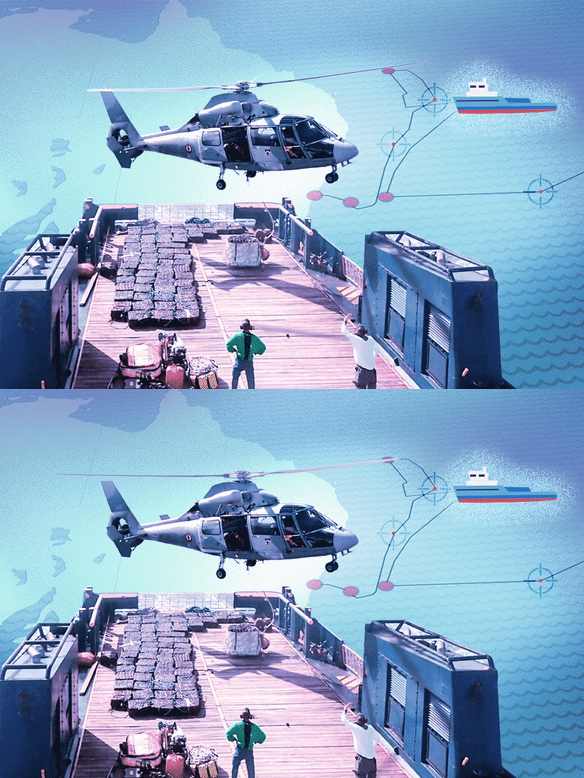
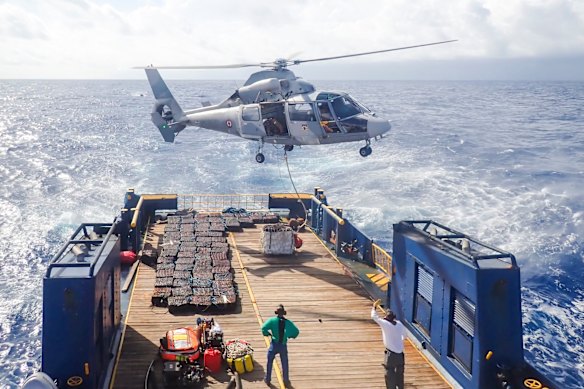
French law enforcement agencies seized and destroyed 4.87 tonnes of cocaine found onboard the Raider during a military-led operation on January 16 before releasing its crew without charge. Soon after, as the Raider continued sailing towards Australia, the AFP received intelligence about the suspected additional cocaine onboard. By then the AFP, which had been monitoring the Raider for several weeks, believed a local arm of the syndicate importing the cocaine had planned to meet the ship at sea to collect the delivery.
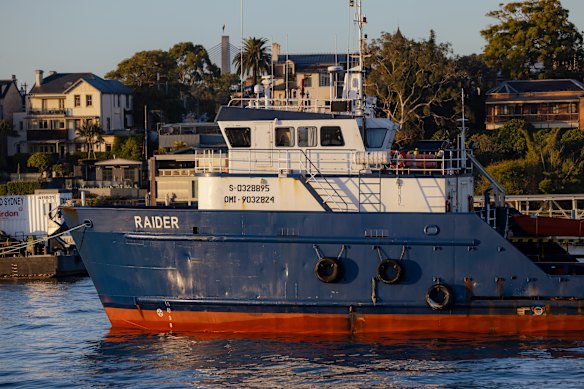
But the AFP had not shared the intelligence about the suspected cargo with NSW Police and ABF officers who intercepted the Raider 180 nautical miles off the NSW coast on February 19, according to several sources familiar with the investigation. Aware that 11 crew members may try to claim asylum in Australia, and the logistical challenges of sequestering the Raider the ABF opted to turn the ship around, rather than seizing it, according to several law enforcement sources familiar with the decision-making process. No AFP officials were onboard the NSW Police boat Nemesis during the interception.
Two ABF officers onboard the Nemesis provided the crew supplies, and redirected the Raider towards New Caledonia. Officers on the Nemesis – used in lieu of ABF vessels that had been deployed in Australia’s north to combat people-smuggling and which were therefore unavailable – were told the Raider’s interception was related to immigration matters only, several sources familiar the operation said.
Four days after it was redirected, though, the Raider changed course and headed back towards Australia’s east coast, according to satellite tracking of the ship’s route. On February 26, a week after it had been turned around, the Raider reached waters off Gladstone, a Queensland port city about 500 kilometres north of Brisbane that law enforcement sources familiar with organised crime syndicates’ methods say is used as a collection point for drugs being smuggled into Australia. The ABF, unable to intercept the Raider because of a lack of resources and personnel on the country’s east coast, allowed the ship to continue on its route. It is unclear when the AFP shared the intelligence about the suspected cargo with the ABF.
Over the next week, the Raider sailed a course experienced investigators say is consistent with well-travelled drug trafficking routes, passing several locations on the NSW coast where smugglers have regularly offloaded cargo. Still, authorities did not intervene.
Not until after the Raider was escorted into Sydney Harbour following a distress call to the Australian Maritime Safety Authority on March 12, three weeks after the ship had been redirected, did federal authorities become aware that the cocaine had been offloaded. During searches of the Raider and crew members’ phones, ABF officials allegedly found several key pieces of evidence indicating the cocaine had been successfully imported. Only when the Raider had been escorted into Sydney Harbour did federal authorities share the weeks-old intelligence about the ship’s cargo with NSW investigators. Privately, senior NSW Police officers have lambasted the agencies’ handling of the situation and the decision to withhold crucial information that could have prevented the alleged importation. The AFP and the ABF’s handling of the operation, they said, signalled a weak approach to drug-trafficking on Australia’s east coast.
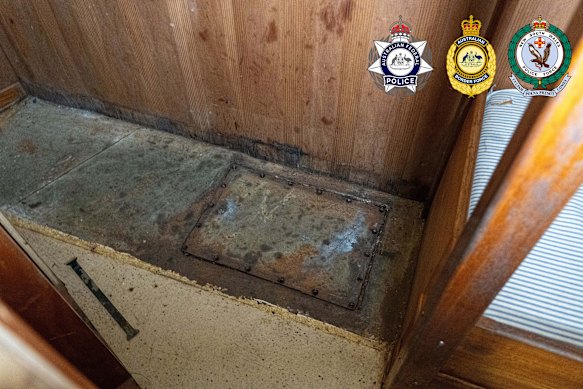
Messages allegedly discovered on the phones of Raider crew members identified a hidden compartment under a cupboard where the additional tonne of cocaine not detected by French authorities had been stored. The newly uncovered evidence, the AFP and the ABF said in a joint statement lauding the arrests of six Raider crew members on Monday, was “consistent with the allegation” the ship had been carrying cocaine as it headed towards Australia.
Starlink internet hardware was onboard the ship, allowing crew members to communicate with overseas contacts throughout their months-long voyage. The agencies said evidence found on the seized devices suggested at least one drop-off had been made in Australian waters, but they believe the cocaine was offloaded at several locations. None of the cocaine, estimated to have a street value between $300 million and $600 million depending on the supply levels of the drug in NSW, has been found.
Last Saturday, AFP detectives charged six Raider crew members – five Honduran men aged 26 to 61, and a 43-year-old Ecuadorian man – with conspiring to import a commercial quantity of a border-controlled drug. Charging the men with plotting to traffic the shipment, an offence that still carries a maximum penalty of life imprisonment, was considered the best-case scenario for empty-handed investigators, who cannot charge the crew members with importing the cocaine unless it is found. Several crew members have returned to Honduras. At least one crew member remains at Villawood Immigration Detention Centre in Sydney’s west.
Some of the crew told relatives they had responded to a Facebook advertisement and been contracted to deliver the Raider to a Queensland company that had purchased the ship, according to sources familiar with the communications but unwilling to be publicly identified. Crew members said they had not been paid since December 20, shortly after they claim to have been employed by recruiters hiring sailors on behalf of the ship’s owners, and days before satellites recorded the Raider travelling through the Panama Canal. The crew said no modifications had been made to the Raider and no cargo had been loaded onto it after they took possession, according to the sources. Police say the Raider was modified to house the $1.8 billion worth of cocaine onboard when the ship left Central America.
Little public information exists about the Raider, which was built in Houma, Louisiana, in 1991, and registered to the US and Honduran ports of New Orleans and La Ceiba since. But according to the ship’s limited available tracking data, the Raider made no manoeuvres and was never recorded leaving or entering a port until last November, when it sailed from Coxen Hole, near La Ceiba, to Panama under the flag of Togo, a west African nation regarded as having low oversight of the shipping industry. No class surveys, which are required to insure a ship, have ever been recorded for the Raider, and nor have any safety certificates. The ship’s lack of recorded activity indicates its sailing history might have been altered or that it might have gone intentionally undocumented to disguise criminal activity, according to shipping industry and law enforcement sources familiar with methods used by organised crime syndicates and international drug cartels.
The Raider’s crew, intending to deceive authorities about the vessel’s origin, had purchased an Australian flag during a stopover in Rarotonga in the Cook Islands in late January, said law enforcement sources seeking anonymity to discuss operational details.
Organised crime syndicates are increasingly trafficking drugs through the Pacific, which has become the preferred route of international cartels capitalising on Australia’s appetite for cocaine. This year, French authorities operating in the Pacific have seized more than 11 tonnes of cocaine.
Authorities are working to trace the murky ownership history of the Raider, which, according to the limited available records of the ship, has been registered since last November to a Panama City-based technology company with a limited online footprint. The company could not be reached for comment. The ship, previously sailing under the Honduran flag, was sold in 2021 to an undisclosed buyer. Some records show the Raider’s registration was updated after French authorities seized the cocaine in January and the ship was recorded as sailing under an unknown flag; other records indicate its owner may have tried to register the ship under the Bolivian flag and rename it.
Detectives are investigating what knowledge of the cargo the Raider’s crew had, and whether the sailors were willing participants in the alleged importation or if they were onboard the ship under duress.
In response to more than 20 questions put to both agencies about the Raider operation, an ABF spokesperson said its approach to the ship was “measured, informed and in the best interests of Australia’s border protection”.
An AFP spokesperson said investigations into the activities of the Raider were ongoing, including inquiries in Australia and offshore to identify syndicate members involved in the supply and collection of the cocaine. The office of Home Affairs Minister Tony Burke, who oversees the ABF and the AFP, declined to comment on the operation.
Start the day with a summary of the day’s most important and interesting stories, analysis and insights. Sign up for our Morning Edition newsletter.
Disclaimer : This story is auto aggregated by a computer programme and has not been created or edited by DOWNTHENEWS. Publisher: www.smh.com.au