Regan MorrisHollywood
 Getty Images
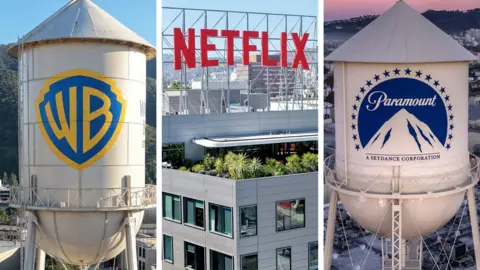
Disaster, catastrophe and nightmare. That’s how Hollywood’s creative workers describe the fall of the once mighty Warner Bros, as Netflix and Paramount battle to buy the historic studio and tinsel town braces for more upheaval and job losses.
Warner’s decline and impending sale – whether it’s to Paramount Skydance as a whole, or to Netflix cut up in parts – is being mourned in Hollywood, where a historic production slump has already battered the entertainment industry. The loss of the studio, which has created iconic films ranging from Casablanca and Goodfellas to Batman and Harry Potter, likely means more job cuts and definitely means one less buyer of film and TV projects.
Interviews with dozens of actors, producers and camera crews by the BBC reveal an industry attempting to weigh the lesser of two evils: control by a tech giant blamed for killing movie theatres (Netflix) or billionaires seen as too cosy with President Trump (Paramount).
“David Ellison is a right-wing billionaire Trumper,” a camera assistant said of the Paramount Skydance CEO who is the son of billionaire Oracle co-founder and close Trump ally Larry Ellison. “Netflix is much more historically inclined to not micromanage production.”
If Netflix gets the deal they want, they will buy Warner Bros’ crown jewels – the 102-year-old studio, HBO, and its vast archive of films and TV shows – leaving Warners’s legacy TV networks, like CNN, TNT Sports and Discovery, for another buyer.
Meanwhile, Paramount Skydance’s $108bn(£81bn) hostile takeover bid for Warner Bros includes backing from Saudi Arabia, Abu Dhabi, Qatar and a fund started by Jared Kushner, US President Donald Trump’s son-in-law.
It has raised concerns about the possibility of censorship and government overreach.
President Trump added fuel to the fire when he said “it’s imperative that CNN be sold”.
The Warner Bros deal is the latest in a long line of major shake-ups in Hollywood since the pandemic.
Film and TV productions ground to a halt in 2023 during simultaneous actor and writer strikes. Seemingly everyone in Hollywood was working in 2022 as studios and streaming services went into creative overdrive after Covid shutdowns. But when the labour strikes ended, the production boom never returned.
The fallout has meant that many media companies have had to close doors – or merge. David Ellison’s Skydance Media bought Paramount, another legendary Hollywood studio, earlier this summer, leading to thousands of job losses.
When Warner Bros put up a for-sale sign, Paramount launched an eager campaign to buy the company. But the studio ultimately announced a tentative deal with Netflix. A spurned Paramount then went direct to Warner Bros Discovery shareholders with a hostile takeover offer that they say is “superior” to the Netflix deal.

 Getty Images
Whether they’re rooting for Paramount or Netflix or another potential buyer, the one thing people in Hollywood seem to agree on is this story’s villain – Warner Bros Discovery CEO David Zaslav, who earned $51.9m last year as Warner Bros lost more than $11bn and the company’s stock fell nearly 7%.
“I watched Warner Bros struggle since David Zaslav became the CEO and ran it into the ground,” says an actor who lost his home after his work dried up. He did not want to be identified because he still hopes to work for Netflix and Paramount.
More than one person compared Mr Zaslav to the fictional movie character Gordon Gekko who proclaims “greed is good” in the 1987 movie Wall Street.
Mr Zaslav took over in 2022 during another massive merger of Discovery, Inc., which he ran, with AT&T’s WarnerMedia, creating Warner Bros Discovery. The consolidation saw several thousand jobs cut – and lavish pay packages for Mr Zaslav.
“Zaslav is just Gordon Gekko – he came in, broke it and sold it all,” says a producer who was working on the Warner Bros lot. “He said I will make all shareholders rich and who cares what the history of this place is.”
Warner Bros objected to that characterisation.
“Under the leadership of David and the talented team at WBD over the past three and a half years, the studio has regained its leadership position with a unique slate of films led by original content, seen the relaunch of the DC Universe under a single unified leadership team with ten year plan and the streaming service has launched globally and become profitable for the first time ever,” Warner’s head of communications Robert Gibbs said in a statement to the BBC.
For many film workers, whoever buys Warner Bros has felt almost irrelevant. They have instead been focusing on how to reinvent themselves as the industry shrinks amid consolidation and the growing use of AI in entertainment.
“Every morning, no matter how much I tell myself to stay positive, I wake up feeling like I’ve failed in every direction,” says an actor who is now homeless with his wife and two children, relying on the kindness of friends and food banks while he works odd jobs. He asked not to be identified out of fear it could impact future work.
“I would rather see Netflix purchase Warner Bros then foreign money,” he says.
Others are not so sure. The tech giant has arguably been the industry’s greatest disrupter since Warner Bros pioneered “the talkies” in 1927.
“I think it’s a disaster,” says a film exhibitor who did not want to be identified because they work with Netflix. “This is a company openly, proudly saying theatres aren’t necessary anymore. That’s scary. It’s a nightmare.”
Many theatres in the US refuse to screen Netflix movies because of their streaming-first strategy.
“At least with Paramount, we know movies will make it to the big screen. They didn’t kill movie theatres,” said one producer who has worked for all three companies.
Netflix has sought to alleviate those fears, saying they expect “to maintain Warner Bros’ current operations and build on its strengths, including theatrical releases for films.”
Many in Hollywood want to believe them.
 Getty Images
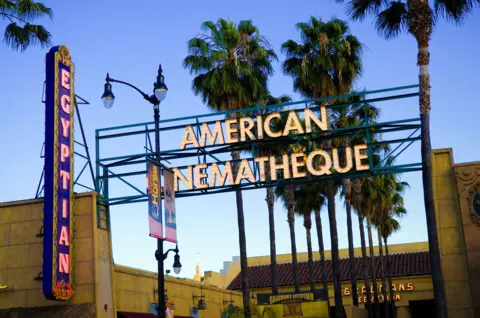
John Evans, a sound technician who dabbles in acting, writing and producing, points to Netflix’s loving restoration of The Egyptian Theatre along iconic Hollywood Boulevard as a sign of their good faith.
The Egyptian, a classic 1922 theatre, was the site of the world’s first movie premiere – Robin Hood starring Douglas Fairbanks – and had fallen into disrepair before Netflix bought the property in 2020 and gave it a $70m makeover.
“I think it’s a good sign,” Mr Evans said, adding that streaming is how many film workers consume movies and TV like the rest of the world.
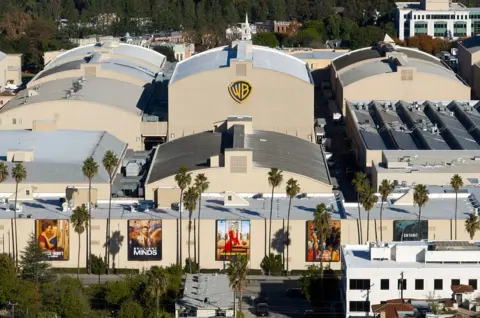
On the backlot at Warner Bros, tourists snap selfies in front of the Central Perk cafe set from Friends, and stroll by facades of buildings that stand-in for New York or Los Angeles. Inside the offices and writers’ rooms, for those still working, it’s business as usual.
“I’ve gone through seven mergers,” a producer working on the Warner Bros lot said while developing a new show, explaining it’s sad to lose a studio because it means it will be even harder to get shows made and sold with one less customer. “But if you make good stuff, you make good stuff.”
The producer spoke on the condition of anonymity on the day that Paramount Skydance announced their hostile takeover bid. They said they were too busy to worry about the sale because they were trying to get a show on air – and they wouldn’t be surprised if another billionaire or trillionaire made another offer for the studio by the end of all this.
“I joke about Elon walking in and doing this, but he could,” they said of the Tesla and X owner. “When you have people worth a trillion dollars, there are no rules.”
Disclaimer : This story is auto aggregated by a computer programme and has not been created or edited by DOWNTHENEWS. Publisher: BBC