KYOTO, Mar 01 (News On Japan) –
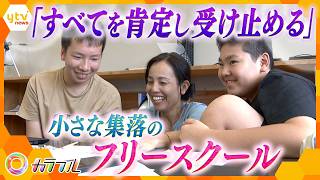
In the Keihoku district on the northern edge of Kyoto City, a free school operating out of a former elementary school has become a sanctuary for children who struggle to attend regular classes, offering not only a second chance at learning but also a place of emotional safety for both students and their parents.
[embedded content]
Surrounded by mountains and rich natural scenery, the small community is home to a towering cedar tree more than 450 years old, long regarded as a local symbol. The former No. 3 Elementary School, which closed amid declining enrollment, reopened three years ago as a free school welcoming children once again.
The school, known as Manabino, is led by Umeda, affectionately called “Mako-chan,” and her husband Akinobu, a former elementary school teacher. Around 10 students from elementary to high school age, many of whom have experienced school refusal for various reasons, now attend what they describe as a “second home.”
While there is a basic daily structure, participation is flexible. “We suggest a flow for the day, but it’s only a proposal,” Umeda explains. “If a child doesn’t feel up to it, they can rest. There is no absolute ‘must.’”
Students say the atmosphere is more relaxed than at conventional schools. There are times set aside for study, but also for outdoor play, visiting the nearby river, or preparing meals together. “If you don’t want to do something, you don’t have to,” one student says. “It’s freer.”
Meals are supported by local volunteers, now numbering more than 30. The involvement of the community has been essential, from the use of the former school building to help with lessons and activities. Students wash their own dishes, learning practical life skills while building a sense of responsibility.
One sixth-grade student had stopped attending school for a period and spent most of her time at home focused solely on piano. She began attending Manabino after her older sister returned to regular school. Reflecting on her earlier school experience, she recalls discomfort with rigid expectations. “When you draw yourself, they tell you what color your skin and hair should be,” she says. “But everyone is different.”
For children who have felt hurt, pressured, or misunderstood, rebuilding confidence requires first restoring a sense of acceptance. “Many children have lost sight of the wonderful qualities they naturally possess,” Umeda says. “So we start with the premise that ‘You are fine just as you are.’ Whether you can do something or not, the fact that you are here is precious.”
Ensuring emotional safety, she believes, is the first step toward any new challenge.
After graduating from university, Umeda worked in after-school childcare. She and her family relocated to Keihoku when her eldest son was born, and they built a home there three years ago. Around that time, her son began refusing to attend school.
“At first I asked, ‘What’s wrong? Are you being bullied? Don’t you like studying?’” she recalls. “But when I asked myself whether forcing him to go would truly benefit his life, I couldn’t honestly say yes.”
She vividly remembers the relief she felt when she decided to establish a free school. “The moment I thought, ‘Let’s create one,’ I felt a huge weight lift.”
In sparsely populated areas, the small number of children makes running such facilities financially challenging, and few alternatives exist nearby. At the same time, in close-knit rural communities, losing one’s place can mean having nowhere to retreat. That reality has made Manabino’s role all the more significant.
Last year in February, Akinobu, who had long wrestled with balancing public education and the free school, left his teaching position. The decision cost the family a stable source of income and at one point brought the school to the brink of closure. Yet they say it ultimately strengthened their resolve.
“Rather than clinging to money for security, being honest about what we truly want to do and taking on the challenge feels like happiness,” he says. “It’s tough, but it’s rewarding.”
Some students now split their time between Manabino and their original schools. One sixth-grade boy alternates attendance depending on the day. When he first stopped going to school, his relationship with his mother became strained. To support families, the free school holds monthly meetings exclusively for parents, recognizing that their struggles also need acknowledgment.
“I said so many harsh things to him,” one mother says, recalling frequent arguments when her son could not leave the house. Over time, seeing her child regain his sense of self has helped rebuild trust. Staff members note visible changes in both children and parents as emotional burdens ease.
Throughout the year, the school organizes various events, encouraging students to take on challenges at their own pace. Whether performing music, participating in activities, or simply expressing curiosity, each step is celebrated.
“Emotional safety nurtures curiosity,” Umeda says. “We want this to be a year when we see children’s potential sprout again. And adults, too, can rediscover joy and grow together. If everyone can simply be healthy and themselves, that is enough.”
In a quiet mountain community once marked by decline, an abandoned school has become a place where children — and their parents — are learning how to begin again.
Source: YOMIURI
Disclaimer : This story is auto aggregated by a computer programme and has not been created or edited by DOWNTHENEWS. Publisher: newsonjapan.com