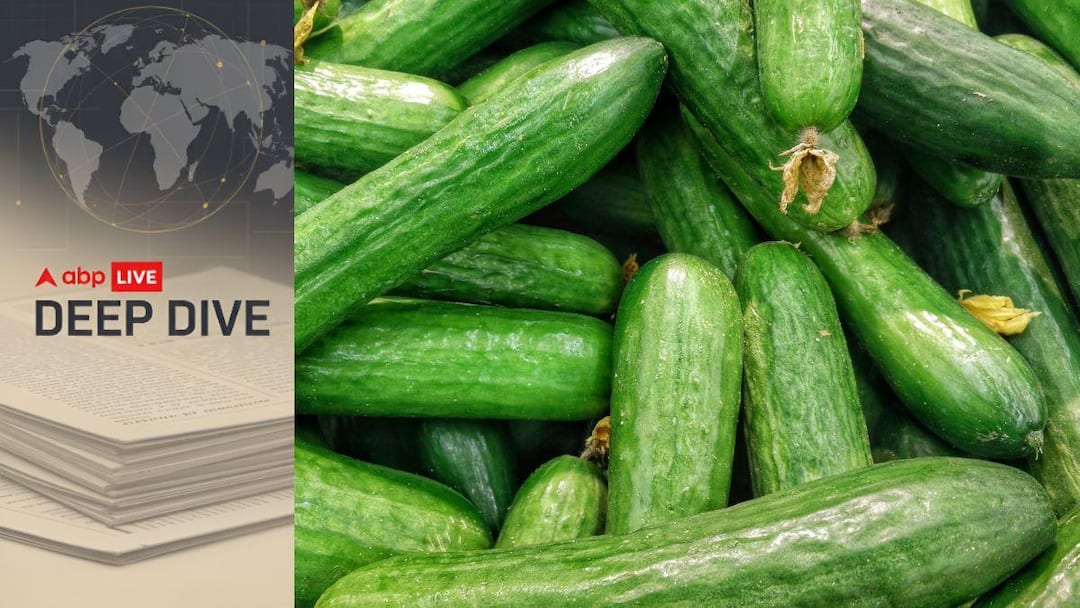
Cucumbers, a basic ingredient in Russian salads and everyday meals, have unexpectedly become a symbol of rising living costs, after prices soared sharply in recent weeks. The spike has triggered public frustration, drawn political attention, and prompted regulatory scrutiny at a sensitive time for the country’s economy.
Prices Have Doubled Since December
According to official data, the average retail price of cucumbers has more than doubled since December, now standing at just over 300 roubles per kilogram (around Rs 358). However, many consumers say the reality on the ground is even more severe. Social media platforms have been flooded with photos showing cucumbers priced at two or even three times the official average in some stores.
The surge has transformed what is typically a staple vegetable into what some politicians have mockingly described as a luxury item.
Political Pressure Mounts
The sharp increase has forced a swift response from lawmakers, including members of the ruling United Russia party, which faces parliamentary elections later this year.
Russia’s anti-monopoly regulator has sent formal requests to producers and retailers demanding explanations for the sudden jump in prices. The move signals official concern that price hikes could fuel broader dissatisfaction among consumers already grappling with inflation.
Sergei Mironov, leader of the Just Russia party in parliament, publicly criticised the situation, remarking that cucumbers had become a “new delicacy” in Russian shops this winter. He questioned whether citizens were expected to accept being priced out of basic food items.
Mironov also criticised the explanation offered by the Ministry of Agriculture, which attributed the spike to seasonal factors. He noted that similar reasoning had been used previously to explain sharp increases in potato prices, which had also drawn public anger.
The Role Of Seasonality
Agricultural officials maintain that the price surge is largely seasonal. Winter production of cucumbers is typically more expensive due to greenhouse heating costs and lower natural yields. Producers have reassured consumers that prices are likely to ease next month as temperatures rise and supply improves.
Seasonal fluctuations in produce prices are common, and Russian authorities have previously intervened or applied pressure to stabilise food costs when they have spiked. Tthere are no signs that public frustration, amplified by social media, has escalated into broader unrest.
Inflation and Economic Pressures
However, the cucumber price surge does not exist in isolation. Overall consumer prices have risen by 2.1 per cent since the start of the year, partly due to an increase in value-added tax. At the same time, Russia’s economy is slowing after four years of war in Ukraine.
The central bank has forecast annual inflation of up to 5.5 per cent this year. Households are already facing higher utility bills, rising petrol prices, and more expensive supermarket and restaurant costs. In that context, the doubling of cucumber prices has become a visible and relatable example of mounting financial pressure.
In some regions, cucumbers are now more expensive than imported fruits such as bananas. Supermarkets in parts of Siberia have reportedly introduced purchase limits per customer to prevent hoarding. One of Russia’s most widely read newspapers has even distributed cucumber seeds to readers, encouraging them to grow their own supply at home.
Proposals To Cap Mark-Ups
Opposition parties represented in the State Duma, including Just Russia and the Communist Party, have suggested imposing limits on the retail mark-ups that supermarkets can apply to essential food items.
Meanwhile, Yevgeny Popov, a lawmaker from the ruling party, sought to calm concerns on social media, arguing that cucumber prices would soon decline and emphasising that Russia remains fully self-sufficient in the product.
A Small Vegetable, A Bigger Signal
While cucumbers alone are unlikely to destabilise the economy, their price surge highlights broader anxieties about inflation, purchasing power, and economic resilience during wartime conditions. For many Russians, the issue is less about one vegetable and more about the steady erosion of affordability in everyday life.
Whether prices fall as warmer weather approaches, as producers predict, may determine whether the “gilded cucumber” becomes a brief seasonal anomaly or a longer-lasting symbol of economic strain.
Related Video
Delhi flood update: once again AAP points out BJP, for Delhi’s present situation
Disclaimer : This story is auto aggregated by a computer programme and has not been created or edited by DOWNTHENEWS. Publisher: abplive.com