
When Erin Vincent was in her early 30s, she saw the Edgar Degas sculpture, Little Dancer of Fourteen Years, in a museum and was so overcome that she had to leave the room.
The work depicts Marie van Goethem, one of the impoverished juniors, known as “petits rats”, at the Paris Opera Ballet School in the 1880s. One art critic referred to the teenager’s “lecherous little snout”, while another wrote, “with bestial effrontery she moves her face forward, or rather her little muzzle”.
To Vincent, the awkward waif encapsulated her 14-year-old self: “That terrible, sad defiance that I had at that age.” She was 14 and living in Western Sydney when a speeding tow-truck ploughed into her parents as they crossed a road. Her mother died at the scene, her father, four weeks later. In her book, Fourteen Ways of Looking, she describes becoming an instant pariah. Family friends and relatives largely retreated, leaving the three siblings – Vincent, her three-year-old brother and a sister three days short of her 18th birthday – to fend for themselves. Sponsoring a UNICEF orphan was big in 1983, she writes, but people “could not bear to be in the presence of the orphan who looked just like them”.
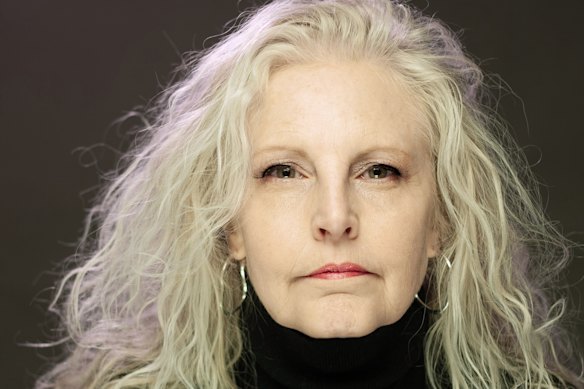
Now in her 50s and sitting in a wood-panelled room in her Blue Mountains home, beneath the kind of kitsch ’60s art you’d jump on in an op shop, Vincent is agreeable even when her words are blunt. “People think that when you’re orphaned, people are kind to you, and I’d like to dispel that myth,” she says. “My husband has known me since I was 19. He says, ‘People really kind of hate you for it. It’s almost like they’re angry at you’.”
Is that because they have no chance of winning in the trauma stakes? “I have no idea. It’s one of the great mysteries of my life.”
After enrolling at UTS for a Masters of Arts in Creative Writing, Vincent took inspiration from authors who wrote in a fragmented style, such as Maggie Nelson in Bluets, realising that the form suited the way her brain worked. “The fragmentary nature of trauma is that everything is non-linear and broken up into different pieces,” she says.
Those who have experienced trauma can probably relate to the feeling of being preserved in amber at the age in which it occurred. Vincent decided to use the number 14 as her guide, to be open to whatever signs it sent. Memories of her 14-year-old self are spliced with haunting, sometimes devastating examples of the number in literature, art, science and historical news stories, from Degas to Dante, Alan Turing to Marguerite Duras, Emily Dickinson to Edvard Munch. Sometimes it’s a page number, sometimes a date, sometimes the number of letters in a name.
Part of this quest for meaning comes from Vincent’s fruitless search for answers about her mother’s internal life – a search that took in her mother’s Bible, day planner, and even an old taped session her mother had with a numerologist. “I think she was a depressed person, and I was very conscious of that as a kid, but there are so many gaps,” says Vincent. “That’s what the white space on the page is: silence and gaps.”
Vincent’s father was even more complicated. In the book, her resentment towards him is revealed long before the reasons, which come into sharp focus near the end. “I almost felt like I was betraying him, but I also felt like it would be betraying my mother not to write the truth of him.”
The teenage Vincent received no professional help, other than a few sessions with a hopelessly ill-equipped school counsellor. She’d watched Jessica Lange in Frances, the biopic about the institutionalisation of actor Frances Farmer, and wondered if she, too, would end up strapped to a table. Without adult intervention, she had to make sense of a traumatic situation on her own terms, coming to the conclusion that her thoughts were responsible for her parents’ deaths. In the book, she frequently breaks the fourth wall and addresses the reader – to devastating effect, since we are likely to have more compassion for her than she does for herself, and yet, we can’t address her back. “I’ve always been so hard on myself,” she agrees, “but I think that got me through, in a way: Pull yourself together, don’t be pathetic. Yeah, my parents died. What’s the big deal?”
One of the fragments quotes Lorrie Moore’s short story How to Become a Writer, which recommends that a would-be writer try any other profession first and then fail, in order to acquire critical disillusionment: “It is best if you fail miserably at an early age – say, 14.” Vincent herself had been enjoying acting at Sydney youth theatre Shopfront, before deciding, at 14, she would never act again.
“To act, you have to show vulnerability. And I was like, nope,” she says. But in adulthood, when she and her photographer husband, Adam Knott, moved to Los Angeles, she joined an avant-garde theatre. “I did this wild, manic audition and I got in. I loved it. It was actually backstage, waiting to go on, that I started remembering life at 14 because the theatre reminded me of Shopfront. I started writing what was going to be a one-woman show, and then it turned into a book.”
That first book, written in her 30s, was Grief Girl. Pitched at a young adult audience, it was a memoir intended to be a lifeline – inspired by the fact that the many books she read on grief as a teenager only left her more isolated. “I felt like I was crazy because I was experiencing horror and terror in my head and in my body, and yet the grief books were all very soft and gentle: ‘grief is like the wind, it comes and goes’, or it’s the waves, or it’s the rain,” she says. “The only thing that really resonated was when C.S. Lewis wrote in A Grief Observed that no one ever told him that grief felt so like fear.”
Writing Grief Girl had a detrimental effect on Vincent’s physical health and brought her to the brink of suicide. Afterwards, she tried and failed to write books in linear form. (In Fourteen … she lists writers who managed to produce great books, essays and poems while depressed.)
And so her husband was initially tentative when, one sunny day as they sat outside, Vincent produced a notebook and announced her intention to tackle 1983 once more. This time, she would use the buffer of playfulness. “I had recently read about Georges Perec, whose parents died in World War II,” she says, of the French author and essayist who enjoyed wordplay and experimentation. “He spent his life being playful with his writing, a huge inspiration for this book.”
Vincent took to the shed and started shuffling the fragments she was collecting. “Some of them are pretty horrific,” she admits. “I say, ‘I wondered what my mother thought at the moment of impact’… and then I list the 14 bones in the face. But at the same time, the artfulness of putting those two together was quite thrilling.”
In her previous book, Vincent included her contact information. She’s stopped short of that this time, but is aware that when an artist works in the medium of grief, a huge well of need can spill out of others. “I do feel an enormous responsibility, but then, I’ve got one life, right? My main concern is saying the wrong thing, but on the other hand, I remember when I was going through it, I would rather someone say the wrong thing than say nothing,” she says.
“If I could ease the burden slightly for someone, that’s a pretty good way to spend my life.”
Fourteen Ways of Looking by Erin Vincent (Upswell) is out on March 3.
The Booklist is a weekly newsletter for book lovers from Jason Steger. Get it delivered every Friday.
 Jenny Valentish is the author of the non-fiction books Everything Harder Than Everyone Else and Woman of Substances.
From our partners
Disclaimer : This story is auto aggregated by a computer programme and has not been created or edited by DOWNTHENEWS. Publisher: www.smh.com.au