
With the Iran war continuing to escalate, the company overseeing take-off and landing slots at Sydney Airport expects travel disruptions to drag on for weeks even after the conflict ends.
Airport Coordination Limited, which manages the slots at Australia’s busiest airport, said it would not penalise airlines that needed to “cancel services as a direct result” of airport and airspace closures due to the conflict in the Middle East.
In fresh guidance on the impact of the war on airport operations, the company told airlines that “where exceptional circumstances exist because of the situation, ACL will grant alleviation for the period of the disturbance plus six weeks”.
That means even if the war stopped today, the airport coordinator plans for up to six more weeks of flight disruptions as airlines adjust networks, reposition planes and redeploy crews to reactivated routes.
The protracted time frame for resumption of normal air travel suggests there won’t be a quick relief for the aviation industry and travellers from the war, which has cost lives, unleashed fuel price spikes and forced the cancellation of thousands of flights.
Slots, which are permissions given to a plane to arrive or depart at an airport at a particular time on a particular day, give airlines access to crucial airport hubs. In normal times, under a “use-it-or-lose-it” principle, airlines must use allocated take-off/landing slots at least 80 per cent of the time during a season to maintain their slots for the following period the next year.
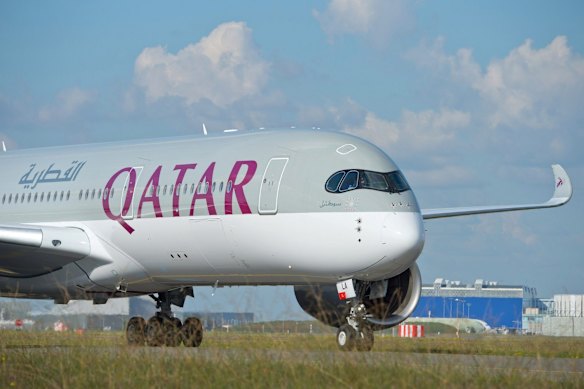
The war, which began on February 28, has prompted Persian Gulf countries such as the United Arab Emirates and Qatar to shut down civilian air operations in the face of repeated drone attacks launched from Iran, which is fighting a bombardment from the US and Israel.
The sudden disruptions have paralysed a region used by more than 60 per cent of Australians travelling to and from Europe, according to figures submitted by Qatar Airways to the ACCC.
From the start of the war to March 11, more than 46,000 flights going over the Middle East have been cancelled, says aviation analytics firm Cirium.
UK-based ACL was appointed by the Albanese government last year to manage Sydney’s slots amid suspicions Qantas was hoarding “slots” to deny rivals access to the nation’s biggest airport. It also provides slot coordination across Dubai, Abu Dhabi and Riyadh’s airport in Saudi Arabia.
ACL chief executive Neil Garwood said that in times like these, the challenge for Middle East carriers is that “either the main airport is a target and it closes, or the airspace is closed to civilian traffic, or both”.
“The slot rules are designed to alleviate in severe circumstances, so airlines don’t lose slots when they can’t fly for reasons outside their control.”
To date, Gulf carriers such as Emirates, Etihad and Qatar have resumed flights – but at dramatically reduced schedules. Dutch carrier KLM said flights to Tel Aviv were suspended for the remainder of its winter season and called off all flights to Dubai until March 28. British Airways cancelled all flights to Abu Dhabi until later this year.
Oleksandra Molloy, a lecturer in aviation at the University of NSW in Canberra, said the current situation “highlights the need for the industry to be adaptable, fast and agile, and to work around the key concept of safety and security”.
The Business Briefing newsletter delivers major stories, exclusive coverage and expert opinion. Sign up to get it every weekday morning.
 Chris Zappone is a senior reporter covering aviation and business. He is former digital foreign editor.Connect via X, Facebook or email.
From our partners
Disclaimer : This story is auto aggregated by a computer programme and has not been created or edited by DOWNTHENEWS. Publisher: www.smh.com.au