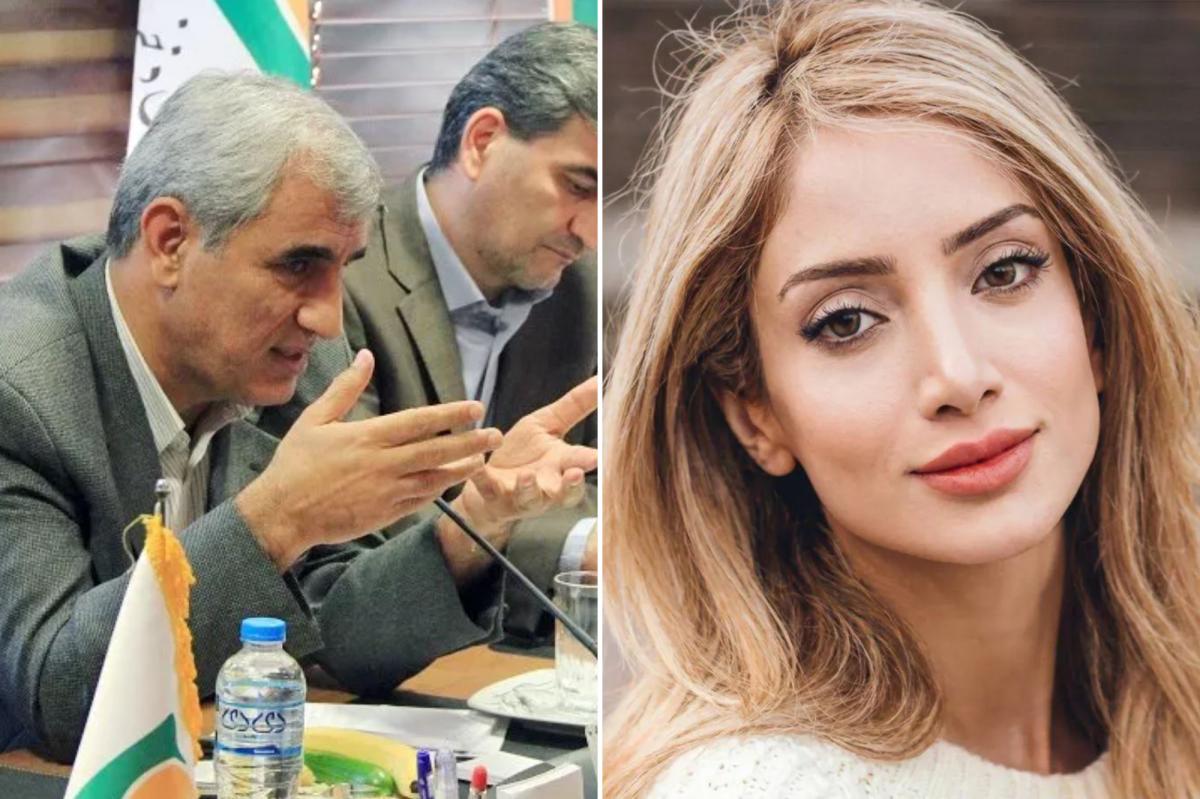
Alleged Iranian spies with ties to regime bigwigs have been charged with infiltrating Silicon Valley.
Last month, a federal grand jury indicted three Iranian software engineers for allegedly stealing trade secrets from tech companies, including Google.
Two of the suspects are sisters, Samaneh Ghandali, 41, and Sorvoor Ghandali, 32. They were charged alongside Mohammadjavad Khosravi,40, who is Samaneh’s husband, with allegedly using their employment at unidentified technology companies to “obtain access to confidential and sensitive information,” according to the Department of Justice.
The tech workers then allegedly “exfiltrated confidential and sensitive documents, including trade secrets related to processor security and cryptography and other technologies, from Google and other technology companies.’
They are then accused of transferring the confidential data to other locations, including Iran, according to the indictment. They have all pleaded not guilty.
The Ghandali sisters’ father is Iranian regime insider Shahabeddin Ghandali, a former chief executive of the Teachers Investment Fund Corporation back in Iran. He was arrested and charged over an embezzlement of $2.5 billion in 2016, and fraud involving Iran’s Bank Sarmayeh, according to reports. Although arrested, it is unclear if he was ever prosecuted in relation to the scheme, as others were.
Opponents of the Iranian regime in the US say that the family connections could have facilitated the alleged spying.
“The issue is risk, access, and vulnerability,” said Iranian human rights activist Lawdan Bazargan, who heads up the Alliance Against Islamic Regime of Iran Apologists.
“When individuals connected to powerful networks in an authoritarian system enter universities and research centers, they gain access not only to advanced technology but also to professional networks and institutional trust. In certain cases … access can be abused.”
There are other examples of the Iranian regime’s tentacles finding their way into US institutions.
Kaveh Lotfolah Afrasiabi, a prominent Iranian-American political science professor who has taught at Harvard and other elite universities, was charged with failing to register as a foreign agent for Iran under the Foreign Agents Registration Act (FARA) in 2021.
Prosecutors claimed that for more than ten years he was secretly working for the government of Iran and the Permanent Mission of the Islamic Republic of Iran to the United Nations (IMUN) “to spread their propaganda.”
Afrasiabi, a frequent contributor to the New York Times, had collected more than $250,000 in checks drawn on IMUN’s official bank account since 2007 and received health insurance through the IMUN employee health benefit plans since 2011, according to a federal complaint against him.
“Mr. Afrasiabi never disclosed to a congressman, journalists or others who hold roles of influence in our country that he was being paid by the Iranian government to paint an untruthfully positive picture of the nation,” claimed the Department of Justice in a press release. The same document alleged Afrasiabi lobbied an unnamed congressman and gave the Iranian ambassador to the UN advice for “retaliation” for the US military airstrike that killed Major General Qasem Soleimani, the head of the country’s Islamic Revolutionary Guard Corps. Soleimani was killed in a US strike in Baghdad on January 3, 2020.
Afrasiabi also allegedly proposed the Iranian government “end all inspections and end all information on Iran’s nuclear activities pending a [United Nations Security Council] condemnation of [the United States’] illegal crime,” of killing Soleimani, according to the complaint. Afrasiabi claimed the move would “strike fear in the heart of [the] enemy.”
Afrasiabi pled not guilty, calling himself a “consultant” to Iran’s UN mission in a televised interview last year.
He said he was a political target of the first Trump administration and called himself “an agent of peace committed to US-Iran reconciliation and peace and dialogue.”
President Biden issued a full pardon for Afrasiabi as part of a prisoner swap in 2023. He is still believed to be in the US.
In another case, Iranian-American Ahmadreza Mohammadi Doostdar pleaded guilty to acting as a foreign agent of Iran in 2019. Mohammadi-Doostdar, whose brother teaches Islamic Studies at the University of Chicago, conducted surveillance of Jewish organizations at that school, federal prosecutors claimed.
They also accused him of conducting surveillance of Iranian-Americans who were members of Mujahedin-e Khalq (MEK), a militant Iranian regime opposition group.
Mohammadi-Doostdar’s father, Hossein Mohammadi-Doostdar, is the former head of Iran’s College Publications Center.
Ahmadreza was sentenced to just over three years in prison. An Iranian co-conspirator based in California, Majid Ghorbani, was sentenced to 30 months, according to the Justice Department.
Disclaimer : This story is auto aggregated by a computer programme and has not been created or edited by DOWNTHENEWS. Publisher: nypost.com