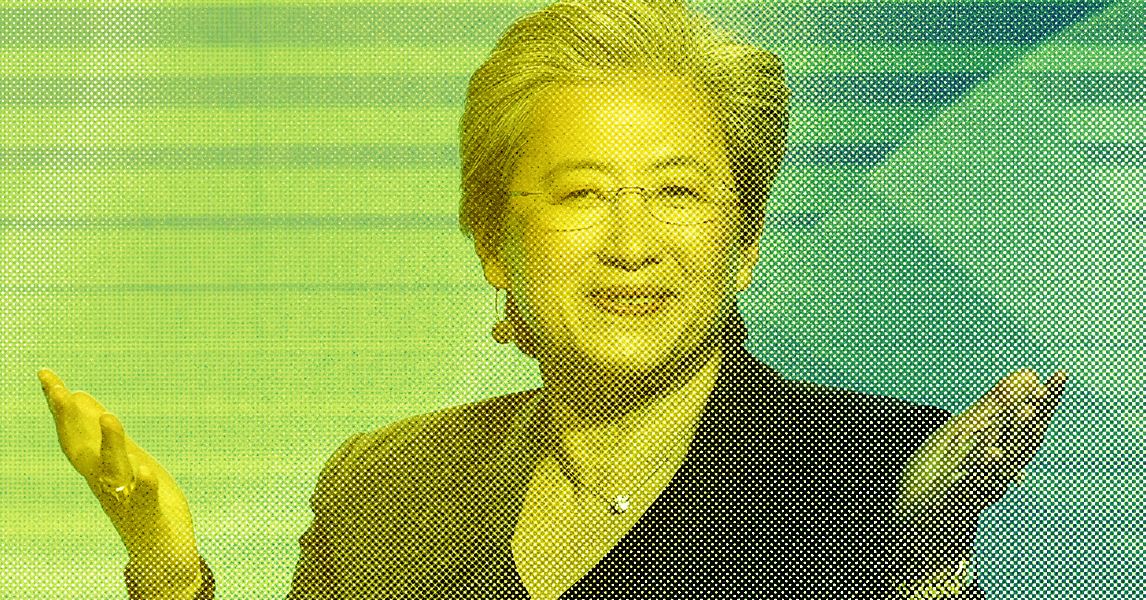
Last week, some of the most forward-thinking minds in tech, culture, and politics came together for WIRED’s Big Interview event—a series of live, in-depth conversations with industry leaders. To kick off the event, Lauren Goode sat down with AMD’s CEO Lisa Su. In this episode of Uncanny Valley, hosts Michael Calore and Lauren sit down to discuss the key ideas that came up during the interview, as well as the other conversations that caught everyone’s attention during the event.
Articles mentioned in this episode:
- AMD CEO Lisa Su Says Concerns About an AI Bubble Are Overblown
- Can AI Look at Your Retina and Diagnose Alzheimer’s? Eric Topol Hopes So
- San Francisco Mayor Daniel Lurie: ‘We Are a City on the Rise’
- Watch the Highlights From WIRED’s 2025 Big Interview Event Right Here
You can follow Michael Calore on Bluesky at @snackfight, Lauren Goode on Bluesky at @laurengoode, and TK on Bluesky at @TK. Write to us at uncannyvalley@wired.com.
How to Listen
You can always listen to this week’s podcast through the audio player on this page, but if you want to subscribe for free to get every episode, here’s how:
If you’re on an iPhone or iPad, open the app called Podcasts, or just tap this link. You can also download an app like Overcast or Pocket Casts and search for “uncanny valley.” We’re on Spotify too.
Transcript
Note: This is an automated transcript, which may contain errors.
Michael Calore: Hey Lauren, how you doing?
Lauren Goode: Mike, I’ve been pondering the word tape.
Michael Calore: Because we’re taping a podcast?
Lauren Goode: Because we say we’re taping a podcast.
Michael Calore: Sure.
Lauren Goode: I don’t think the kids know what that means.
Michael Calore: I mean, they may know what it means in the abstract, but I don’t think they’ve had the visceral experience of actually recording something onto tape.
Lauren Goode: Onto tape and rewinding the tape. Be kind, rewind, all of that.
Michael Calore: Yep.
Lauren Goode: No, so I guess we’re supposed to say we’re recording a podcast now.
Michael Calore: Recording works.
Lauren Goode: Recording. Yeah.
Michael Calore: Yeah. It’s like when people say, let me film that. You’re not actually filming anything. You’re shooting a digital video.
Lauren Goode: So then if you have a video podcast, are you shooting the podcast? What do you say? Do you say taping, then?
Michael Calore: I think you say recording because it just—
Lauren Goode: Recording the pod.
Michael Calore: Yeah.
Lauren Goode: We’re recording the pod.
Michael Calore: It covers all the bases.
Lauren Goode: We’re capturing it.
Michael Calore: That’s what we’re doing.
Lauren Goode: We’re sublimating it. All right. Well, should we record this pod?
Michael Calore: I would like to, yes.
Lauren Goode: Let’s do it.
Michael Calore: Honestly, I’m still recovering from last week’s Big Interview event. My throat is still feeling a little bit raw, even though it’s been like four or five days.
Lauren Goode: You sound delightful to me.
Michael Calore: Thank you.
Lauren Goode: But that really was an epic event.
Michael Calore: It was.
Lauren Goode: Yeah.
Michael Calore: You were on stage.
Lauren Goode: I was. I was first up in the morning. Katie, our boss, gave the intro to the conference and then it was me and Lisa Su, the CEO of AMD. And not only was it a really interesting conversation, but then I was done for the day. I didn’t have to do any more interviews after that. And I just got to listen and absorb, and there were some other really great talks.
Michael Calore: There were, yes. And we’re going to talk through some of them. We’re also going to listen to your conversation with Lisa Su, and then we’ll talk about it, and we’ll take listeners behind the scenes of The Big Interview.
Lauren Goode: Let’s take them behind the curtain.
Michael Calore: Let’s do it. This is WIRED’s Uncanny Valley, a show about the people, power, and influence of Silicon Valley. Today, we’re breaking down the key conversations that went down at our Big Interview event in San Francisco last week. Since last year, WIRED has hosted this space where the most forward-thinking innovators, whether they’re in tech, politics, science, or culture, have in-depth conversations with us that go beyond the headlines. This year, the lineup included Anthropic’s cofounder, Daniela Amodei, scientist and author of Super Agers, Eric Topol, and Wicked‘s director, Jon M. Chu, among many others. We’ll dive into what ideas caught our attention the most, which ones we’re skeptical about, and what these conversations tell us about the future of the industries that shape our lives. I’m Michael Calore, director of consumer tech and culture.
Lauren Goode: And I’m Lauren Goode. I’m a senior correspondent.
Michael Calore: Lauren, before we hear your conversation with AMD’s Lisa Su, it is worth saying that this is not your first time speaking with her. Can you share a bit about her background and how your previous reporting informed this conversation that you had with her at Big Interview?
Lauren Goode: I first got to know Lisa Su in person earlier this year. I had the opportunity to go down to Texas where AMD has offices and labs, and that’s where Su spends most of her time. And we not only spoke for a big magazine piece that I was working on for WIRED, but she gave me a tour around some of the testing facilities that they have there. So I got to see the chips they make being put through their paces in these labs. Also had this really fun opportunity at one point where we were all traveling in separate cars around, the labs are in the rolling hills of Austin, and so we had to drive between the labs.
And at one point she turned to me and she said, “Do you want to come in my car?” And I said, “Of course I do.” So it was me, her, her driver, and her bodyguard, and normal day for me. And we just had an in depth conversation about AI and the news and what she’s focused on. And we’ve shared some personal anecdotes about dealing with the healthcare system, but she really is a pretty remarkable CEO. She was born outside of the United States. She was born in Taiwan in 1969, moved to Queens, New York at a very young age, was raised there. Her father worked for this city as a statistician. Her mother was an accountant who later became an entrepreneur. And then Su’s background is in electrical engineering. She went to MIT. I tried reading her thesis, her PhD thesis, because she is Dr. Lisa Su, and boy was that just—go straight over my head. I actually sent it to someone who’s an electrical engineer and said, “Could you help me parse this?”
Michael Calore: So she’s super smart—
Lauren Goode: Super smart.
Michael Calore: And she runs one of the biggest chip companies in the world.
Lauren Goode: Yeah. Yeah. And then she made her way up through various semiconductor companies. And then she landed at AMD in 2012 and about 18 months later, became CEO.
Michael Calore: Wow.
Lauren Goode: And she has executed what is widely acknowledged to be a remarkable 10-year turnaround of that company. AMD was on the brink of bankruptcy in the early 2000s. Since 2014, when she took over as CEO, the company’s market cap has risen from around $2 billion to nearly $360 billion.
Michael Calore: It’s not bad.
Lauren Goode: It’s pretty good. Now, the juxtaposition there, though, is of course Nvidia. People always ask about Nvidia. And Nvidia is a $4 trillion company now and it’s a company that’s widely recognized as having smartly foreseen the AI revolution and pivoted its business to focus on AI GPUs. And Nvidia still has the overwhelming share of the GPU market. AMD makes both CPUs based on the x86 architecture, but they also have this AI GPU and AI accelerator business, and they have a fast-growing data center business.
And so what we’re seeing in the chip market broadly right now is all of these different chip makers, whether it’s a company that started out making chips, like an AMD or Nvidia, or whether it’s a giant hyperscaler or cloud company, like Google or Amazon, now getting in the game and making chips. Everyone wants a chip. Everyone wants to make a chip, and this is what’s really powering the AI revolution. So we had a lot to talk about on stage. I was frankly bummed to be limited to 25 minutes with her. I may have gone over by just a few, and I just always really enjoy talking to Lisa.
Michael Calore: All right then. We’re going to listen to the conversation that you had. It’s a slightly condensed version of your conversation, but let’s give it a listen.
Lauren Goode: Dr. Lisa Su.
Lisa Su: It’s wonderful to be here, Lauren. Thank you for having me.
Lauren Goode: Thank you so much for being here. We’re so excited. I should note for everyone that Lisa revealed to be backstage, that she’s already been up and boxed this morning at approximately 5:00 AM. So I think you’re ready to go.
Lisa Su: I am ready to go.
Lauren Goode: All right.
Lisa Su: Are you guys ready to go?
Lauren Goode: Is everyone ready to go?
Lisa Su: All right.
Lauren Goode: All right. Welcome to San Francisco. You spend a lot of time in Texas. It’s where your home base is.
Lisa Su: Yes.
Lauren Goode: So you’re traveling around a lot these days. I think it’s safe to say that there’s a vibe in San Francisco right now, and I think that’s due, in large part, to AI. Would you agree with that?
Lisa Su: I would absolutely agree with that. I mean, the talent and the energy and the innovation that has come into San Francisco has definitely just accelerated over the last 12, 18 months, and it’s wonderful to see.
Lauren Goode: Which leads me to the question, are we in a bubble?
Lisa Su: Let’s start with: Are we in the bubble? And I will say, Lauren, emphatically, from my perspective, no. If we take a step back and you look at where we are in AI today, it sounds like something that people say, but it’s something that I truly believe. AI is the most transformative technology of my career, of my lifetime. I mean, you can see the power of the technology, and we’re so early in the usage of it. So I find it really interesting when people ask, “Are we in a bubble?” I’m like, “We haven’t even gotten started yet.”
The amount of progress that we’ve made in the last couple of years has been wonderful, but we’re still at the very early innings of seeing what AI can do and how it can really enhance productivity, how it really changes businesses, how it really changes the way we think about science and healthcare and all of those reasons. I think we are still so early in the cycle and it’s a really, really exciting time for me, personally, because every day you see something new and you learn something new and that’s why it’s so exciting to be in tech.
Lauren Goode: Do you think that the concerns, then, about it being a potential bubble are totally overstated? I mean, you have to understand, in a sense, why people might be looking at this and looking at the immense amounts of capital that are being invested right now into AI and wonder about this.
Lisa Su: I do think the concerns are somewhat overstated and that’s probably because we’re not used to bets this big. And it is true, the types of bets that you’re seeing in AI for the largest hyperscalers in the world, for the largest technology companies in the world, for companies like ourselves, we are making much bolder and bigger bets because of where we are in the AI cycle and the power that we have. But I think what people are underestimating is the fact that there is so much demand for technology that the underlying health of the ecosystem is really, really strong.
I mean, there’s tremendous free cash flow being generated by the largest hyperscalers. There’s a tremendous demand for technology and the macro is actually really quite strong as well. And so when you add those things together, you say, “Yes, are we investing big?” Yes, we are, but we are investing big at the right time because of the technology capability. And you have to assume that the people who are running these companies are very rational, smart people.
Lauren Goode: You assume a lot.
Lisa Su: Oh, come on, Lauren, really?
Lauren Goode: Present company excluded, you assume a lot. Let’s unpack the demand aspect of this. I had a feeling that you were going to say that. Incredible amount of demand. You’ve said that before. The leaders of companies like Microsoft, Nvidia, everyone’s talking about the immense amount of demand for AI. Unpack that a little bit. What does that actually look like? Who’s demanding it? What are they demanding it for? Is this enterprise? Is this customers?
Lisa Su: Yeah, I think you see it in several aspects. When we first started, if you were to go back two years ago or even 12 months ago, I think there was a lot of demand for training models. People were trying to figure out, and even today, we’re trying to figure out, hey, who’s going to have the best model? We’ve certainly seen a lot of new innovation in that area. But I think what’s really driving demand today is just AI usage. People are asking AI to do more. They’re asking more questions. They are putting together more complex tasks. There’s more in terms of agents that are doing work.
And with that demand, what we’re seeing is that there’s just not enough computing power that’s installed today. So in a sense, the way I like to tell the analogy is if you equate computing use with using AI to intelligence and you’re running a company, why wouldn’t you want to have more intelligent capability? And for that reason, the investment is justified, but it takes time. There’s a lag between when you want the computing capability and when you actually have it.
Lauren Goode: I guess I wonder if it’s more of a top-down effect right now that’s happening where tech companies, hyperscalers, chip makers are saying, “No, there is demand,” versus bottom-up where it’s actually the consumers and the clients who are saying, “No, we want this power.” Is it an element of if we build it, they will come?
Lisa Su: No, I think there really is real demand from the standpoint of there are so many more things that we would want to do if there was more computing capability out there. And I think you hear that from just being in the trenches. The way I view it is, I spend a lot of time with our top customers, the top thought leaders in the area. And every conversation is like, yes, it’s great where AI is today, but we know it’s not yet good enough. We know that there’s more innovation that can be done. From a very personal standpoint, when we look at AI within AMD, we’ve made significant progress using AI within AMD, but I know that it can do more. And the idea of unlocking more capability in terms of building better chips, higher quality, lower cost, really automating that whole process, which is still so early.
Lauren Goode: When you look at the competitive landscape right now, who keeps you up at night?
Lisa Su: When I look at the landscape right now, what keeps me up at night is how do we go even faster in terms of innovation? And I say that because the one thing that we can’t ever get back is time. And when you look at how do you make major leaps in technology, it is all about how do you take really good ideas and get them to market faster than your competition. And so from that standpoint, it really is about how do we get our technology out there?
Lauren Goode: So it’s about being faster.
Lisa Su: Yes.
Lauren Goode: Faster than who?
Lisa Su: How about fastest? Is that OK? Look, the thing that I’d like to perhaps say about this market that is also important is it is unlike any other market that I’ve been part of. And when I say it’s been unlike any other market, it’s because the rate and pace of innovation is faster, the risks that people are willing to take with new technology. And the fact is you see this constant leapfrogging as well, right? So the conversation this month is the great job that Google has done with Gemini three, and you got to give them a lot of credit. It’s a great model. But if you think about all of the things that have happened in the last 11, 12 months, we were talking about DeepSeek at the beginning of the year, now we’re talking about something completely different. I think that’s what’s different about AI. It is the rate and pace of change, as such, that there is no concept in my mind of one winner or one loser. I think it’s the concept of you’re going to constantly see this leapfrogging because there’s so much opportunity to take the technology in different directions.
Lauren Goode: I’ll bring up some of your competitors. So I’m glad you brought up Google, because Google’s been making some really incredible progress with TPU, their own homegrown chip. And there have been reports recently that Google would actually sell that chip outside of its own stack, its own universe. There’s obviously Nvidia, which is the world leader in the GPU market. So you both make GPUs, you’re both making AI accelerators. You’re both trying to appeal to both the training and the inference crowd. From what I hear, everyone wants to make their own custom chip. There’s also Amazon. They make Trainium and they work with Anthropic, who we’ll hear from shortly. So the competitive landscape is pretty intense where you are. When you look at that cluster, no pun intended, who do you see as the most formidable competitor to you?
Lisa Su: Lauren, we’re in this notion of a competition and I’m in this notion of this is a huge market and you’re going to need all kinds of chips. And I really believe that. I think if I talk about my vision of where this industry goes, you are going to need CPUs, you’re going to need GPUs, you’re going to need ASICs or custom chips, you’re going to need all kinds of things. And I think the winners are those who can comfortably move across those domains and not feel like, “Hey, I’ve lost in that.”
So look, Nvidia is a phenomenal company, really great company. So much respect for Google, so much respect for all of the hyperscalers that you mentioned, but at the end of the day, technology needs choices and technology needs, really, the right chip for the right workload. And I think that’s what we do at AMD. I think that our big differentiation in this space is we’ve been investing in high performance technologies for the last 10 plus years and we have all of the elements that bridge all of these pieces together. So it really is, how do we grow the market capability as quickly as we can? And I am fortunate to be in the company of such great companies.
Lauren Goode: I have to ask you about politics.
Lisa Su: Sure.
Lauren Goode: You’ve been spending more of your time in Washington, DC, these days. And from what I understand, you interface quite a bit with the commerce secretary, Howard Lutnick, as well. I have a specific question for you, but first let me ask you this. How does your experience with this administration thus far, this presidential administration, compare to your relations with the last?
Lisa Su: Well, one of the things that has become incredibly clear and different is, over the last five years, I think the recognition that semiconductors are so core to national policy has really intensified. It wasn’t the same. It wasn’t the same in the industry before. And I think that makes sense, right? I think chips are now so powerful and so capable, whether you’re talking about national security or the economy or all of the intelligence out there, they’re so important. I would say that what’s been different about this administration is the speed. I think the administration has been extremely open and wanting to work with industry.
I very much appreciate Secretary Lutnick, Secretary Wright, David Sacks is amazing. Michael Kratsios, I think the administration truly understands that for this to work, there needs to be a really, really open dialogue between the administration and industry. So that access is really helpful. I think we also have to do our part as a technology industry and be helpful in trying to solve some of the issues that are critical from a national policy standpoint, things like manufacturing more in the United States. That is good for the country, that’s good for our industry. That’s something that we all have to step up to accelerate. Certainly a lot of conversation about export controls and other things as well.
Lauren Goode: I asked you about export controls when we met in June, and you basically said export controls are a fact of life in your world. There was just some news yesterday that at least one of the bans, I think, that was going to happen on some of your chips being shipped to China has now been lifted. So you’re able to apply for the licenses now in order to get your chips to China, as I understand it. Is that correct?
Lisa Su: Well, maybe I’ll say it this way. So we actually have gotten some licenses to ship our chips to China. Those happened a few months ago, and there’s active conversations about what should happen longer-term with export controls. But I think the ruling yesterday was relative to another aspect of it.
Lauren Goode: So previously AMD and Nvidia had both agreed to pay the government a 15 percent tax or fee on certain chips that would be shipping to China. So what is the status of that now?
Lisa Su: So we have licenses for some of those chips. For us, they’re called the MI308 chips. It is a place where we work very closely with our customers and see what their demand is. So we believe we’ll be shipping some ships to China over time, but we’ve not been very specific about how much because we’re really wanting to see how the entire dynamic plays out. It’s a very dynamic time.
Lauren Goode: But will you be paying the 15 percent tax to the US government on those chips?
Lisa Su: As we ship those chips, we will be.
Lauren Goode: You will be still? OK.
Lisa Su: Yes.
Lauren Goode: So yesterday’s ruling didn’t change that at all?
Lisa Su: That’s correct.
Lauren Goode: OK. Really interesting. OK. What else would you like to see come out of this current administration? It could be related to policies on your chips. It could be related to other policies you feel strongly about as this administration continues.
Lisa Su: Well, what I’m very passionate about is the idea that the US should absolutely lead in AI. Right now, the US leads in AI design and AI technology, AI software, the models, all of that. We should also lead with using AI within the United States. And one of the areas that this administration, President Trump, has been very forward leaning on is his AI action plan that was unveiled during the summer. I think we talk about things and then we actually see things go into action.
This administration has been really helpful in bringing some of that to action. So for example, we’re talking about much deeper partnerships between the national labs and industry so that we can accelerate the usage of AI so that we can solve some of the important problems around science and research and all those areas. So those are areas that I’m very passionate about. They just announced this massive effort called the Genesis Mission. This is an area where, again, you’re going to bring the best minds in the country together, such that we’re accelerating our own usage of AI.
Lauren Goode: There is this divergence of opinions right now in the industry, whether or not we should be shipping chips to China, even if it’s not the best chips, even if it’s the H20 or the MI308, in your case. And some people feel that it’s a threat to national security to do that. Some people feel that, by withholding our chips from China, that potentially it would incentivize the country to build their own robust AI chips, which we know that China is doing. Where do you generally stand on that? I mean, I know you have chips to sell, but really, where do you stand on and how much technology the US should be shipping to China?
Lisa Su: Yeah. I think the way I think about this is, first and foremost, US national security is the number one priority. And we are fully supportive of that. It is our duty to make sure that that’s the case. And the fact that AI chips can really help from a security standpoint is clearly there. China is an important market. I would say when we look at the long arc, we want to have access to the Chinese market. There are a lot of smart people there.
There’s a lot of innovation happening there. We would want the entire world to be using the US AI stack because it’s not just about, “Hey, we want to sell chips,” or Nvidia wants to sell chips. It’s really about we want the ecosystem to develop in such a way that we have access to the smartest people using US AI technology because that just helps us ensure that we continue to stay at the bleeding edge. So I do think that the administration is thinking about these things very carefully, the idea that we must protect national security, but we also want US technology to continue to be the best in the world, and we’re very much a part of that conversation.
Lauren Goode: One more quick question for you. I asked you a version of this before. I said, “What impresses you most as a leader and what irritates you most as a leader?” And now I’m going to ask you a version of that about AI. What impresses you most about AI right now and what irritates you most about AI right now?
Lisa Su: What impresses me the most about it is just how much potential it has and how quickly it gets better. I really—
Lauren Goode: What’s an example of that?
Lisa Su: An example of that is when you’re using it in your daily life, how often do you use it? I use it 10 times more today than I did even three months ago because it actually is helping me. It’s helping me gather information. It’s helping me get prepared for things. It’s helping me in terms of what information that would be useful. But what irritates me is it’s still not right enough of the time. And so it goes back to this notion of we are so early, but the potential is so clear. It is incredibly clear to me that we are going to be super surprised at what we use AI for. Forget about what we use AI for five years from now or 10 years from now. One year from now, we’re going to be super surprised at how much AI is a part of all of our daily lives, even though we think we’re using it a lot today.
Lauren Goode: Dr. Lisa Su, thank you so much for joining me. I just wanted to say this was a fantastic conversation and we really appreciate you kicking us off. So, thank you.
Lisa Su: Thank you.
Michael Calore: Let’s take a quick break and when we come back, we’ll discuss our key takeaways from the Lisa Su interview and other things that happened on The Big Interview stage.
Welcome back to Uncanny Valley. Lauren, we just listened to your interview with Lisa Su from AMD. It was not surprising to hear her share that she thinks that the fears of an AI bubble are overblown and that the demand for chips will only continue to grow. But it was a bit surprising to see that she didn’t really address AMD’s competition in a direct way. And considering that AMD is still just, like, a fraction of the size of its biggest competitor, which is Nvidia, did it feel like Nvidia is the elephant in the room and more generally, what do you think the strategy was behind this messaging?
Lauren Goode: I think that’s fair to say, yeah, that it is the elephant in the room, but I also think that the competitive landscape is a lot more nuanced than just AMD versus Nvidia. And I think in some way, that’s probably what Su and her executive team at AMD are trying to convey. I mean, one reason is that as AI itself evolves and the way that generative AI is being made, changes the needs for compute power change too. So GPUs are really great for training giant AI models like the kind that OpenAI and Anthropic built, but there’s also inference. There’s a fast-growing market for inference, which requires slightly different combinations of compute power. And so what’s your favorite word, Mike? “Compute.”
Michael Calore: “Compute.”
Lauren Goode: “Compute” as a noun.
Michael Calore: You can just say “computing resources.” It’s OK.
Lauren Goode: Computing resources. I like that. Computing resources, let’s make that a thing on this podcast. And so I think AMD is trying to position itself as not only a maker of GPUs, but CPUs that can serve different needs. And the other thing is, like I referenced earlier, that it’s really not just AMD versus Nvidia because of the fact that so many other giant tech companies are now, they either make chips and they have really strategic partnerships, like Amazon’s with Anthropic, or they’re definitely looking at making chips, whether it’s Meta or OpenAI, which is planning to make a custom chip with Broadcom. So the competition abounds. There’s also these tier two level chip makers and cloud companies that are serving different parts of the market too, like Cerebras or Grok or SambaNova or really the list goes on.
Michael Calore: Yeah. And she mentioned this in your talk, the fact that there are several different chips necessary for each different application of artificial intelligence or machine learning.
Lauren Goode: Right. What stood out to you from the talk?
Michael Calore: The thing that stood out to me the most is that she was illustrating how quickly the AI market is evolving. And she said at the beginning of the year, we were talking about DeepSeek, which was like the ultra light, ultra inexpensive model that came out of China. And I gasped because I was like, that was less than a year ago—
Lauren Goode: Right.
Michael Calore: —we were talking about DeepSeek? So I mean, obviously she’s going to say that we’re not in a bubble, but she’s right that the market is just evolving at such a quick pace and the economy is just like going all in on this technology. This is me, this is not Lisa Su talking, but maybe we’re not going to see all of the promises that the industry is making, that AI is going to be this big, transformative technology, but it absolutely cannot be ignored. And it absolutely will be sticking around because there’s just so much momentum behind it.
Lauren Goode: Totally. And she said earlier this year we were focused on DeepSeek and now we’re talking about Gemini 3, which is Google’s latest AI model, which uses Google’s own chip technology, TPUs, tensor processing unit. And so even though she said specifically Gemini 3, to me, that meant that she was gesturing towards it’s Google’s chip efforts. It’s that full stack integrated effort. And that’s something, don’t sleep on TPU.
I mean, I remember even a couple of years ago when I was working on another story for WIRED about Nvidia’s Jensen Huang asking someone, an AI CEO in the industry, “When you’re looking at the kinds of computing resources that you need, and it’s not just Nvidia, but you’re looking at other options who’s most interesting to you?” And they said, “Well, TPU is interesting.” And that was then, and Google’s been working on this for a long time. So once again, don’t sleep on TPU, I think.
Michael Calore: That’s right. I carry around a version of a TPU in my pocket every day on my Pixel phone.
Lauren Goode: And your Pixel phone, is that called the TPU? [inaudible]?
Michael Calore: Oh yeah, I use it. I run massive amounts of compute on my Pixel phone.
Lauren Goode: We’re going to get an email from Google’s comms team shortly with a full rundown and specs of the Pixel again—
Michael Calore: Brilliant.
Lauren Goode: Just in case we forgot.
Michael Calore: Let’s move on to some of the other conversations that happened on stage during The Big Interview event last week. You told me that Eric Topol’s interview caught your attention. He is the physician and scientist who also wrote a book called Super Agers about longevity. When I think about longevity in the context of Silicon Valley, I unfortunately immediately think about biohackers and people who have bloodboys and so on, but I hope that Eric Topol’s approach was a little bit different.
Lauren Goode: Topol is a real one. Have you listened to him on podcasts before or read any of his work?
Michael Calore: I saw him on stage.
Lauren Goode: There you go.
Michael Calore: I have not read his book.
Lauren Goode: There’s so many grifters out there, so many snake oil salesmen in health and wellness these days completely fueled by online influencer culture that when you listen to Topol, you realize what he’s saying is evidence-based. I love how Sandra asked him to grade the current officials in the health and human services in the United States. And he basically said that RFK Jr. and his ilk are the antithesis of good health. I like how we talked about how screening for certain diseases is age-based now. You get to age 40 and you should go get a mammogram. You get to age 45 or 50, you should get a colonoscopy. And he talked about how maybe that should evolve so that it becomes more data-based, more genetics-based, more risk-based, based on your risk factors, which just seems to make so much sense to me, particularly now when more young people are getting cancers.
Michael Calore: Yeah. And I’m sure when he said that, all of the folks working in AI in the room sat up because that’s a great opportunity for them.
Lauren Goode: Yeah. And he actually had some positive things to say about AI. He thinks it has the potential to spot trends and symptoms to help doctors recognize illness earlier.
Michael Calore: So you mentioned that he gave some health advice at the end?
Lauren Goode: Yeah. And it was pretty straightforward. It’s like have a good diet, exercise often, make sure you get enough sleep. Sleep is hugely important. He talked about building community and not the kind of community that you build through screens, but actually IRL. You and I sitting in this podcast once a week, going for bike rides, gossiping—
Michael Calore: Gardening.
Lauren Goode: Fuel of life. Yeah. And I’m even going to go back and listen to that session again. That’s how much I enjoyed it.
Michael Calore: We all should.
Lauren Goode: Yeah, we all should. So Mike, before the conference, Katie, our boss, posted something in our WIRED Slack, which was basically, “Hey, San Francisco folks, I’m interviewing your mayor. What do you want to know?” And I could see, “Michael Calore is typing, Michael Calore is typing.” And I was like, this is his moment. He’s been waiting for this.
Michael Calore: Well, yeah. I mean, our mayor, Daniel Lurie, is relatively new. He’s a year, almost, into the job. And there are a lot of things to talk about when you talk about San Francisco’s mayor because San Francisco is a city that has been utterly transformed in the last couple of years by the AI industry. It is also a city that has been utterly transformed by the pandemic five years ago because our downtown is hollowed out. We have a seven by seven piece of land that is very difficult to build housing on. So we have a terrible housing crisis. We also, of course, have a terrible street drug problem, just like most big cities right now with the fentanyl crisis and opioid use.
So the mayor is somebody who is not an experienced politician. He did not come up through city hall. He has a lot of money and he primarily works in philanthropy and nonprofit sectors. And he came into the office and took a very interesting approach to how he was going to govern San Francisco. He approached it like a manager. And Katie asked him several things about this, particularly when you took office, some of these problems were already solved. Some of them were things that you solved. How much did you inherit your success? How much do you own your success? And he was rather deferential to all of the work that everybody in the city has been doing. But he also talked a lot about the AI industry and how that has transformed housing and how that has transformed the economy. And I thought that all of that was really interesting because he doesn’t do a lot of interviews. He doesn’t do a lot of press. Daniel Lurie does press conferences—
Lauren Goode: He does bits on social media.
Michael Calore: He does a lot of bits on social media.
Lauren Goode: Yeah.
Michael Calore: Yeah.
Lauren Goode: Was there anything particularly illustrative that he said about housing, for example, that stood out to you?
Michael Calore: Yes. So the big battle in San Francisco right now in housing is the upzoning initiative. Basically, it converts a lot of areas of the city that are high traffic areas near transit hubs, near big streets that it’s difficult to build anything that would house a lot of people. So buildings that are more than two or three stories tall, buildings that have high density housing. And the city just passed an ordinance that would change this and it would allow developers to build, build, build in places where they’d previously been locked out. And the process for this was contentious, of course. They just passed this and already people are talking about suing the city, right?
Lauren Goode: Homeowners?
Michael Calore: Yeah.
Lauren Goode: People who don’t want more building.
Michael Calore: Yeah. People who are against building for a number of reasons. Most of them fall apart when you look at the public good that more housing would do. Some of them are actually valid and there are a lot of small business owners who are worried about losing the building that they’re in, things like that, that are real problems. But the mayor was very adamant about the fact that, OK, this went through public approval. The people of San Francisco want this, so we’re going to do it and it’s going to hurt, but we need to do it.
And this idea that we’re going to trust the process and we’re going to have public comment, we’re going to have public debate, and then we’re going to make a vote and whatever the city votes on goes. That has always been a problem in San Francisco because there are so many voices and people feel ignored and people don’t feel heard. The other thing, to your question, that he talked about that I thought was really indicative of his managerial style was he talked about how the city government meetings work. There’s all of these different agencies within the city government and they only get together so often. Well, he increased the frequency of their face-to-face meetings. He also has installed new people to oversee little pockets of agencies for better coordination, basically just like more management of what’s going on within all the agencies of the city. So yeah, he’s a suit and he’s acting like it.
Lauren Goode: And he wears good socks.
Michael Calore: Yeah. So the interview started with him talking about how he has a good sock game and then Katie was like, “Prove it.” And he took off his shoes and showed the audience his socked feet.
Lauren Goode: Yeah, because it looked like from the top, they were just black socks, but then he was like, “No, no, no, there’s something on the foot.” So he took off one of his shoes.
Michael Calore: That’s right.
Lauren Goode: Don’t think we’ve had a moment like that at our WIRED conference before.
Michael Calore: Nope.
Lauren Goode: It sounds like you’re pretty positive on Lurie so far.
Michael Calore: I mean, I’m just like most San Franciscans, I’m never going to be happy with our mayor and I’m never going to be happy with city government because there are still so many problems that need to be solved that I feel like the city is bungling. I was skeptical of him when he came into office. I’m less skeptical of him now that I have seen him work for a year and I’ve heard him talk about these things on stage at The Big Interview.
Lauren Goode: That’s encouraging.
Michael Calore: I want to talk about one more interview that caught your attention. And you told me it was Michele Jawando, who was the president of the Omidyar Network.
Lauren Goode: Yeah. I know some of the folks at the Omidyar Network and I had never interacted with Michelle before and I still didn’t really have the chance to get to know her super well at our event, but she was there and she was a speaker on stage. And also just full disclosure, Omidyar Network happened to be one of the sponsors of our event this year. So OK, we’ll get that out of the way. But Michelle, yeah, she’s a really interesting person. She’s worked as the global public policy lead at Google in the past. She codirected the 2020 global election integrity team there. She’s worked in civil rights law. I mean, she’s done it all. And her conversation with Katie was very wide-ranging and philosophical. But the thing that stood out to me was that at one point early on in the talk, she made the audience repeat, “AI is not destiny, it is design.” And she said it twice.
And she was basically making the argument that we can have agency on how AI is deployed in our lives. She talked a lot about how it’s important to have people from various perspectives and industries in the room when decisions are being made about tech design. She said it’s a false binary to say that building that way, like in a thoughtful way, means that you have to slow down innovation. And she called for more investment in startups that actually want to push the envelope towards good for society. And because Omidyar basically lobbies for better governance around technology, she was drawing a direct link between this agency or lack of agency we have around technology, power, and then governance. So you need better governance structures, in her mind, I think she made a good case for it, in order to have a more equitable tech deployment.
Michael Calore: Yeah. And that’s been their mantra since they started working with all these organizations, is trying to find solutions that are more equitable for everybody.
Lauren Goode: Yeah.
Michael Calore: Yeah.
Lauren Goode: And I don’t necessarily always believe that governance is the answer to how to build better tech products. But what we’ve seen is just this complete runaway train of technology over the past 15 years or so. And the moral versus immoral framework that we tend to put on technology companies for how they’re building something no longer applies because they’ve just thrown it out the window. It’s build, build, build, scale, scale, scale. And so I think you do need some mitigating forces there in order to make sure that we’re not just users being abused by technology.
Michael Calore: And they can do it without turning off the money faucet.
Lauren Goode: Right.
Michael Calore: All right. Let’s take another break. And then when we come back, we’ll do our WIRED and TIRED.
OK, Lauren, we are winding down to our last segment. It’s called WIRED and TIRED, and you know the drill. Whatever is new and cool is WIRED, and whatever is passé is TIRED. So do you want to go first?
Lauren Goode: Sure. This is not new. I’m going to say bubble baths are WIRED. And our producer, Adriana, right now, is going to be like, “I need a tech recommendation.” There is a tech part of this.
Michael Calore: Oh, in bubble baths?
Lauren Goode: In bubble baths.
Michael Calore: OK.
Lauren Goode: So I’m going to assume that most people who take baths bring their phone into the bath with them, right? We all think we’re going to read a book, but come on, phones are waterproof now.
Michael Calore: I typically just put on music and then leave my phone out of the bath.
Lauren Goode: Some of us may have been in positions before where we had to take a bath because we had to respond to work emails because we were bathing for the day, but I use this bubble bath from Kneipp, a German brand. It’s eucalyptus bubble bath. It’s great. You just need a small cap full and it just changes the whole vibe. I was reading the bottle the other day and I realized that there’s a QR code on the back of the bottle for a Spotify playlist.
Michael Calore: Oh no.
Lauren Goode: Yeah. It’s a Spotify playlist that comes with your bubble bath.
Michael Calore: So is it like a unique play? Well, it can’t be a unique playlist, but I mean, do they change it ever?
Lauren Goode: It was fine. I don’t know if they’d change it. I don’t think so. It was fine.
Michael Calore: OK. They went through the effort.
Lauren Goode: You know what? It’s a nice idea. There was a time a while ago where I remember getting a pair of running shoes and there was a QR code in them, in the sole, and I thought, this is dumb. Why do I want this QR? But I was like QR code on the bubble bath bottle for a bubble bath playlist. Pretty cool.
Michael Calore: Yeah. The pandemic changed QR codes forever.
Lauren Goode: It really did. Yeah. And so now they’re everywhere. They’re in the bath.
Michael Calore: So how would you rate the bubble bath playlist?
Lauren Goode: Oh, like a solid 4 out of 10.
Michael Calore: Really?
Lauren Goode: Not great, but you know what? A, for the effort.
Michael Calore: Did it have the “Rubber Ducky” song?
Lauren Goode: No, it was very chill. It’s like something you would’ve heard in a yoga class or something.
Michael Calore: Oh, OK.
Lauren Goode: Yeah.
Michael Calore: OK. Appropriate.
Lauren Goode: Appropriate.
Michael Calore: Nice. So what’s your TIRED?
Lauren Goode: My TIRED is Spotify. No, OK. Specific—well, yeah, maybe Spotify. But the Spotify Wrapped this year, over, done, get it out.
Michael Calore: Yep.
Lauren Goode: Why are we still doing them? And this year, I’m convinced—I’m going to add Spotify comms to the list of anger emails we’re going to get—I’m convinced that the age thing was just so we’d all talk about it.
Michael Calore: Oh, yeah. What’s your musical age?
Lauren Goode: What’s your musical age? It was so random. I had friends getting 67. I got 21 and I was like, I don’t know why. Either they think I’m listening to ’90s music ironically, as a 21-year-old might do right now, or I’m listening to enough vaguely emo stuff that they think … I was like, I don’t get it. What was your age?
Michael Calore: I’m on Tidal. I’m not on Spotify.
Lauren Goode: Oh.
Michael Calore: Yeah.
Lauren Goode: Wait, really?
Michael Calore: So I don’t know. My age is my age.
Lauren Goode: But don’t I send you Spotify stuff sometimes?
Michael Calore: Sometimes, yes.
Lauren Goode: Sudden realization that he’s never listened to anything I’ve sent him.
Michael Calore: No, I have a little service where you plug a link in and it generates a Tidal link. There’s a lot of these. It’s pretty cool. When people send you links, you can just make them whatever service you listen to, if you’re an Apple Music person or a YouTube Music person.
Lauren Goode: I’m guessing your age would’ve been, if Spotify Wrapped did your age, I think he would’ve gotten a solid 58 to 62.
Michael Calore: Oh my God. How dare you?
Lauren Goode: Well, because, yeah. I don’t know. Actually, maybe they would’ve mistaken you for a 37-year-old who goes to lots of shows. Because you do go to watch shows.
Michael Calore: They don’t know that I go to a lot of shows.
Lauren Goode: Approximately 58 would’ve been your age, I think.
Michael Calore: Thank you. I’m very—
Lauren Goode: 50, 55, maybe.
Michael Calore: I very much appreciate that. Yeah.
Lauren Goode: OK. Tell me your WIRED and TIRED. I’m so excited.
Michael Calore: OK. So for the WIRED, I’m really excited about the new product from Pebble, which, to be clear, I have not tried, but our colleague, Julian Chokkattu has tried it and he’s written about it. It’s a ring. It’s called Index. It’s a smart ring and it costs under $100.
Lauren Goode: What? Is this an Aura competitor?
Michael Calore: No, it’s very, very simple. So it’s called Index because you wear it on your index finger and it has a little button that sticks out on the side that you press with your thumb. So it has a thumb button on it and you press that to activate it and then you can speak your notes and voice notes into it. Those go onto your phone. There’s an on-device AI component that does speech to text for your notes and gives you notes that are searchable and shareable on the app on your phone. Nothing goes into the cloud. There is no subscription. So it’s an AI powered smart ring that does not have an AI subscription. And I love this. So my actual WIRED is smart technology that you wear in your body that does not come with a subscription.
Lauren Goode: And then you just wait for the ads to appear? Great.
Michael Calore: Yeah. So it’s pretty sweet.
Lauren Goode: OK. It’s called the Index.
Michael Calore: Index. Yeah.
Lauren Goode: Or just Index. OK.
Michael Calore: Yeah. Index ring.
Lauren Goode: How much does it cost?
Michael Calore: It’s like $99. I think you can buy it for $75 right now. And the weird thing is it has a battery in it that’s not rechargeable because it does so little they can make it without a rechargeable battery. So you just use it until the battery is depleted, which will take about two to three years with regular use. And then you send it back to them for recycling and then you buy a new one. So you’re buying a new one every three years, two years, but that feels OK because they’re not hitting you for a subscription in between and they’re recycling it for you.
And I will say that the idea that you can get a device that is this good and this smart without a subscription these days is great because obviously the company is leaving money on the table and I wish more companies would do that because the subscription thing is just getting so outrageous. Everything is coming with a data subscription now or a service subscription. We’ve been feeling subscription fatigue for a really long time with streaming, media and now we’re feeling it with our devices and I’m over it and I would just like to buy things that work and I don’t need to pay you any more money.
Lauren Goode: Is that your TIRED?
Michael Calore: That is my TIRED, yes.
Lauren Goode: Beautifully done.
Michael Calore: Thank you.
Lauren Goode: Yeah. So what’s the solution? Are you just going to cancel a bunch of subscriptions in the new year?
Michael Calore: I cancel subscriptions all the time.
Lauren Goode: I know.
Michael Calore: And yes, I will be canceling more.
Lauren Goode: You know what’s funny, but it’s not funny, it’s pretty dark. When you are trying to save money, the first thing that well-meaning folks, whether it’s a financial advisor or friends or like the FIRE crowd on Reddit will say is like, “Cancel all your subscriptions.” When I tally up my subscriptions, it pales in comparison to the cost of food. Then I look at the food column on a budget spreadsheet. I’m like, “This is absurd.” I might as well just keep the subscriptions because it doesn’t even matter anymore.
Michael Calore: And stop eating. Just rice and beans from here on out until 2027, folks.
Lauren Goode: Well, on that note—
Michael Calore: All right. Well, thanks, Lauren. This was fun. It was good to recap The Big Interview.
Lauren Goode: It really was and I hope folks take a few minutes to go listen to those interviews.
Michael Calore: Thanks for listening to Uncanny Valley. If you liked what you heard today, make sure to follow our show and rate it on your podcast app of choice. If you’d like to get in touch with us with any questions, comments, or show suggestions, you can write to us at uncannyvalley@wired.com. Today’s show is produced by Adriana Tapia and Mark Leyda. Amar Lal at Macro Sound mixed this episode. Mark Leyda is our San Francisco studio engineer. Kate Osborn is our executive producer and Katie Drummond is WIRED’s global editorial director.
Disclaimer : This story is auto aggregated by a computer programme and has not been created or edited by DOWNTHENEWS. Publisher: wired.com