TEHRAN – The Director General of the International Atomic Energy Agency (IAEA) has acknowledged that Iran has the right to pursue peaceful nuclear work under the Nuclear Non-Proliferation Treaty (NPT).
Speaking during a session on the sidelines of the Munich Security Conference on Friday, Rafael Grossi underlined that Tehran’s right to civilian nuclear capabilities must be respected.
Grossi explicitly reaffirmed that Iran’s right to pursue nuclear technology for civilian and peaceful purposes must be respected. He stated: “Tehran intends to continue its peaceful nuclear activities and we must recognize this right.”
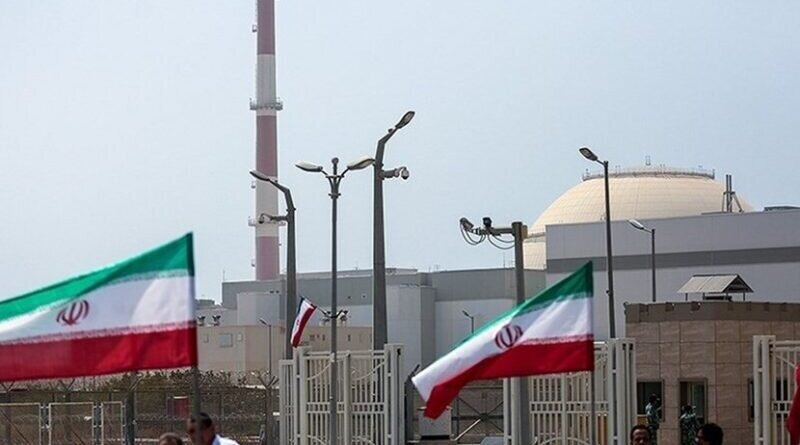
Grossi’s remarks came amid continued scrutiny over the Agency’s position following attacks on Iranian nuclear facilities back in June 2025 by Israel and the United States. Though attacks on nuclear sites are a violation of international law, Grossi has so far not issued a formal condemnation of those strikes.
On June 13, 2025, Israel launched a blatant and unprovoked act of aggression against Iran, triggering a 12-day war that killed well over 1,000 people in the country, including military commanders, nuclear scientists, and ordinary civilians. The United States also entered the war directly by bombing three key Iranian nuclear sites – Fodo, Natanz and Isfahan – in grave violation of international law.
In response, the Iranian Armed Forces targeted strategic sites across the occupied territories as well as the al-Udeid air base in Qatar, the largest American military base in West Asia.
After the June war, the Americans changed their tactics and decided to intensify economic sanctions and put pressure on the European trio of Britain, France, and Germany to trigger the snapback mechanism to officially return the sanctions lifted under the 2015 Iran nuclear deal, officially known as the Joint Comprehensive Plan of Action (JCPOA).
The JCPOA was a multilateral international agreement signed between Iran and five permanent members of the United Nations Security Council plus Germany in July 2015. Under the deal, which came into force in January 2016, Iran had agreed, in good faith, to limits on its nuclear program in exchange for the termination of sanctions.
However, Trump pulled Washington out of the agreement endorsed by the UN Security Council, imposed severe economic sanctions against Tehran while Iran was adhering to the terms of the agreement, and even continued to do so for a year after the U.S. withdrawal.
Elsewhere in his remarks, Grossi stated that the IAEA continues to conduct inspections in Iran, though these do not include facilities that were targeted in the attacks. He added that Iran must respect the authority of the IAEA.
He further claimed that the 12-day war fundamentally altered Iran’s nuclear landscape, arguing that the equation has changed not only in terms of capabilities but also regarding infrastructure that no longer exists or has been severely damaged.
According to Grossi, the IAEA returned to Iran after the June war. He noted that inspectors were able to access and review facilities, except for locations that had been bombed.
While acknowledging some level of progress in cooperation with Tehran, Grossi emphasized that further verification measures are required. He concluded that reaching a new agreement with Iran on nuclear inspections is possible, but described the process as very difficult.
Disclaimer : This story is auto aggregated by a computer programme and has not been created or edited by DOWNTHENEWS. Publisher: tehrantimes.com