
When do you actually need to file a tax return in Germany, and when can you safely skip it? The Local spoke to a tax lawyer to unpack exactly when filing pays off for foreign residents.
It’s mid-March: By now, all employees in Germany should have received their annual payslip (Lohnsteuerbescheinigung) for the 2025 tax year, which shows how much tax was withheld and why.
Most people (those without tax advisors) have until Friday, July 31st to decide whether they need to file a return, whether it is financially worthwhile – or if they should seek professional help.
To understand how these decisions play out in practice, The Local spoke to Mahmoud Achour, a Berlin‑based lawyer and specialist attorney for tax law, who works with foreigners navigating Germany’s tax system every day.
“The foreign residents who come to me always ask the same questions,” Achour explained.
Here we share his answers to these top questions, to help clear up your confusion.
Do I need to file a tax return in Germany?
For many foreign residents, the most important thing to know is that you may not need to file a tax return at all.
Germany’s wage tax system is designed so that employees in straightforward situations should have the the correct amount of tax withheld automatically each month.
“If you just have employment income, and you’re in tax class I or tax class IV, then you don’t have to declare taxes,” Achour explained. “Tax class I is single, IV is married. In those cases, everything is already paid through your salary.”
READ ALSO: Why Germany’s tax system could be putting women off marriage
For married couples where both partners are employed, Achour generally recommends tax class IV. Under this setup, filing a tax return is still not strictly required – and the tax office will automatically refund overpayments where applicable.
“If one partner earns more than the other, IV often means you get money back at the end of the year,” he said. “It’s like a savings plan. You pay a bit more each month, and then you’re happy when the refund comes in.”
The alternative – opting for a III / V split when one partner earns significantly more – means couples are obliged to file a tax return.
“If you work in class III, you have to declare taxes anyway,” Achour explained. “And normally you pay less tax than you should during the year – so you pay on top later.”
Who is obliged to file a tax return in Germany?
“If you are self‑employed, or you have rental income, or income from abroad, then you have to file a tax declaration,” Achour said.
“The same applies if you receive wage replacement benefits, or if you’re married and working in tax class III,” he added.
In all of these situations, failing to submit a return can lead to late fees, penalty payments and – in serious cases – further enforcement measures by the tax office.
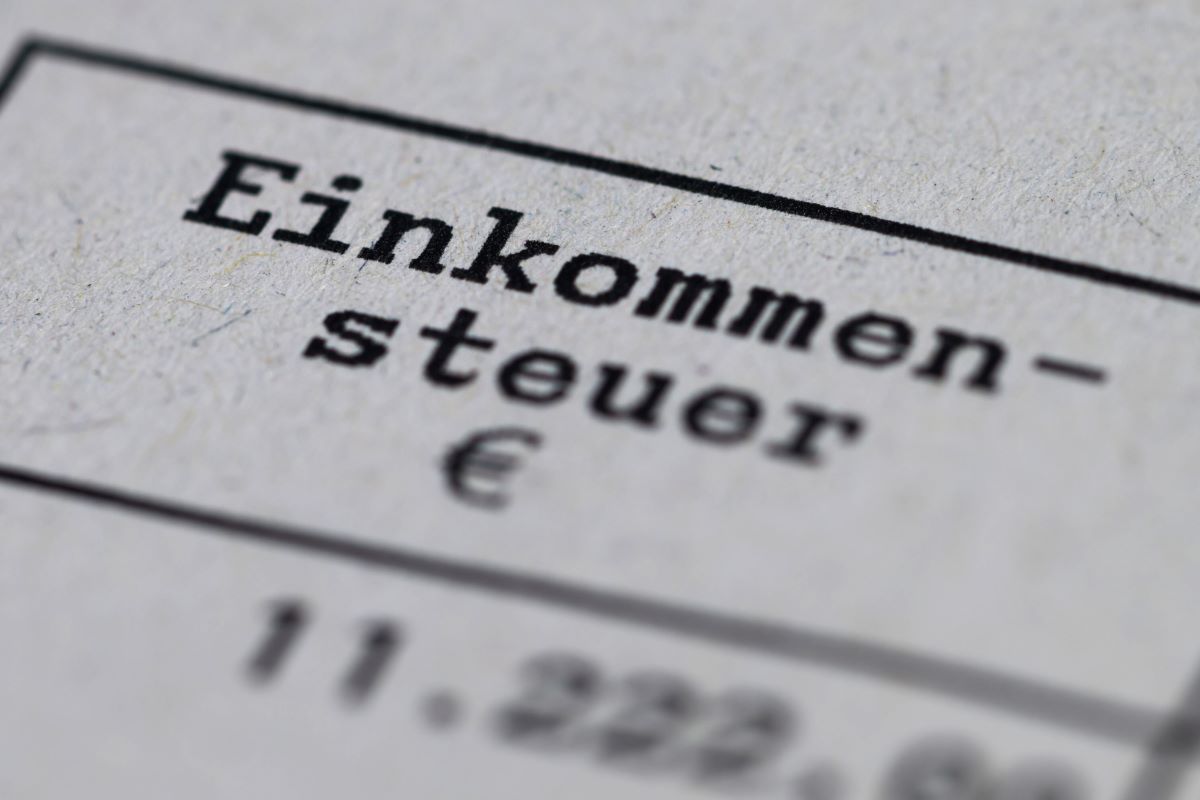
‘Income Tax’. Photo: picture alliance/dpa | Robert Michael
READ ALSO: How does Germany’s highest income tax rate compare to other countries?
‘People think if it’s abroad, nobody knows’
One of the most persistent myths Achour encounters is the belief that income earned abroad is invisible to the German tax authorities.
“People think if it’s abroad, nobody knows,” he said. “That’s not true anymore.”
Germany participates in extensive international data‑sharing agreements. When you open a bank or investment account – whether in Germany or abroad – you are usually required to provide your tax identification number.
“And they send the information directly to the tax office,” Achour explained.
This exchange of information is not limited to Europe.
“There are OECD agreements covering countries worldwide, including Dubai, Abu Dhabi and Cyprus,” Achour said.
“One day, you’ll get a letter from the German tax office saying: ‘We know you have a bank account in Dubai. Tell us what kind of account it is and what interest you earned’.”
The same logic applies to investments.
“Even when you trade with ETFs, the profit is taxable,” Achour said.
In Germany, capital gains tax is often deducted automatically by banks, meaning that many people are compliant without even realising it. But problems tend to arise when investments are held abroad.
“If you trade in Great Britain, for example, and you don’t declare the profit, this could get you into trouble,” Achour warned.
READ ALSO:
‘Be happy you pay taxes’
For non‑EU citizens in particular, Achour stressed that tax declarations can have benefits beyond compliance with the Finanzamt.
“I always tell artists and freelancers: if you earn money abroad, declare it here,” he said. “It might mean paying tax, but it also helps with residence permits and applications for citizenship.”
German authorities regularly request tax assessments when reviewing residence permits, freelance visas and naturalisation applications – especially for self‑employed residents whose right to stay is often directly tied to their economic activity.
And, Achour added, there is another reason to be positive about paying tax: “It means you earned money.”
Are there other reasons to declare taxes, even when you don’t have to?
Even when foreign residents are not legally obliged to file a tax return, there are situations in which doing so can still make sense – financially, practically and strategically.
One of the clearest examples is having children.
“If you’re in the standard tax class IV, your children won’t appear there at all,” Achour said. “Of course, you can apply separately for the Kinderfreibetrag at the tax office – but in that case, I would recommend filing a tax return.”
Kinderfreibetrag is a tax credit in Germany that reduces the taxable income of parents to compensate for the costs of living, care, upbringing or education of a child.
READ ALSO: What is Germany’s church tax and do you have to pay it?
Investments are another area where filing can be beneficial, even if tax has already been deducted automatically.
“If you trade with ETFs, the profit is taxable,” Achour explained – but automatic deductions are not always optimal.
“For example, if your tax rate is 15 percent you could apply to the tax office and say: I paid 25 percent capital gains tax – please tax my capital gains at my personal tax rate,” he said.
In other words, filing a return can allow employees with lower overall income to reclaim overpaid capital gains tax, even when they’re otherwise not required to submit a declaration.
‘Once you’re in, you’re in’
While some deductions – such as long commuting distances – can make filing worthwhile, Achour cautions against filing purely on the basis of marketing claims.
“There’s a lot of advertising saying: file a tax return and you get €1,000 back, but that’s not necessarily correct,” he said.
What’s more, declaring once can create an ongoing obligation.
“Once you’re in the system, you’re in,” as Achour put it.
READ ALSO: When do you owe taxes on crypto trades in Germany?
For that reason, he urges foreign residents to think carefully – or check with a professional – before filing voluntarily for the first time. Otherwise, they may find themselves submitting annual declarations for years to come, just for the sake of a few euros.
“Most problems come from not knowing the system, not from the system itself,” concluded Achour.
Disclaimer : This story is auto aggregated by a computer programme and has not been created or edited by DOWNTHENEWS. Publisher: thelocal.de



