
Oil was at $109 this morning after rising above $111 earlier in the day. S&P 500 futures were flat this morning. The index rose 0.44% yesterday. Europe and Asia were relatively calm: Stoxx Europe 600 was up 0.64% and the UK’s FTSE 100 was up 0.25% in early trading. Japan’s Nikkei 225 was flat.
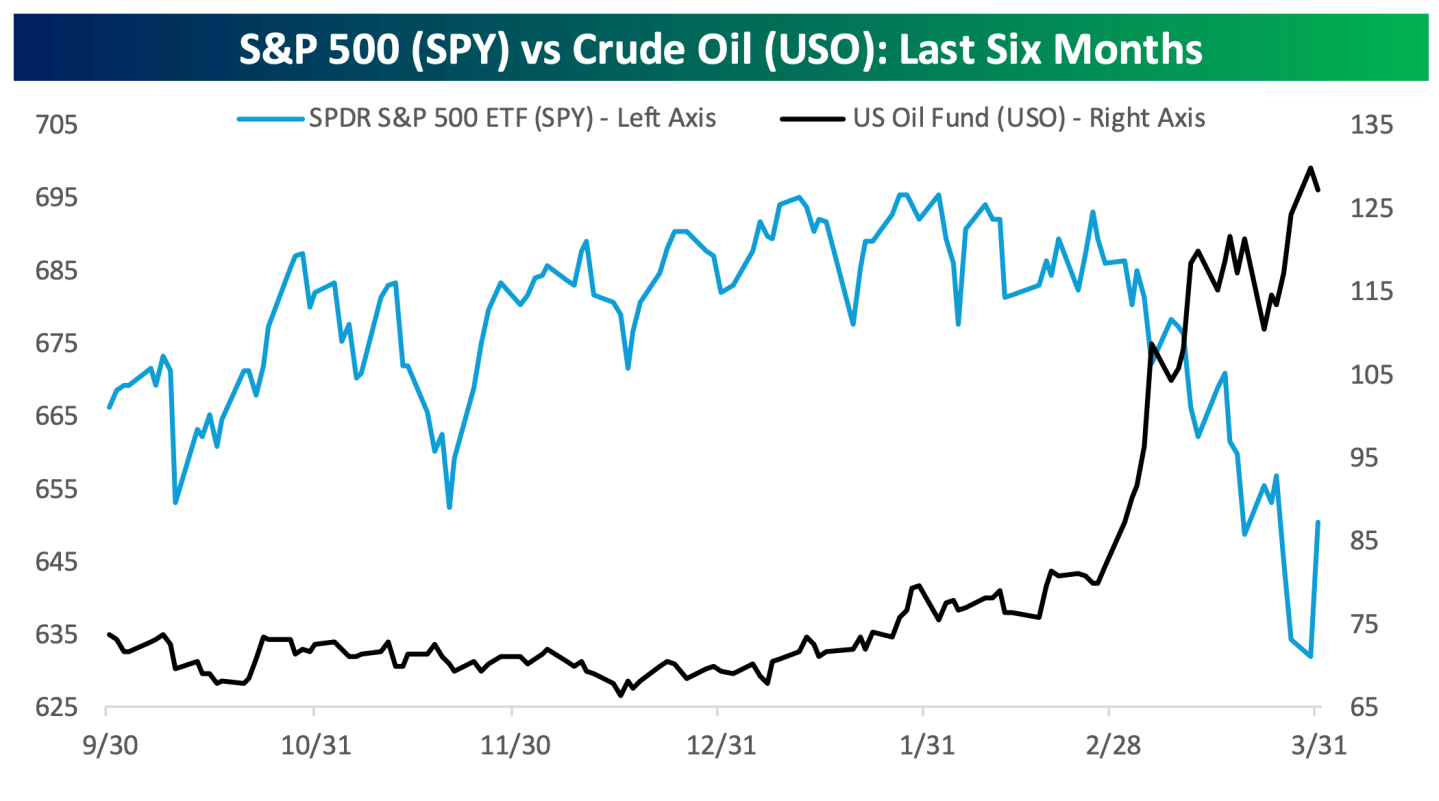
When oil goes up, stocks go down: This chart from Bespoke Investment Group showing the price of oil vs the S&P 500 through Q1 says it all:
ONE BIG THING
EXCLUSIVE: Anthropic’s economics chief talks about the jobs that could be killed by AI
More than 90% of the work done by tech and finance workers could—in theory—be replaced by AI, according to data published by Anthropic. But AI adoption in many industries is lower than expected, Peter McCrory, head of economics at Anthropic, told Fortune. “I was somewhat surprised that the gap between sort of coding in general, which as we point out had something like 94% theoretical exposure, but then based on actual adoption, it was closer to 30% of the tasks across all the jobs in that pocket of the economy,” he said.
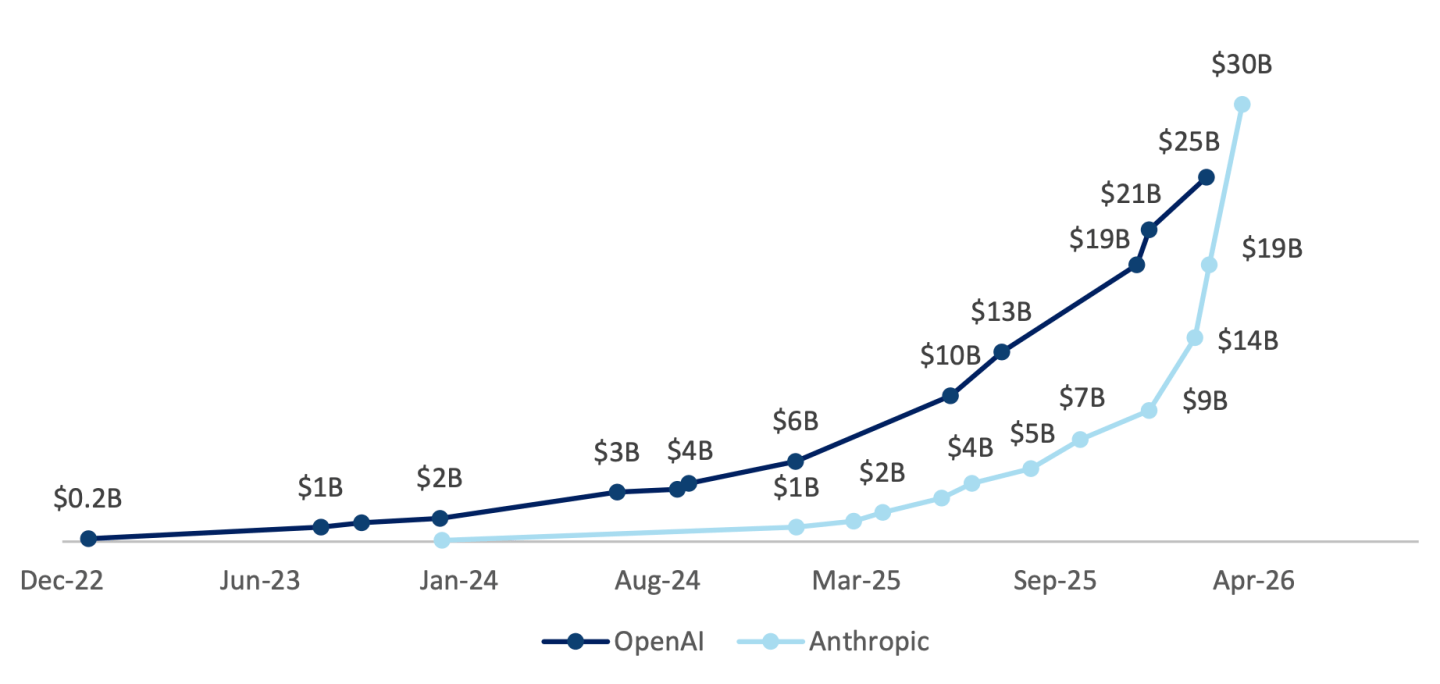
Anthropic’s annual recurring revenue has surpassed OpenAI’s for the first time, according to research from Jefferies analysts Brent Thill and Maximilian Joseph:
IRAN
No end in sight as we approach Trump’s 8 p.m. deadline for a deal with Iran
Negotiators on both sides of the Iran conflict are pessimistic that they will come to an accord before President Trump’s latest deadline for a deal expires at 8 p.m. this evening. Trump has threatened to bomb Iran’s civilian infrastructure—bridges, power plants, and so on—if Tehran doesn’t propose something acceptable to him. Trump has set, and then extended, deadlines multiple times. The Iranians don’t believe that Trump will let up in his missile assault on the country, the Wall Street Journal reports.
Trump has said “the entire country” of Iran “can be taken out in one night.” One way to do that would be with BLU-114/B bombs, according to Fortune’s Eva Roytburg. The bombs don’t destroy power infrastructure with explosives. Instead they release clouds of chemically treated carbon fiber filaments that drape over transformers and high-voltage lines, causing short circuits that cascade throughout the grid.
- Israel warned Iranians not to board trains today. In a social media post written in Farsi, the IDF urged civilians to not travel by train until 9 p.m. this evening local time. Strikes continued today on sites in Bahrain, Lebanon, Iran, and Saudi Arabia, per the BBC’s live coverage.
- Britain hosts a meeting of 40 countries today in hopes of finding a way to reopen the Strait of Hormuz.
NOT AGAIN, PLEASE
Cicada: The creepy new name of the latest COVID mutation
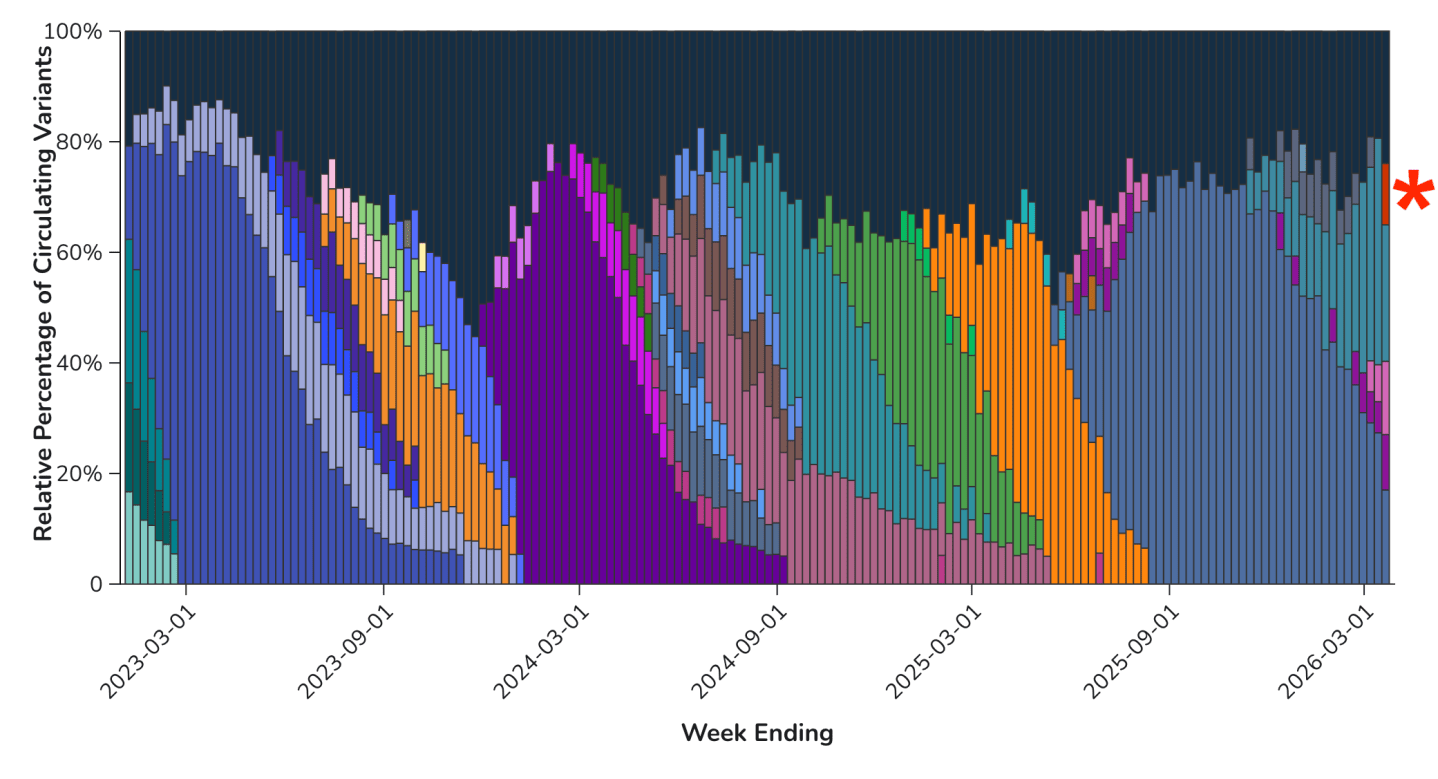
See that tiny block of red data on the far right of this CDC chart, which I have helpfully marked with an asterisk? That’s a new strain of COVID called “Cicada” (officially BA.3.2) which “has a highly mutated genetic sequence that some experts fear could enable it to evade some of our immunity from vaccination or a past COVID infection,” according to Katelyn Jetelina, the respected author of the YLE epidemiology Substack. Although Cicada is spreading fast—23 countries so far—it has not led to a significant wave of new COVID cases…yet.
Why is it called “Cicada”? Because the variant, descended from an ancestor first detected in 2022, has been underground for years, according to T. Ryan Gregory a professor of evolutionary biology at the University of Guelph in Ontario.
MORE FROM FORTUNE
Sam Altman says AI superintelligence is so big that we need a ‘New Deal.’ Critics say OpenAI’s policy ideas are a cover for ‘regulatory nihilism’ – Sharon Goldman
JPMorgan CEO Jamie Dimon predicts AI will cut the workweek down to 3.5 days—and tells Gen Z developing EQ is more important than ever – Emma Burleigh
A quantum threat to Bitcoin has some asking the unthinkable: Is it time to freeze old wallets belonging to Satoshi Nakamoto? – Jeff John Roberts
AI is cutting 16,000 U.S. jobs a month—and Gen Z is taking the brunt, Goldman Sachs says – Nick Lichtenberg
Fidji Simo’s medical leave from OpenAI puts a spotlight on one of the most expansive roles in tech – Emma Hinchliffe
CHART OF THE DAY
Private capital investment in decline
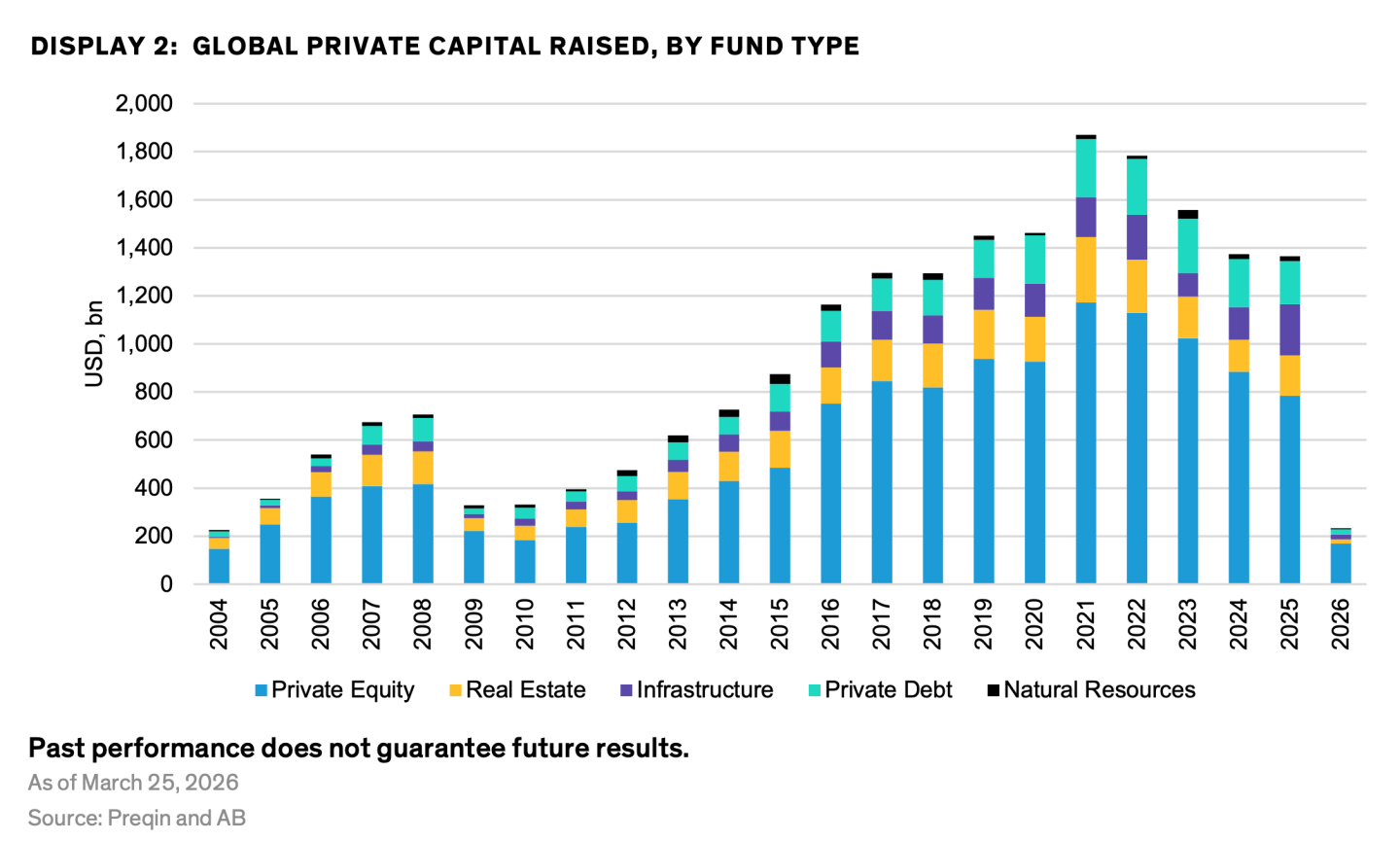
“It is clear from looking at capital raising in recent years that the flows into direct lending and core private-equity funds have already started to contract. The global capital raised for private debt and private equity in 2025 was 11% less than in 2024, while capital raised for venture and buyout funds was down 21% and 16%, respectively,” according to Alliance Bernstein’s Inigo Fraser Jenkins and Alla Harmsworth.
NUMBER OF THE DAY
21.4%
The year-on-year increase in household spending on gasoline via credit and debit cards, according to March data published by Shruti Mishra and Aditya Bhave of Bank of America.
THE FRONT PAGES TODAY
Bill Ackman’s Pershing Square offers €55bn to buy Universal Music Group – FT
SpaceX lays out IPO details, targets early June roadshow – CNBC
MAGA’s global model faces existential test in Hungary – Axios
The Workers Opting to Retire Instead of Taking on AI – WSJ
Supreme Court Clears Way for Dismissal of Bannon Conviction – NYT
ONE MORE THING
The Iran war will not trigger a ‘rip to the upside,’ Piper Sandler says
In a pithy, single-paragraph note to clients titled “Hormuz Is Your Problem,” on what might happen in the markets once the Iran war is concluded, Piper Sandler’s head of U.S. policy research, Andy Laperriere, warned that the Iraq wars of 23 and 35 years ago will be no guide to traders.
“We have been perplexed by the number of people drawing parallels to the 1991 and 2003 wars against Iraq and assuming it is only a matter of time before stocks rip to the upside (as they did after both of those wars). Unlike those conflicts, the result is not going to be a resounding U.S. military victory in which the enemy is thoroughly vanquished. Moreover, unlike in those other conflicts, a lot more damage to energy infrastructure has occurred, a lot more energy production has ceased, the flow of oil has been massively disrupted, and an opening of the Strait of Hormuz is far from assured anytime soon,” he wrote.
As for President Trump’s belief that the Strait of Hormuz “will open up naturally” once his assault on Tehran is over: “That seems optimistic,” Laperriere said.
Disclaimer : This story is auto aggregated by a computer programme and has not been created or edited by DOWNTHENEWS. Publisher: fortune.com






