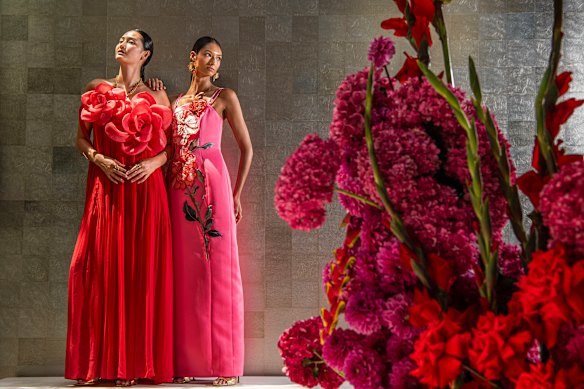
In 2026, China is having a moment in the Western fashion imagination.
Dior’s Fall 2026 menswear show and Valentino’s Spring 2026 couture collection both referenced Paul Poiret, a French designer whose work was heavily influenced by Asian art and culture.
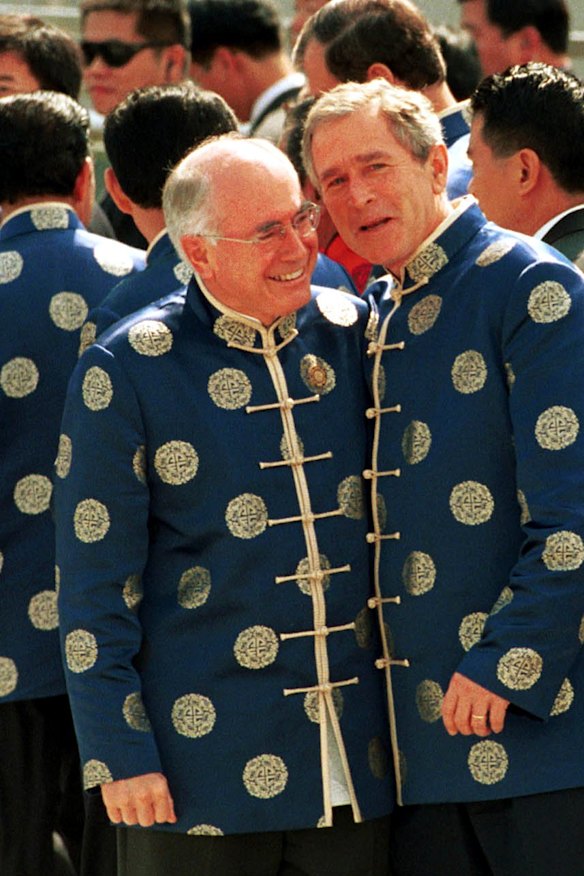
At Shanghai Fashion Week in October, Adidas presented a streetwear interpretation of the Tang jacket – a simple style dating back to the Qing dynasty characterised by a Mandarin collar and knot buttons (pankou). Initially available only in China, the suede style quickly sold out (spawning countless imitations) and recently became available in Europe.
The Tang jacket (often mistakenly referred to as the “Mandarin” jacket) has become a standout style of the season, with Dutch brand Rohe creating various interpretations. Brocade, embroidery, fringe and frog closures have also featured heavily on Pinterest boards, runways and social media feeds.
And it’s not just fashion.
On social media, users are sharing videos of themselves adopting “Chinese” practices, such as drinking hot water with ginger and wearing slippers around the house, and writing “you’ve met me at a very Chinese time in my life” (a reference to Fight Club) and “#chinesebaddie”.
So, what’s driving this cultural “Easternisation”? What’s the line between cultural appropriation and appreciation? And what does this mean for Chinese-Australian designers?
Trent Rigby, director of Retail Customer Advisory, says the sphere of influence has shifted.
“A few years ago, ‘Chinese made’ wasn’t something you would really promote or necessarily be proud of, but over the last few years we’ve seen real growth in Chinese brands, not just with fashion but in the broader market,” he says, pointing to Huawei, Chinese EVs and toy company Pop Mart, spurred by their trending Labubu dolls last year.
One reason for this is China’s economy – the second largest by GDP in the world – creating a “massive consumption engine”, Rigby says.
Then there’s Gen Z, both in mainland China and abroad, whose growing purchasing power is driving demand.
“You’ve got that growing patriotism among younger Chinese consumers and more pride in local brands,” he says, adding that social media and influencer culture from China are spurring the change.
Australian brands are taking note.
Rigby says he’s working with retailers who are investing significant marketing dollars to reach consumers (locally and abroad) on Chinese social networking platform Xiaohongshu (or RedNote).
Others, he says, are taking inspiration from Chinese streetwear to inform their own designs.
Lunar New Year
Lunar New Year has become a key event on the retail calendar, with brands releasing themed collections and extensive marketing campaigns to appeal to customers in mainland China and abroad.
This year, brands from Bonds to Prada, Marimekko to Chanel have ushered in the Year of the Horse.
For Australian womenswear brand Leo Lin, whose eponymous founder moved to Sydney from Dalian, China in his teens, honouring the holiday is a natural part of the brand’s DNA.
“We were quite early to the [Lunar New Year] game on from a [luxury fashion] perspective,” says Laura Good, the label’s head of brand.
“We have stayed within the space for a long time because there’s such a high density of [Asian] customers … it’s really important to establish ourselves as the go-to destination for Lunar New Year dressing.”
Leo Lin’s capsule collection for the Year of the Snake sold out. This year it has doubled down, with a new collection, limited edition Mahjong set and collaboration with Singapore-founded hotel Capella in Sydney.
Good says many of the label’s customers are of Asian descent, for whom the brand’s craftsmanship and design form a deeper meaning.
Given that Chinese shoppers make up two-thirds of purchases in the luxury Australian market, it makes sense for brands to tap this significant holiday.
But the way brands approach the holiday matters.
In 2018, a Dolce & Gabbana marketing campaign featuring models struggling to eat pasta and pizza with chopsticks was heavily criticised for its racist tone. The fallout from the controversy was huge, with the brand forced to cancel its Shanghai fashion show and pulled from various retailers.
Fashion and ‘Orientalist chic’
“Chinese Orientalism is very complicated, but dates back a few hundred years and has been filtered down through this Western imagination of what they think China is,” says Faith Cooper, a fashion historian and founder of the Asian Fashion Archive.
From Marco Polo’s travels down the Silk Road to Paul Poiret’s 1920s designs, China has long been a source of exoticism, Cooper says.
In the ’90s and early 2000s, the qipao, or cheongsam, were common sights on the red carpet – which Cooper points out tended to be sexualised versions of a garment with deep meaning for many Chinese people.
“People will justify it saying, well, ‘it’s fashion, it’s supposed to be fantasy’, but no, what are the implications of these Orientalist images?” asks Cooper.
Indeed, the implications are central to conversations about cultural appropriation – when a dominant group, like the West, takes things from a minority culture, which has historically experienced oppression.
‘China’s economic and technological visibility is challenging this older, Western-centric idea of modernity, and fashion is reflected in that.’Fashion historian Faith Cooper
Who benefits when aesthetic elements of a culture become a trend, and who loses out? In light of the recent popularity of Chinese culture, some online users have pointed to the racism members of the Chinese diaspora continue to face, such as the anti-China attacks many experienced during the pandemic.
“It depends on the power dynamics, intention and context,” Cooper says.
“If you’re looking at European designers through an Orientalist lens, like the 1920s, that was an aesthetic fantasy of using Chinese motifs as decorative fuel without engaging China as a contemporary creative equal.”
Last year, fearing a potential TikTok ban, many US users flocked to Chinese social media app RedNote, which Cooper sees as the first time many Americans experienced a non-Western social media culture.
“It really was a broader move from this idea of an exotic spectacle through a Western lens to peer-to-peer exchange.”
‘When you walk out the door, people see you as different’
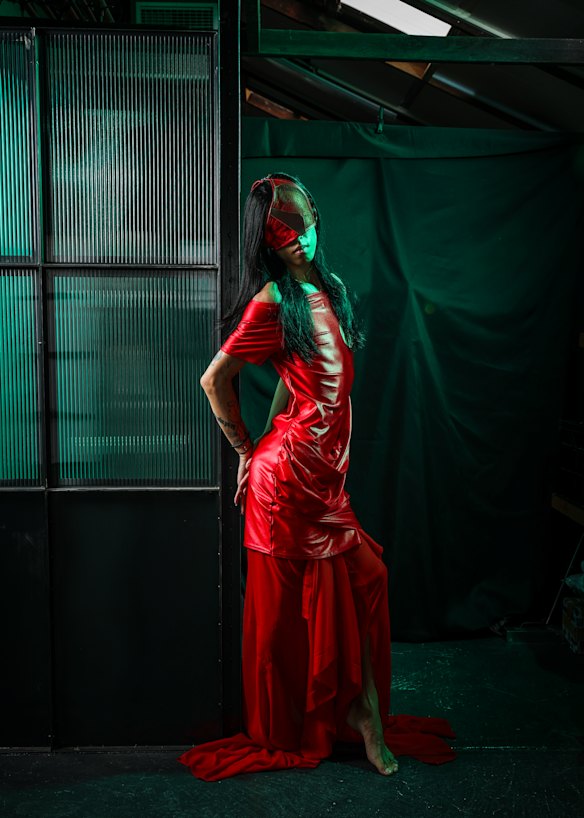
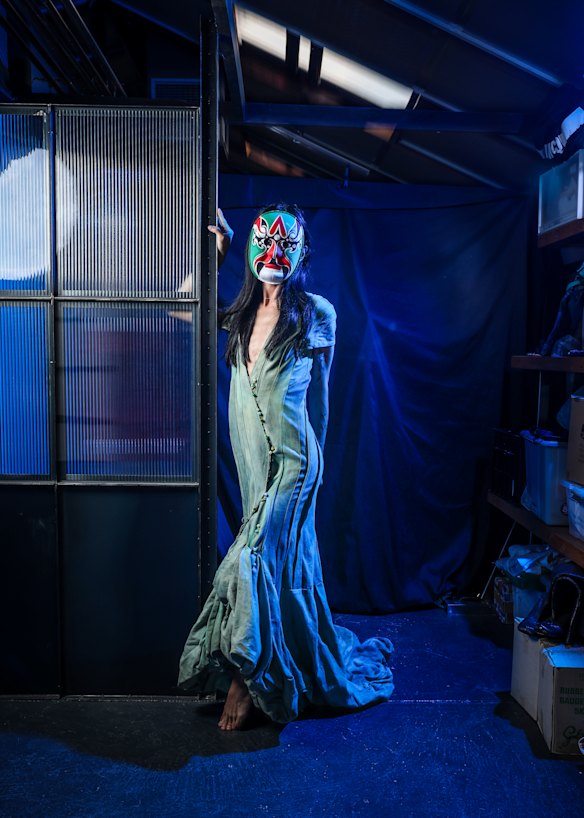
Melbourne designer Jackie Wu grew up in Beijing and moved to Australia to study fashion at RMIT. She describes her brand, Wackie Ju, as a “multidisciplinary fashion art label”.
Her collection Saviour, which debuted at Australian Fashion Week in 2024 (and some of which will be on display at the Melbourne Fashion Festival later this month), drew inspiration from Yuanmingyuan in Beijing, or the Old Summer Palace. During the Second Opium War, the palace was pillaged and burned to the ground by British and French forces.
For Jackie, who grew up visiting Yuanmingyuan, what remains of the palace is a beautiful celebration of the hybrid of Chinese and baroque architecture.
“Historically, the invasion was marked as saving innocent civilians from the, quote, ‘evil’ Qing dynasty’s hands,” she says, noting the “white saviour complex” that still exists today in negative media portrayals of China.
While she says growing awareness of her culture is beautiful to witness, it’s also complex, due to colonial history and imperial fantasies of China.
Her Saviour collection was the first time she explicitly referenced her heritage in her work – something Chinese designers in the West are often expected to do.
“Earlier in my career, I did get some opportunities being only recognised as a trans person or a Chinese person,” she says.
“You’re just you, you’re doing what you’re doing, and you live authentically. But when you walk out the door, people see you as different, and that’s the separation.”
‘If I could make it tangible, I could understand it’
Sydney designer Xixi Wu moved to Australia when she was five.
“Growing up, I always felt caught between cultures; not quite Australian, but not fully Chinese either … that sense of being in between shaped how I understood identity from a young age,” she says.
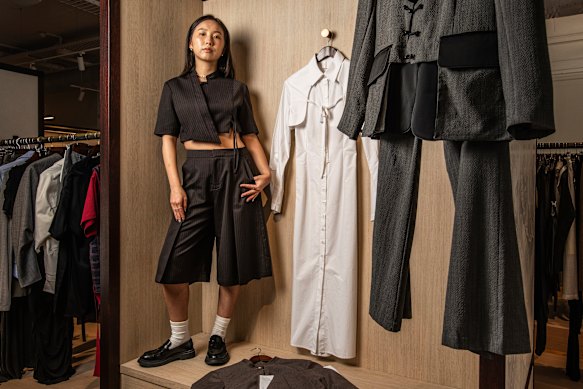
Studying textiles at the University of Technology, Xixi initially shied away from referencing her heritage.
“I avoided textiles references or colours – such as quilting, patching, mandarin collars, the usage of red – that I see and identify as Chinese as they reminded me of my upbringing. I had felt a sense of pressure to reject these due to the negative connotations that I associated with them, like ‘old-fashioned’ and ‘backwards’.”
Her contemporary, ready-to-wear pieces marry Chinese silhouettes and techniques with Western ones.
“In Chinese culture, clothing is more flat and modest. It’s to conceal your body, whereas in Western culture, it’s more about individuality … so it’s about how can you play with those ideas, so maybe a jacket, but with higher slits, or maybe it’s more cropped,” she says.
Her designs – sold under her eponymous label Xi Wu Studio – embody this reconciliation of East and West.
“Xi Wu Studio began as a way to make sense of my bicultural identity,” she says. “Designing was the method of internal negotiation where, if I could make it tangible, I could understand it.”
Make the most of your health, relationships, fitness and nutrition with our Live Well newsletter. Get it in your inbox every Monday.
Disclaimer : This story is auto aggregated by a computer programme and has not been created or edited by DOWNTHENEWS. Publisher: www.smh.com.au