On the industrial edges of Australia’s biggest cities, a new skyline has been rising – not of gleaming glass office towers, but of massive, windowless cylinders. Some stretch 50 metres wide and soar 10 storeys high. Each is filled to the top with tens of millions of litres of fuel.
As the conflict in Iran throttles global oil supplies and ignites a contagion of long queues and panic-buying at Australian petrol stations, these hulking steel mega-tanks, many of which were built only in the past few years, represent one of the last lines of defence against the risk of crippling energy shortfalls.
All told, Australia has 36 days’ supply of petrol, 34 days’ of diesel and 32 days’ of jet fuel stashed at facilities across the country, the government has confirmed.
“We are in a very uncertain time internationally,” Energy Minister Chris Bowen says. “But we enter this crisis very well prepared.”
The numbers partly support his optimism: national stockpile levels are the highest they have been 15 years. It’s a turnaround that has not been by happy accident, Bowen says; rather, it is the result of a concerted years-long push to quietly build a fortress against the very kind of shock now unfolding in the Middle East.
This has included co-investing in giant new storage infrastructure and introducing strict mandates for refiners and importers to maintain a baseline of physical fuel stock on Australian soil.
But in a war that’s disrupting a fifth of the world’s oil exports with still no end in sight, nerves are running high — motorists and farmers in some corners of the country have been racing to fill jerry cans while independent fuel suppliers are struggling to fill orders.
At the Riverstone Petroleum service station in Blacktown, NSW, the console operator has had to shut off bowser access for customers attempting to fill up more than their vehicle’s tank. “They became angry, and we tried to explain the situation to them,” says the store’s manager, who asked not to be named. “We have to maintain fairness for everyone … especially in this situation.”
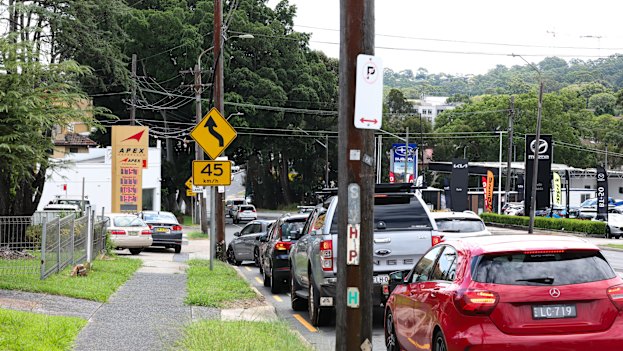
Despite the recent gains, national fuel stocks remain below where some argue they need to be, as well as in breach of an International Energy Agency requirement for member countries to hold emergency fuel reserves equivalent to 90 days of net imports. As alarm continues building over the war in the Middle East, uncomfortable questions are growing, too, about Australia’s fuel security – including its diminished oil-refining capacity, its reliance on imports for 90 per cent of its liquid fuel needs, and whether the government’s minimum stockholding obligations provide enough protection in the event of a crisis.
“It’s like insurance: the more you have, the better,” says Peter Khoury, spokesman for the National Roads and Motorists Association. However, 34 days of diesel doesn’t mean we will run out of petrol in that time, he notes. What it means is that we will run out if nothing else arrives, and there appears little danger of that yet. So far, all expected shipments of fuel deliveries have arrived here on schedule, and Australia benefits from sourcing its oil and refined fuel from a wide array of regions, not just the Middle East. The tankers have “never stopped coming completely”, Khoury says. Whether it’s worth spending billions of dollars of taxpayer money boosting storage capacity by extra weeks or months is a matter that’s open for debate.
“Do we increase our reserves knowing that we have never had to really use them?” says Khoury.
It’s a question that has nagged successive federal governments for 20 years or more. “And there’s no right answer,” says Tony Wood, senior fellow at the Grattan Institute. “It’s only enough when we don’t run out, and if it turns out we don’t need it then it’s too much,” he says.
Australia has added about 300 million litres of diesel storage capacity since 2021, with new tanks springing up across refineries and port terminals in Victoria, NSW, South Australia and WA. “We are actually in a better position than we have been for years,” Wood says.
But few commodities affect consumers as much as oil – the natural resource that’s refined into petrol for the cars we drive and diesel for the freight trucks that move goods across the country – meaning the economic stakes could hardly be higher. A growing number of experts agree the geopolitical risks to oil markets have never been this severe, including the 1970s when Arab oil producers imposed an embargo, which restricted supplies to much of the world.
Simon Flowers, chief analyst at global consultancy Wood Mackenzie, describes the current disruption caused by Iran’s effective blockade of the Strait of Hormuz, a shipping lane that usually caters for 20 per cent of the world’s oil supply and much of its natural gas, as “unprecedented” in its scale. Multiple oil refineries in the region have also been shut down or curtailed output after sustaining attacks.
“Much will depend on how long the war lasts, how long the Strait of Hormuz remains closed and if the US Navy can ensure safe passage of vessels by escorting shipping,” Flowers says.
International oil prices have soared from less than $US72 a barrel before the outbreak of the war to nearly $US120 for the first time in years, pushing the cost of fuel higher.
The longer the disruption lasts, the greater the risk will be for Australians at the petrol pump, experts say. As a rule of thumb, if prices continue rising, each $US10-a-barrel rise could add 10¢ a litre to the price of regular unleaded at the bowser.
Price data compiled by the NRMA revealed Australia’s wholesale fuel prices, known as terminal-gate prices, officially notched their highest levels on record on Wednesday. Wholesales regular unleaded jumped 7.58c per litre to $2.04, while diesel shot up 11.85c per litre to $2.43.
While higher retail prices for consumers are inevitable, motoring groups including the NRMA have raised concerns in the past week that some petrol stations may be using the war in Iran as a smokescreen to hike prices prematurely. Experts and officials say higher prices of Tapis crude, Australia’s regional oil benchmark, are meant to take between seven and 10 days to flow through to Australian service stations.
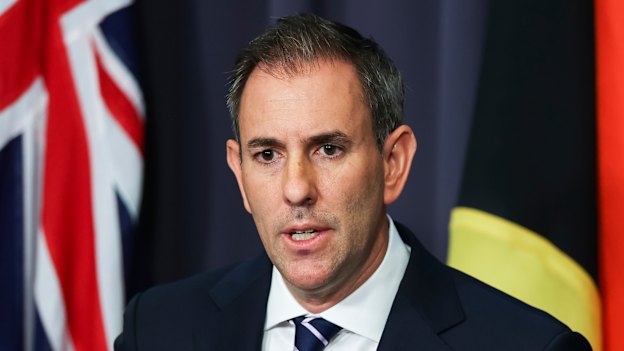
Treasurer Jim Chalmers wrote on Tuesday to the Australian Competition and Consumer Commission, instructing it to monitor petrol price-gouging by petrol stations. “Unfolding events should not be used as an excuse for retailers to gouge customers or to increase prices opportunistically,” he said.
On Wednesday, the ACCC said it had convened urgent meetings with fuel companies to seek “more detailed explanations” about their recent price movements. “We are closely watching market behaviour, and if there is conduct that is collusive or misleading or deceptive, we will investigate it and take action where appropriate,” Commissioner Anna Brakey said.
US President Donald Trump insists “short-term oil prices” are a “very small price to pay” for the US, world safety and peace, and has claimed prices would “drop rapidly when the destruction of the Iran nuclear threat is over”.
Some analysts, however, are not so sure, warning that global energy supplies do not have an “on” switch. And once prices start spiking, they can be difficult to bring back down. “When the conflict ends, cranking up the supply chain won’t be swift,” says Flowers. “Product barrels in storage at refineries or in port might be moved on vessels quite quickly – but if wells are shut in for a prolonged period, restarting production to full output could take weeks or even longer.”
For now, the fuel tankers are still arriving, and Australia’s strategic storage tanks are sitting full. But as the crisis in the Middle East enters a volatile next phase with no clear end in view, even a record-breaking stockpile may prove only a temporary buffer for a nation at the end of one of the world’s longest supply chains.
The Market Recap newsletter is a wrap of the day’s trading. Get it each weekday afternoon.
Disclaimer : This story is auto aggregated by a computer programme and has not been created or edited by DOWNTHENEWS. Publisher: www.smh.com.au