Key posts
‘She just thinks it’s a bit silly’: Kids react to the ban
By Liam Mannix
Lauren Munro’s kids, Hayley and Emma, don’t seem to have been affected by the ban yet – either because it didn’t stop them from doing what they wanted to do, or it didn’t work.
Emma, 14, has been able to access Instagram. “She hasn’t been blocked. Maybe it’s a slow process? No idea.”
She’s also able to access TikTok and watch videos, but not post reels or make comments – which she wasn’t doing anyway.
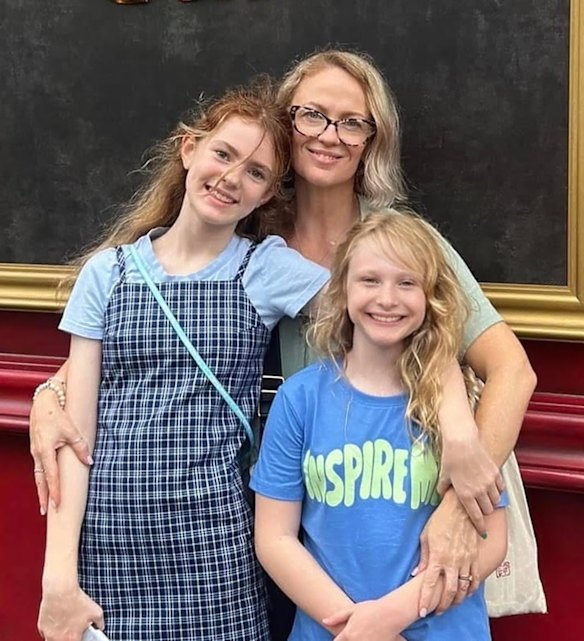
Lauren Munro and her daughters, Hayley and Emma.
“She’s not angry or upset. She just thinks it’s a bit silly,” Munro said.
“With Snapchat, I think that one, they do a scan of your face. And she got through.
“I’m actually kind of glad they can’t do any chatting, to be honest. That gives me a bit more relief – I don’t need to police it as much. Because I always have to make sure no one is talking to them that shouldn’t be.”
Does the social media ban go far enough?
By Bronte Gossling
Chanel Contos, chief executive and founder of Teach Us Consent, says the social media ban is an important first step to prevent young people from harm, but there is an opportunity to do more.
Teach Us Consent last week launched “Fix Our Feeds”, a campaign calling for the federal government to introduce an opt-in feature for social media algorithms.
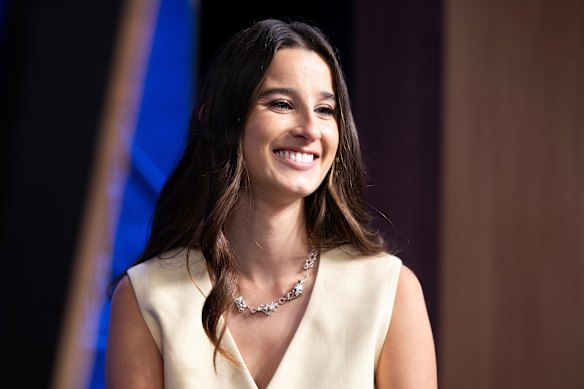
Chanel Contos, founder of Teach Us Consent.Credit: Alex Ellinghausen
An algorithm is a set of rules that platforms use to organise content and decide what users can see on their social media feeds, and the order the content is presented in.
“Algorithms are fuelling misogyny, which contributes to our national crisis of gender-based violence in Australia. We can’t ignore the research,” says Contos.
“There’s a common misconception that young men and boys are seeking out misogynistic content. But the reality is that, for the most part, they’re being targeted by predatory algorithms promoting extreme material.”
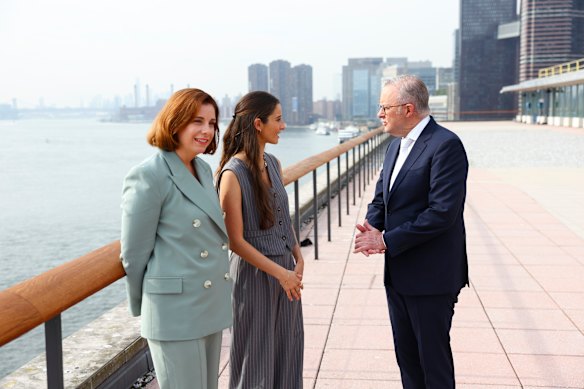
Chanel Contos (centre) travelled to New York City with Communications Minister Anika Wells and Prime Minister Anthony Albanese in September. The trio were there to promote the social media ban at the United Nations.Credit: Dominic Lorrimer
An experiment conducted by this masthead on TikTok in August revealed sexualised content, misogynistic messaging and videos themed around death appeared within the first three minutes of scrolling.
An open letter to Prime Minister Anthony Albanese from Contos, co-signed by former prime minister Malcolm Turnbull, activist Tarang Chawla, media personality Abbie Chatfield and others, reached more than 5400 signatures of its goal of 7500 in seven days.
Mum says ‘clever’ kids will find a workaround
By Liam Mannix
Jackie Bondell’s son, Colin, is a moderate social media user. “Not so much for sharing stuff. But he and his friends use Discord a lot for chatting, especially when playing video games. And he just watches YouTube shorts – mostly people playing video games.” (Discord is not included in the ban.)
Discord is not included in the social media ban and is widely used by teenagers.Credit: AP
“For him, I feel it’s a fairly good thing, with how he uses it. He’s generally using it to stay in contact with his friends, especially when they’re spread apart – it’s how they socialise,” she says.
“They are carrying on their normal conversations, how we would have done, hanging out in a room with our friends. He’s always chatting with people he knows in real life.”
Bondell still frets over the risks of social media.
“I know it’s a lot easier for AI algorithms to target certain age groups, and to be able to really figure out what’s going to make someone stay online. I worry about that a little bit. That seems to be a bit unregulated. And with kids understanding what the difference is between what’s real, what’s just being done for show, and what’s AI-generated.”
Bondell works in science communication, and says she’s torn on whether the ban is a good thing or not.
“It’s a great way to reach audiences. I also realise there are issues with highly unmonitored, unregulated conversations between people who may not be able to self-regulate. I think more of the onus should be on the social media companies to control how they advertise and how they organise their algorithms.”
Like many, she expects kids to just find a way around it, or turn to even less-regulated social media platforms not covered by the bans. “They are very clever,” she says.
Analysis: Why mental health experts don’t believe the government
By Liam Mannix
You will have heard the claim that social media is bad for teens’ mental health. You may not have heard that a coalition of Australia’s leading youth mental health groups – Black Dog, Beyond Blue, Headspace – are firmly against this ban.
“Parents and carers are rightly worried about the impacts of social media. We are, too, and we agree reform is necessary. But a blanket ban is not the answer. Parents and carers deserve substantial solutions, not a false sense of security,” they said in an open letter in 2024.
Everyone is in agreement that young people’s mental health has profoundly worsened in recent years. Patrick McGorry, one of the world’s leading experts on youth mental health, calls it a crisis.
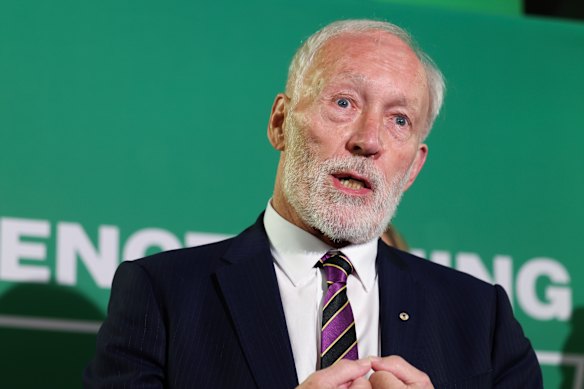
Professor Patrick McGorry.Credit: Alex Ellinghausen
He also says we’re misguided in blaming it all on social media.
“It’s an easy target. A simple explanation,” he told me earlier this year.
It is easy for parents to believe social media is the total cause of their kids’ poor mental health. “But no experts in the youth mental health field believe that. And government did not listen to us when this policy was being formulated,” McGorry says.
You can read our deep-dive into the evidence here. But I just wanted to pull out one key data point: systematic reviews of the evidence on asking people to give up social media – what we’re doing today to everyone aged under 16 – do not suggest it makes a difference to their mental health outcomes.
The evidence-quality is not great. We do need more data. But the way we’re about to get it is by conducting a politically-motivated experiment on a group of Australians who do not vote.
‘Force people to communicate’: The teens not opposing the ban
By Kayla Olaya
Friends Luna Harris, Ava Perilli and Yichen Li are spending the school holidays at Bondi Beach in Sydney. The 14-year-olds don’t have a lot of social media, but have nonetheless been banned from all their accounts.
“When you’re on Snapchat, there’s a lot of things to do, you’re really entertained by it. But because it’s gone now, I spent lot more time on my phone [yesterday] because I’m trying to find things to do,” she said.

Luna Harris, 14 and Ava Perilli, 14, at Bondi Beach. Credit: Louise Kennerley
“I have mixed feelings about the ban, I’m kind of happy it’s happening because people can socialise more. When you go to parties, or you go to events, everyone’s on their phone. There’s nothing to do and nothing to talk about. It’s just so unsocial.”
Ava agrees. She is hardly on social media, and sees the ban as an opportunity to have better connections with her peers.
“I feel like when a lot of people hang out they’ll all be on their phones. I feel like this will force people to communicate,” she said.
Snapchat is the platform children under 16 have grieved the hardest because it’s their most used social media app, Yichen said.
“There are a lot of people who use Snapchat… everyone in the grade pretty much has it,” she said. “Snapchat is really convenient as it sends messages and photos really fast, and you can search anyone up and see whether you have mutuals.”
What we’ve covered so far today
By Ashleigh McMillan
It has been an action-packed day as the nation digests the new social media ban, which keeps Australians under 16 off social media apps, including TikTok, Snapchat and Instagram. Here are the key takeaways from our coverage of the ban so far.
- Social media tech giants had until today, December 10, to implement “reasonable steps” to prevent children from having an account on their platforms, or risk being fined up to $49.5 million.
- Prime Minister Anthony Albanese said it was a “proud day” to be an Australian, as the ban would ultimately give teens their childhoods back.
- According to Communications Minister Anika Wells, more than 200,000 TikTok accounts have already been deactivated.
- Julie Inman Grant, the eSafety commissioner, said her team would report before Christmas whether the ban was working.
- As the onus has been pushed back onto the tech companies to ensure those under 16 are not using their apps, neither teens nor parents will be punished if they circumvent the ban.
- Already, teens have been gloating online about bypassing the ban. You can read here about how to stop the teens in your life from continuing to use social media.
- Counselling service Kids Helpline and Parentline reported a “noticeable increase in contacts” in the past three to four weeks about the social media ban, virtual services manager Tony FitzGerald said.
- Looking internationally, countries including France, Germany and Spain have talked about putting limits on social media for young people. Denmark, however, is moving faster than other European countries and their Digitalisation Minister, Caroline Stage Olsen, has said she was “super envious” of Australia’s new law.
British voters support a ban even more than Australians
By David Crowe
Australian voters strongly back the social media ban, as we’ve shown with our latest Resolve Political Monitor, which found 70 per cent support for the policy.
So how do other countries rate on the same question? The support is slightly higher in one similar country, the United Kingdom, although it is too early to be sure about other parts of Europe.
Polling company YouGov asked 5000 British voters about a social media ban over the past few weeks, without reference to the Australian regime. The question was simple: “Would you support or oppose banning children under the age of 16 from having social media accounts?”
It found that 39 per cent said they “strongly” supported the idea and 35 per cent said they “somewhat” supported it. At 74 per cent, the overall level of support was higher than in Australia. Another 15 per cent were “somewhat” opposed and 4 per cent “strongly” opposed, with the rest undecided.
Voters in other countries are open to tougher rules on social media platforms, but YouGov did not appear to ask them about a specific age ban. “The French are the most likely to think that social media regulations are too relaxed,” the polling firm said. It found that 53 per cent of French voters thought the rules were not strong enough, compared with 47 per cent in the Netherlands, 42 per cent in Germany and 38 per cent in Italy.
Social media ban sets schoolgrounds abuzz
By Liam Mannix
Tania Kaniz is a teacher’s assistant at a high school, and mum to Taihan, 16, and Rehan, 12.
The ban has set the schoolground abuzz, she said.
“They all have it – especially TikTok, if you see it, my God. In high school, mobiles are banned because whenever they can, they are just making reels for TikTok and for Instagram,” Kaniz said.
“Some of them are really anxious [about the ban] … I don’t see anyone who’s really happy. Some of the students are saying, like, ‘They shouldn’t ban it – but I’m OK.’”
Are kids already finding ways around the ban? Kaniz is not sure because mobiles are banned at her school, so there’s no way of her knowing.
“I think they are, but they don’t want to share it with us. So I can’t tell. They are thinking they will figure it out somehow,” she said.
Taihan is 16, so he’s just escaped the ban. “He’s lucky,” Kaniz said. Rehan would have also been affected, but he does not have a social media account – at least as far as his mum knows, anyway.
Ryan’s story: One night without social media
By Kayla Olaya
Fourteen-year-old Ryan Angler has spent nearly an entire day with no social media after he was finally banned from Snapchat yesterday afternoon.
“I was banned from Snapchat, TikTok, Instagram – all of them,” Ryan said, adding that the ban made him realise he didn’t have another way to communicate with friends.
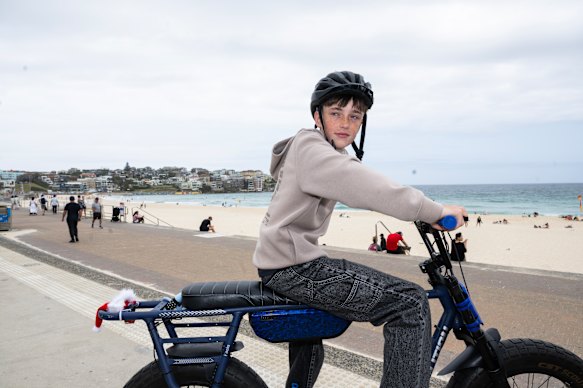
Ryan Angler, 14, rides his bike at Bondi Beach after the social media ban began.Credit: Louise Kennerley
“[After being banned], I just wanted to meet up with all my friends, but I couldn’t really because I don’t have their numbers before we lost social media,” he said. “Now I’m going to try to get all the numbers from school.”
Ryan said he was the most bummed to lose Snapchat, and that he was keen to fish and ride his bike more.
“I’ve just been riding around on my bike, playing games on my computer and laying down on my bed [since the ban] because I couldn’t do anything,” he said.
“I’ll probably do more fishing, I want to do it more. I’m keen to have more time to focus on it.”
In pictures: How the ban was welcomed at Kirribilli House
By Kate Geraghty
Our photographer Kate Geraghty was at Kirribilli House in Sydney this morning for the launch of the national social media ban. See her best photos below.
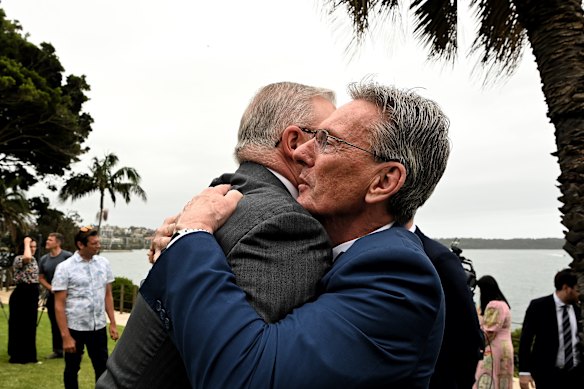
At Kirribilli House, Prime Minister Anthony Albanese embraces Wayne Holdsworth, whose 17-year-old son Mac took his own life after being extorted online.Credit: Kate Geraghty
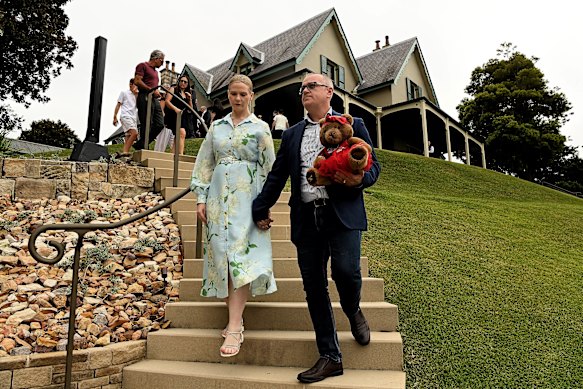
Kelly and Matthew O’Brien, whose daughter Charlotte took her own life as a result of bullying, at an event for families who have lost loved ones due to social media.Credit: Kate Geraghty
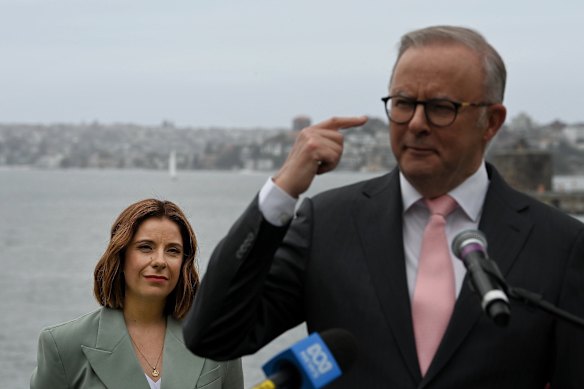
Communications Minister Anika Wells listens to the prime minister speak about the social media ban.Credit: Kate Geraghty
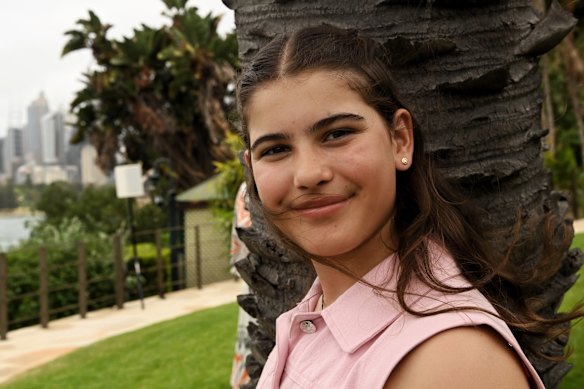
Tasmanian school student Flossie Brodribb, 12, who did a science project on the impact of social media and spoke at an event for families at Kirribilli House.Credit: Kate Geraghty
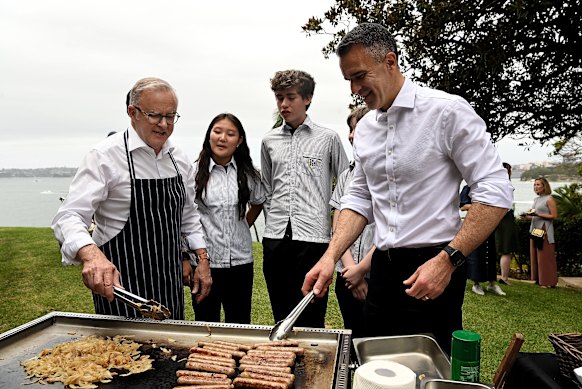
Prime Minister Anthony Albanese and South Australian Premier Peter Malinauskas talk to Inner Sydney High School students over a barbecue.Credit: Kate Geraghty
If you or anyone you know needs support call Kidshelpline 1800 55 1800, Lifeline 131 114, or Beyond Blue 1300 224 636.
Most Viewed in Politics
Disclaimer : This story is auto aggregated by a computer programme and has not been created or edited by DOWNTHENEWS. Publisher: www.smh.com.au