Before artificial intelligence supercharges global productivity, governments will have to deal with an unfortunate reality: the long-awaited economic windfall may be years away, while the bills are coming due now.
Listen to the optimists, and the AI-driven economic boom is at the doorstep. The Penn-Wharton Budget Model projects AI will add 1.5% to GDP and productivity over the next decade. Goldman Sachs says it could add up to three percentage points to productivity every year. By the mid-2030s, AI might increase work output by 20%, according to Vanguard.
For Moody’s Ratings, the global AI productivity boom will be worth 1.5% annually, averaged out across 106 countries, according to a Thursday research note. But in the case of economic growth, governments might have to spend money to make more of it down the line. AI could have significant upsides for productivity, but countries will first have to navigate a complicated and expensive landscape as they create digital infrastructure and support disrupted workforces, Moody’s analysts warned.
The buildout to make AI adoption widespread will likely come with significant upfront costs. For countries that already deal with constrained public finances, AI’s capital costs could end up “sharpening the policy trade-off between assuming higher near-term fiscal risk and delaying participation in AI-driven growth opportunities,” the analysts wrote.
A windfall, delayed
To be sure, AI adoption could come with some serious fiscal benefits for governments, including higher growth, stronger corporate and wealth tax receipts, and sharper tax administration. AI-powered digitalization could also plug compliance gaps, potentially adding up to 1.3% of GDP in revenue for countries with weak enforcement, according to Moody’s, citing IMF data.
But the note cautioned against treating AI as an “immediate fiscal windfall.” Before productivity fully kicks in, governments face upfront costs that could strain budgets already burdened by post-pandemic debt. Government spending explicitly earmarked for AI remains modest—often only a fraction of a percent of GDP—but a sea of hidden costs could make the transition much more difficult for budgets to handle.
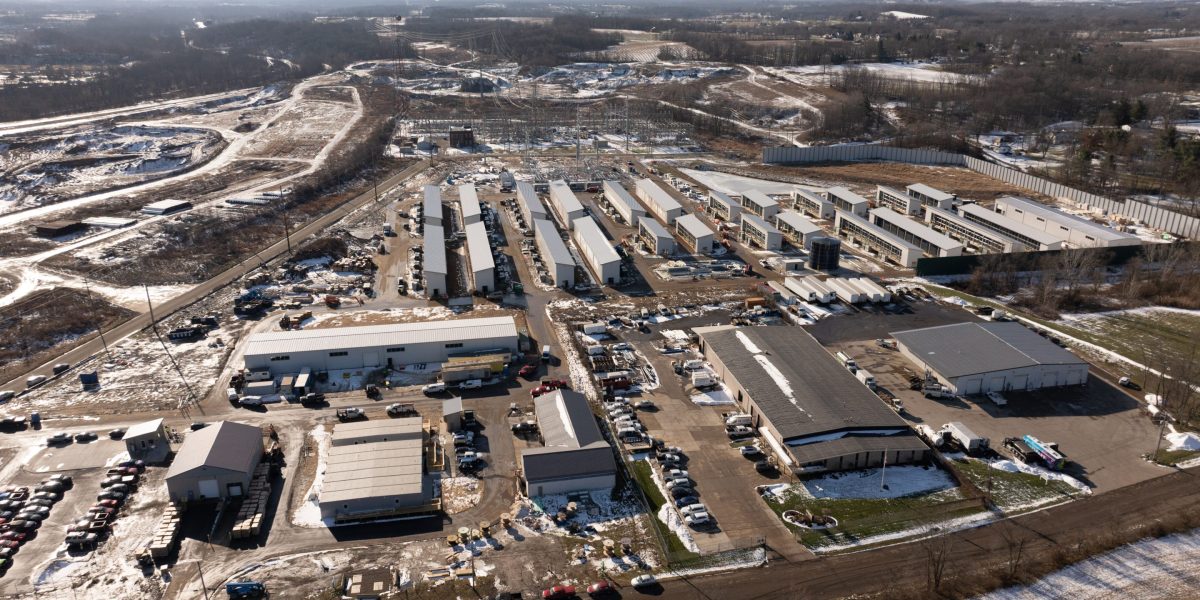
Consider the energy crunch: Global data-center power demand will more than double by 2030, per the International Energy Agency, forcing upgrades to grids, water systems, and connectivity. China’s state grids are embarking on a 5 trillion yuan ($722 billion) expansion explicitly for AI and data centers that is equivalent to 4% of GDP, according to Moody’s. The Qatar Investment Authority has announced a project worth $20 billion (9% of the nation’s GDP), to develop AI data centers and computing infrastructure. And in Korea, despite AI-related spending only accounting for 0.4% of GDP, the country’s recently established sovereign wealth fund is almost exclusively targeted at high-tech industries including AI and chips, while planning to deploy a war chest worth 5.7% of GDP over the next five years.
These debt-funded projects create “indirect but potentially material” exposure to fiscal risk, the analysts wrote. Beyond infrastructure, governments will have to plan for labor disruptions and related social support. The IMF estimates 40% of global jobs—and 60% in advanced economies—are exposed to AI, particularly high-skill roles, potentially eroding payroll taxes while spiking demand for reskilling and safety nets.
“Declines in labor-based tax receipts could offset or exceed other AI-related tax gains,” Moody’s notes, echoing similar calls from the IMF that fiscal policy include progressive taxation and social protections to mitigate AI-related budgetary impacts.
Uncertainty reigns
For the U.S., the stakes of this transition are uniquely high. As a primary hub for the global AI infrastructure boom, the U.S. is poised to capture a significant portion of the projected $3 trillion in data-center-related investments over the next five years, as projected by Moody’s. However, this leadership comes with a steep entry fee: massive demands on power grids and digital connectivity that require enormous spending before productivity gains ever hit the bottom line.
The Penn-Wharton model found in a preliminary analysis that AI could reduce deficits by $400 billion by 2035. But the Congressional Budget Office framed AI and associated investment as wildcards in determining the U.S. fiscal and economic outlook. While the CBO projects AI to enhance total productivity by 1% in the next decade, its most recent budget report conceded that this prediction was “highly uncertain.” If adoption was slow or costs higher than anticipated, it would significantly alter GDP growth and, consequently, government revenue.
Disclaimer : This story is auto aggregated by a computer programme and has not been created or edited by DOWNTHENEWS. Publisher: fortune.com