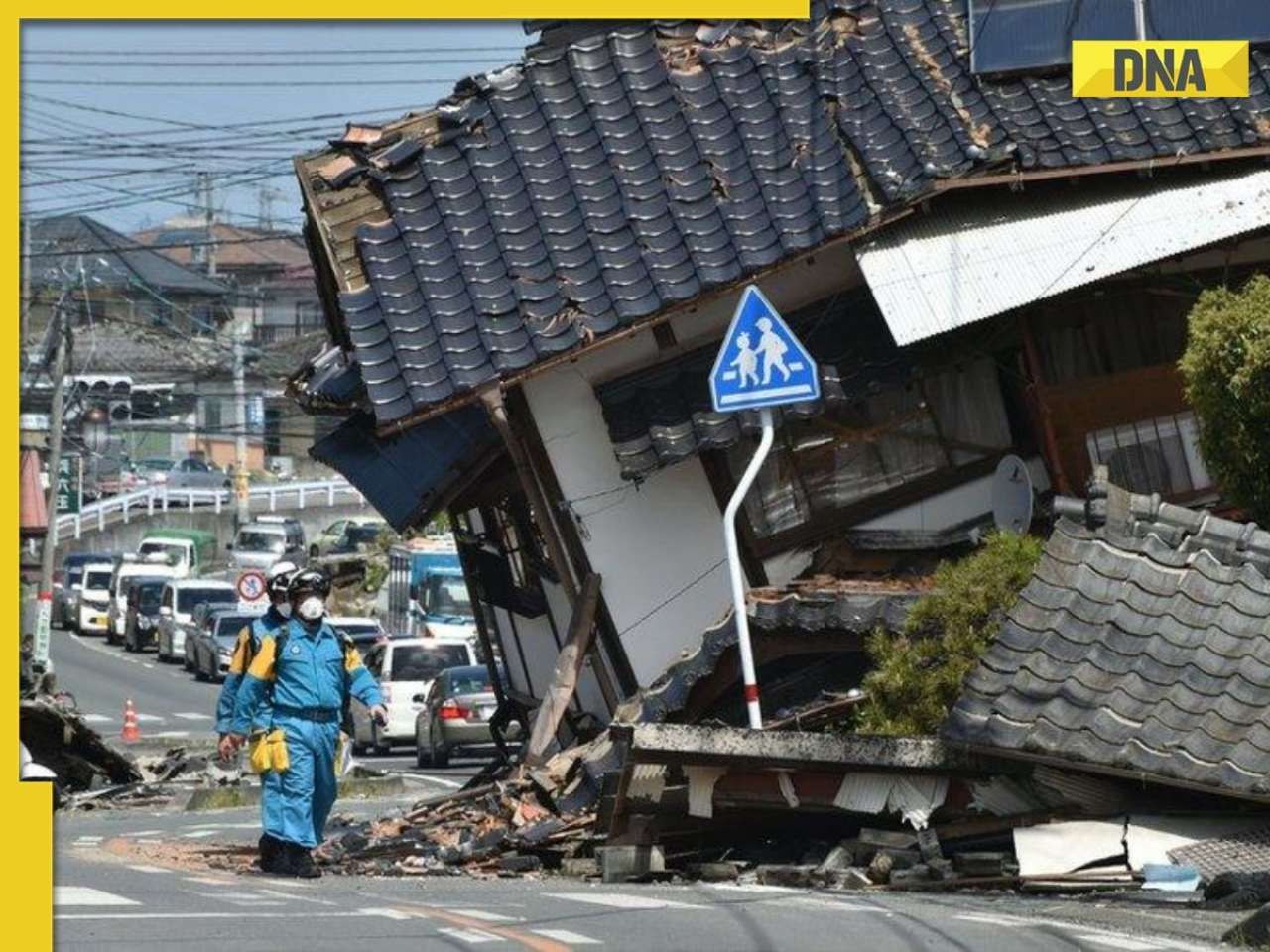
Japan has issued a rare ‘megaquake’ warning after a 7.5-magnitude earthquake hit its northern coast on December 7. The Japan Meteorological Agency raised the risk of a stronger earthquake in the next week but kept the probability low.
Japanese authorities have issued an uncommon warning, alerting the public to the heightened risk of a ‘megaquake’ striking the northern coast of Japan within the next week. This comes after a powerful 7.5-magnitude earthquake rattled the region on December 7, triggering small tsunamis and leaving several people injured.
The Japan Meteorological Agency (JMA) stated that the earthquake, which occurred at 11:15 pm off the Pacific coast of Aomori in northern Honshu, occurred at a depth of about 54 km. The tremor has increased the likelihood of another earthquake of equal or greater magnitude in the same region. As a result, the JMA has issued a rare ‘megaquake advisory,’ which raises the probability of a magnitude 8 or higher earthquake in the area, though the overall likelihood remains low at about 1%.
What does the Warning mean?
The recent earthquake, with its epicentre off the coast of Aomori, caused significant shaking, which was felt in major cities, including Tokyo, around 550 km away. It also led to small tsunamis measuring approximately 60 to 70 cm and caused damage to infrastructure, including cracked roads and damaged buildings. At least 30-33 people were reported injured, and 90,000 residents were forced to evacuate their homes.
The megaquake advisory, introduced by the JMA in 2022, is issued when an earthquake of magnitude 7 or greater occurs in regions known to be at risk of ‘megathrust’ earthquakes, like the Japan Trench and Kuril Trenches. This advisory is the first of its kind for the Hokkaido–Sanriku sector, where the recent quake occurred, and signals a temporary increase in the risk of a much larger earthquake.
Why are Scientists Concerned?
Japan sits on the Pacific Ring of Fire, where the Pacific Plate is subducting beneath the North American and Okhotsk plates. This tectonic activity results in the accumulation of strain, which is sometimes released in devastating megathrust earthquakes, like the catastrophic 2011 Tohoku earthquake, which measured 9.0 and triggered a massive tsunami that killed nearly 20,000 people and caused the Fukushima nuclear disaster.
The concern following the December 7 earthquake is that it could be a foreshock or part of a broader stress readjustment along the same trench system. Authorities are urging both residents and local governments to review and update their evacuation plans, stockpile necessary supplies, and remain prepared for the possibility of more severe shaking or a larger tsunami warning in the coming days.
Should India Be Concerned?
While the megaquake warning is causing concern for Japan and the surrounding regions, India is not at significant risk from this particular event. The energy from megathrust quakes along the Japan Trench typically impacts areas in the northwest Pacific, such as Japan, Russia’s Far East, and possibly parts of the Aleutian Islands in Alaska.
In contrast, India’s coastlines are primarily vulnerable to tsunamis generated by megathrust earthquakes along the Sunda Trench near Sumatra and the Arabian Sea. The 2004 tsunami in India was caused by a magnitude 9.1 earthquake in Sumatra, not by a Pacific-based event.
While Japan’s megaquake advisory highlights the global importance of early warning systems and the shared tectonic risks, Indian authorities have reassured the public that there is no immediate tsunami or earthquake threat to the country’s coastlines from this specific event.
Disclaimer : This story is auto aggregated by a computer programme and has not been created or edited by DOWNTHENEWS. Publisher: dnaindia.com