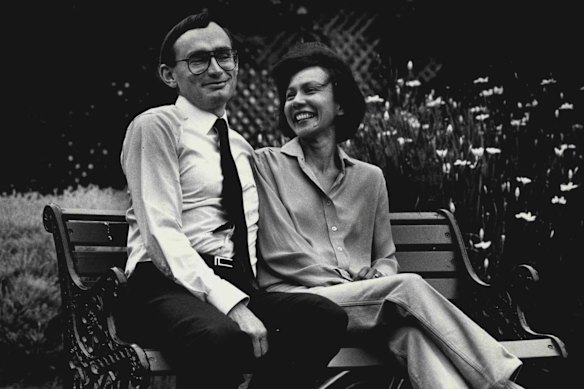
Bob Carr strides into the Eastbank restaurant on Circular Quay with the kind of purposeful gait you expect from the former premier and foreign minister. He looks healthy, tall and (perhaps I’m projecting) hungry.
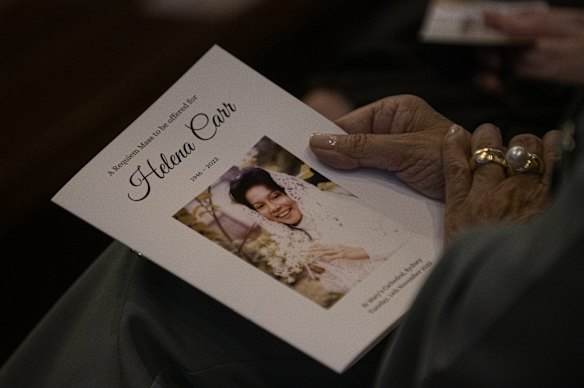
He is meeting me for lunch to discuss his grief memoir, Bring Back Yesterday, about the sudden death of his wife, Helena, in Vienna in October 2023.
Mired in shock, Carr did a lot of striding around Sydney after the catastrophe of her death, but without the purpose he displays today. He just needed to move, to expel his grief, or at least exercise it somehow.
He used to walk late at night, and enormous distances – from his Phillip Street office in the city to Leichhardt in the inner west. From Surry Hills to Randwick, then home to Maroubra.
Often he wept openly as he walked, wondering what people would think if they saw him, the former premier and federal cabinet minister, sobbing and walking, trying to make sense of what he calls the “obliteration” of Helena’s death.
On the night of what would have been their 51st wedding anniversary, he tramped from their marital home in Maroubra in Sydney’s coastal eastern suburbs to the Coogee beach esplanade, and up to a cliff top where there was a sign displaying the number for a suicide hotline.
But he never considered it – it would be a betrayal of Helena, he says.
“With me and I think with the vast majority of people, the instinct for life is too strong,” he tells me during our lunch.
Carr is very much in one piece today, which is a late summer Sydney day, so dreadfully hot and windy that we opt for an indoor table, removed from the view of a busy harbour, full of ferries and tourist traffic up to the Opera House.
“This is bushfire weather,” he booms upon arrival, ever the former premier, and we settle in.
Carr is dressed neatly but casually in a blue shirt, a patterned Hermes tie and chino trousers.
His appearance is not an insignificant detail because Helena was the practical one in the marriage – she did all the laundry.
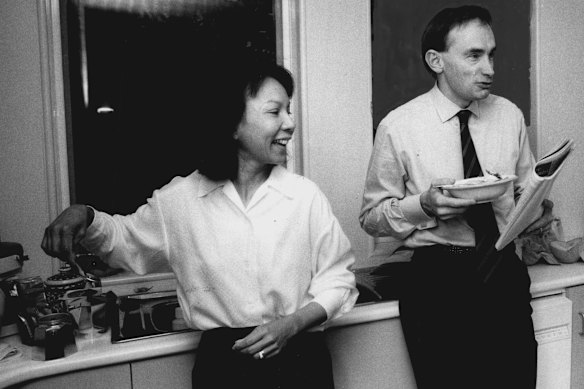
She also did her husband’s packing for trips, the internet banking, the bill-paying, the driving and the cooking. Carr has had to teach himself all these skills, and more, since she died.
“I thought, ‘Well, I’ve done hard at things in my life’,” he says. “I’ve led a party in opposition for seven years. I can learn to use a washing machine.”
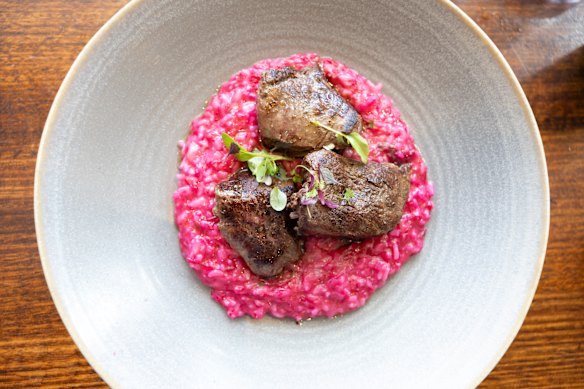
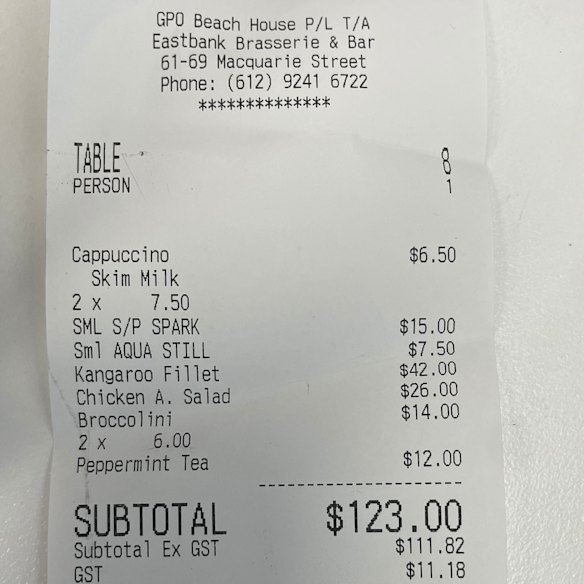
Carr’s voice is as deeply, sonorously senatorial as ever, exuding a natural authority as he orders his kangaroo fillet with beetroot risotto.
He chose this restaurant because they serve kangaroo, which is both lean and environmentally friendly, appropriate for a health nut and former environment minister.
I begin by asking him why he wanted to write a grief memoir – a notable addition to a genre which includes works by greats like Joan Didion, Julian Barnes and Geraldine Brooks.
“One element in bereavement is the slight sense of panic that the memory is going to be lost,” he answers. “CS Lewis wrote about the memory of his wife as a photograph being covered by snow.”
Writing also became a system of self-governance (together with the weeping-walking) and a way of trying to process intellectually this enormous emotional event.
“Someone said to me that journalising is better than resorting to medication,” he says. “And maybe because I’m somewhat bookish, I had a desire to read about bereavement. I remember standing on a corner in Vienna a day or two after [Helena’s] collapse and with shock, absorbing that my universe had tilted … this radical change after 50 years. What is this thing? How have others navigated it?”
The tilt in his universe was nauseatingly sudden – the couple was on an opera-and-galleries tour of Europe, deep in the companionable comfort of nearly five decades of happy marriage, when Helena felt poorly one evening in their Vienna hotel room. She complained of a headache and pain in her back. Thirty minutes later she collapsed.
Carr describes pleading with her like a character from one of his beloved operas: “Don’t leave me. Come back, little friend.”
She didn’t come back. She was taken to hospital by ambulance and never regained consciousness. Carr flew home with her ashes in an urn.
In the book he writes of his homecoming: “No one ever told me about the silence that comes with grief … nobody warns you that this is your new mode of living, this hush.”
Our meals arrive. I have ordered the grilled chicken salad – Carr’s healthy choices have rubbed off on me. We share a side of steamed broccolini scattered with almond flakes.
Soon after he lost Helena, Carr met Barry Humphries’ widow Lizzie Spender at a social function in Sydney. She advised him on what to do to get through: “Whatever it takes.”
This is the very same mantra Carr’s friend and comrade Graham Richardson, famous head-kicker of the NSW Right, applied to politics.
Richardson makes a few cameos in Carr’s book, which is a poignant account of the head-kicking quality of deep grief, besides being the story of a happy marriage, and a potted narrative of Helena’s cosmopolitan background and successful business career. There are also diversions into Carr’s political life, and his views on AUKUS (he’s very anti).

The book is full of the exquisite detail of loss – finding Helena’s favourite teacup at home, with its special compartment for a lemon slice. The way she squeezed his hand during a rendition of Stephen Sondheim’s Being Alive at the theatre – a show-stopping number about the risk and the beauty of love. Or the time when Carr passes a man on the street with his arm around his wife, a casual display of love that is a “red-hot poker into my guts”.
But I am fixated on one thing. Did you really not do a load of washing in your entire married life? I ask him.
“No,” he says. “She always said she found it easier to do it, rather than clean up after I attempted it. Now that is simply wrong.” I feel as though I have walked into a marital disagreement. “I might have got things wrong, but I would have got it right in the end. But she was cheerfully efficient … cooking at the end of a long day … I don’t know how she did it.”
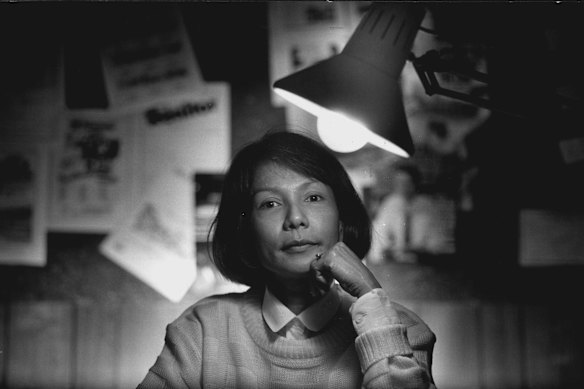
One of the ways Carr kept Helena vivid after she died was to research and write the fascinating story of her early life in Taiping, Malaysia, where she was born in 1946 to an Indian father and a Chinese mother.
She was educated at the local convent and, as a teen, wrote to Our Lady of Mercy College, Parramatta, and asked if she could enrol there for matriculation. She was accepted and later won a place to study economics at the University of Sydney. She went on to become a successful businesswoman, running various printing companies with huge contracts.
Meanwhile, a young working-class man from Malabar had his sights set on a political career. Intriguingly, Carr admits in the book he was initially in favour of the White Australia Policy – his father was a railway driver and a unionist, and like many Labor men of his time, thought that bringing in non-white immigrants would import racial tensions.
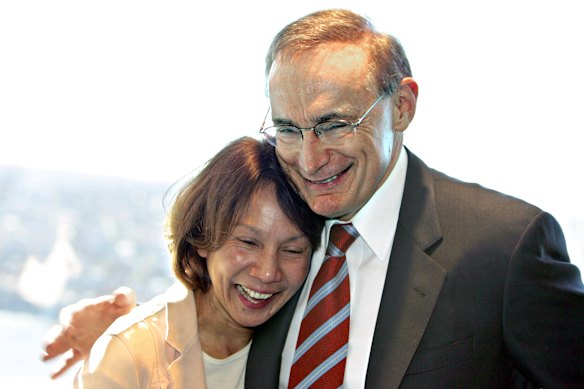
But by the time he met Helena in Tahiti in 1971, on a stop-over from the United States, he was a devotee of Gough Whitlam and had embraced the idea of an open, multicultural Australia. “I thought there were more important issues, and it just became irrelevant.”
Carr writes in the book about spending time with friends after Helena’s death and being aware that he was talking about her and her death too much and for too long.
“There might be a temptation to inhabit a world of sweet sorrow,” he says. “You can opt to reside there, and say, for example, ‘I feel like going out for a one-hour walk, and I feel like drawing on some memories and talking to her’.
“On other occasions, you can think, ‘Enough’, and plug in an audiobook or podcast, flooding your prefrontal cortex.”
Carr labels his life now as the “leftover life”, the second act of a life bifurcated by a terrible event.
The leftover life is full of rich memories and many pleasures, like friends, music, movies and sensory experiences like diving into the foam of a wave at Coogee, where Carr now lives, or “lying on the floor as the winter sun comes through the window”.
“You wouldn’t give it up for anything,” he says. “But in the spirit of realism, it doesn’t include the presence of the one person in life who opted to find you special. You had it, you had it for 50 years and that’s gone. Take a deep breath and accept it.”
I have demolished my salad, but Carr has eaten only half of his (generous) portion of kangaroo. He asks the waitress for a Tupperware container so he can take the remainders home.
Surely, I think to myself, only in Australia would a former top politician be so unpretentious as to pack up leftovers after lunch with a journalist. (Also, if you grow up working class, you never waste food).
I ask Carr, a longtime pro-Palestine voice within Labor, about Adelaide Writers Week, which collapsed after the Palestinian writer Randa Abdel-Fattah was cancelled from the lineup for her political views.
Carr, who was to be a guest at the festival to talk about Bring Back Yesterday, said publicly he would not take part in a boycott as most other writers did.
“I think [Abdel-Fattah’s] talk about ‘no safe cultural space’ for Zionists is utterly undesirable language to be recruited to this debate,” he says. “This is about key words. The key words are occupation, apartheid laws, settlements – all of them illegal – and war crimes in Gaza. That’s the script. Don’t veer off into language that undercuts the viability of a two-state solution.”
We order peppermint tea and I ask Carr if his sorrow has expanded his sense of humanity. “Undoubtedly,” he says. “To be reminded of the luck. The luck you have enjoyed can be withdrawn.”
Bring Back Yesterday: On losing the love of my life, and doing what it takes to survive by Bob Carr will be published on March 3.
Disclaimer : This story is auto aggregated by a computer programme and has not been created or edited by DOWNTHENEWS. Publisher: www.smh.com.au