
LONDON, Feb 08 (News On Japan) –
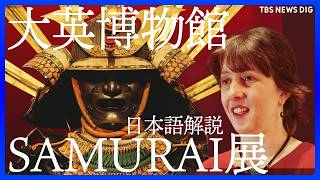
Rosina Buckland, curator of the Japanese collections at the British Museum, has offered a Japanese-language tour of the museum’s Samurai exhibition in London, highlighting the diverse history and cultural legacy of Japan’s warrior class beyond its popular image as fighters alone.
[embedded content]
Buckland explained that while the term “samurai” is widely recognized around the world, it is often understood only in terms of warfare, and the exhibition aims to deepen understanding in the West of the many roles samurai played across history. By viewing armor, artworks, and handwritten documents, visitors can explore the breadth and richness of samurai history and appreciate its cultural depth.
The exhibition is divided into three sections. The first focuses on the medieval period, exploring themes of conflict and culture. Among the featured items is a portrait of a young samurai connected to a daimyo family who traveled to Europe at the age of 13 during the Tensho era. After a two-year journey to the Vatican, he returned to Japan, and on his way home a portrait of him was painted in Venice by the renowned artist Tintoretto. Depicted in elegant Western attire like an Italian noble, the work is among Buckland’s favorite pieces in the exhibition.
The exhibition also explores the relationship between samurai and Britain. In 1613, shogun Tokugawa Hidetada sent a suit of armor as a diplomatic gift to King James I. The armor took two years to reach London, arriving in 1615, and has been displayed in the country for about 400 years, becoming a symbol of British awareness of Japan. Another suit of armor from the Royal Collection is also on display. Presented in 1869, shortly after the Meiji Restoration, it was a gift from Emperor Meiji to Prince Alfred, one of the first members of a European royal family to visit Japan. The armor symbolizes the modern diplomatic relationship and friendship between Japan and Britain.
Buckland also highlighted a contemporary work created for the exhibition by artist Noguchi Tetsuya. The piece features a detailed miniature samurai figure wearing armor while riding a toy rubber duck. By combining elements from different historical periods and introducing a sense of playful dissonance, the sculpture offers a fresh perspective on tradition and modernity, making it one of Buckland’s favorite works.
A display of Darth Vader is also included, reflecting the influence of samurai culture on global pop culture. Buckland noted that director George Lucas has often cited Akira Kurosawa’s films as a major inspiration for Star Wars. The shape of Darth Vader’s helmet is directly influenced by samurai armor, and narrative elements in the film series draw from Kurosawa’s work, including The Hidden Fortress. The ongoing global popularity of samurai themes in films, television, and video games, such as Netflix’s samurai-themed productions and titles like Nioh, shows that fascination with samurai culture continues worldwide, not only in Japan but also across the United States, Europe, and beyond.
Source: TBS
Disclaimer : This story is auto aggregated by a computer programme and has not been created or edited by DOWNTHENEWS. Publisher: newsonjapan.com







