
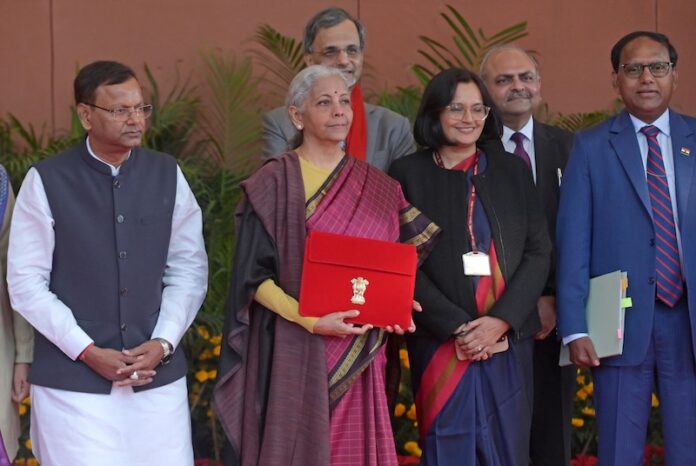
New Delhi: The Union Budget has drawn a strong and largely positive response from the healthcare and life sciences industry, with stakeholders welcoming its clear focus on strengthening health systems, accelerating biopharma research and development, and positioning India as a global medical tourism destination.
From landmark investments in biopharmaceutical innovation and regulatory reforms to patient-centric measures and the creation of regional medical tourism hubs, the Budget is being seen as a strategic blueprint that aligns public health priorities with India’s long-term ambition to emerge as a global healthcare and life sciences leader.
The industry stakeholders across life sciences sector share their post budget reactions:
Rishubh Gupta, Managing Director of Roche Diagnostics India and Neighbouring Markets
“The Union Budget 2025–26 takes meaningful steps to strengthen India’s healthcare ecosystem while preparing it for evolving patient and system needs. Stronger regulatory frameworks, faster approvals, and the expansion of healthcare capacity through regional medical hubs beyond metros—along with a skilled allied healthcare workforce—will help improve access to advanced care at scale, strengthen clinical decision-making, and enhance patient outcomes. As national institutions, including mental health services, are strengthened, robust diagnostics and equitable investment in screening remain critical to enabling early, accurate diagnosis and effective disease management. Together, these measures reinforce India’s ambition to emerge as a trusted global healthcare hub as it advances toward Viksit Bharat 2047.”
Sanjay Bhutani, Managing Director, Bausch & Lomb & Director, MTaI
“In the backdrop of buoyancy on GDP growth and improving domestic consumption, this Budget strikes a prudent balance between growth and predictability. With reducing Debt to GDP ratio and fiscal deficit, It reinforces macro stability through a clear fiscal consolidation path, while sustaining a strong public capex push that should crowd in private investment over the medium term. We welcome the efforts to decriminalize technical nature offenses under direct tax and the rolling out of new Income Tax Act. On the indirect tax side, the rationalization of customs duty slabs and continued pruning of long-standing exemptions will reduce classification disputes and improve planning certainty for manufacturers. The Customs 2.0 agenda—time-bound assessments, wider use of risk-based AI systems and a more trusted-importer framework—marks a decisive shift from revenue policing to genuine trade facilitation. For healthcare and MedTech, creation of regional hubs for promoting medical tourism, a combination of duty exemption on additional life‑saving drugs and correction of inverted duty structures on key components, and a larger electronics manufacturing outlay will lower input costs and strengthen the case for making advanced devices in India. Overall, this is a structurally positive, execution-focused Budget that rewards compliance, supports innovation and gives long-term investors greater confidence in India’s policy direction.”_
Mandeep Singh Kumar, Managing Director & Vice President, Medtronic India & MTaI member
“The Union Budget 2026–27 marks a significant leap for India’s healthcare sector, placing technology, innovation, and talent at its core. The Biopharma Shakti program, with a ₹10,000-crore investment, is set to accelerate R&D and drive impactful innovation in healthcare. The initiative to train one lakh allied health professionals and 1.5 lakh multi-skilled caregivers will strengthen clinical capacity and support the safe deployment of advanced medical technologies nationwide. The focus on regional medical tourism hubs further positions India as a global centre for world-class care. For the medical device industry, these measures create unprecedented opportunities to scale solutions and support India’s vision of becoming a global healthcare destination. We welcome this forward-thinking budget and remain deeply committed to partnering with India on this journey to advance patient care and foster MedTech innovation.”
Amit Mookim, Board of Director and CEO, Immuneel Therapeutics and Member of NATHEALTH
“The Union Budget 2026–27 reflects a crucial inflection point in India’s biopharma track. The exemption of basic customs duty on essential cancer drugs and the inclusion of seven rare diseases for personal import ease patient access today, and the ₹10,000 crore Biopharma Shakti programme helps build domestic capacity moving forward. Both of these initiatives indicate a focus on affordability as well as long-term capacity buildup. With Biopharma Shakti’s focus on biologics and biosimilars, the expansion of NIPERs and the strengthening of CDSCO build a strong platform for advanced platforms with the likes of cell and gene therapies, accelerating innovation pipelines and clinical translation. From my experiences with advanced cancer therapies in India, I believe that the focus of the government on training of allied health practitioners and caregivers is as vital for safely and ethically delivering high-performing, complex, care-intensive medicines at scale. Regional medical hubs in relation to medical-value tourism also establish India as a preferred advanced care destination. Over the next five years, long-term policy clarity, workforce readiness, and manufacturing scale can take India beyond small-molecule dominance and drive equitable healthcare access by 2030 and put the country strongly on its track towards Viksit Bharat 2047. Scaling manufacturing, supported by regulatory clarity and clinical readiness, is how India can establish defensible leadership in the global biopharma space.”
Rajiv Nath, Forum Coordinator, Association of Indian Medical Device Industry (AiMeD)
“The Union Budget 2026 sends a strong and credible signal of India’s commitment to building a globally competitive life-sciences ecosystem. The announcement of Biopharma Shakti with a ₹10,000-crore outlay over five years is a landmark step towards positioning India as a global biopharma manufacturing hub, particularly in biologics and biosimilars, which are critical for improving longevity and quality of life at affordable costs. The proposed creation of a biopharma-focused network, establishment of three new NIPERs, upgradation of seven existing institutes, and a nationwide network of 1,000 accredited clinical trial sites will significantly strengthen India’s research, talent, and clinical validation capabilities. These measures address long-standing structural gaps across the innovation-to-manufacturing continuum. Equally important is the Budget’s emphasis on strengthening the Central Drugs Standard Control Organisation (CDSCO) through dedicated scientific review capacity, domain specialists, and time-bound approvals, which is essential for regulatory predictability, global alignment, and investor confidence.”
Dr Rajiv Chhibber Joint Forum Coordinator, AIMED
“The Union Budget 2026 sends a clear and strong signal that India is ready to lead global healthcare manufacturing through Make in India, Atmanirbhar Bharat and technology-led innovation. Flagship announcements such as the ₹10,000 crore Biopharma Shakti initiative, expansion of research institutions, creation of national clinical research infrastructure and strengthening of CDSCO towards global regulatory benchmarks will directly enhance India’s credibility as a high-quality, innovation-driven MedTech and life sciences manufacturing destination. Policy steps such as rationalisation of duties on critical therapies including cancer drugs and increased focus on assistive and patient-centric technologies further reinforce the government’s commitment to accessible and advanced healthcare.”
“At a time when India is deepening global economic engagement through FTAs with key regions including Europe and other strategic partners, this Budget provides the domestic manufacturing strength required to fully leverage these trade opportunities. For the medical devices sector, this is a decisive moment to scale exports, strengthen supply chains and position India as a trusted global partner in cardiovascular, diagnostic, implantable and high-technology medical devices. With continued policy-industry alignment, India is well positioned to transition from import substitution to global MedTech leadership while supporting national healthcare priorities and global health security.”
Ajay Bagga, Managing Director and Country Head – Zimmer Biomet India & MTaI Member
“Budget 2026 highlights a structural transformation in healthcare, prioritising modern manufacturing, integrated infrastructure, workforce readiness, and India’s global positioning. The Budget emphasises allied healthcare professionals through skill development and workforce expansion. The government’s proposal to set up regional medical tourism hubs will promote India as a global destination for medical and wellness travel. Government’s focus on building a domestic ecosystem for cancer drugs and technologies will lower costs and improve overall access to patients.”
Varun Khanna, Group MD Quality Care India Ltd
“The Union Budget 2026-27 is a reform-driven blueprint that demonstrates the government’s long-term alignment with the vision of Viksit Bharat through sustained growth, fiscal discipline and people-centric development. The focus on establishing five hubs for Medical Value Tourism in partnership with the private sector, creating integrated regional medical hubs with diagnostics, post-care and AYUSH services, upgrading and setting up new institutions for Allied Health Professionals, and training 1.5 lakh multi-skilled caregivers will significantly strengthen India’s care ecosystem, including much-needed geriatric and allied care. The creation of new All India Institutes of Ayurveda and the upgradation of the WHO Global Traditional Medicine Centre reflect a progressive approach to integrating modern and traditional systems of medicine. Equally encouraging are the reduction of TCS from 5% to 2% for education and medical purposes, the strong thrust on Biopharma SHAKTI to accelerate domestic biologics manufacturing, and the exemption of basic customs duty on 17 cancer medicines, which together improve affordability, self-reliance and patient access. Anchored in a socially and economically conscious framework, and supported by continued investments in infrastructure beyond Tier 1 cities, digital enablement and public-private collaboration, this Budget lays a robust foundation for a resilient, patient-centric and globally competitive healthcare ecosystem.”
Dr Harsh Mahajan, Mentor, FICCI Health and Services Founder & Chairman, Mahajan Imaging & Labs
“The Union Budget’s initiatives signal a strong and forward‑looking direction for India’s healthcare ecosystem, and there is clear relevance for diagnostic service providers. The push for Biopharma Shakti with a Rs. 10,000 crore allocation over five years to boost domestic manufacturing of biologics and biosimilars underscores the government’s intent to strengthen advanced treatment availability in India. This will not only help patients access critical therapies but also increase demand for high‑quality diagnostics to guide and monitor those treatments. In addition, the Budget’s plan to establish five regional medical tourism and integrated healthcare hubs in partnership with the private sector, featuring advanced diagnostics, research and rehabilitation facilities provides new opportunities for labs to expand services and strengthen collaborations with hospitals and care centres. The focus on expanding and upgrading the allied health workforce, including training one lakh allied health professionals, reinforces the critical role of skilled diagnostic personnel in delivering accurate and timely patient care across regions. Together, these measures support the diagnostic labs’ mission to scale specialised testing, improve patient access across the country, and contribute to a more resilient and responsive healthcare system in India.”
Dr. Sudhir Srivastava, Founder, Chairman & CEO, SS Innovations
“The allocation of over ₹1.04 lakh crore to healthcare in Budget 2026- 27 marks a defining moment for India’s health ecosystem and reflects a clear commitment to strengthening both access and quality of care. Investments in district hospitals, emergency and trauma care, allied health professionals, and traditional medicine signal a comprehensive approach to building a resilient and inclusive healthcare system. The emphasis on capacity expansion, medical tourism, and technology-led upgrades creates a strong foundation for advanced interventions such as robotics, minimally invasive surgery, and precision-driven care. This budget not only addresses today’s healthcare needs but also positions India as a global hub for affordable, high-quality, and innovation-led healthcare delivery.”
Chaitanya Sarawate, Managing Director, Wipro GE Healthcare and President & CEO, GE HealthCare South Asia
“In line with the Viksit Bharat vision, the Union Budget 2026 takes a balanced approach to strengthening both supply and demand. It clearly signals intent to deepen India’s pharma and medtech manufacturing ecosystem through greater manufacturing depth, infrastructure expansion, regulatory maturity, and technology readiness. On the demand side, the focus on a comprehensive care ecosystem—covering cancer, rare diseases, geriatrics, mental health, and allied care—is timely. The proposal for five regional medical value travel hubs integrating care, education, and research can strengthen domestic delivery while positioning India as a credible global destination for medical-value care. Initiatives such as Biopharma Shakti, alongside emphasis on precision diagnostics, AI-led innovation, regional care delivery, and local manufacturing, are positive steps. Sustained execution to build scalable domestic capabilities will be key to delivering affordable, high-quality healthcare and enhancing India’s global standing.”
Dr. Rakesh Gupta, Chairman Sarvodaya HealthCare
“The Union Budget 2026-2027 strikes at the heart of what we have been advocating for years at Sarvodaya Healthcare, making advanced care economically reachable for the patient in the metro corridor who is exhausting their savings on recurring therapy cycles. This landmark step toward reinforcing India’s position as a global leader in clinical excellence, and we particularly welcome the exemption of customs duty on 17 life-saving cancer drugs, the Finance Minister has directly alleviated the crushing monthly out-of-pocket burdens that cancer and rare disease families routinely shoulder in our outpatient departments. This is a compassionate move that will directly lower the financial barriers for families battling complex malignancies and rare diseases, allowing us to pass on the benefits of global medical breakthroughs to our patients. In addition, the government’s investment in training 1.5 lakh caregivers and upgrading allied health facilities is aimed at creating a highly skilled workforce that will fulfill the need for a specialized workforce within super-specialty settings. When combined with the ongoing expansion of the Ayushman Bharat Digital Mission and the government’s desire to promote integrative medicine, that makes this budget an incredibly strong foundation for developing a data driven, holistic health care approach and demonstrates our commitment to providing patients with access to world-class technology-enabled treatments and helps further solidify India’s status as an attractive location for patients to seek high-level surgical or clinical specialties through medical tourism.”
Dr. Dharminder Nagar, FICCI Co chair- Health& Services & M.D Paras Health
“The Union Budget brings reassurance for patients and families at a time when healthcare costs are rising and lifestyle-related illnesses are becoming more common, especially in Tier 2 and Tier 3 cities where access to specialised care remains limited. The focus on strengthening the biopharma ecosystem is particularly timely, as conditions such as cancer, diabetes, and autoimmune disorders often require long-term and advanced treatment. By encouraging domestic manufacturing of biologics and biosimilars, the Budget supports better availability and affordability of these therapies, enabling hospitals to deliver advanced care closer to patients’ homes. Building on this, the Budget proposes exemption from basic customs duty on 17 lifesaving drugs and medicines, including key cancer therapies, and adds seven rare diseases for exemption on personal imports of drugs, medicines, and specialized foods. This move will provide tangible financial relief to families managing serious and chronic illnesses, especially in smaller cities where treatment often involves travel and additional expenses. By reducing the cost burden, patients can access care more consistently without compromising on quality.”
Dr Saurabh Arora, Managing Director, Auriga Research
“Budget 2026 reflects a clear and deliberate push to strengthen India’s manufacturing and research ecosystem, particularly in biopharma. The Biopharma Shakti initiative, with an outlay of ₹10,000 crore over five years, is a significant boost for a sector driven by high value, high skill and high technology products. The creation of 1,000 clinical trial sites and the move to strengthen CDSCO to global standards demonstrate a deep understanding of what it takes to build a globally competitive biopharmaceutical industry. Repeated emphasis on quality upgradation and R and D infrastructure, seen across initiatives from biopharma to textiles, will provide a strong lift to the testing, inspection and certification ecosystem. The commitment to upgrading drug testing facilities for Ayurveda, with a focus on quality and skilled manpower to support exports, further reinforces the government’s intent to build robust quality infrastructure across healthcare segments. This approach aligns well with the India EU free trade agreement, which opens access to regulated global markets where compliance and quality are critical. The parallel focus on strengthening education and research institutions will also help address the skilled manpower gap that must be filled to scale manufacturing sustainably. Overall, the budget sets a strong foundation, with execution now becoming the key differentiator.”
Anindith Reddy, MD & Co-founder Wadi Surgicals Pvt Ltd (Enliva)
“The ₹2,000 crore top-up to the Self-Reliant India Fund in Union Budget 2026 is a timely step for manufacturing MSMEs built under the Atmanirbhar Bharat mission, including Enliva. Access to growth capital has been a key constraint, and this measure directly addresses that gap while reinforcing the focus on self-reliant, scalable enterprises.”Abhay Soi, Chairman and Managing Director, Max Healthcare: The proposal to establish regional medical hubs is a timely and strategic step towards positioning India as a global destination for medical value travel. By integrating clinical care, education, research, AYUSH, and post-treatment rehabilitation, this initiative addresses the entire continuum of care that international and domestic patients increasingly seek. India is uniquely positioned to emerge as a global leader in medical tourism, backed by world-class medical infrastructure, highly skilled and internationally trained doctors, and a strong cost advantage that delivers high-quality care at a fraction of global prices. Public–private partnerships will be critical to the success of these hubs, and the healthcare industry is well placed to contribute clinical expertise, technology, and operational excellence. Beyond strengthening India’s medical tourism ecosystem, this initiative will also create significant employment opportunities for doctors and allied health professionals, while accelerating innovation and skill development in the healthcare sector. We look forward to collaborating with the Government to help translate this vision into world-class healthcare infrastructure.”
Pavan Choudary, Chairman, Medical Technology Association of India (MTaI)
“Union Budget 2026 reflects a shift from episodic healthcare spending to long-term capacity building. The thrust on Health Advancement through Knowledge, Technology and Innovation under the BioPharma SHAKTI initiative – backed by a ₹10,000 crore commitment – along with the strengthening of CDSCO’s regulatory and execution capabilities, expansion of NIPERs, and large-scale skilling of allied healthcare professionals, signals a systemic deepening of India’s health infrastructure, regulatory credibility, and human capital. Equally significant for the MedTech sector is the enhanced allocation of ₹40,000 crore for electronics component manufacturing, which will accelerate domestic value addition in medical electronics and diagnostics. Investments across advanced biopharma manufacturing, clinical research infrastructure, district-level oncology care, expanded medical education, and new critical care blocks point to a balanced approach that aligns industrial ambition with patient outcomes. That said, the Budget would have been stronger had it paired these fiscal commitments with explicit administrative and process reforms. Cleaner, more accountable execution on the ground, would improve outcomes at point of delivery – and attract globally compliant capital and partnerships into the sector.”
Dr. Simon Thomas, Senior Director – Robotic Joint Replacements & Orthopaedics, Max Super Speciality Hospital, Shalimar Bagh
“The Union Budget 2026’s strong focus on healthcare and biopharma, particularly through the Biopharma Shakti initiative, is a transformative boost for clinicians managing chronic and complex conditions. By strengthening domestic production of biologic medicines critical for targeted cancer therapies, diabetes management, autoimmune disorders, and emerging regenerative treatments that may help delay or even prevent knee replacement through cartilage regeneration. These measures will improve affordability, expand access, and ensure treatment continuity for patients nationwide. We also welcome the development of regional medical value tourism hubs that integrate private sector partnerships with high-quality manufacturing and research. Together, these initiatives will reinforce India’s position as a global leader in affordable, high-quality healthcare, while simultaneously building robust, homegrown biopharma and regenerative medicine capabilities.”
Bhargav Kotadia, Co Chair FICCI Medical Devices Committee & MD & CEO Sahajanand Medical Technologies Ltd
“The Union Budget 2026 sends a strong and forward-looking signal for India’s healthcare and MedTech ecosystem. The launch of the ₹10,000 crore Biopharma Shakti scheme to build India into a global biopharmaceutical manufacturing hub is particularly significant, especially as the nation’s disease burden shifts towards non-communicable diseases such as diabetes, cancer and autoimmune disorders. Along with this, the expansion of NIPER infrastructure, creation of a nationwide network of 1,000 clinical trial sites, and strengthening of CDSCO to global standards will significantly improve India’s quality research, regulatory and innovation competitiveness. These measures will not only strengthen India’s healthcare security but also create strong upstream demand for advanced diagnostics, implants, and medical technologies. From a medical devices perspective, the Budget reinforces the vision of Atmanirbhar Bharat and accelerates India’s journey towards Viksit Bharat 2047. Investments in research infrastructure, clinical ecosystems, workforce development including allied health and caregiver training, and the development of integrated medical hubs will create a strong domestic demand environment while boosting global export competitiveness. The policy direction clearly positions India as a trusted global partner in advanced healthcare manufacturing and innovation, and will catalyse deeper industry–academia collaboration, faster technology adoption, and stronger integration of MedTech into India’s evolving NCD care continuum.
Dr. Somnath Chatterjee, Chairman & Joint Managing Director, Suraksha Clinic & Diagnostics
“The focus on mental health is absolutely timely. Also the reduction of duty on oncology drugs is commendable. Private participation in health care could have been addressed better” It was announced that existing institutions for allied health professionals will be upgraded, along with the setting up of new AHPI institutions in public and private sectors, under the second Kartavya, which is to meet the aspirations and dreams of the citizens of India, building their capacity, turning them into strong alliances in the path of India towards prosperity. 10 selected disciplines, such as radiology, optometry, OT technology, anaesthesia, behavioural health, and applied psychology, will come under these. The government also announced that nearly 1 lakh allied health professionals will be included in the upcoming five years. Moreover, it was announced that a strong care system covering allied and geriatric sectors will be set up. It was proposed that a range of National Skills Qualification Framework (NSQF) aligned programme for training multiskilled caregivers, amalgamating allied skills and core care, including yoga, wellness, and meditative assistive devices, will be formed. A premier mental health institute in North India – NIMHANS 2.0 will be set up, besides strenghtening the capacity of district hospitals by nearly 50% through new trauma and emergency care centres, enhancing access to critical care.”
Disclaimer : This story is auto aggregated by a computer programme and has not been created or edited by DOWNTHENEWS. Publisher: biovoicenews.com








