
Some people get the ‘ick’ over feet. Yet problems such as corns and callus are very common. Here’s what causes them as well as the painful condition known as ‘jogger’s heel’.
The pain began when she was walking: a dull ache at the base of her heel. “But it fairly quickly progressed to a sharp pain all over my heel,” says Alicia Martin. “At its worst, it felt like someone was sticking a knife into my foot constantly with every step.”
Martin was being treated for cancer at the time, in 2024, and had ramped up exercise at home to avoid catching COVID at the gym. “Normally, I’d have been on the spin bike or doing Body Pump [weights]. I’d also normally swim, but I was having radiotherapy and my skin was getting too irritated for the pool, so I just did a tonne of walking,” she says. “I stupidly ignored my foot pain because I was more focused on my cancer treatment. At the time, I was like: the foot – I’ll deal with it later.”
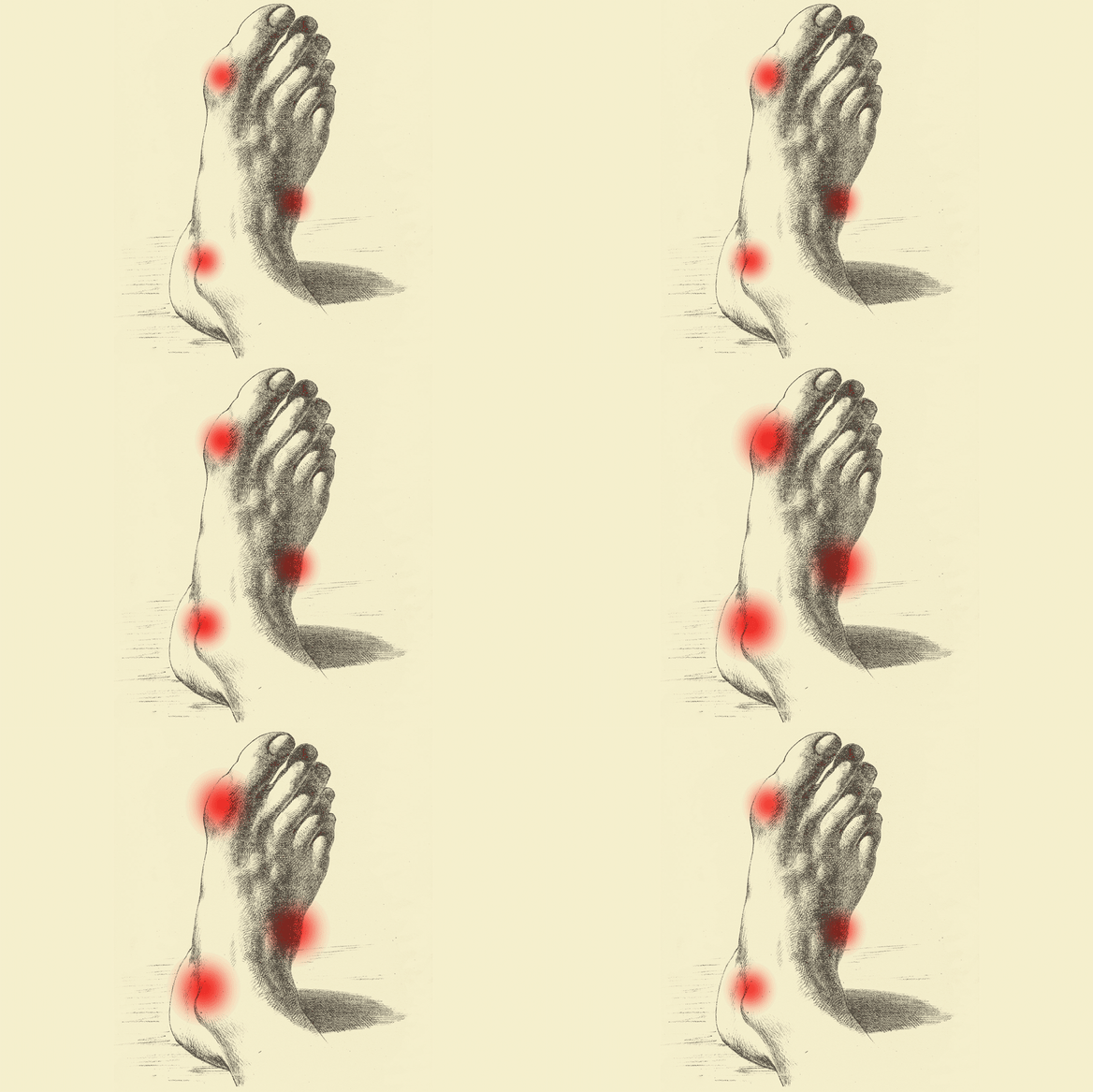
Later, though, she found herself using a moon boot and a walking stick to get around. The problem? An enormous heel spur – a bony outgrowth under the heel – combined with chronic inflammation of the plantar fascia, bands of tissue that run from the heel to the base of toes.
Plantar fasciitis. Say those words at a social gathering of sporty types, or any types after a certain age, and wait for the knowing nods, the tales of niggling irritation or even persistent, grinding pain. For this time of year is “peak plantar” among those who have embarked on rigorous exercise regimens, often from a standing start, inflicting fresh levels of high impact on the unsuspecting bottoms of their feet. “People decide they want to go for a run, they want to be fit and healthy, the weather’s improved,” Professor of Podiatry Hylton Menz tells us, “and rather than doing it gradually, they do it all of a sudden.”
Meanwhile, as we go barefoot or get about in sandals and flip-flops, we accumulate calluses, even corns. Our feet are on full display, and we might not like what we see.
How do feet get into a state of disrepair? What are some of the more common problems? And what can we do about them?
How do feet problems develop over a lifetime?
The 26 bones, 33 joints and more than 100 muscles, ligaments and tendons that make up our feet are designed to work extremely hard, supporting our body weight (within reason), absorbing shock (ditto), providing balance and allowing us to locomote with remarkable economy and resilience.
At the start of life, they’re still a work in progress, and will change every year based on a child’s developmental needs, says Professor Cylie Williams of Monash University’s school of primary and allied health care. “Babies and toddlers have a lot more fatty structures or fat pads in the sole of the foot, and that’s really about support for developing and growing bones. It helps the foot contact the ground more, which helps with learning to walk.”
By about the age of eight, areas of cartilage have toughened into bone and the main change in feet will be an increase in size, which can continue, particularly with boys, into adulthood. Keeping kids’ feet healthy is no walk in the park. Teenage boys, for example, are prone to ingrown toenails, where the edge of the nail grows over the nail bed and into the flesh, causing swelling and, potentially, if untreated, infection. “They’re very susceptible, teenage boys,” says Menz, from La Trobe University’s school of allied health, human services and sport, “because they go through this growth spurt.” Boys’ toes can become squished in their shoes, and hormonal changes mean they tend to sweat more, making the skin around the nail spongy and “increasing the likelihood of the nail piercing the skin”.
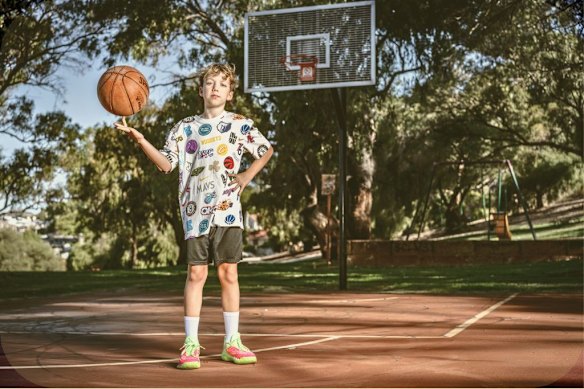
Children are not immune from foot-related sports injuries either. Ten-year-old Ryder Reed, an avid basketball and Australian Rules player, had a sore foot, but it took weeks to work out what was wrong. “It wasn’t swollen, there was no bruising, you couldn’t see what the problem was,” says his mother, Courtney Reed. An ultrasound showed that Ryder had damaged his Achilles tendon, which joins the heel bone to the calf muscles. “I’ve since heard that basketball is renowned for Achilles injuries,” says Courtney. Ryder has recovered but now does exercises to keep his Achilles strong. “They need to warm up their tiny muscles,” Courtney says.
Pain in children’s feet has all sorts of knock-on effects, notes paediatric physiotherapist Nicole Pates. “[It] leads them to run slower, or not as far, or not being able to play with their friends. This should not be tolerated,” she tells us. “The pain might gradually go away, but the child might miss six, 12, 18 months of opportunity for physical and social development.”
For women, being pregnant can bring more change to the feet. “Not only do you get the effects of relaxin hormone, which enables you to give birth,” says Menz, “that actually acts on all the different levels in your body, including your feet. There is a tendency for your feet to spread, so to become a bit wider and for the arch to get lower as pregnancy develops.” (At any age, podiatrists say, give your nails a break from nail polish from time to time: “It does actually mask things like, if you’ve got say, onychomycosis, which is like a fungal infection of your nerve,” says Menz. Speaking of which, opt to keep your cuticles intact; they function as a protective seal, just as your nails protect your digits.)
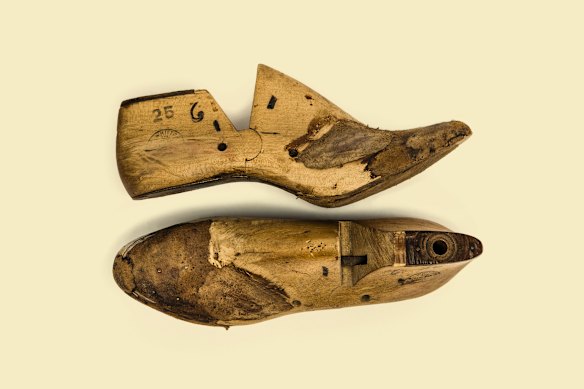
That women’s feet are different to men’s is no surprise, yet even women’s sports shoes have historically been designed using a smaller version of a man’s last (a foot-shaped form used in shoe making), say researchers Roshna Wunderlich and Peter Cavanagh at Penn State University in the US. “Female feet and legs are not simply scaled-down versions of male feet but rather differ in a number of shape characteristics, particularly at the arch, the lateral side of the foot [from the little toe to the heel], the first toe and the ball of the foot,” they write.
Women’s shoes do tend to underestimate the width of women’s feet, agrees Dr Kade Paterson, who is president of Sports and Exercise Podiatry Australia. “There are many different types of feet, but often the shoe manufacturer will use a single last and the forefoot is often too narrow.”
The takeout is to shop around. “You can now buy cushioned, accommodative and supportive work boots and dress shoes that also look great,” says podiatrist Danusha Lahde. “The running shoe market is constantly evolving with new technology. Footwear options for kids have also improved.”
As we age, there’s less (figurative) wriggle room for feet to bounce back from being routinely squashed. “Those fat pads under the forefoot, and under the heel in particular, they can reduce in size so you get a little less of that cushioning,” Paterson says. “And then cumulative problems that might have occurred through years and years of ill-fitting footwear, narrow footwear, over time you get the development of bunions or toe problems.”
‘With other parts of the body, you can rest those areas, but with foot pain generally – but especially plantar heel pain – you’re feeling it with every step.’
And while we hear a lot about osteoarthritis causing age-related joint degeneration in hips and knees, about 16 per cent of Australians over the age of 50 have it in their feet. Ouch. It’s not well understood (or well funded), says Paterson, so “we don’t really know what’s effective for it”. This is despite research showing that most older people with foot pain consider it to be disabling, and one in five consider it to be the main cause of their inability to leave their home.
Still, there are plenty of good times for your feet – just don’t overdo it. Plantar fasciitis, also known as jogger’s heel, affects between 4 and 7 per cent of people, including athletes, hairdressers, retail and hospitality workers and, as with Alicia Martin, people who run a lot. “With other parts of the body, you can rest those areas, but with foot pain generally – but especially plantar heel pain – you’re feeling it with every step,” Paterson says.
What is plantar fasciitis?
It’s more wordy than “ACL tear” but no less cringe-inducing for sportspeople. The rollcall of athletes who’ve had plantar fasciitis includes tennis player Pete Sampras, basketballer Kobe Bryant and golfer Tiger Woods, who in 2022 said of the condition: “When you first step of bed, it’s like, ‘Oh my God’.”
The plantar fascia is a bundle (from the Latin “fascia”) of connective tissue on the bottom of the feet (“planta”) that runs from the heel through the arch and to the base of the toes. It helps the foot extend and contract to put the spring in our step, literally, as well as absorbing shock and keeping us balanced. In plantar fasciitis, the fascia gets overloaded, “either acutely or chronically”, says podiatrist Bjorn Lahde. “That load might be acute – squatting all day in the garden, attending a reformer Pilates class, or a sudden twinge when playing tennis – or chronic: wearing poor footwear for an extensive period of time, or having weak muscles that allow the fascia to be loaded excessively.”
Plantar fasciitis sufferers describe the pain as akin to a knife sticking into the bottom of their foot or having a pebble in their shoe. Others describe just a mild swelling in the heel. “The characteristic symptom [of plantar fasciitis] is ‘first step pain’, which is pain under the heel as soon as you get on in the morning,” says Menz. (Just ask Tiger Woods.)
Menz says the most effective intervention is to maintain a healthy body weight. “Excess body weight affects feet in two ways: it worsens the mechanical function of the foot as well as affects pain receptors.” Fat is metabolically active, and produces hormones and cytokines (protein) which act on nerve endings, leading to pain.”
Apart from resting the foot, and checking that you have the right footwear, treatments can range from foot taping to massage, orthotics (insoles to support the foot), cortisone injections to reduce inflammation, laser surgery and dry needling to reduce pain, as well as the platelet-rich blood plasma injections that are favoured by some sports professionals. (“We’ve got pretty good evidence that it’s not really any more effective than saline injections,” says Paterson of blood plasma shots. “There are [also] light therapies, where we don’t really have any evidence that they’re effective either.” )
‘I was frustrated that I couldn’t just walk down to my parents’ house down the street or walk to the train station.’
Alicia Martin tried rest, changing her orthotics and having cortisone injections to her plantar fascia – but the pain remained severe. “I was getting flat and frustrated that I couldn’t do my normal activity. I was frustrated that I couldn’t just walk down to my parents’ house down the street or walk to the train station. You get in that cycle of chronic pain and it starts to affect your mood.”
Then her new sports podiatrist, Paterson, discovered she had a large heel spur, as well as bone bruising in the spur and heel bone, and a partial tear of the fascia. Heel spurs can result from a tight fascia, with lots of tension pulling on the heel bone; over time, the pulling on the heel causes the body to lay down more bone, Paterson says.
Surgeons told her that she was a candidate for two different surgeries: to cut either the fascia or the calf muscle in order to loosen the tension and pain caused by the excessively tight tissues. She opted instead for a combination of: shockwave therapy, where sound waves stimulate the cells to improve blood flow to the inflamed area; regular stretches; and inserting carbon-plate insoles in her shoes, which makes the shoe rigid and can alleviate pain.
Shockwave therapy felt like a hammer on her foot, she says, but her treatment worked. She was recently able to travel to Europe. “If I look back a year-and-a-half ago, I would’ve thought, this is never going to happen,” she says. “It took a long time, to be honest, to get better. But I got better to the point where we’ve just had a seven-week holiday and I was walking on average 16,000 to 18,000 steps a day. There were a couple of days I did 25,000 to 26,000 steps.”
Meanwhile, Melbourne Walking Clinic advises this daily routine for people with plantar fasciitis: “Before you get out of bed each morning, gently curl your toes up towards your knees, to stretch the sole of your foot. Do not pull on the toes. Stand immediately onto your orthotics (if you are using them), or a pair of appropriate shoes, pause for a few seconds and then walk very slowly for your first few steps. Take short strides and do not walk on your toes, even if it hurts.”
What exactly are bunions?
They call it hallux valgus: roughly “bent big toe” in Latin, and the older you get, the worse it usually becomes. “A delicate balance of tendons, muscles, ligaments and joints is required to maintain the ‘normal’ appearance of the foot, and when an imbalance occurs, a bunion can form,” says Bjorn Lahde. Specifically, the bone of the big toe shifts, by 40 degrees in extreme cases, towards the second toe. A knobbly bump may develop at the big toe joint, which can be made up of extra bone growth and enlarged soft tissue.
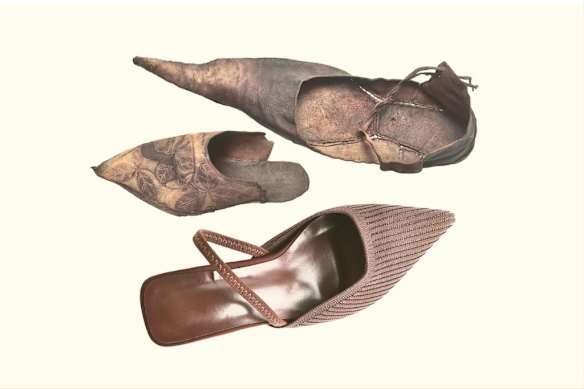
A meta-analysis by Australian researchers in 2010 found more than a third of people aged 65 and over had bunions, compared with fewer than 8 per cent of children. As with many foot issues, being overweight can exacerbate the problem. Again, ill-fitting shoes are thought to play some role. Researchers who dug up 177 medieval adult skeletons from both rural and city cemeteries in Cambridge in 2021 found 18 per cent had bunions – most of whom were city-dwellers at a time when pointy shoes, called poulaines, were in vogue.
‘If your parents or your grandparents had bunions, there’s a fair chance that you will get them as well.’
Perhaps many of their descendants had bunions too (that was beyond the scope of the study) because genetics are a key factor. “If your parents or your grandparents had bunions, there’s a fair chance that you will get them as well,” says Menz. “But you can’t actually do much about that. Wearing shoes that do not compress the toes is beneficial for at least slowing the progression of deformity.”
Aesthetics aside, bunions can affect gait and balance. (In the Cambridge study, researchers found more bone fractures in the skeletons with bunions.) They can lead to hammer toes, where the toes start to curl under the foot, as well as corns, calluses and inflammation in the ball of the foot. Bunions can also make it harder to find shoes that fit.
Pain from bunions is best treated with foot orthoses, splints, manual therapy, taping, exercises and Botox injections to relax the muscles, an Australian study in 2022 found. Or there’s surgery as a last resort – recovery time can be long and complications include nerve damage or mis-realignment. There are many types of bunion surgery, from removing the bony jump (exostectomy), to realigning the toe joint into a normal position (osteotomy) to fusing the two bones that form the big toe joint (arthrodesis).
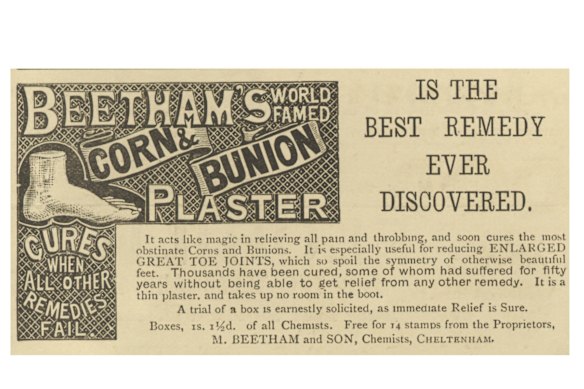
Does it matter if your feet have a lot of callus?
Repeated friction on the feet will trigger the body’s defence systems. Thick, tough skin – callus – builds up in a process called hyperkeratosis, an overproduction of keratin, which is a fibrous protein that helps protect all sorts of creatures, creating hooves, horns, feathers and scales as well human hair and nails.
“A common myth for corns is that they’re caused by a virus or other infection,” Paterson says. “I think people also don’t realise how common both corns and calluses are, and so they can be a bit embarrassed.”
Calluses can be filed away at home with a pumice stone or foot file; a bath can help to soften skin, and applying moisturiser “to help soften thickened skin a little at a time” can help, says the Australian Podiatry Association; “or relieve pressure between the toes with a foam wedge”.
‘I think people also don’t realise how common both corns and calluses are, and so they can be a bit embarrassed.’
But if a callus sticks around, the college adds, it’s time to visit a healthcare professional who might “debride” some of the skin using a sterile instrument as well as advise on longer-term care such as padding in footwear or applying “keratolytics” that thin the hard skin. (People who produce a lot of callus might get ahead of build-up by regularly visiting a podiatrist.)
Ignoring calluses can cause gnarly problems. They can restrict oxygen and blood flow to the tissue underneath – a problem that also applies to corns (see below). “The thicker they get, the more pressure they put on the underlying skin layer, which includes nerve endings, and so they can get painful,” Paterson says. “In certain circumstances, they can get cracked, which can provide a path for bacteria and other infections to get in.”
Corns – shall we go there?
Corns (from the Latin cornu, or horn) are another variation on what’s called traumatic hyperkeratosis and, in their own way, are a wonder of biology and physics. As pressure is applied to a very specific point (often the outer edge of the toe), the body produces keratin that has nowhere to grow. So it turns inwards and down, creating a translucent nucleus or core in the middle of a mound of hard cells over weeks or months. (Soft corns more often form between the toes, becoming white and rubbery from absorbing sweat, and providing a mini-hotbed for fungal or bacterial infection.)
This would be merely interesting, if maybe a bit unsightly, except that the corn’s core can keep descending into tissue that has nerve endings in it. Untreated, they can enlarge and get more painful until, eventually, it can become difficult to walk. “In some cases, the skin underneath can start to break down, and a secondary infection can develop,” says Paterson. Given all of this, they are best treated by a podiatrist.
‘If the forces remain, which they often do, the lesion tends to return after a period of time.’
Even then, corns often return because of repeated pressure or friction on that area of the foot. “If the forces remain, which they often do, the lesion tends to return after a period of time,” Paterson says. “They aren’t caused by a virus or other infection, so medications won’t help.” Corn pads – small and donut-shaped – take pressure off the central core to provide pain relief. “Medicated corn pads are also available,” Paterson says, “but we generally don’t recommend those because the medication breaks the skin down and can cause redness, peeling, burning and other reactions if they’re not properly monitored.”
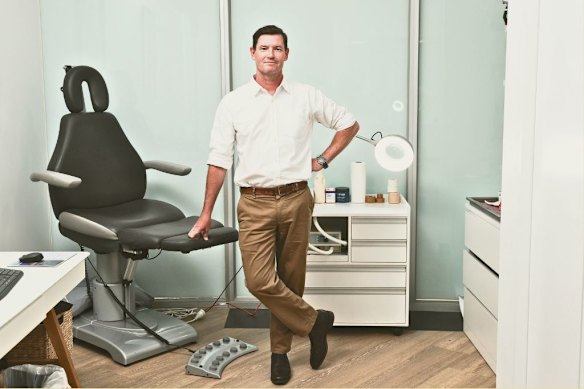
Ideally, Australians would have their feet checked by a podiatrist as often as a dentist checks their teeth, says Menz. “It’s probably a good idea to go maybe once or twice a year just to check up and see how their feet are going.” While people can be squeamish about feet (something about their proximity to the ground and dirt, Menz thinks), the view from the podiatrist’s chair isn’t all bad. Bjorn Lahde says people often ask him how he can look at feet all day. For him, “providing corrective surgery on ingrown nails or the satisfaction of being able to resolve someone’s long-standing wart” are highlights of the job. “And people get to talk to you, unlike in dentistry.”
Get fascinating insights and explanations on the world’s most perplexing topics. Sign up for our weekly Explainer newsletter.
Disclaimer : This story is auto aggregated by a computer programme and has not been created or edited by DOWNTHENEWS. Publisher: www.smh.com.au


