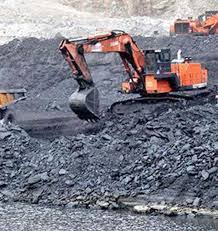
New Delhi: Amid the Prime Minister’s appeal for austerity and energy security measures, the Union Cabinet on Wednesday cleared a Rs 37,500-crore worth coal gasification scheme in the country. The move of the government is aimed at strengthening India’s energy security and reducing import dependence of LNG, urea, and methanol amid the volatile geopolitical situation due to ongoing conflict between the United States and Iran.
Besides, it will also boost production of gas, urea and chemicals from domestically produced coal. The scheme is designed to promote value-added use of local coal resources and reduce reliance on imported fuels. However, the government expects that the utilisation of coal and lignite is expected to generate Rs 6,300 crore annually.
Briefing the media after the cabinet meeting, Union information & broadcasting minister Ashwini Vaishnaw said that an outlay of Rs 37,500 crore of outlay has been kept for this scheme, and there will be an investment of around Rs 3 lakh crore in this, and the projects will be put up for gasifying 75 million tonnes of coal.
Coal gasification refers to the process of converting dry fuel into synthetic gas or syngas, which is used as an alternative fuel and helps reduce carbon emissions. This process supports production of methanol, fertilisers, hydrogen and chemicals, cutting reliance on imports.
The country has 401 million tonnes of known coal reserves and lignite reserves of 47 billion tonnes, which is enough for the next 200 years. “We all know about the current geopolitical situation. So we have to take all the decisions to become Atma Nirbhar. In this context, a big decision on coal gasification was taken today,” the minister said.
Under the scheme, the government said in a statement that financial incentive for any single project would be capped at Rs 5,000 crore, for any single product (except synthetic natural gas and urea) capped at Rs 9,000 crore, and any single entity group capped at Rs 12,000 crore across all projects. “Due to the scheme, the investment mobilisation is likely to be at Rs 2.5 to Rs 3 lakh crore,” it said.
The scheme marks a major step towards accelerating the country’s coal gasification programme, advancing the national target of gasifying 100 million tonnes (MT) of coal by 2030, strengthening energy security, and reducing dependence on imports of key products such as LNG, urea, ammonia and methanol. “The utilisation of coal and lignite is likely to generate Rs 6,300 crore annually from 75 million tonnes of gasification envisaged under the scheme, plus downstream revenue from GST and other levies,” the minister said.
“At present, more than 50 per cent of the LNG is currently imported, it will be reduced. The urea, which we import, will also start manufacturing in India. Ammonia is 100 percent imported today. With this development, new avenues for ammonia production will open. Methanol is currently 80-90 per cent imported and will also be made in India,” the minister said.
As per the statement, under the scheme, the financial incentive at a maximum of 20 percent of the cost of plant and machinery will be provided and the selection would be through a transparent and competitive bidding process, with an evaluation framework benchmarking project cost, coal input, and syngas output. “The incentive will be disbursed in 4 equal instalments and be linked to project milestones,” it said.
India’s import bill for key substitutable products, such as LNG, urea, ammonium nitrate, ammonia, coking coal, methanol, DME, and others, stood at approximately Rs 2.77 lakh crore in FY25, vulnerability further exposed by the ongoing geopolitical situation in West Asia. The incentive builds on the National Coal Gasification Mission (2021) and a Rs 8,500-crore scheme approved in January 2024, under which eight projects worth Rs 6,233 crore are under implementation.
Disclaimer : This story is auto aggregated by a computer programme and has not been created or edited by DOWNTHENEWS. Publisher: deccanchronicle.com