

Calum WatsonBBC Scotland
 Christopher Brindle
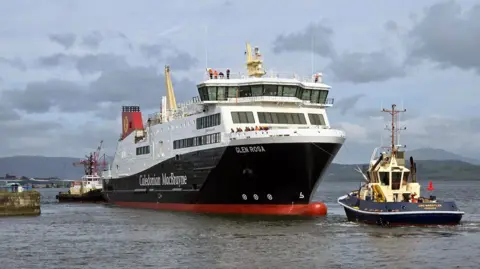
The delivery date for MV Glen Rosa – the second of two dual-fuel ferries being built for CalMac – has been pushed back by up to another six months.
The state-owned Ferguson shipyard said corrosion had been discovered during recent inspections and the ship will require an extra period in dry dock next year.
In a letter to MSPs, it said that would have a knock-on effect on commissioning the ferry, and it was now aiming to deliver it in the final three months of next year.
In a separate update, ferries body CMAL confirmed that MV Isle of Islay, the first of four CalMac ferries being built in Turkey, faces another short delay and will not be handed over this year.
MV Glen Rosa and its sister vessel MV Glen Sannox were meant to enter service in 2018 but the build has been plagued by design challenges and disputes over costs which saw the firm fall back into administration and nationalised.
The second of the hybrid propulsion ships has been moored at the quayside of the Port Glasgow shipyard for fitting out work since its slipway launch in April last year.
At the time of the launch it was hoped it would be handed over this autumn as it was in a far more complete state than Glen Sannox, famously sent down the slipway seven years earlier with painted-on windows and plywood funnels.

 Christopher Brindle
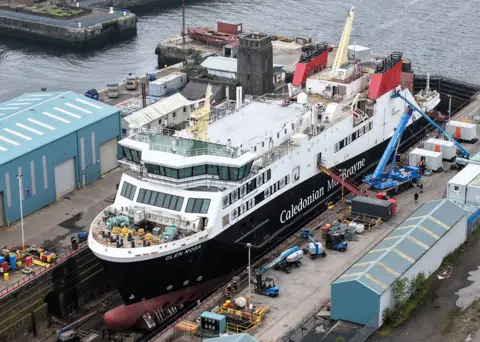
But a final push to get Glen Sannox into service saw resources diverted and a nine-month delay for Glen Rosa was announced in May, meaning it has now spent 20 months in the water.
A dry dock inspection in August revealed corrosion in the propeller tubes and deterioration of paint coatings which will require a longer dry docking next year to remedy.
Ferguson Marine said difficulties in securing a timeslot for docking had a knock-on impact on the schedule for commissioning the ship, meaning it was now aiming for delivery within the fourth quarter of 2026.

Chief executive Graeme Thomson, who joined the firm in May, apologised to those affected by the latest delay including island communities.
He added: “Glen Rosa has been and will continue to be a complex project, but the team and I are fully committed to doing everything we can to bring forward delivery and being as transparent as possible about where we are in the process.
“While these setbacks have confirmed historic systemic issues within our operations, they do not define our future.
“We are embarking on an ambitious modernisation journey that will transform Ferguson Marine whilst we work extremely hard to deliver a Clydebuilt vessel that showcases our commitment to the highest standards of safety and quality.”
A further update on costs is promised in January. The total bill for the two ships, if money paid out prior to nationalisation and written down government loans is included, stands at about £460m, more than four times the £97m contract price.
MV Glen Rosa is eventually expected to join MV Glen Sannox on the Arran route.
Why have the ferries taken so long to build?
The contracts for the two dual-fuel ships – which can run on marine gas oil and liquefied natural gas – were awarded to the shipyard in 2015, just a year after it was rescued from administration by an investment firm led by Jim McColl, a former economic adviser to the Scottish government.
Initially lauded as the start of a revival of Clyde commercial shipbuilding, the build soon ran into trouble and a bitter stalemate developed over claims for extra costs.
McColl’s firm claimed a flawed specification, multiple change requests and interference by the customer – government-owned ferries agency CMAL – had left the firm facing unforeseen design complications and extra expenditure.
CMAL denied this, claiming McColl’s management team had underestimated the complexity of the task and made mistakes in their build strategy while at the same time embarking on a disruptive modernisation programme.
The deadlock forced the firm into administration again and it was later nationalised but design and engineering challenges continued under public ownership with repeated delays and ever climbing costs.
A government-appointed turnaround director, Tim Hair, left in 2022 having been paid about £2m while his successor, David Tydeman, was later sacked by the Ferguson board which had lost confidence in him.
The biggest union representing workers at Ferguson’s, GMB Scotland, said years of “hubris, incompetence and mismanagement” lay behind the repeated delays.
The dual-fuel ferries are the first vessels of their type built by a UK shipyard and the largest ships ever constructed at Ferguson’s which is still working to modernise after decades of underinvestment.
General secretary Louise Gilmour said the 300-strong workforce were not to blame and they shared the frustration of island communities.
She said: “The contracts to build the Glen Rosa and Glen Sannox should have burnished Fergusons worldwide reputation for excellence but, instead, shredded it.
“Skilled and committed shipbuilders were lions led by donkeys as they strove to complete contracts undermined by the hubris, incompetence and mismanagement of ministers, government agencies, and executives from the very start.”
The union is calling for the shipyard to be given a fresh start and chance to move on with a ship order better suited to the yard’s size and current capabilities.
What’s happening with the Turkish ferries?
 CMAL
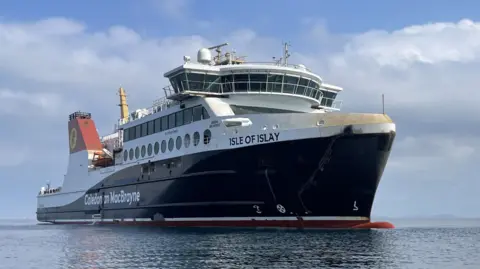
CMALThe next new ferry to be delivered for the CalMac fleet will be MV Isle of Islay, the first of four vessels under construction at the much larger Cemre shipyard in Turkey.
The ship, which will serve the Islay route, was originally due for delivery in October 2024 but has also been delayed several times with the shipyard blaming labour shortages and supply chain issues.
CMAL recently announced that some issues identified by the UK’s Maritime and Coastguard Agency regulator during sea trials were being addressed which might delay the final sign-off for the ship beyond the Christmas break.
In a new letter to Holyrood’s net zero, economy and transport committee, it confirmed it would not be able to take delivery of the ship until after further inspections had been carried out on 5 January.
The ferry will then commence the two-week journey to Scotland and will have undergo crew familiarisation and berthing trials before it enters service.
The Turkish yard is then due to deliver three more new large ferries, for Islay, Harris and North Uist, at six monthly intervals.
Disclaimer : This story is auto aggregated by a computer programme and has not been created or edited by DOWNTHENEWS. Publisher: BBC









