Canada is pushing for a collective G7 and Middle East approach to de-escalating the Iran war, including off ramps that might bring an end to the conflict, the Canadian foreign minister, Anita Anand, has told the Guardian.
In London to meet the UK’s foreign secretary, Yvette Cooper, after of talks with the her Turkish counterpart, Hakan Fidan, she said she hoped a G7 meeting chaired by France, this year’s president of the group, might start to build a broader collective approach to the crisis.
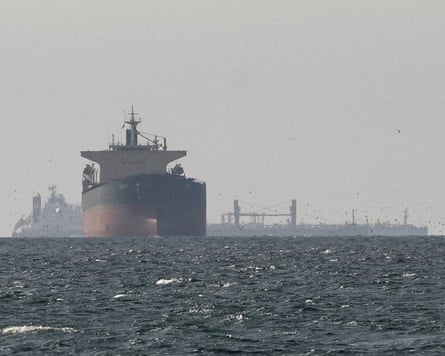
Europe and Canada have largely been left as bystanders in the US-Israeli bombing campaign that Iran has retaliated to with missile and drone strikes against its Gulf neighbours and threats to shipping in the strait of Hormuz. They are only now starting to coordinate their position.
Anand said she had drafted a “document of principles” to share with others “to reduce the risk of regional spillover, to minimise the collateral impacts on non-belligerent states and civilian populations and finally to mitigate local economic shocks”.
“It’s a document I am working with a number of countries on. I am speaking with every G7 country and every partner impacted by the war in the Middle East to stress the principle of de-escalation,” she said.
“It’s important for us to have a conversation about the off ramps. I want to engage with the countries being directly impacted by the retaliatory strikes in particular so this is a collective and coordinated discussion about off ramps.”
Diplomats recognise the extreme difficulty of ending the war because Iran is seeking some kind of guarantee that it will not be attacked again, but that is not likely to be forthcoming in a format Tehran would accept.
Levels of trust between the US and Iran are at all-time low, and Donald Trump may now have set the reopening of the strait of Hormuz as one of his war objectives.
Anand stressed Canada’s lack of enthusiasm for the US-Israeli assault, but at the same time described Iran’s response as reprehensible and a breach of international law.
“We were not consulted on the offensive military operation. We did not participate in the offensive operation. We have no intention of participating in the military operation period,” she said.
“That does that mean we are not concerned about the strait of Hormuz. We recognise the importance of the stoppage of 20% of the world oil reserves. It’s extremely problematic for food supply chains and energy supply chains”.
Canada is home to a large Iranian diaspora, but has not had diplomatic relations with Tehran for 15 years. It has declared the Islamic Revolutionary Guard Corps as a terrorist entity.
European states and Canada have arguably been slow to coordinate their initial response to the US attacks, but their positions are gradually coalescing.
The Canadian prime minister, Mark Carney, recently made a much hailed speech at the World Economic Forum in Davos calling for “middle powers” to be more active in the face of the major hegemons, something they have not done over the Iran crisis.
Anand said Carney’s speech continued to resonate with every diplomat she spoke to. “It identified that we are at a unique point in time where countries with like-minded interests and values can be more powerful and influential together than apart,” she said.
The precise constellation of middle-power alliances would be driven by pragmatism, she said, and would be “different on different issues whether it is the coalition of the willing in Ukraine, whether it is the Nordic five plus Canada on Arctic sovereignty, whether it is Australia, India and Canada on information technology”.
She denied Canada was being forced to spread its diplomatic wings solely because of the difficulties in its relations with Trump, but accepted that it had been pursuing a policy of trade diversification since early 2025.
“Since Mark Carney became prime minister we have signed more than 12 trade agreements over six months on four continents.” The aim she said was to double non-US trade over the next 10 years, she said. “We are doing it with alacrity.”
Anand, a former defence minister, also pressed the case for the UK to join the Defence Security and Resilience Bank. Negotiations on its charter are scheduled to take place in Montreal next week. The aim is for the bank to provide capital for defence firms that want to scale up to meet increasing demand.
Disclaimer : This story is auto aggregated by a computer programme and has not been created or edited by DOWNTHENEWS. Publisher: theguardian.com