
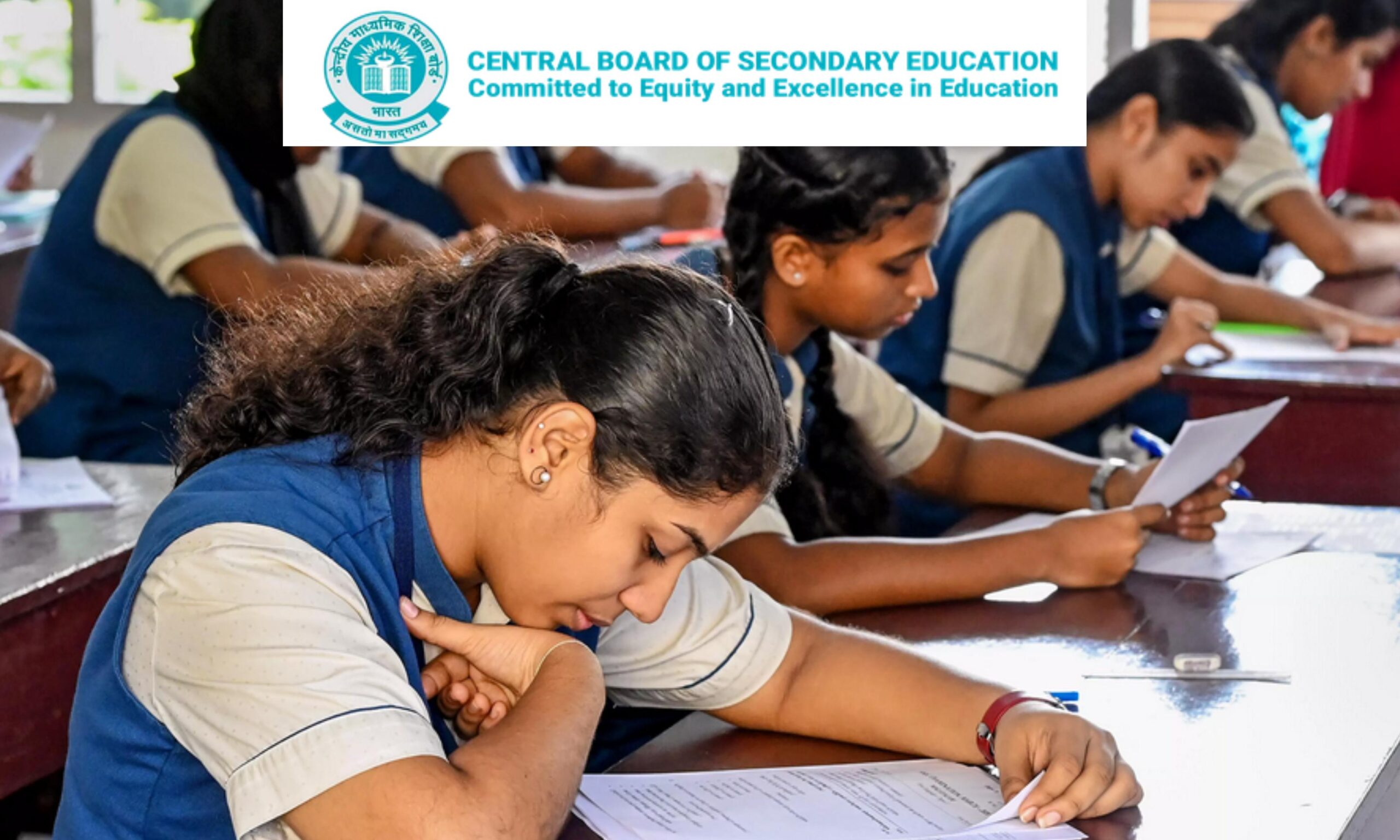
Hyderabad: Educators and parents said the changes mooted by the CBSE in its curriculum offered flexibility but raised concerns about classroom execution, teacher availability, and student pressure. The CBSE last week announced a three‑language system from Class VI and a two‑level pattern for mathematics and science in Class IX from 2026–27, which will be rolled out in phases.
The board has said all Class IX students will write a standard 80‑mark paper, with an optional 25‑mark advanced paper. The advanced score will remain outside the aggregate and appear separately only if a student crosses the threshold.
On paper, this lets students attempt a harder paper without risking their percentage. Teachers say the real test will be common textbooks, limited advanced content, and whether staff can manage two tiers in the same room.
Dr B. Ebenezer, CBSE teacher, educator, and vice‑chairperson of the Hyderabad Sahodaya Schools Complex, said, “This is a brave and strong move. The intent is clear but implementation at the classroom level will be the real challenge.”
That concern runs through the plan. He said it remains manageable if teaching stays common and the difference comes in the papers, where one tests basics and the other pushes higher‑order thinking. Any split in textbooks or content would make it harder. “You will now have two sets of students in the same class, standard and advanced. The question is whether both will follow the same curriculum and textbook,” he said. “If not, that would make things complicated.”
Parents read the policy differently. Roopchand Yadav, whose child studies in a CBSE school, said the language part could reduce strain if choices are sensible. Two compulsory languages may allow a child to take the mother tongue instead of an unfamiliar one, and a carefully handled third language can widen learning. “Trouble begins,” he said, “when schools reduce such subjects to compliance.”
Teachers in Hyderabad say this is where CBSE circulars meet the limits of school readiness. The board has begun webinars and training, but early weeks have seen uncertainty over textbooks and course material.
Ebenezer said the first year will be the hardest and staffing could be a problem, especially outside large cities. “It won’t be difficult to find separate sets of teachers for standard and advanced levels in tier‑1 and tier‑2 cities, but what about schools outside? It won’t be an easy feat,” he said. He also pointed to the risk of hierarchy, with mathematics and science seen as markers of academic worth. “Parents might pressure children as well.”
Language remains another point of friction. CBSE’s plan requires three languages, with at least two Indian languages, and makes the third compulsory from Class VI. “This feels like reinventing the wheel. We had this earlier and now it is being reintroduced,” Ebenezer said, adding that it may reduce uncertainty in states like Telangana where local language learning is already becoming compulsory.
However, Tamil Nadu Chief Minister M. K. Stalin has attacked the rollout as a Hindi imposition, against the state’s longstanding two‑language policy. Further, education remains in the Concurrent List, with language provisions tied to school autonomy and mother‑tongue instruction.
So, Hyderabad educators see the CBSE move in two parts. It gives students a safer way to test depth without affecting aggregate marks. It also leaves schools to manage textbooks, staffing, and timelines as the rollout is still settling. “The bigger question is how schools will actually adopt these changes. Faculty must be trained and aligned quickly. Without that, execution will remain uneven,” said Yadav.
Disclaimer : This story is auto aggregated by a computer programme and has not been created or edited by DOWNTHENEWS. Publisher: deccanchronicle.com





