
Brits who were in Germany before the Brexit cut-off date are facing hurdles trying to get their permanent residence documents. We look at what’s going on across Germany.
When British-Australian national Jo Bennett applied in Berlin to update her post-Brexit document to get permanent residence status two years ago, she found that officials did not appear to know the rules.
“I asked them to convert it to permanent residency as I was then eligible,” says the 47-year-old festival organiser who has lived in the German capital for eight years.
“There was confusion, no one understood the rules, it was all unclear and I ended up just accepting another residency card with an expiry date.”
Fast forward to February 2026 and Jo recently picked up her permanent residence card. It came after she emailed a department at the Landesamt für Einwanderung (LEA) at the start of the year, stating that “under Brexit laws I’m eligible for permanent residency and would like to swap my card”.
“A week later, I got a letter inviting me to an appointment,” Jo says.
Some Britons in Germany – like Jo – are encountering hurdles on their way to get their Article 50 residence permits.
Under the Brexit Withdrawal Agreement, British people who were legally living in Germany before the cut-off date at the end of 2020 automatically had, and continue to have, the right to stay in Germany under what’s known as Article 50.
People gather at Berlin’s Brandenburg Gate on the eve of Brexit. Photo: picture alliance/dpa/dpa-Zentralbild | Britta Pedersen
Those who had been in Germany for less than five years at the time received a short-term permit valid for up to five years, while people who’d lived here for a longer period got permanent residency, known as the Aufenthaltsdokument-GB Daueraufenthalt.
READ ALSO: How Brits who arrived in Germany before Brexit can get permanent residence
Now as more Brits update their ID document to permanent status, various issues are coming to light.
Alison Jones from British in Germany (BIG) says the citizens’ rights group has seen an uptick of queries about getting permanent residence.
“I think the experience that people are having is varied,” says Alison. “It’s not a kind of, ‘oh, panic, everybody’s being victimised, there’s something terrible happening’ – I don’t think that is going on. But some people are having difficulties.”
The issues tend to be linked to immigration offices or individual workers who are not familiar with the rules.
“It is not altogether surprising they don’t necessarily know what the process should be or what they should be doing,” says Alison, pointing out that the Article 50 agreement applies to a relatively small group of people.
“If you look at the numbers involved, there are probably about 90,000 British citizens under the EU exit agreement in Germany,” she says. “There are about 11 million non-German citizens in Germany, and the Ausländerbehörde also deals with all of those cases.”
Know your rights
There is some confusion over the type of residence document Brits should be asking for, and what requirements are needed.
Under the WA, for example, British people do not need to prove B1 language skills to get permanent residence unlike most other nationalities.
Posts on social media suggest that some immigration authorities in Germany are recommending that Brits apply for a general permanent residence permit, rather than the specific Brexit one they are entitled to.
“What most British people should be trying to get is the Daueraufenthalt under Article 50,” says Alison.
“Some of the things that seem to be happening with some local authorities is that they’ve forgotten, like all of us have. It’s a long time ago, and it’s all very boring admin stuff. People have just forgotten what the specifics were about British citizens leaving on the exit from the EU.”
Other Britons say they have struggled to receive a reply or an appointment at their local Ausänderbehörde to update their residence document; a general problem that affects foreigners across Germany and may be linked to staff shortages.
READ ALSO: ‘You need patience’ – what it’s like to get a residence permit in Germany
Alison recommends that Brits “be as clear as possible about what their rights are” and provide the relevant documentation of that.
People can read up on Brexit residence rights in this information document published by Germany’s Interior Ministry.
Some immigration authorities, such as Munich, have a dedicated info page for British people. A spokesperson from Munich also sent The Local a link to the form that Brits in this group have to fill in to get permanent residence.
Meanwhile, a spokesperson from the LEA in Berlin sent us this page on the required documents needed.
It may be reassuring to hear that there are no reports of people not getting permanent residence, even if the process is less than smooth.
“As far as I know, we at British in Germany are not aware of any cases where ultimately somebody’s been refused a Daueraufenthalt (permanent residence title),” says Alison.
“There are cases where they might be, for example, if they’re not self-supporting then they may not be given Dauerauftenthalt but I’m not aware of cases.”
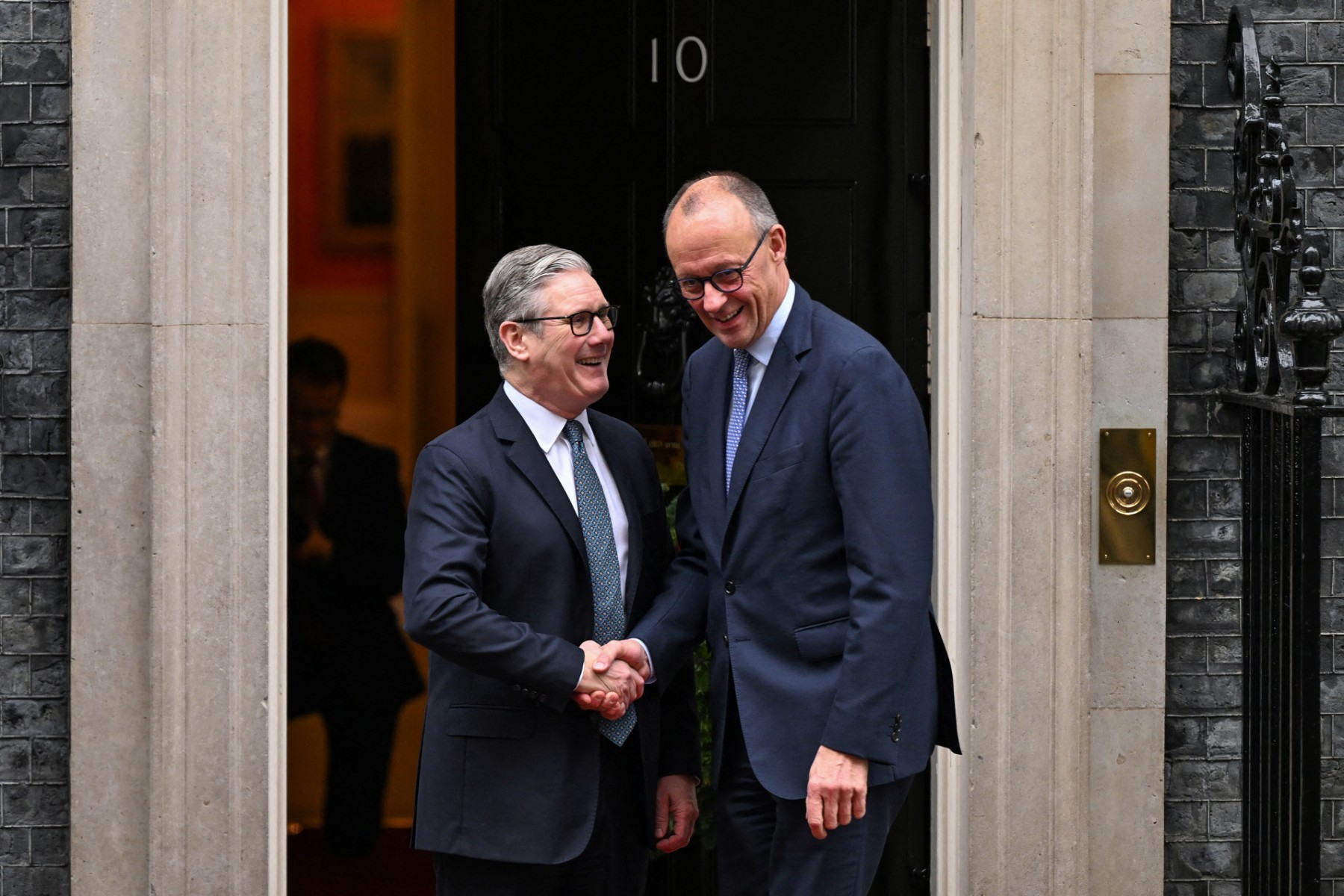
UK Prime Minister Keir Starmer greets German Chancellor Friedrich Merz as he
arrives at Number 10 Downing Street in central London on December 8, 2025. (Photo by Chris J Ratcliffe / AFP)
‘It was so simple’
Although she is in the process of applying for German citizenship, Jo wanted to make sure she had permanent residence status secured.
Jo says once she had emailed the LEA in Berlin and explained the situation, the whole process was simple.
“I just opened up their inquiries form and filled it out and I attached a picture of my passport and a picture of my residency permit and just said, ‘under Brexit, I’ve been here long enough, I’m eligible (for permanent residence)’.
“And then they emailed me back and asked me for a couple more documents, which I emailed to them. And then they sent me an invitation by mail to come in.
“It was so simple,” she says.
Jo believes the problems stem from the general Brexit chaos, which threw up lots of extra bureaucracy and stress for people from the UK living in the EU.
“I think when we all got our residencies initially – when Brexit happened – there was so much confusion,” she says, adding that everyone’s residence permit had a different expiry date “It was all a big mess,” she adds.
However, Jo says she ultimately feels lucky that Brits who were here before the Brexit cut-off date have a fairly easy path at the immigration office.
She feels glad to have got permanent residence, even if she won’t need it for long. “Hopefully, in the not too distant future I’ll be handing that back in,” adds Jo, thinking ahead to becoming German.
Disclaimer : This story is auto aggregated by a computer programme and has not been created or edited by DOWNTHENEWS. Publisher: thelocal.de