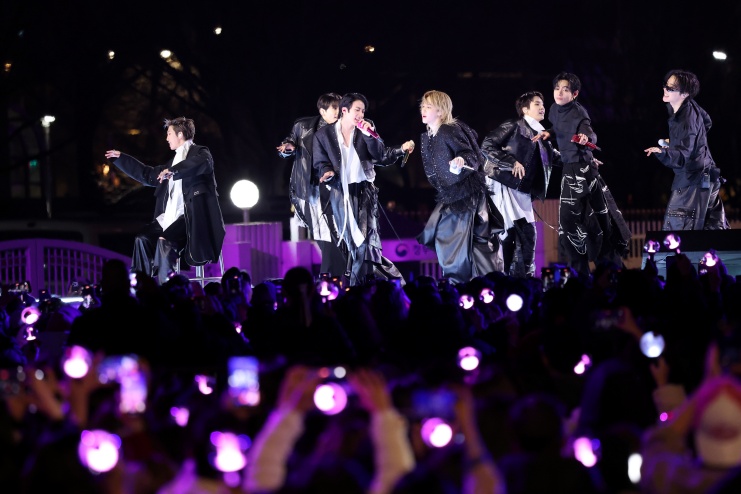
North Korea’s crackdown on South Korean pop culture has done little to dim young North Koreans’ enthusiasm for BTS, with sources inside the country reporting that the globally popular K-pop group has become so embedded in youth culture that those unfamiliar with them risk being labeled out of touch by their peers.
According to a Daily NK source inside North Korea, BTS has worked its way into daily life among young people not only in border regions but in the capital, Pyongyang, where being unaware of the group is enough to leave someone on the outside of peer conversations.
While North Korean fans know they like BTS and some even understand the word “fan” in its international sense, most are unaware that the group’s official fandom is called ARMY, the source said.
“Some young people started liking them after actually hearing the music, while others became interested after hearing about them from peers,” the source said. “A lot of them quietly talk among themselves about things like the members’ looks and dancing.”
Coded language keeps BTS fandom alive
Rather than abandon their interest under intensified surveillance, young North Koreans have adapted, developing slang to discuss BTS without drawing official attention. Instead of using the group’s full name, which could attract scrutiny from authorities, they refer to the group as “Bangdan” or “BT.”
“Young people these days don’t stop talking about South Korean singers just because crackdowns have gotten stricter,” the source said. “They just change the way they say things so that only they understand. They often call Bangtan Sonyeondan ‘Bangdan’ or ‘BT’ instead of saying the full name.”
Phrases like “Bangdan’s songs are so good” or “I want to see BT in person” have become common ways of expressing fandom while avoiding detection.
The coded language reflects the dangerous legal environment young North Koreans navigate. The Reactionary Ideology and Culture Rejection Law, enacted in 2020, bans the consumption and distribution of music, videos, and publications from South Korea and other countries deemed hostile to the state. Penalties can reach the death penalty for serious violations. Since the law took effect, authorities have broadened enforcement to target even South Korean speech patterns and expressions, with young people bearing the brunt of the campaign.
Despite the crackdown, appetite for South Korean content has not faded. Most young North Koreans access BTS music, photos, and videos through USB drives and SD cards loaded with outside media that circulate informally. In some border areas where South Korean television signals bleed across the frontier, young people have reportedly watched BTS content directly on their TV sets.
Daily NK asked multiple young North Koreans, through the source, why they like BTS. “The songs are good, the dancing is attractive, and the way they style their hair and clothes is polished and cool in a way that’s hard to pull off here,” they said.
Young people added that even middle school students are not only drawn to BTS music and choreography but want to dress and style themselves like the members. “Boys want to look like BT, and girls dream of dating someone like BT,” they said.
Favorite tracks cited included “I’m Fine,” “Go Go,” “Danger,” and “Spring Day.” When asked which member they liked most, several names came up, including RM, Jimin, and Jungkook. Notably, young North Koreans refer to RM by his legal name, Kim Nam-jun, and use the Korean word “jojang” (group leader) rather than the English loanword “leader,” reflecting North Korea’s broader push to limit foreign language use in everyday speech.
When asked what they would do if they lived somewhere they could freely listen to music and follow artists, their answers were straightforward: go to a concert, play recordings as loud as they wanted and copy the dances, dress up like the members, or meet them in person and take photos.
Reporting from inside North Korea
Daily NK operates networks of sources inside North Korea who document events in real-time and transmit information through secure channels. Unlike reporting based on state media, satellite imagery, or defector accounts from years past, our journalism comes directly from people currently living under the regime. We verify reports through multiple independent sources and cross-reference details before publication.
Our sources remain anonymous because contact with foreign media is treated as a capital offense in North Korea — discovery means imprisonment or execution. This network-based approach allows Daily NK to report on developments other outlets cannot access: market trends, policy implementation, public sentiment, and daily realities that never appear in official narratives.
Maintaining these secure communication channels and protecting source identities requires specialized protocols and constant vigilance. Daily NK serves as a bridge between North Koreans and the outside world, documenting what’s happening inside one of the world’s most closed societies.
Disclaimer : This story is auto aggregated by a computer programme and has not been created or edited by DOWNTHENEWS. Publisher: dailynk.com