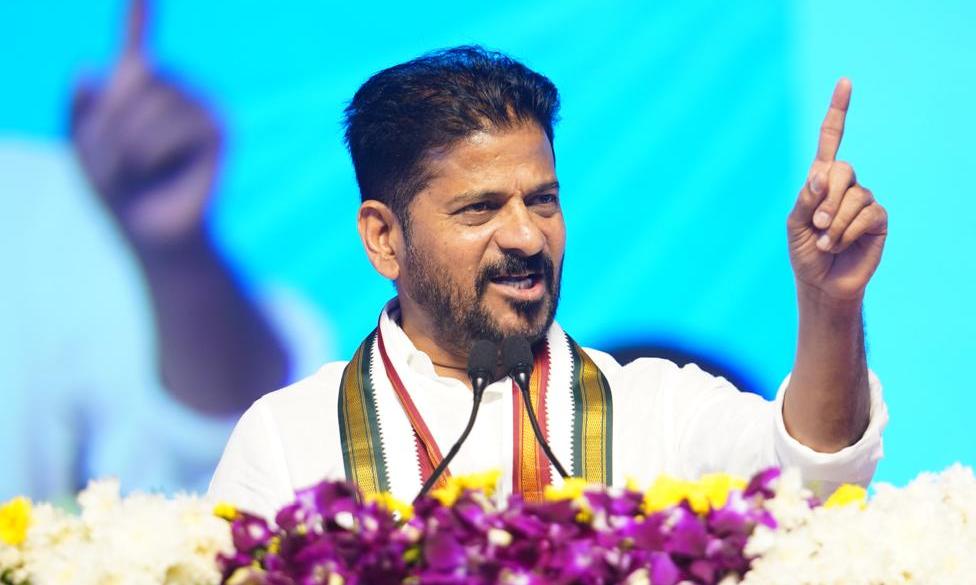
The unprecedented victory of the Congress in the urban local body elections in Telangana, with a strike rate of almost 90 per cent, has put Chief Minister A. Revanth Reddy in the numero uno position in the party as well as the government. It has secured his Chief Ministership for the full term beyond any doubt.
However, to realise his dream of retaining power in the next Assembly elections, Revanth Reddy has to put his administration — both at the state government level and on the ground — on a constant delivery mode. The responsibility of serving the rural areas too lies with him, as the Congress made considerable electoral gains in the recently held gram panchayat elections also.
The next litmus test for Revanth Reddy will be capturing the Greater Hyderabad area, which is now trifurcated into Hyderabad, Cyberabad and Malkajgiri municipal corporations. Voters in this area, impressed with the development façade that then IT minister K.T. Rama Rao had projected, stood by the Bharat Rashtra Samithi (BRS) in the 2023 Assembly elections, denying the Congress victory in any of the 24 seats. Revanth Reddy, however, is keen on leaving his imprint on Hyderabad by winning all the three corporations, which will play a crucial role in the 2029 Assembly elections.
Revanth Reddy’s Telangana Rising 2047 model, which envisages transforming Telangana into a $3-trillion economy by 2047, using Hyderabad and the surrounding area as the growth engine, got a fillip, with the Central government announcing big-ticket infra projects like the Regional Ring Road and a speed rail hub at Shamshabad. The Chief Minister was of the strong view that the core area of Hyderabad and the proposed development clusters between ORR and RRR will make India’s fifth economic powerhouse a global city.
Despite severe financial constraints, the Revanth Reddy government managed to fulfil the majority of its poll promises such as the free bus facility to women, crop loan waiver, free power to the poor, and new ration cards, to name a few. Supply of fine variety of rice through the public distribution system, at a time when prices skyrocketed, earned the affection of the marginalised sections, and making recruitment in the government sector a continuous process helped in creating thousands of government jobs.
Employment creation in the private sector, though a bit sluggish due to distress in the realty sector, registered a marginal growth because of the flow of global investments in the IT sector. On the political front, the masterstroke is his unrelenting pursuit of social justice by resolving the decades-old Scheduled Castes classification, and following the “jitna aabadi utna haq” slogan of his party leader Rahul Gandhi, which, in other words, means increased reservation for the underprivileged classes.
Though legal impediments prevented him from legalising the enhanced reservation for people belonging to the Backward Classes, Revanth Reddy found a political solution — giving more tickets to candidates belonging to the community. This move not only endeared him to these sections, but also forced the opposition parties to toe the Congress’ line. Today, in Telangana, 55.46 per cent of the elected councillor/corporator posts are held by persons from the Backward Classes, which is more than the mandated 28 per cent reservation and 35 per cent in municipalities and corporations respectively. Once the final results of the election for the chairpersons of the ULBs emerge, there will be more BCs in power because of the Chief Minister’s decision to continue the tradition.
Disclaimer : This story is auto aggregated by a computer programme and has not been created or edited by DOWNTHENEWS. Publisher: deccanchronicle.com