Famous faces line up alongside new discoveries in this year’s feast of Gallic cinema.
This year’s French Film Festival serves up star turns (including Isabelle Huppert as The Richest Woman in the World and Jodie Foster in A Private Life), along with typically frothy Gallic romances and so much more. Here are four festival offerings that made a splash on the international circuit.
Enzo
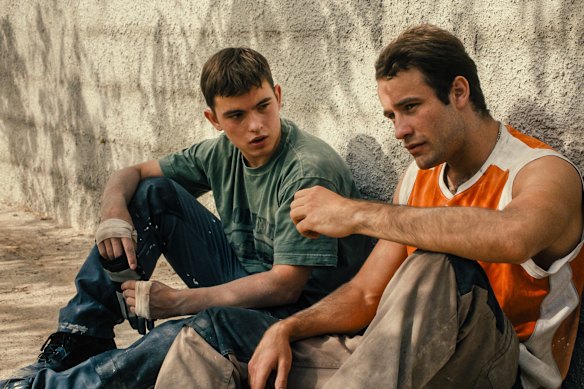
Seven weeks before shooting, Robin Campillo (best known for 2017’s BPM, an energetic recap of the fight against AIDS) took over directing this last film by veteran director Laurent Cantet, who was then dying of cancer.
The two friends’ sensibilities – gay and straight, older and younger – blend in this perceptive, ambiguous portrait of an upper-class teenager who rejects his family’s ambitions to become a builder’s labourer. Enzo turns out to be hopeless with a hammer, but embraces workplace camaraderie – especially with the Ukrainian worker Vlad, whose honest toil and association with a just war fills him with a romantic yearning.
“His desire is haunted with a lot of elements,” says Campillo. “He wants to go away with this guy: two people storming through the night. It’s a fantasy but a fantasy connected to the body.” We forget the intensity of adolescence, he says, but we’ve all been there. “Everything burns inside you, everything is too much – and it’s good.”
Case 137
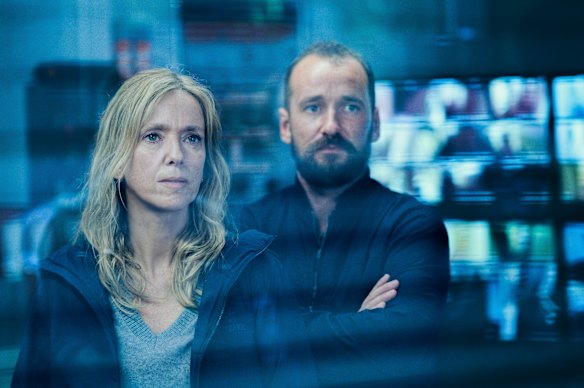
A perfectly paced police procedural, Dominik Moll’s immersive account of an internal investigation of police brutality finds its focus in a superb performance by Léa Drucker as the investigating officer. A family from a country town who came to Paris with the Yellow Vests movement, eager to protest against the closure of their local bus service, is devastated when a police officer shoots teenage Guillaume in the head. The boy is left with brain damage; meanwhile, his best friend goes to prison for six months. He did nothing, but nobody in court listens to him.
“When the [Yellow Vests] protests began, I didn’t know what to think of it,” says Moll. The media painted the thousands of protesters as far-right extremists. “And I guess in the beginning I fell for that. But then I started to get more interested. It was mainly just people who wanted to be seen. What struck me was after the lockdowns, nobody talked any more about this movement that had shaken the whole country. But the fractures are still present, so how can we talk about that?”
Alpha
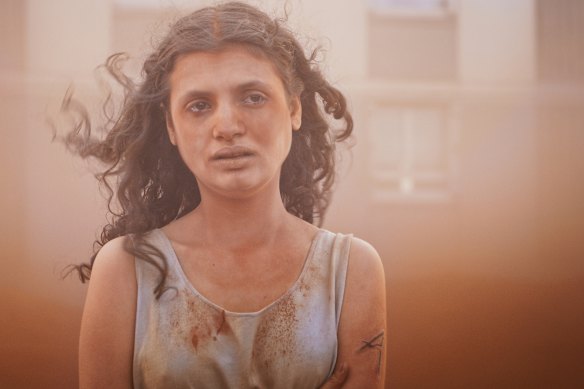
Julia Ducournau, whose flamboyant scorcher Titane won the Palme d’Or at Cannes a few years ago, takes a futuristic voyage into the lower depths. When a virus spreads that turns the infected into crumbling ceramic statues, Alpha, 13, believes herself to be one of them after a class bully forces a tattoo on her. Her uncle Amin, an abject junkie, hopes for death; her mother, a doctor whose hospital is surrounded by the rioting sick, is on the brink of collapse but compelled to care for everyone, even feckless Amin. “Too much love makes you crazy,” he tells his niece between his jack-knifing spasms of withdrawal.
Ducournau’s memories of the AIDS crisis, the more recent scars left by the pandemic and her own immigrant family’s crises are all part of Alpha’s searing, squalid mix. “If I am going to do a film with love, I cannot talk about another family than mine,” she said in Cannes, where Alpha appalled at least as many people as it impressed. “Every time you make a film, you expose a side of yourself you didn’t even know existed before you started. That is what is scary, that you are naked in front of everyone.”
The Little Sister
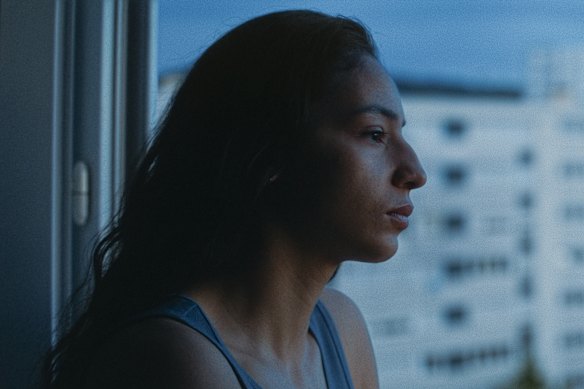
Fatima is the youngest in her devoutly Muslim Algerian family, a beloved but puzzling daughter who hangs out with loudmouth boys and horses around, although she bridles when her family suggests she’s a lesbian. Hafsia Herzi’s adaptation of Fatima Daas’ autofiction The Last One is no hackneyed coming-out story, however; it is about one girl’s determination to establish her own identity, achieved on screen by an appealingly fresh performance by Nadia Melliti. An almost domestic intimacy tempers the drama of Fatima’s first real affair – with a Korean nurse who turns out to suffer from crippling depression – her awkward relationship with her family and a toe-curling interview with the imam, to whom she turns for advice.
“She doesn’t talk about her life with anyone, so she goes to him,” says Melliti, who spent a lot of time with Daas to prepare for the role. “But this is what I love in the book: this isn’t someone who says ‘no’ to her religion and education. She wants a way to live with the two of them. I identified with that. She was a fighter.”
The French Film Festival screens in Melbourne, Sydney and Brisbane until April 8; affrenchfilmfestival.org
Must-see movies, interviews and all the latest from the world of film delivered to your inbox. Sign up for our Screening Room newsletter.
Disclaimer : This story is auto aggregated by a computer programme and has not been created or edited by DOWNTHENEWS. Publisher: www.smh.com.au