
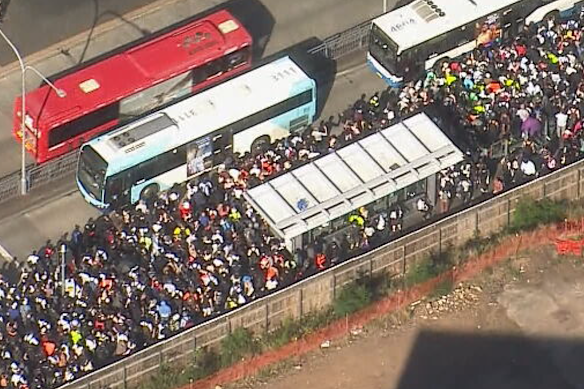
Cindy Yin’s article rubs salt into the wound for commuters already grappling with the now almost-routine weekend closures of Sydney’s rail system (“Why 24-hour public transport in Sydney could become a reality”, March 23). Do those managing Transport for NSW truly appreciate the scale of disruption these repeated outages are causing? Weekend traffic congestion has become the norm, exacerbated by the influx of replacement buses onto already crowded roads. Now, commuters are also facing a shutdown of the Metro line over Easter, precisely when many people need public transport to see family and friends. At the same time, we have a looming fuel crisis and the price of petrol has soared. Commuters are continually encouraged to use public transport, yet the very system they are asked to rely on is increasingly unavailable when it is needed most. In this context, it is reasonable to ask what concessions or support NSW Transport Minister John Graham is offering. If we can have a 24-hour service for the Mardi Gras, can we please have a normal service over Easter and reduce the need for so many weekend outages? Marie Belcredi, Epping
I was one of the 74,000 fans who attended the Matildas game at Olympic Park on Saturday night. While the result was not what we wanted, I would like to compliment Sydney trains on its efficiency and service. There is no need to use cars when our public transport works so well. I felt proud to be a Sydneysider. Tanya Burrows, Millers Point
Voter dissatisfaction
Sean Kelly captures the problem of voter dissatisfaction perfectly (“Only one party can defang One Nation, and it’s not the Libs”, March 23). If Anthony Albanese is too scared to boldly tackle inequality and the challenges that lie ahead, then we will not be surprised if parties of protest and resentment (namely One Nation) capture the votes of people who feel they have been left behind. The same theme has played out through Brexit in Britain, MAGA in America and other far-right parties around the world. One Nation may never get enough votes to form a government, but they just might get enough Senate seats to stymie government legislation. Making small changes to capital gains tax and negative gearing will be nowhere near enough to divert this trend. Wealth inequality, under-investment in public education and the need for serious taxation reform should be priorities for Albanese and his front bench. Catherine Rossiter, Fadden (ACT)
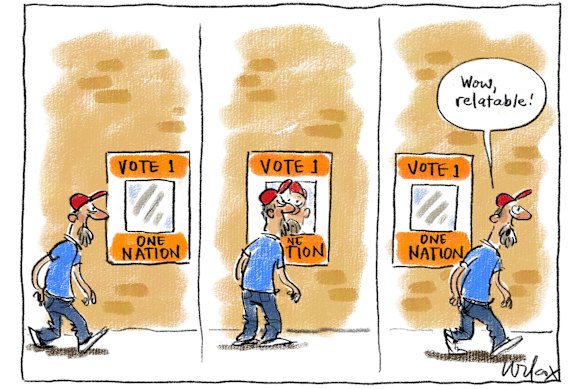
It remains incomprehensible to me that the Pauline Hanson creation, One Nation, remains relevant. The party has no credible policies but is expert at exploiting dissatisfaction in the community and has helped reduce the Liberal Party to a pale shadow of its former self. That itself is an accomplishment and should make it simpler for Labor to embark on an ambitious program of long-term, long-overdue reform, ignoring the shrill noise of protest that will emanate from those who have abandoned the Liberals. As Sean Kelly notes, now is the time for Labor to take the initiative. There may never be a better time. Max Redmayne, Drummoyne
I’m sure millions of Australians share my concern about the damage to our social fabric that could be caused by the widening gulf between the haves and the have-nots. The success of One Nation in the SA election is a stark reminder of that. We can blame years of Liberal Party trickle-down economics for much of this, but it’s Labor that is in a position to act, and it’s us, the citizens, who must embrace the changes. We have become a nation where it’s the wealth of your parents that is the defining aspect of your life, not your education or your willingness to work hard and save. Those of us who are financially secure may have worked hard for it, but the blunt reality is that the generational transference of family wealth at the scale it’s occurring in Australia will destroy us, as success comes to rely more on inheritance than productivity or wages. We can let the government do something about it, or we can protect what’s ours at any cost, but the “have-nots” have a way of making their feelings known, and rightly so. Even if we don’t care about the plight of others, we must embrace change. Resistance is futile. Prue Nelson, Cremorne Point
Correspondent Tony Sullivan makes an excellent point about Angus Taylor’s simple world view (Letters, March 23). Taylor’s reductive approach to serious issues is no surprise to those who observed him in government, but it also points to a more complex issue – the Liberals’ deepening women issue. While no fan of Sussan Ley, the daily attacks on her credibility while opposition leader were vicious and relentless. Meanwhile, since Angus Taylor has stumbled into the job, the persistent criticisms have miraculously vanished, even though some of his tone-deaf comments clearly require critical mention. Does anyone spot a pattern here? Alison Stewart, Riverview
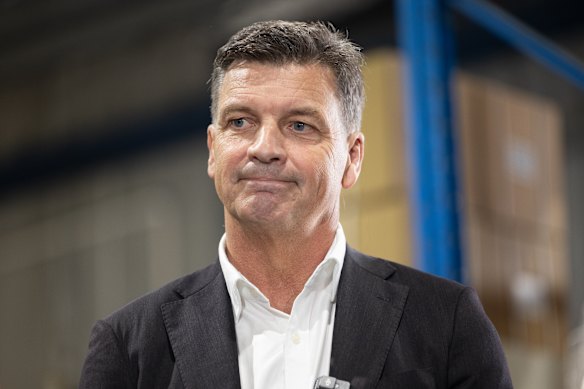
Sean Kelly relates that tax expert Bob Breunig told a Senate Committee: “I don’t think we’re back to pre-French Revolution times, but I’m worried about that.” If we are already there, I’m imagining that Pauline Hanson as a reincarnated Marie Antoinette is already giving advice to the electorate: “Let them eat Angus.” Paul McShane, Burradoo
Naughty corner
Your editorial shows schools are at the front line of a changing social contract, in which the usual boundaries and expectations have broken (“Schools principals and the need to discipline unruly parents”, March 23). To their cost, educators – like workers in hospitals and the service industry – routinely absorb the overflow of a more volatile society. A “bouncer” on every school gate may be a welcome support for schools, but it is a disturbing comment about the state of our society. Greg Bugden, Armidale
It’s hard to know where the irony starts and finishes here. Private and public schools are now discovering that recalcitrant parents need to be sent to the naughty corner. At the same time as 20 per cent of the electorate is embracing the lunacy of One Nation and its platform of hate. And the best that the new Coalition zoo can come up with is more children from more bad parents. Tony Doyle, Fairy Meadow
Career passport
Clancy Yeates suggests that AI will make life more challenging for job-seeking university graduates (“AI technology could make uni degrees less valuable”, March 23). This may well be true for those in the currently lucrative fields of law, accountancy and commerce. However, the humanities and the creative arts, disciplines based on critical thinking and innovative solutions, are well-placed to survive the transition. The humble BA, a degree that was first conferred in medieval times, is most likely to continue its status as a passport to future careers in many directions. Joanna Mendelssohn, Dulwich Hill
Thirsty for data
Given the vast quantity of electricity and water required by data centres, merely setting expectations about reducing their impact on key resources is inadequate (“Data centres should back renewable transition”, March 23). In the context of renewable energy production, the issue of power transmission from dispersed sources has been important. Ideally, data centres should be near the solar and wind farms, possibly establishing their own battery storage, and benefiting from cheap electricity. Rather than burdening the power grid, they would only require high-capacity fibre optic cables to be connected to the internet. For water supplies, data centres could be near lakes, for example, Liddell and Wallace, where coal-fired power stations have been decommissioned, possibly even using the remaining cooling towers for recycling water. Roger Epps, Armidale
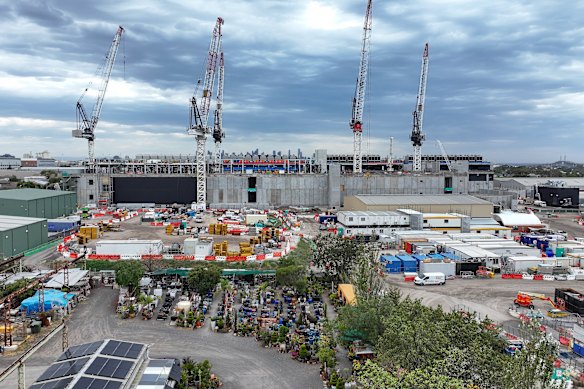
Surely in Australia, a dry continent with recurring droughts, water is the biggest worry. Data centres require vast quantities of water for cooling. Where is it to come from? Where will the heated water be discharged? I see little discussion of this issue and little regulation proposed. Katriona Herborn, Blackheath
Resources and reprisals
Correspondent Ben Basger asks, “who were the idiots who put the mullahs in charge of world oil and gas stability?” (Letters, March 23). The answer is Mother Nature: she put the oil and gas in the Middle East, in the mullahs’ countries. After years of being economically raped by BP, Shell and the US oil companies, it is hardly surprising that these countries decided to take control of their own resources. It’s the same as we Australians wishing to own and control our natural resources. After such abuse at the hands of the West, it’s hardly surprising that the Arab states are antsy. Sorry, Western countries, but you reap what you sow. Peter Gunn, Hornsby
In response to Ben Basger’s question: It began in 1953 when Iran dared to suggest that they might control their own resources. Those who wanted to control the world’s oil and gas, Britain and America, toppled a relatively democratic government and installed a puppet regime with the Shah as its nominal head. With the destruction of the secular government, leadership of the resistance movement fell to the only other organised force in Iran, the Islamic religion. So, Ben, the “idiots” were the British and the Americans. The next question: What happens when the mullahs fall? Don’t expect a democratic outcome. Been there, done that. Paul Sowter, Westleigh
The current situation in Iran is a direct result of the CIA helping overthrow a legitimately elected government in the early 1950s at the behest of oil companies. The puppet Shah lasted until 1979 and the swing in the opposite direction following his overthrow led to the rule of the mullahs. Yes, another big own goal by the US. Philip Dowle, Wickham
Perhaps a more important question would be “how quickly can we all move beyond oil and coal?” This war being waged by the most reprehensible US leadership since World War II may have the beneficial consequence of forcing oil consumers to look harder at the alternatives. Tom Mangan, Woy Woy
If the Australian government applies a 25 per cent tax on gas exports and the gas companies carry out their threats to stop investing in new projects, we could be lucky. That is just what we need to tackle climate change. Allan Rees, Moruya
Lessons of history
It’s been observed that Trump’s war on Iran ignores important lessons in history (Letters, March 23). In fact, it is difficult to think of any war declared on another country in history that has ultimately ended well for the aggressor – Napoleon, Hitler, Stalin, name your own. And Donald Trump and Pete Hegseth seem to be playing checkers with this, while other nations are playing chess. Don Palmer, Gordon

When advised on Robert Mueller’s passing the response of President Trump via Truth Social was “Good, I’m glad he’s dead” (“Former FBI director dies”, March 22). This is the same person who took people to task for comments they made about Charlie Kirk after his assassination. Suresh Rajan, Stirling (WA)
Why is it that every time I hear a quote from Donald Trump (“Trump sets deadline for strait to open”, March 23) I’m reminded of Plato’s quote “Wise men talk because they have something to say; fools, because they have to say something”? Peter Singer, Hamilton South
Money transfer
The $9 billion wagered annually in NSW is not actually “lost” (Letters, March 23). Most of it is simply transferred from punters who make a net loss to those who are smarter or better-informed. Clubs use their slice to fund their operations, which benefit the whole community. The rest helps to fund our voracious demand for government services. John Christie, Oatley
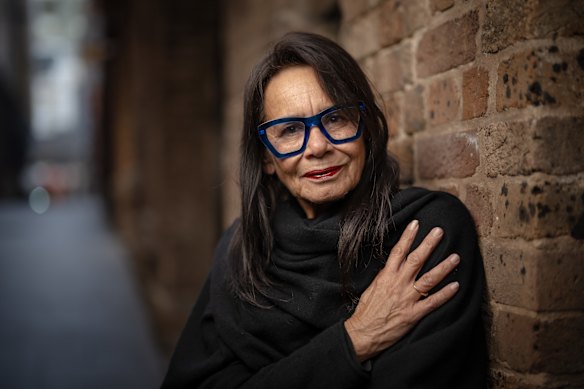
Vale, Rhoda Roberts
Rhoda Roberts left us an extraordinary gift through her wisdom, her energy and her commitment to the communities she advocated for (“Indigenous leader who coined ‘Welcome to Country’ dies aged 66”, March 23). She reached over the “invisible divide” and helped so many Australians come together. Even without knowing her personally, I feel enriched in my own life through her humanity and generosity of spirit. Vale, Rhoda Roberts Beverley Fine, Pagewood
Firm and gentle strength is how I remember Rhoda Roberts in her days as head of Indigenous programming at the Sydney Opera House. A dependable force of nature in uncertain times, Rhoda certainly contributed her service to our humanity in spades. Rhoda was one of those people who wear the well-earned title of a leader’s leader. Rest in peace dear lady, and thank you. Neville Williams, Darlinghurst
Scythe-fi
Michael Deeth complains about the rate of growth of his lawn and the need to mow more frequently (Letters, March 21). I have a solution for him: buy a robot mower. I saw one last week, unsupervised and uncomplaining, doing an excellent job on a neighbour’s half-hectare block. Isaac Asimov would have been pleased. Brian O’Donnell, Burradoo
Perspective
My friend’s family had to flee Germany in the 1930s because they were Jewish. After the war and at school here in Australia, she was bullied because she was “the German girl”. Ruth Holmes, Crows Nest
- To submit a letter to the Sydney Morning Herald, email letters@smh.com.au. Click here for tips on how to submit letters.
- The Opinion newsletter is a weekly wrap of views that will challenge, champion and inform. Sign up here.
Disclaimer : This story is auto aggregated by a computer programme and has not been created or edited by DOWNTHENEWS. Publisher: www.smh.com.au




