In August 2022, Olena Yurchenko stumbled across a heated discussion on a Russian-language online forum – and made a discovery that would ultimately affect US and European sanctions policy on the Ukraine war.
The war had begun six months earlier. Yurchenko, 22, had been forced to leave Ukraine for Latvia after Russian strikes on her home town in the north. She had joined a nascent effort to pressure western companies to move their operations out of Russia. But the “name and blame” tactic only went so far, she said.
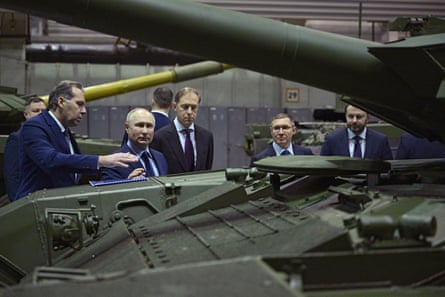
Her discovery was about computer numerical control (CNC) machine tools, which are used in almost all modern precision manufacturing. Without them, Russia would have to machine-cut key military components – tank hulls and missile casings – by hand.
Russia does not make CNC machines, Yurchenko found out. In fact, only a handful of companies in the world do. After over a year of investigation, and many meetings, the EU and the Biden administration put CNC machines on the sanctions list.
These sanctions, which led to a 2025 fine against the US manufacturer Haas Automation, have not stopped Russia manufacturing military components. But it has been forced to go to great lengths to obtain the machines, said Yurchenko.
“Russians used to buy 70% of the CNC machines from the west. Now they are buying 80% of their CNCs from China. And these CNC machines are of a lower quality, bad precision, like a one-time razor,” she said. Russia also attempts to smuggle CNC machines in through Belarus and central Asia.
More than in any previous conflict, civil society groups and a loose band of international volunteers have shaped the course of Europe and the US’s efforts to support Ukraine. The US and the EU have together announced more than three dozen rounds of sanctions since the start of Russia’s full-scale invasion of Ukraine, covering thousands of entities from defence conglomerates to plastic manufacturers. Many of the more precise actions have been identified not by officials in Washington or Europe, but by a loose, worldwide coalition of civil society organisations and individual volunteers who have devoted themselves to uncovering exactly what Russia needs to keep sending men and machines to the war.
Chief among these are the “economic fighters” of Ukraine: organisations such as ESCU, which has a team of eight analysts, and loosely coordinates with the government’s war effort. But there is a broad coalition of Americans, Europeans and even Russians bound together in a wide-ranging civilian network.
Together, they have mapped the materials and supply chains that sustain the war, from Arctic-going barges manufactured in Singapore to chromium mined in Kazakhstan. Their efforts have changed the art of economic warfare, say officials.
“We have done 19 sanctions packages so far, two of them under the Danish EU presidency,” said Simon Kjeldsen, the sanctions coordinator for Denmark’s foreign ministry.
“Each of the packages have closed some loopholes and targeted Russian circumvention. And they have often done that … [with] a correlation and inspiration from what has been uncovered by Ukrainian civil society organisations.”
Civil society groups “have the energy and the investigative wherewithal to really drill down on supply chain dynamics, really niche areas of violations of sanctions, whether it’s energy or banking or export control violations,” said Laura Cooper, a former US deputy assistant secretary of defence for Russia, Ukraine and Eurasia.
“They do so with great precision. This is very helpful especially in the context of government offices that are largely overworked, under-resourced and can only follow so many leads at once.”
Sanctions have not forced Russia to end its war in Ukraine, nor have they made it change course by bringing its industrial base to ruin. But over time, they have eroded its capacities. The EU’s sanctions envoy said this month that Russia’s efforts were becoming “unsustainable” because of the way sanctions have distorted its economy.
“Their effects are not immediate, unfortunately,” said Ilona Khmeleva, the secretary of ESCU. “If we have sanctions today, we’ll see the results next year. The problem is that sanctions are like little cuts. If you have a lot of them, you can stop Russia.”
Diesel engines, mechanical lubricants and chromium
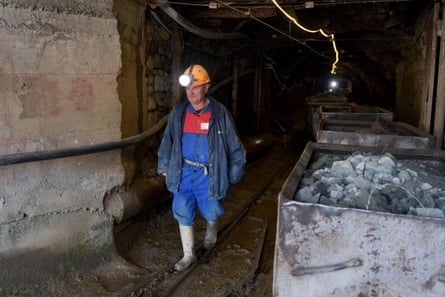
For an advanced economy with a legacy of manufacturing, Russia has a surprisingly hollowed-out industrial base.
That was what Andrew Fink, a former US defence contractor, discovered in 2021 shortly before the start of the full-scale invasion.
“I was talking to a Ukrainian friend of mine about other things that the United States could sanction to potentially deter a war,” he said. His friend told him that Russian corvettes – small, missile-carrying-boats in the Black Sea – were built using Chinese copies of German engines. “I thought this was very interesting, that Russia is not even able to make diesel engines.”
Yurchenko reached roughly the same conclusion on CNC machines: “In Russia specifically they are critical, because most of the military complex specialists either died or drank themselves into an early grave after the fall of the Soviet Union.”
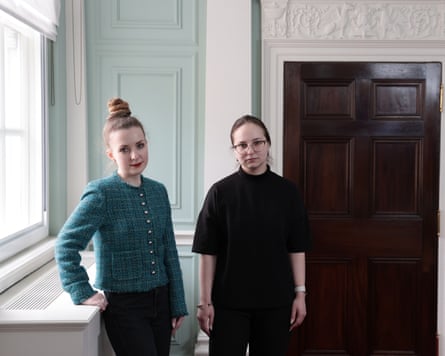
Fink was able to confirm the finding in an old interview, in which a senior Russian engineer defensively explained to journalists why Russia struggled to manufacture engine components. The discovery launched Fink, 36, into a years-long obsession with unpicking Russia’s war economy.
In 2023, researching the imports of a Gazprom subsidiary, he found that Russia buys vast quantities of mechanical lubricant additives abroad, mostly from Chinese and Korean manufacturers. These are a class of difficult-to-manufacture chemicals added to petroleum to produce motor oil; there are only a handful of companies in the world that produce them. Without them, Russia would struggle to produce lube for mechanised warfare.
Fink brought the tip to the US anti-corruption group DeKleptocracy, which is headed by a former state department Russia expert, Kristofer Harrison, who began a two-year pressure campaign to limit the export of these chemicals to Russia.
Harrison told the Guardian the current level of CNC smuggling, for example, “indicates how badly [Russia] needs western technology to keep their economy going”.
There have been others. In 2024, ESCU led a successful campaign to convince the EU to interdict chromium exports to Russia. Chromium is a kind of metal used to plate artillery barrels; Russia depends on imports from Kazakhstan and Latin America.
In 2022, DeKleptocracy was part of a coalition of civil society groups that pushed the Biden administration to impose sanctions on Arctic-going vessels – barges and ice-class tankers – which are necessary to service and build Arctic LNG 2, the gas terminal that Russia is building roughly 1,000km (620 miles) east of Murmansk.
These sanctions arguably slowed the project for years. Russia obtained its first ice-class tanker – capable of transporting the gas through the Arctic waters to the transshipment terminal at Murmansk – last month.
Cooper and Kjeldsen, the US and Danish officials, say the coordination between governments and groups such as ESCU and DeKleptocracy, along with tens of others, may outlast the current conflict.
“This is a new approach and it’s a way of harnessing the huge public outrage that we saw after Russia’s invasion of Ukraine. We saw energy and determination, not just from within Ukraine, but from around the world to try to hold Russia to account,” said Cooper.
Kjeldsen said Denmark has set up an initiative with the Kyiv School of Economics to focus on economic tools and resilience, which will include a “sanctions hub of excellence”.
“ This is the start of something that’s more long running,” he said.
Disclaimer : This story is auto aggregated by a computer programme and has not been created or edited by DOWNTHENEWS. Publisher: theguardian.com