

I’m always concerned with the “politics” of a film and filmmaker. And that’s when #SabarBonda (cactus pear) scores. After a slight homage to Eliot’s peach scene in Call Me By My Name and one tip to Sairat, this beguiling and deceptively simple Marathi film finds its poetic rhythm. A son, Anand and his mother (an excellent Jayshri Jagtap) share a silent moment of togetherness after the death of Anand’s father, but the minute the mourners gather the mother is automatically “socialised” into wailing loudly. The dirge continues till the mother and son have to go back to their village to complete the ten-day ceremony following the father’s death. Anand meets the “unmarried” Balya, his childhood friend and sparks fly. Anand had come out to his driver father and mother and his mother keeps his secret at all costs. This is done rather well, especially the scenes between the mother and son. It’s poignant and filled with empathy, especially Anand’s final breakdown, realising his father’s deep empathy and concern.
What are we without our grief and healing? And sometimes it’s love that makes us belong and heal faster. Sometimes we find it in the comfort of strangers, and at other times families ironically are our oasis. Sabar bonda is not an easy watch, but you will be rewarded and perhaps even ennobled going through the experiences with Anand and Balya. Bhushaan Manoj and Suraaj Suman are terrific in their portrayal of love and longing excellently shot by Vikas Mrs. Sabar Bonda is an excellent addition to the LGBTQ love stories because it avoids all the coming-of-age cliches. It’s resilient and stoic without labelling itself and also retaining its mystical beauty.”

Joyland may be devoid of any joy. But it is laced with humour and biting sarcasm that brings in the light. At the outset, a pregnant woman’s water bag has burst, and she’s clinically firing off instructions to her family before she sets off to the hospital on a moped driven by her brother-in-law (Ali Junejo, terrific).
Between the two sisters-in-law who, despite the one-upmanship games, furtively share a cigarette and let loose at an amusement park, ironically titled Joyland. Joyland for me is memorable for the crucial love-making scene between the transgender woman and her lover who might find his real identity- was he emasculated by the pressures of family? Or didn’t he know who he was? The writing by Saim Sadiq, also the director, is lyrical and nuanced. When the “ghusal” rites are performed on the dead body of the pregnant woman, it left me with unanswered questions. Whose child was she carrying? Was her act of suicide an act of defiance against the tyranny of oppression?
And actress Rastie Farooqui steals the limelight away with her performance. But for me, it’s also Ali Junejo of Tangled Sensibilities chafing against brutal patriarchy; his eyes speak volumes. On the back seat of a scooter, huddled with his lover, his is the story of repression and heartache. The LGBTQ community may find many resonances in Joyland, but the pain is universal. With a remarkable economy of expression, the director and his cameraman create the ambience of claustrophobia. Hope is as fleeting as a rushed amusement park outing.
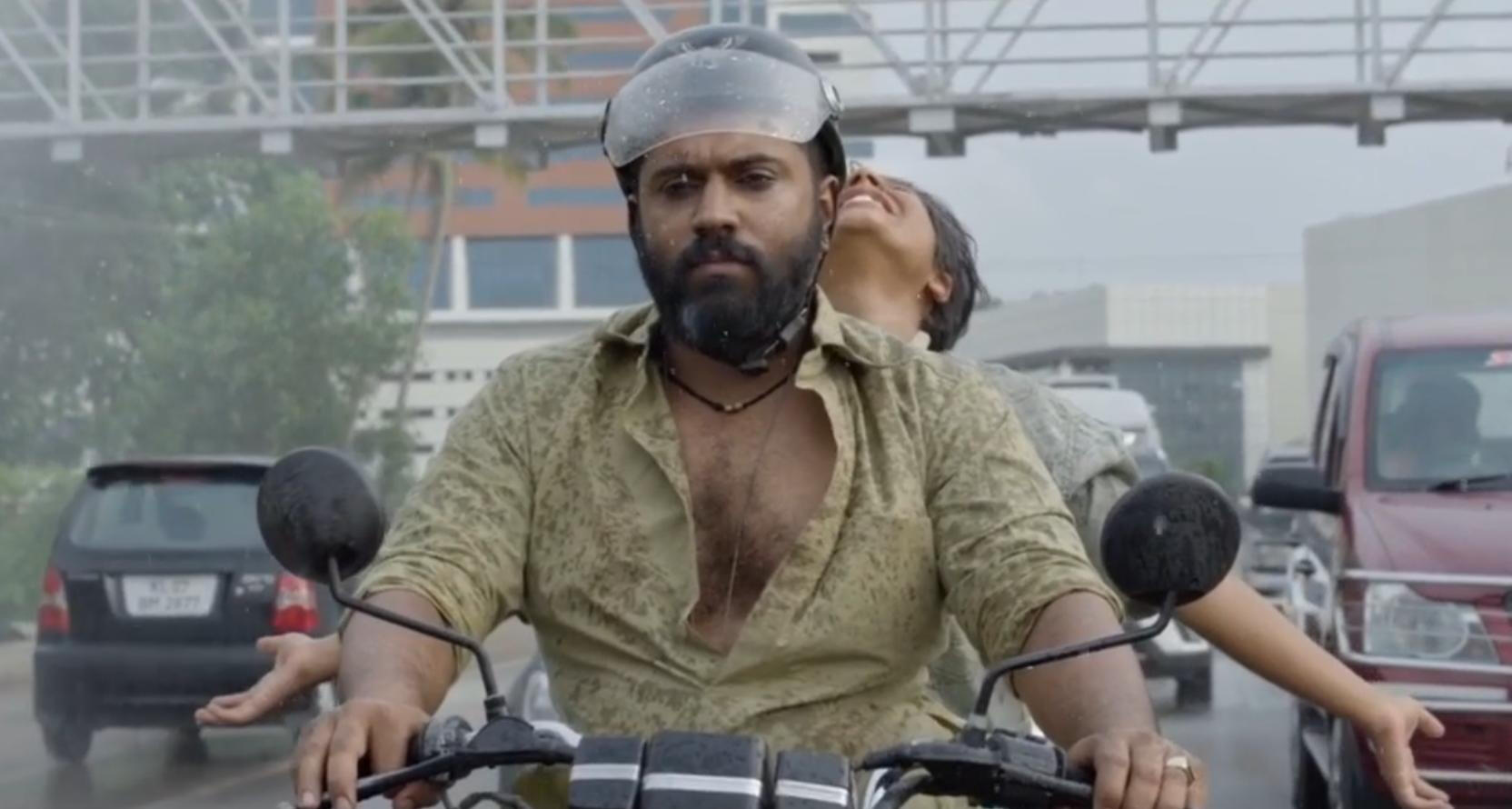
I witnessed the love of Akbar and Ameer. Set amidst the sylvan locales of Lakshwadeep. Akbar flagellates himself through the ritual of kuthuratheeb. Almost like an atonement for forbidden love. Malayalam is just the medium for this universal feeling.
Moothon or The Elder One talks about forbidden love, gender stereotypes and ultimately the pain love engenders. A little boy goes in search of his older brother and reaches the mean streets of Mumbai with its brothels, gangsters, double dealings and merciless pimps.
Nivin Pauly as Akbar gives a performance of a lifetime, investing in his role a gentle lyricism in the flashback portions and a visceral madness in the Mumbai portions. He’s a knockout. Roshan Mathew as the mute Ameer is affecting, and his muteness is probably a rebellion in the times of inchoate noises and mindlessness. Especially moving is the scene in the Lakshwadeep waters in the moonlight where they exchange silences and tender glances.
The film becomes laboured in the Mumbai portions, where we enter Ram Gopal Varma territory. It’s raw, gritty, yes, but you are filled with Deja vu. Pauly’s portions with the child who has a secret, too, are heartbreaking, but alas, you are not allowed to get fully into it. What could have been another film on unrequited love is the transvestite’s story with Akbar.
Moothon is an immensely moving film if you are patient. It’s almost like an elegy for lost love and hopes and the loss of innocence. We can only heal through our memories and sometimes the love of strangers, too. The turmeric applied to Akbar’s body after his self-flagellation is meant to heal us, too. If you have felt the unbearable loss of love and are unable to express it, this film might be that immersive experience. Catharsis comes in the form of tenderness and one long, silent gaze.
Also Read: Editor’s Take: Akshaye Khanna Let His Performances Do The Talking
Disclaimer : This story is auto aggregated by a computer programme and has not been created or edited by DOWNTHENEWS. Publisher: filmfare.com




