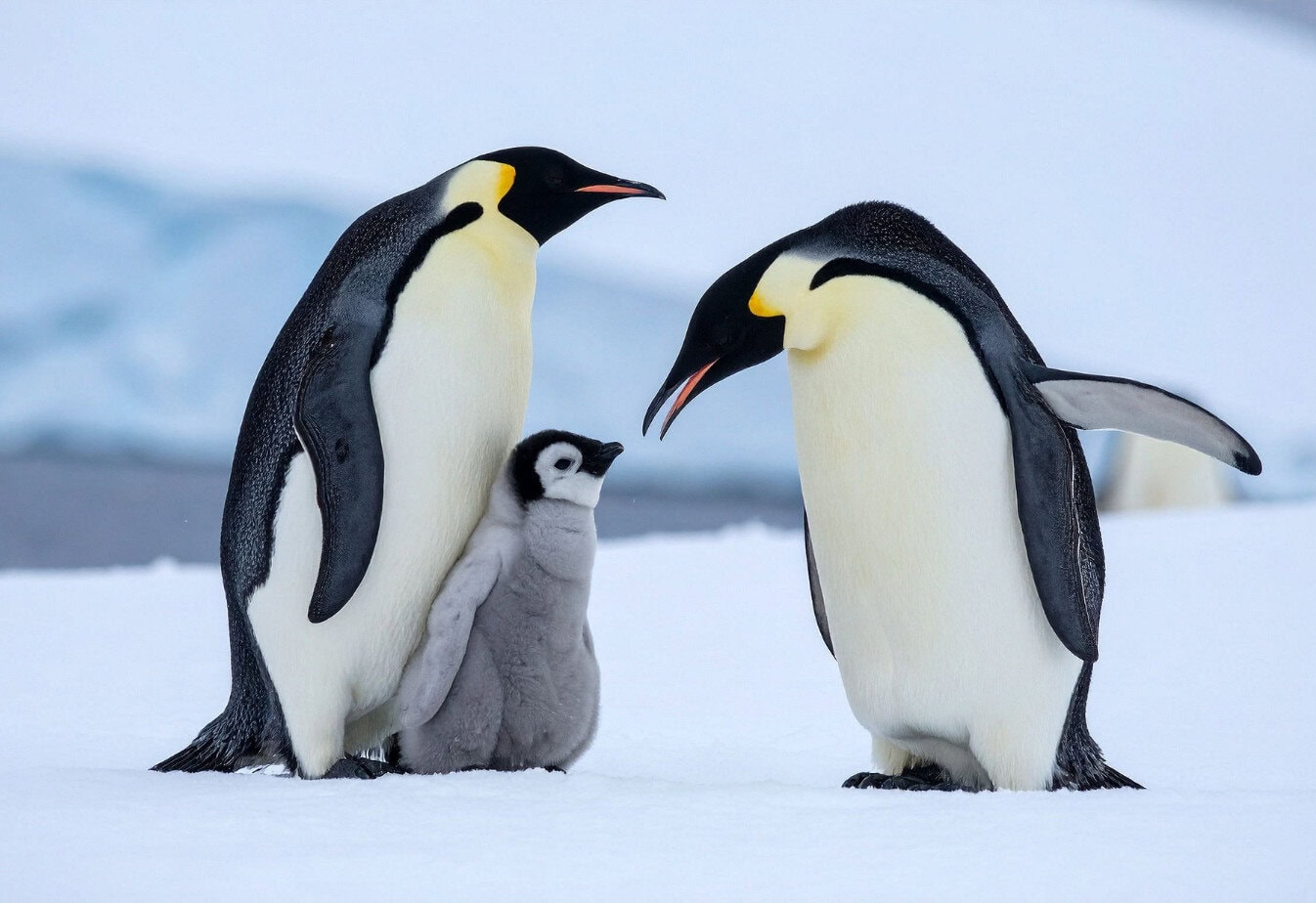
A new scientific study has found that emperor penguins may face a serious new threat as climate change causes Antarctic sea ice to melt.
Researchers used satellite images to find new moulting sites, which are places where emperor penguins gather to replace their feathers. The study found that melting sea ice is making this important time more dangerous for the birds.
Emperor penguins depend on stable Antarctic sea ice during almost every part of their life cycle. During moulting, which happens between January and March, the birds cannot swim or hunt while they replace all their feathers.
Scientists found groups of moulting penguins by looking at satellite images taken between 2019 and 2025. This is the first time researchers have been able to spot and track these moulting groups from space.
The study looked at West Antarctica, where many penguins from the Ross Sea population go to moult.
Sea ice disappearing earlier
Researchers found that in recent years, sea ice has started breaking up earlier than usual. In 2022, 2023, and 2024, fast ice, which is the stable ice attached to the coast, broke apart while penguins were still moulting.
When this happens, penguins might have to enter cold water before their new feathers are ready. This can raise the risk of exhaustion, hypothermia, and even death. Penguins need fully waterproof feathers to swim and survive in icy water.
Scientists say they are still studying the impact of these changes, but the situation could affect how many adults survive and how successful future breeding will be.
A critical moment in the penguin’s year
The moulting period is one of the hardest times in an emperor penguin’s life. During these weeks, the birds cannot go to sea to feed and have to rely on the energy they have stored.
Researchers say this stage might already be when the most adult penguins die, so changes in sea ice could have a big impact on penguin numbers in the future.
Emperor penguins are seen as one of the Antarctic animals most at risk from climate change because they rely so much on sea ice for breeding and survival.
The study shows that rising temperatures and record-low Antarctic sea ice are creating new risks that scientists did not fully understand before.
Scientists say that satellite technology will now help them watch these remote areas more closely and better understand how penguin populations are changing over time.
The study, titled “Discovery of Antarctic moulting sites in satellite imagery reveals new threat to emperor penguins,” was published on Wednesday in the journal Communications Earth & Environment.
– Advertisement –
Disclaimer : This story is auto aggregated by a computer programme and has not been created or edited by DOWNTHENEWS. Publisher: theanimalreader.com