
The U.S. and Israel attacked Iran, killing its supreme leader and launching a regional war as Iran and its proxies retaliated against its neighbors, but crude oil prices spiked by only a relatively muted 6% on March 2.
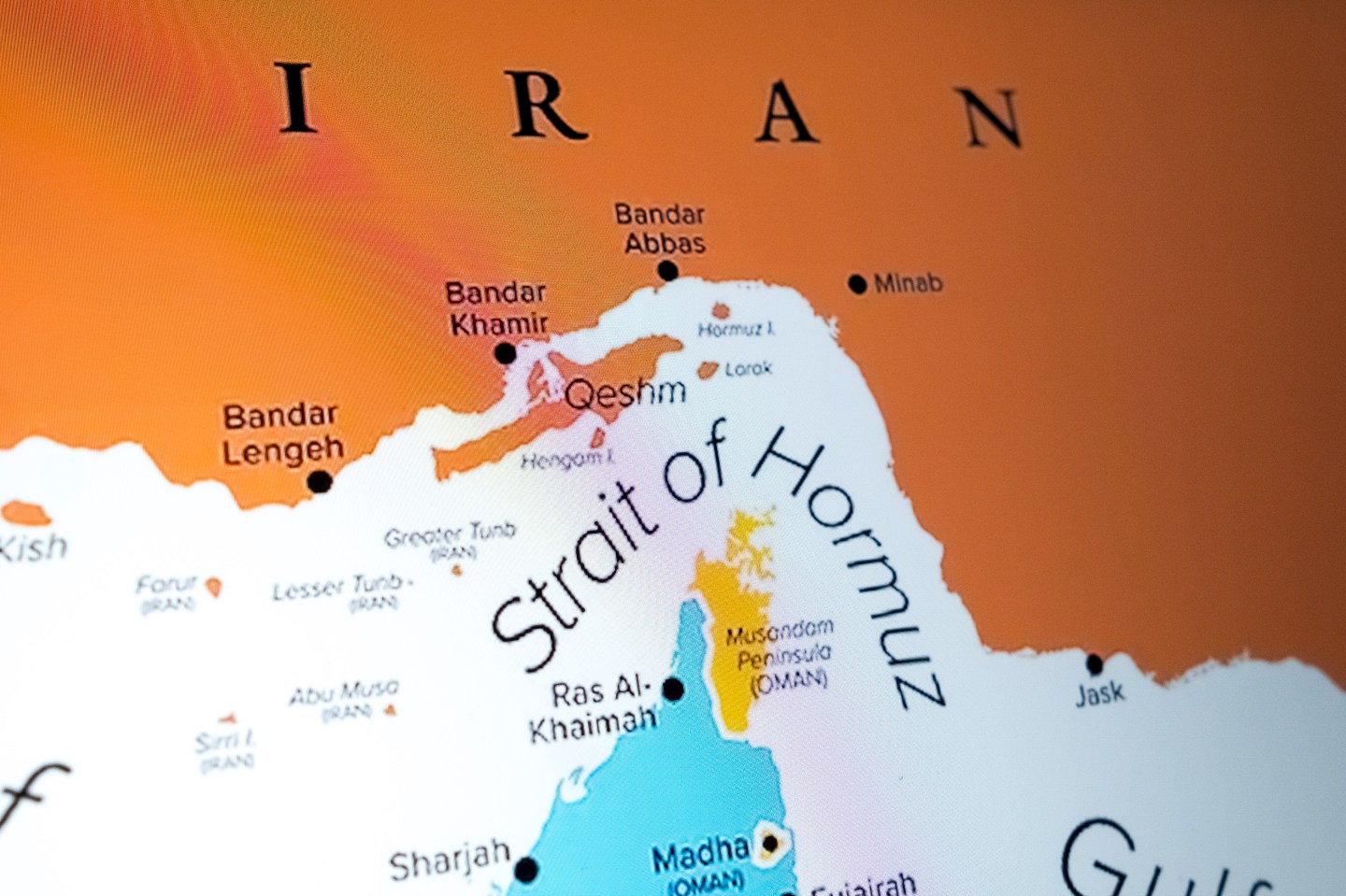
With the Strait of Hormuz—the world’s biggest choke point for oil and gas flows—essentially shut down because of the violence, prices could surge much higher if oil flows haven’t resumed by the end of the week or shortly thereafter, energy analysts said.
“The Strait of Hormuz is essentially closed, and yet prices are only up a little bit,” said oil forecaster Dan Pickering, founder of the Pickering Energy Partners consulting and research firm, admitting he expected greater market movement.
“The oil price reaction is telling us that so far this is contained,” Pickering said. “The expectation is the U.S. will do something to open, and keep open, the strait so oil can flow.”
The narrow, 104-mile strait is the main choke point separating the Persian Gulf—and the daily flow of nearly 20 million barrels of oil—from the Indian Ocean and global energy markets. Nearly 20% of global oil and natural gas exports flow through the strait each day—until now. Saudi Arabia, Iraq, Iran, Kuwait, Qatar, and the United Arab Emirates all depend on the waterway for their exports.
While oil and gas exports aren’t formally blocked, some tankers have been damaged, and more third-party insurers are refusing to insure the tankers that pass through the strait. A couple of refineries in Saudi Arabia and Kuwait have sustained some modest damage, and Qatar—the second-largest natural gas exporter in the world—has temporarily ceased much of its export production.
The U.S. may need to offer some kind of security guarantee to overcome the reticence of third-party insurers to offer coverage for oil tankers. “If that happens, tankers move. Until that happens, tankers wait,” Pickering said.
But notably, no oil and gas production activities have been targeted by Iran or its proxies thus far, said Jaime Brito, executive director for refining and oil products at the OPIS energy pricing research firm.
Brito noted the “relatively benign” market reaction thus far.
“It’s really quite interesting to see that the market prices have not completely reacted in an emotional manner,” Brito said. “It looks like they’re realistically waiting to see if there are more specific confirmations of energy asset attacks before reacting more.”
Pricing impacts
A $4 jump in oil March 2 may not seem like much, but prices had begun reacting to tensions in the region before the U.S. and Israel formally attacked.
The U.S. benchmark for crude oil rose from about $67 to $71 per barrel on March 2. But it started the year at $57 per barrel and has steadily risen because of escalating U.S.-Iran tensions.
From that view, prices have spiked 25% since the beginning of the year. But for context, the year started with the lowest pricing levels since the pandemic because of a fundamental global oversupply and a relative lack of geopolitical disruptions.
Consumers are watching warily for trickle-down effects on prices at the pump. The national average for a gallon of regular unleaded gasoline hit a multiyear low of $2.73 per gallon early this year. It’s now back up to $2.96 and rising, so it’ll cross the $3 threshold any day now, said Patrick De Haan, head of petroleum analysis at GasBuddy.
“In the week ahead, gasoline prices are likely to face heightened upward pressure as seasonal trends continue and markets navigate this evolving geopolitical landscape, with the national average poised to reach the $3-per-gallon mark for the first time this year,” De Haan said.
Indeed, there’s a massive difference between the Strait of Hormuz being impacted for a few days versus the logistical nightmare of a multi-week closure, Brito said.
“Then we are in for significant increases in prices,” Brito said, and prices could jump above $100 per barrel for the first time since Russia invaded Ukraine in 2022.
President Trump told CNN March 2 that the “big wave” of strikes against Iran has yet to occur. “We haven’t even started hitting them hard,” he said, adding that he thought the operation would last about four weeks.
Natural gas prices soar in Europe
Impacts on the price of natural gas have been muted in the U.S., the largest gas producer in the world. But Europe and Asia are highly dependent on supplies from Qatar and others, especially in countries where winter weather is still ongoing. Natural gas prices jumped almost 50% in Europe on March 2—an exception to the relative calm in the markets.
Risks remain that a desperate Iran could lash out more strongly at oil tankers or the energy assets of Saudi Arabia, Kuwait, Qatar, and the UAE. Iranian proxies, such as Hezbollah in Lebanon or the Houthis in Yemen, could further flame tensions. After all, the Houthis have a lot of experience targeting oil assets.
“Although the Gulf states didn’t join the U.S. in its attack on Iran, they are now on the receiving end of retaliatory attacks from Iran,” said Adriana Alvarado, senior vice president for Morningstar global sovereign ratings. “The overall economic impact on the Gulf economies will largely depend on the length and severity of the disruptions to air travel and to traffic on the Strait of Hormuz. But no doubt that whatever the outcome of the current confrontation, political developments in Iran will have lasting consequences for the whole Middle East region.”
And one mistake could always trigger a much larger escalation, Pickering said.
“Every day, the reactive capability of Iran goes down,” Pickering said. “But we still have the risk of an accident, luck, or an errant missile that could be meaningful. Wild things can happen in a war.”
Disclaimer : This story is auto aggregated by a computer programme and has not been created or edited by DOWNTHENEWS. Publisher: fortune.com



