Bad Bunny is constantly making history. Last Sunday he broke a new record by winning album of the year at the Grammys for his 2025 album, “Debí Tirar Más Fotos,” which was the first fully Spanish-language album to claim the title; and come Feb. 8, a.k.a. Super Bowl Sunday, he’ll be the headlining act at the Super Bowl halftime show.
Yet he is also teaching history. Bad Bunny’s latest record is not only a celebration of Puerto Rico and its people, but it offers a window into some of the challenges the embattled territory is currently facing — including massive migration, displacement and an infrastructure on the brink of collapse. In a moment when education is under attack, both in the United States and Puerto Rico, Bad Bunny is using pop culture’s biggest stage to offer the world a history lesson. And in this political context, that matters greatly.
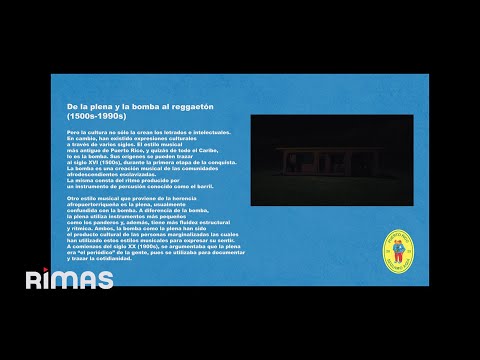
In December 2024, I was contacted by Bad Bunny’s team to produce 17 pages outlining Puerto Rican history, to pair with each song’s YouTube visualizer for “DTMF.” Altogether, they have been viewed more than 775 million times.
I later produced 40 slides jam-packed with historical and cultural facts about Puerto Rico, which were screened at Bad Bunny’s 31-show residency in San Juan. These ranged from facts about the history of women’s suffrage to the founding of Puerto Rico’s oldest punk band, La Experiencia de Toñito Cabanillas.
When Bad Bunny was announced as the NFL’s choice to headline the halftime show, I was hardly surprised by the backlash from conservatives — including multiple Fox News hosts, podcasters and even President Trump, who said, “I don’t know who he is. I don’t know why they’re doing it … [It’s] crazy.”
As communities of color celebrated on social media, critics raised two questions: Why would a Spanish-speaking artist — even if he is the most-streamed artist on Earth — be chosen for that stage? And why wouldn’t they choose a more patriotic, Anglo-American artist?
While undoubtedly xenophobic in nature, these questions highlight their acute ignorance about the place that birthed Bad Bunny, and its ongoing entanglement with the United States.
Puerto Rico was first colonized by the Spanish from 1493 until 1898, the year that the United States occupied the country as part of the Spanish-American War. Later, in 1917, Puerto Ricans became U.S. citizens through the Jones Law. Eventually, we drafted a constitution and became a Commonwealth of the United States in 1952. But there is never one single historical narrative.
What these facts occlude, however, is that Puerto Ricans are second-class citizens who cannot vote for the president — and those in the archipelago are not fully protected by the U.S. Bill of Rights. According to the U.S. Supreme Court’s early-20th century Insular Cases, we belong to the United States, but we are not part of it.
Put simply: We are a colony of the United States in the 21st century.
When drafting the historical narratives for “DTMF,” Bad Bunny understood that Puerto Rican history is often unknown, even to our own people. He was interested in making history available for those who don’t have access to higher education. He wanted me to write these narratives in a candid manner to be read by people in the barriadas y caserios (working-class neighborhoods and the projects). These were the places where I came of age in Puerto Rico.
With the success of “DTMF,” Puerto Rican history was amplified to the world. I’ve had countless conversations with journalists from around the globe, who marveled at how little they knew about Puerto Rico’s history or its relationship to the United States. This is precisely what I think drives those debates about language and who gets the right to claim Americanness — a lack of information.
And even though Bad Bunny is a U.S. citizen, conservatives have organized an alternative “All-American Halftime Show,” which reveals how “Americanness” is policed through language and race. This is the product of willful ignorance.
Puerto Rico’s history is also that of Latin American, Caribbean, United States and Latinx communities. I believe Bad Bunny’s performance will invite people to understand the beauty and complexity of our people’s history, even if it makes outsiders uncomfortable. That he will also be doing so entirely in Spanish in a moment when Latinx people in the United States are being arrested or interrogated by federal agents for speaking in Spanish — or simply for having an accent? That matters.
Of course, artists alone will not save us from the perils of racism and xenophobia — I learned that from my time in the punk community. We cannot just wait on anyone, especially not celebrities, to change institutions without some people power to back them up.
Yet given his enormous reach — just this week his latest album hit No. 1 on Apple Music in China — Bad Bunny has the power to move the cultural needle. And if there’s one thing to take from the Grammys ceremony last Sunday, it’s that he’s not alone — other artists have taken a stand on anti-immigrant violence. They are living up to the moment. That matters too.
So while conservatives organize their bland counter to the Super Bowl halftime show — with none other than Kid Rock as headliner — Bad Bunny will be offering the world a much more valuable history lesson, full of sazón, batería y reggaetón.
Jorell Meléndez-Badillo is the author of “Puerto Rico: A National History” and associate professor of Latin American and Caribbean History at the University of Wisconsin-Madison.
More to Read
Disclaimer : This story is auto aggregated by a computer programme and has not been created or edited by DOWNTHENEWS. Publisher: latimes.com