

Ethereum’s 2026 upgrades, Glamsterdam and Hegota focus on execution efficiency, decentralization, and a new biannual release cycle to reduce upgrade risk.

Published: February 14, 2026 4:26 PM IST
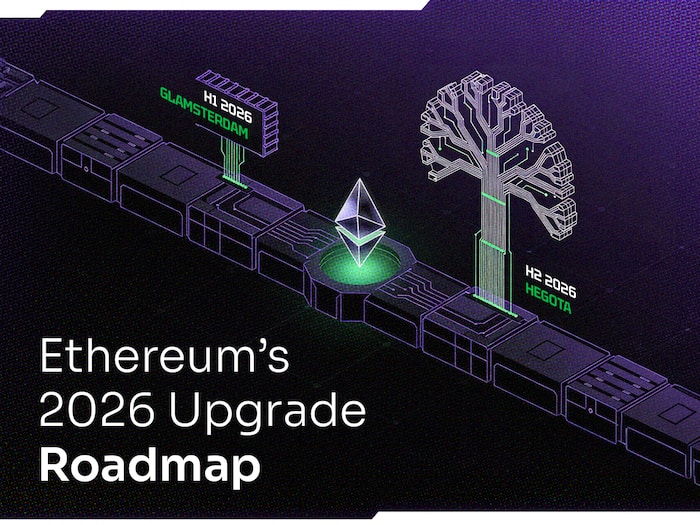
Ethereum developers have outlined two major protocol upgrades for 2026, giving the ecosystem a clearer sense of what’s coming next.
The first, Glamsterdam, is planned for the first half of the year. The second, Hegota, is expected to land in the latter half.
Together, they mark a shift toward a faster and more predictable upgrade rhythm.
For Ethereum, upgrade cadence is not just a technical choice. It affects application reliability, infrastructure costs, and how quickly the network can respond to performance and decentralization challenges.

Instead of packing many changes into a single, high-risk hard fork, Ethereum is moving to a biannual release cycle. This allows improvements to ship sooner, reduces coordination pressure, and makes it easier for builders and infrastructure teams to prepare ahead of time.
Why Ethereum is changing how it ships upgrades
As Ethereum has grown, upgrades have become harder to scope and slower to deliver. Large, infrequent forks increase testing complexity and often force trade-offs at the last minute. A shorter release cadence helps break this pattern.
What changes: With two upgrades planned in a single year, developers can separate urgent fixes from long-term changes. Features that are ready move forward, while others roll into the next fork without blocking progress.
This structure also helps Ethereum respond more quickly to competitive pressure from newer, execution-focused blockchains without sacrificing decentralization.
Glamsterdam: execution efficiency and block building changes
Glamsterdam focuses on near-term execution improvements and safer block production.
Scheduled for: Early 2026
- USP: ePBS and block building, formally known as Enshrined Proposer-Builder Separation
Updates: ePBS changes how blocks are produced by separating block proposers from block builders at the protocol level. This reduces censorship risk, limits excessive MEV concentration, and improves fairness in block construction. It also formalizes a process that is already happening off-chain today.
Beyond ePBS, Glamsterdam is expected to include gas optimizations and execution-layer refinements. These are smaller, practical changes aimed at improving performance without introducing major architectural risk. Developers plan to finalize the feature set shortly after the holiday break, keeping the upgrade intentionally tight in scope.
“Smaller, well-scoped upgrades make protocol changes easier to absorb at the infrastructure layer, especially when automation and event handling depend on stable assumptions.”
Shubham Raj, CTO at Kwala
Ethereum Confirms Glamsterdam and Hegota Upgrades, Moving to a Biannual Release Cycle
Hegota: deeper changes with a decentralization focus
The Ethereum Hegota upgrade combines execution-layer and consensus-layer updates. It is designed to handle features that need more research, testing, and coordination.
Scheduled for: Second half of 2026
USP: Verkle Trees and decentralization
Updates: Verkle Trees are a new data structure that significantly reduce how much state data Ethereum nodes need to store and verify.. This lowers hardware requirements and makes it easier for more users to run nodes.
Over time, cheaper and lighter nodes can increase the number of independent validators. That directly strengthens decentralization while also improving sync times and network efficiency.
Hegota is also expected to absorb complex features that don’t make it into Glamsterdam due to timing or risk. This makes Hegota less about speed and more about long-term network sustainability.
Scaling without pushing the base layer
The Ethereum scalability roadmap 2026 assumes that most transaction scaling comes from rollups and post-2025 sharding. Because of that, core upgrades in 2026 are not aimed at pushing raw TPS. They focus on making the base layer more efficient, secure, and easier to run.
Glamsterdam targets near-term execution efficiency and safer block production.
Hegota follows with deeper changes that reduce node requirements and strengthen decentralization.
Ethereum’s 2026 roadmap reflects a shift from headline-grabbing upgrades to disciplined protocol delivery. By shipping smaller, focused changes on a predictable schedule, the network reduces upgrade risk while steadily improving execution, decentralization, and operational resilience.
For developers, validators, and infrastructure providers, predictability not raw throughput is becoming the most valuable feature of Ethereum’s base layer.
Also Read:
Topics
Disclaimer : This story is auto aggregated by a computer programme and has not been created or edited by DOWNTHENEWS. Publisher: india.com









