
Singapore: For powder hunters, Japan is serving up a 2026 snow season for the ages.
In the ski resort mecca of Niseko on Japan’s northern Hokkaido island – famous as a haven for Australians – fresh dumps almost daily have put it on track for its deepest snow in more than a decade, rescuing the season from a slow start in December.
Big storms due to roll in through the weekend are expected to deposit up to 50 centimetres more snow across Hokkaido by Sunday.
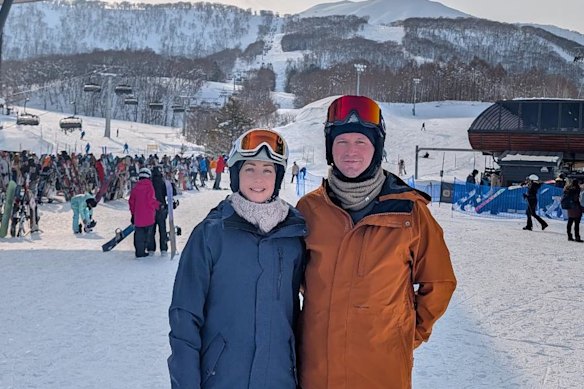
“There’s a lot of tourists, a lot of Aussies. This storm is supposed to be a pretty big one, but I think there’ll still be a lot of people walking around,” says Ryan Comas, 46, a snowboarder from Townsville, who is on his sixth trip to Niseko with his wife, Kate.
“This is probably the best year we’ve experienced here, powder-wise.”
But the conditions are a double-edged sword. What can make for a great day on the slopes has caused havoc across Japan.
For two weeks, the country’s northern and western areas along the Sea of Japan coast have been blasted by icy blizzards and extreme snowfall, blocking roads, snowing in homes, and causing travel chaos, with flights delayed and transport links cut.
At least 35 people have died and almost 400 have been injured in snow-related accidents since January 20 – many involving people trying to shovel snow from their homes, according to Japan’s Fire and Disaster Management Agency.
This year’s winter season has also seen tragedy hit the Australian skiing community, with three young people killed on Japan’s slopes in separate incidents since January.
Brooke Day, a 22-year-old advanced snowboarder from Queensland, was killed after her avalanche backpack became tangled in the ski lift at Tsugaike Mountain Resort in Nagano Prefecture, west of Tokyo.
Days later, Melbourne man Michael Hurst, 27, died while skiing with friends in Japan’s Hokkaido region, between Niseko Moiwa Ski Resort and Niseko Annupuri International Ski Resort, after becoming separated from his group.
In early January, 17-year-old Rylan Pribadi, a recent graduate of Brisbane Grammar School, died after reportedly colliding with a course boundary rope, also in Niseko.
“Everyone’s talking about it – at the chair lifts, even at the shops. Everyone has been quite sad about it,” Comas says, adding that there has been a noticeable increase in operators overseeing activities around the ski lifts than in previous years.
“This is the first year we’ve really experienced, at certain lifts, people being asked to take their backpacks off and put them in front of them. There’s a little speaker, and it’ll say it through multiple languages, including Chinese and English.”
The unusually heavy snowfall hammering Japan is due to a cold air mass arriving from the Arctic. In the northern town of Aomori, one of the worst-hit areas, almost 2 metres of snow fell in 24 hours this week – the heaviest in 40 years – prompting prefecture officials to call for disaster relief help from Japan’s defence forces.
The perilous conditions have prompted authorities to warn of an increased risk of avalanches, falling ice particles and heavy snow sliding off rooftops.
Yusuke Harada, 51, chief researcher of the snow and ice team at the Civil Engineering Research Institute for Cold Region, said terrain in mountainous areas was now nearly smooth due to snow accumulation and could be very unstable, posing a high risk for off-piste skiers.
“It is expected that conditions will be more likely to cause surface avalanches than ever before,” he says.
He urged backcountry skiers to be extra vigilant, saying “you will need the courage to turn back”.
Japanese newspaper Asahi Shimbun reported that 38 people had been stranded on the mountains so far this winter season – 90 per cent of them while backcountry skiing or snowboarding – more than double the previous season.
The deaths of the three Australians have been headline news in Japan and have rippled through the broader skiing community, says Australian Matt Guy, who has lived in Japan for a decade and works as a local guide in the snow resort town of Myoko, Niigata Prefecture.
He says skiing is generally very safe in Japan, but tourists should not expect the same facilities and culture found in famous Western resorts such as Whistler in Canada, or on Europe’s slopes.
“I think people need to be aware that there are old facilities here,” Guy says.
“Outside of the main three or four massive ski resorts in Japan, the ski patrol safety equipment that they’re using to do rescues and things … it’s not the latest technology.”
He says risks also arise as powder chasers increasingly push beyond the beaten track and frequent lesser-known ski lodges.
“They’re not prepared for English speakers. Most importantly, they’re not in tune with the attitude and behaviours of what people are seeking – deep powder snow and the adrenaline. They are more set up for the local community.
“Even the larger resorts, like Hakuba, Niseko, Myoko, they are also playing catch-up to this really high-speed pace of tourism growth.”
More than 1 million Australians travelled to Japan in 2025 – up 15 per cent on 2024, according to figures published by Japan’s National Tourism Organisation – and even more are expected this year.
“We’ve seen a huge surge in last-minute bookings from both the US and Australia,” says Marnie McLaren of The Snow Concierge, a Sydney-based travel agency focused on Japan.
The plummeting yen, which has made ski holidays more affordable than ever, has been a major drawcard, coupled with a dismal snow season at US and Canadian resorts.
The predictions for more snow this weekend are music to the ears of powder enthusiasts, McLaren says.
“That’s what our clients are frothing for. What they want is those big storms,” she says.
McLaren and Guy urged those venturing beyond resort boundaries to go with qualified guides with full safety equipment and the ability to speak and read Japanese in case of an emergency.
As for Comas, he says the recent Australian deaths have given him pause for thought.
“It is so easy for something to go wrong,” he says.
“You definitely do think about it, and just triple check when you’re going onto the lift that you’ve got nothing hanging and being a little bit more cautious.”
Get a note directly from our foreign correspondents on what’s making headlines around the world. Sign up for our weekly What in the World newsletter.
 Lisa Visentin is the North Asia correspondent for The Sydney Morning Herald and The Age. She was previously a federal political reporter based in Canberra.Connect via X or email.
From our partners
Disclaimer : This story is auto aggregated by a computer programme and has not been created or edited by DOWNTHENEWS. Publisher: www.smh.com.au