

From more money for many public sector workers to a USB-C obligation for new laptops and the Easter holiday weekend, here’s a look at the big changes coming to Germany this April.
The start of April comes with the Easter holiday this year, as well as the promise of more blossoms and the opening of many of Germany’s seasonal festivals.
But the new month is not only bringing holidays and (hopefully) good weather, so what other changes are coming this April?
Pay raises for public sector employees
According to the agreement between trade unions and employers, around 925,000 employees covered by collective bargaining agreements in the federal states will receive more money starting April 1st.
These wages will increase by 2.8 percent, or by at least €100.
This applies to workers in 15 of 16 federal states, as the state of Hesse is negotiating separately.
The next increase will be on March 1st, 2027.
READ ALSO: Will transportation strikes affect travellers in Germany over Easter?
Free lung cancer screening
From the start of April, heavy smokers will be entitled to an annual free examination for the early detection of lung cancer.
Active and former smokers between the ages of 50 and 75 will be able to be examined every 12 months using low-dose computed tomography (NDCT). The service is covered by the statutory health insurance companies.
READ ALSO: The check-ups you can get in Germany with statutory health insurance
However, it could take a little longer before you get an appointment. Doctors and radiologists need special training for this – and the latter also need a permit, according to the Federal Joint Committee (G-BA).
Germany marks the Easter holiday
This year Easter Sunday falls on April 5th.
Good Friday, on April 3rd, and Easter Monday, on April 6th, are also national public holidays in Germany, meaning that regularly employed workers in the country are effectively treated to a four-day weekend for the occasion.
Note that most businesses – including supermarkets – will be closed on the public holidays on Friday and Monday, in addition to Sunday as usual. So you’d be advised to stock up on everything you need for the holiday weekend ahead of time, as shops are typically extra busy on the Saturday in between.
READ ALSO:
Artfully decorated Easter eggs lie in a bowl at the Easter Egg Fair at the Lübbenau Spreewald Museum. Photo: picture alliance/dpa | Frank Hammerschmidt
In many states, schools also close for some additional days around the holiday for their spring or Easter breaks.
In Baden-Württemberg, schools are out this year from March 30th to April 3rd. Meanwhile schools in Bavaria and also Berlin get an additional week off for their Easter break, which also starts on March 30th but extends to April 10th. And the same goes for students in North Rhine-Westphalia, with just one additional day at the end – until April 11th.
You can find the school holiday dates for your state here.
Digital registration at EU borders to be fully in effect
From April 12th, the Digital Entry and Exit System (EES) is to be introduced at all EU external borders.
The digital system for entry and exit was implemented at some of Germany’s airports as early as October 2025, but a six month transition period meant that not every border entry was then required to have the system in place.
Going forward, entry and exit of third-country nationals into the EU will only be recorded digitally. Travellers will no longer collect a stamp in their passport, and entry and exit is carried out via digital documentation with biometric data such as fingerprints and facial scans.
However, EU authorities have already said that member states may further suspend EES deployment “where necessary during a period of an additional 90 days with a possible 60-day extension to cover the summer peak” to ease congestion and logistical issues at busy border crossing points.
READ ALSO: What you need to know about the start of EES checks at German airports
New laptops to be USB-C compatible
From April 28th, laptops offered in the EU must have a USB-C charging port.
This has already applied to small devices such as smartphones and mobile phones since the end of 2024, but a longer transition period applied to laptops.
Devices that require a higher power than the 240 watts possible via USB-C must also have the connector at least as an additional socket. This is intended to help reduce e-waste and ensure that consumers can charge multiple devices with the same basic chargers.
READ ALSO: Where can I dispose my old electronic devices in Germany?
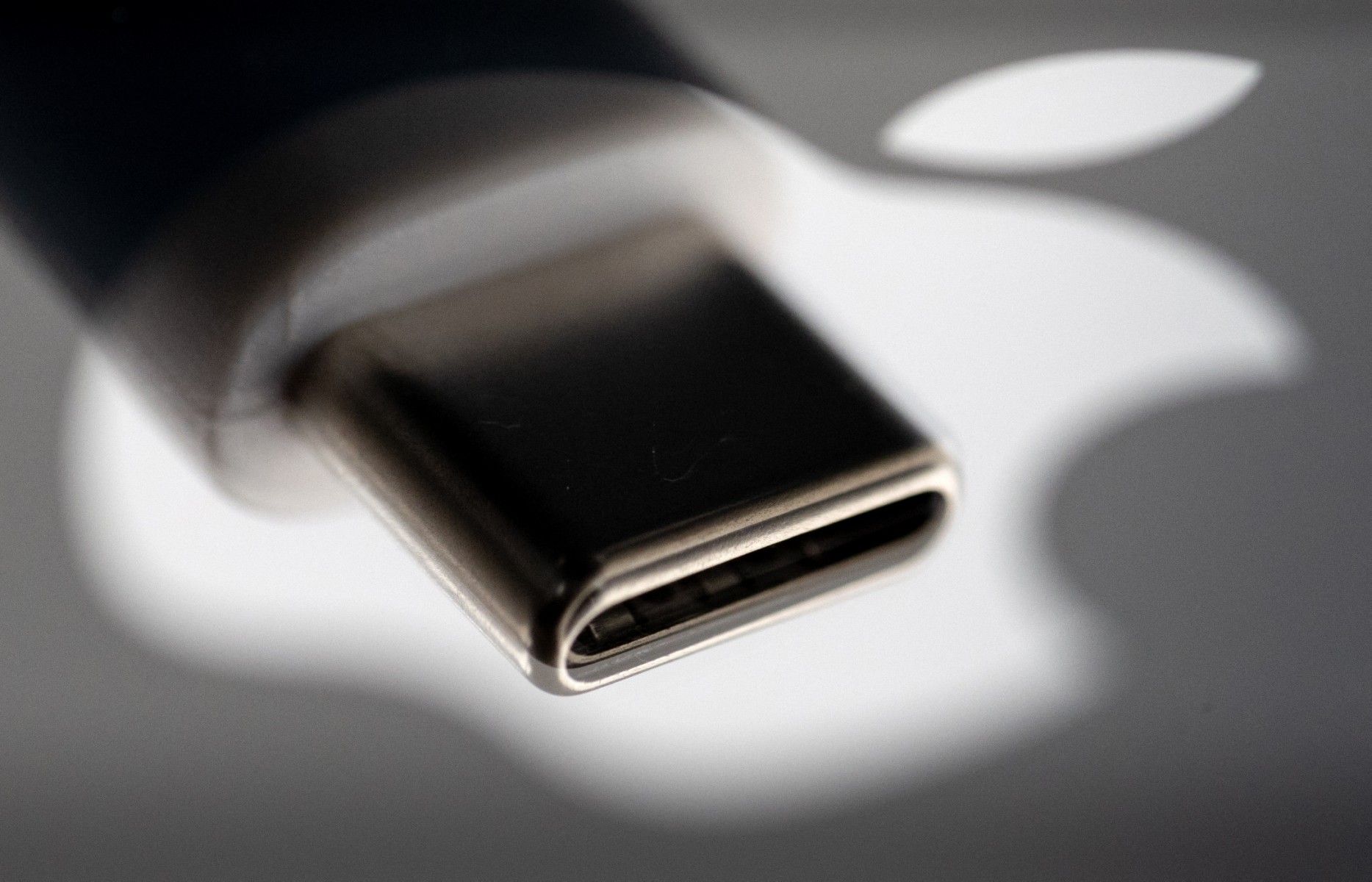
View of a USB-C port charging cable. All new laptops sold in Germany should have a USB-c charge port option from mid-April. Photo by Fred TANNEAU / AFP
Nitrous oxide ban for minors
Minors will no longer be allowed to purchase or possess nitrous oxide, also known as laughing gas, nationwide from April 12th.
Online trade in nitrous oxide and purchases from vending machines will be generally prohibited.
Especially for minors, the consumption of nitrous oxide is associated with high health risks – from unconsciousness to permanent damage to the nervous system.
Strict rules are also coming for the chemicals gamma-butyrolactone (GBL) and 1,4-butanediol (BDO), known as knockout drops.
Change of provider for ‘Miles & More’ credit card
For customers of Lufthansa’s “Miles & More” bonus programme, the previous credit card will end: Deutsche Kreditbank (DKB) cards will lose their validity by April 30th at the latest.
Affected customers who want to continue to earn miles and protect their earned miles from expiration will need to switch to the new credit card from Deutsche Bank. This requires a new application, including inputting personal information and a credit check.
Notable changes in neighbouring countries
Switzerland has adopted new rules on pyrotechnics starting from April 1st: fireworks may no longer be ignited in public indoor spaces.
This was agreed by a committee of the building directors of all 26 cantons following the fire disaster in Crans-Montana, in which 41 people died and dozens were injured. There, foam on the ceiling had caught fire on New Year’s Eve due to a sparking party fountain.
In Austria, consumers will be informed about shrinking package contents with warnings from the start of April.
There retailers must inform their customers for 60 days if the filling quantity of a product has decreased while the package size remains the same, and if the price has not been reduced accordingly.
Violations can result in fines of up to €15,000. In Germany, too, there is discussion about more transparency in the event of hidden price increases.
With reporting by DPA.
Disclaimer : This story is auto aggregated by a computer programme and has not been created or edited by DOWNTHENEWS. Publisher: thelocal.de









