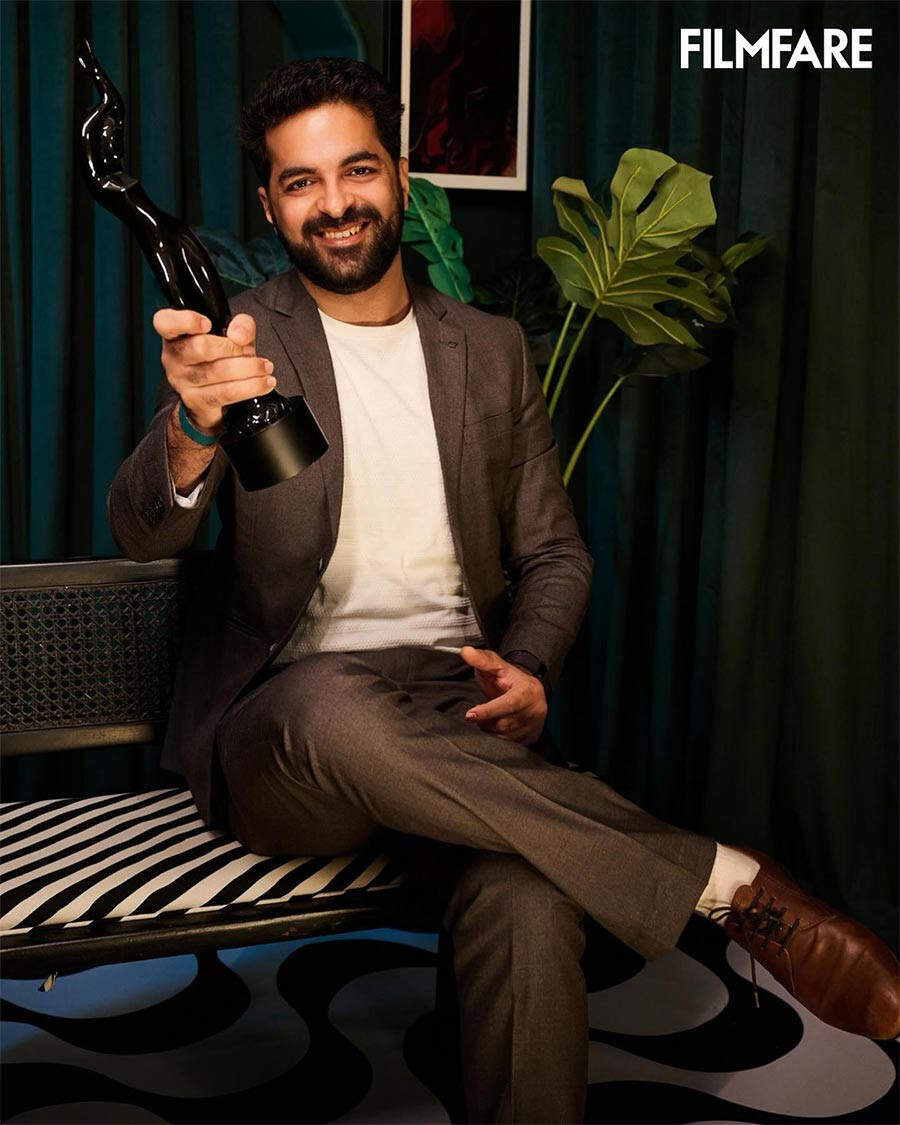
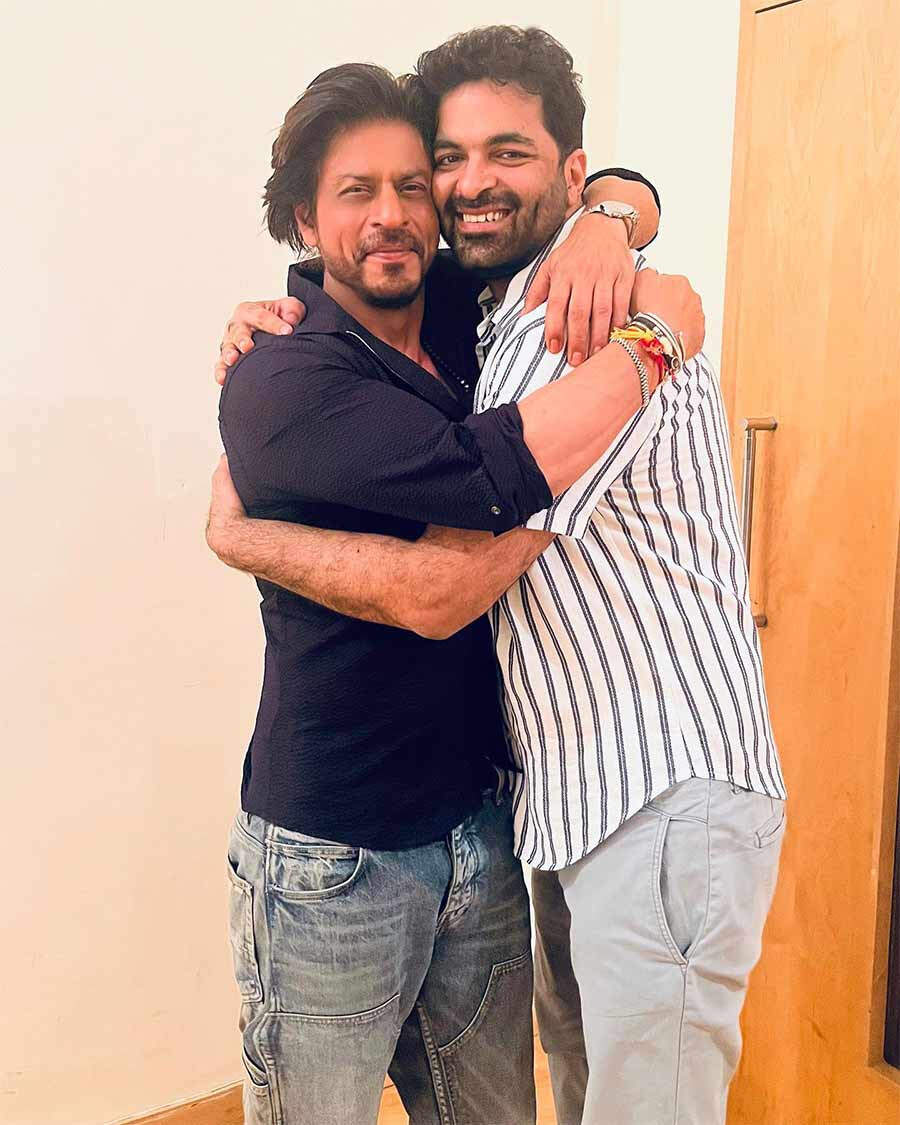
Sumit Arora has come a long way, from humble beginnings in the television industry to films and now OTT. He is the man behind widely quoted lines from Stree, The Family Man and Jawan among others. In an exclusive conversation with Filmfare, he opens up about coming to Mumbai at 17 with film dreams, finding his footing through TV, collaborating with Raj & DK, Suman Kumar and Farhan Akhtar and writing dialogues that become pop-culture favourites.
He also opens up about the changing value of writers in the film industry, crafting massy moments for Shah Rukh Khan, and the excitement of seeing his lines live forever in the audience’s memory.
Excerpts:
Tell us about your journey from a small town in India to one of the most prominent voices in Bollywood…
We can write a book on that journey. I was 17 when I came to Bombay with the dream of writing for films. But getting into films was not easy. I did not have any experience or any course in screenwriting. I got a job as a trainee writer in TV and that’s how my journey started. But I left that job because I wanted to do relatable shows. Then I found those shows – Chhoona Hai Aasmaan, Dill Mill Gayye and Sadda Haq. All these shows resonated with me. At the same time, I also kept trying for films. TV was a stopgap arrangement for me. Eventually, I ventured into films in 2015 and my first film Stree came out in 2018. The love for the dialogues still keeps coming in. That changed my life. And immediately after that The Family Man came in 2019. The journey from there has been like a ride. I am now able to choose the projects that I would want to watch.
Who were some of your inspirations growing up?
I grew up on Hindi literature. Neither on films nor on English literature. Some of my top writers have been Harishankar Parsai, Rajesh Joshi, Ravindranath Tyagi and Gyan Chaturvedi. These are the satirists of Hindi literature and that’s why you see a lot of humour in whatever I do.
You have collaborated with Suman Kumar, and Raj & DK multiple times. How has this bond evolved over the years?
We have been working together for almost 7-8 years now. The bond has been great because I understand what they like and they understand my language. They trust me fully with it. It’s a collaboration with equal trust and love. For two people to collaborate well and continuously, they have to understand each other instinctively.
What kind of responses are you getting for The Family Man 3?
People have been loving the dialogues and I am getting a lot of messages on them. I got a lot of love over Jaideep’s dialogue where he says that one should increase their status but not forget it. A lot of people liked the exchange between JK and Srikant in the jail and Srikant’s conversation with his son Atharva about pronouns.
Tells us about that pronoun scene…
The idea came from Suman. He has a daughter who talks in that kind of language. Then I had to make it further interesting in terms of dialogue. I tried to look at it from Srikant’s point of view. He is a guy who grew up in Banaras, much like how I grew up in Meerut, Uttar Pradesh, and now I live in Bombay. So, if somebody tells me that ‘she’ is not ‘she’, ‘she’ is ‘they’, how will I react? I tried to tap into that. I relate to Srikant on a huge level. I also come from a small town, so it was easy for me to look at this situation from his perspective.
You had another big release, 120 Bahadur. How was the collaboration with Farhan?
It was a great collaboration because he is very open. As a creative individual, he allows you the free space. He comes from years of experience as a filmmaker, and it reflects in how he looks at a script. Farhan is also a dialogue writer so it was good to have somebody like him as a bouncing board and somebody who is listening to your dialogues. I got a lot of insights into how his process is and I always find it interesting to know how other people think.
You went to the location during 120 Bahadur’s shoot. Do you do that for all the shows and films you work on?
Yes, mostly. I do go on the sets, especially in the beginning of the shoot, when the tone is getting set. When you are there as a writer when the characters are being established in the early days of the shoot, you can help or correct them. You can see whether the way you thought the characters will talk or will behave is aligning with how the actors are working. If the actors are bringing in new elements, you can be there as a bouncing board for them. It is nice and essential for a writer to be present in the beginning of the shoot.
Jawan’s dialogues have become pop culture favourites, and Shah Rukh Khan won the National Award for the film. As the dialogue writer, how did you feel when his win was announced?
He should have won the National Award long back. It’s totally his win and it was overdue.
Every project comes with its own expectations from a writer. With a film like Jawan, you are writing for SRK and for a director like Atlee who is known for his massy films. So you have to understand both sensibilities. It is very different from something like The Family Man, where you need to deliver a lot of humour, sharp writing and sharp exchanges of dialogues. But for a Jawan, the expectation is that you have to deliver ‘mass moments’ yet you have to carry your individuality. Mass moments can’t feel dated, they have to feel like what today’s audience enjoys. I like to write things that I would enjoy watching as an audience.
If I am writing a mass film with a huge star, I will think about how I want to watch a big star today. What kind of lines would I like this star to say and what kind of mass moments would I like to watch as an audience? You have to strike a balance between the sensibilities you have and the requirement of the film. That’s how you find an interesting and unique zone.
For years, audiences have remembered iconic lines and the stars who say them, while the writers behind those lines often remained unseen. Is that changing now?
It’s always a work in progress. The industry still has a problem internally. They have understood the value of good writing but there is a lot of reluctance towards giving that same value to the writers. People know that we need good writing and without good content we cannot make a hit. Everybody has understood that across the board. But yet, when it comes to remuneration towards the writer, or giving writers respect, they shy away from it. They fall short of it.
When a young writer is delivering something, you should be able to identify it and give it good respect in terms of money and value. You don’t need to respect someone after they have delivered 5 hits. Respecting the stature of a person is not equal to respecting writers and writing. This fundamental shift needs to happen.
I interact with a lot of young writers and if I like something interesting, I try to mentor it and help people. This is something that I would have wanted when I was starting out. That people like me, who have some access, help young writers.
What are some of your dialogues you are proud of?
‘Woh Stree hai, woh kuch bhi kar sakti hai’ from Stree. There are more lines from the film that I like. I put all my heart out in that film. I like quite a few lines from this season of The Family Man and then of course, there is Jawan’s dialogue, ‘Bete ko haath lagane se pehle baap se baat kar.’
Has the approach towards writing changed post pandemic?
People have too many options and they have gotten used to watching stuff in their homes, on OTT platforms. The whole approach has changed especially when it comes to writing for films. Now you have to write something exciting enough for people to come to theatres to. You have to find such stories.
What was that one turning point in your career that made you believe that you have arrived?
The release of Stree changed everything. I put my complete heart and soul into that film. And it was received well. There was some frustration before that where I felt it’s taking too long to reach where I want to reach. But at no point did I feel that I should quit or go back.
Disclaimer : This story is auto aggregated by a computer programme and has not been created or edited by DOWNTHENEWS. Publisher: filmfare.com