Families of victims of the infected blood scandal have criticised the government for imposing a “penalty for dying” in its compensation scheme, which has seen them lose out on hundreds of thousands of pounds.
The scheme awards payouts to living victims and the families of those who have died after being infected with HIV or hepatitis as a result of being given contaminated blood products by the NHS.
More than 30,000 people in the UK were given treatments before 1996 infected with HIV, hepatitis C or hepatitis B – or a combination of them – and more than 3,000 victims have died.
Last month, Sir Brian Langstaff, the chair of the infected blood inquiry, announced the body would end its work on 31 March, having “exercised the power it has”.
Under the compensation scheme, each infected person is entitled to a basic financial loss award of £12,500, plus an additional financial loss award, which calculates loss of earnings after their infection through NHS treatment.
However, for victims who died before the start of the scheme, families have been told that no future financial loss will be paid to the estate, with loss calculated only from the date of infection until death, which in many cases was just a short time.
In an open letter, charities including the Haemophilia Society and the Hepatitis C Trust have said this means that, if a person died in the early 1990s in the middle of their working life, it equates to a difference of nearly 50 years of financial loss.
“The current scheme creates the situation where an infected person is financially penalised for dying before the government finally agreed to properly address the scandal of infected blood,” the letter reads.
“They and their estates are being penalised for their inability to survive the wrongdoing of government, the very wrongdoing which the compensation is being paid to address.
“Every single person infected as a result of contaminated blood deserves to be valued equally, regardless of whether they survive today or died many years ago,” Kate Burt, the chief executive of the Haemophilia Society, said.
“The credibility of the compensation scheme rests on this principle. It is utterly unacceptable that decades after their loss, bereaved families are still fighting for fair recognition of their loved ones’ lives.”
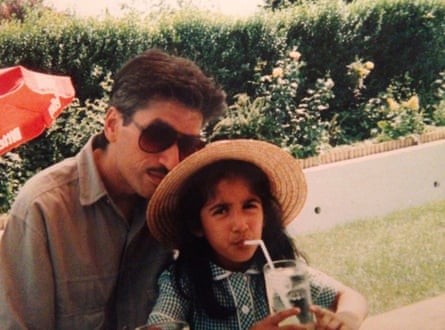
Ami Jai Presly lost her father, Jai Brahmbhatt, in 1993 – he was the same age she is now: 39 years old. The professor of business studies at Brunel University had moved from Kenya to the UK in 1972 to study, but also in the hope of getting better treatment for his haemophilia.
Jai Presly first realised the issue with the scheme when she calculated what her father’s estate was owed, and was told the payment would only cover 16 years of financial loss.
The claim for deceased victims, she said, “is only roughly half the value of that it would have been had that person been alive today”.
“We realised at that point that the current framework creates a penalty for dying,” she added. “It’s unethical and wrong.”
Jai Presly’s sister, Meera Pierson, said: “Our family experience, our family life – mine and Ami’s entire life – has been determined and overshadowed by the contaminated blood scandal, and the reality of what losing our dad meant.
“Nothing will ever be able to make good the loss that we experienced from the loss of my father.”
“The compensation framework is the only mechanism we have to talk about this,” Jai Presly added. “Everybody who is associated with this, whose life has been changed by this, who has had their life taken away or who hasn’t been able to have a conversation as an adult with their dad and never will, knows that money can never replace what has been lost.
“It’s the only thing we have, which is why we are here talking about financial loss.”
Rachel McGuinness’s father, Christopher Thomas, was a haemophiliac who received treatment during the 1970s and 1980s, and was diagnosed HIV positive in 1984. He died in 1990, when she was 19.
“Mum had to give up her job to look after him, and I went off to university at 18, but my brother was still at home at 16,” she said. “He was a young carer, helping Dad and Mum through those last couple of years. He had palliative care at home in the end and he died at home, so it’s just a very different life experience to what most teenagers would be going through.”
When she found out about the discrepancy in the compensation scheme she was “just very surprised and disappointed really”, she said. “Obviously we’ve waited a very long time for the inquiry to be held in the first instance, and then for the government to apologise, and then for the compensation structure to be put in place. And then it still has been found wanting and not fit for purpose.
“My mum’s getting older and I think that to have this additional burden, another hoop to jump through, at 77 when she’s lost her husband 30 years ago is just ridiculous,” McGuinness added.

Ian Dixon has been campaigning alongside his wife, Claire, whose mother, Nora Worthington, was admitted to hospital in Macclesfield as a result of a perforated ulcer in 1982, and when she received a blood transfusion, was given contaminated blood.
“Nora, sadly, having been infected with the HIV virus, was eventually diagnosed with a rare form of cancer,” Ian said. She was diagnosed in 1991 and passed away in August 1993, aged just 47.
At the time, HIV “had an enormous stigma associated with it”, Dixon said, “so her mother really went through hell at the time, and it was incredibly distressing for the family.”
He added: “Quite frankly, the way the scheme has been designed structurally creates a huge disparity between those who are infected and fortunately survived and those who’ve paid the ultimate price.”
Had Nora been alive, she would have received in excess of £2m, he said, but instead, her estate will receive just over £1m.
“It’s not about the money,” Dixon said. “It’s absolutely about the recognition, the people who’ve lost their lives. Their lives should be equally valued as those who are fortunately still with us.”
A government spokesperson said: “The victims of this scandal have suffered unspeakable wrongs and this government is committed to listening to and working with them to ensure justice is not only delivered but reflected in the way compensation is treated for everyone.
“We are committed to making the system as fair and compassionate as possible and the government is now carefully considering the responses to the recent consultation undertaken with the seriousness that this issue deserves, and will publish its response within 12 weeks of the consultation’s closing date.”
Disclaimer : This story is auto aggregated by a computer programme and has not been created or edited by DOWNTHENEWS. Publisher: theguardian.com