

The Greens managed a strong comeback and an historic win in Baden-Württemberg’s elections. But tensions remain high as the CDU suggests power-sharing at the top. We break down five key takeaways from this nail-biting regional vote.
While the election in Baden-Württemberg over the weekend only directly affected leadership in the state, it was seen by many as a test for Germany’s top leaders at the national level – namely Chancellor Friedrich Merz.
Under his leadership, the conservative Christian Democratic Union (CDU) took charge of Germany’s federal government. And while riding that momentum, they hoped to take the top spot in the southwestern state, effectively earning a political mandate to push their policies even harder.
But the voters in Baden-Württemberg were not fully on board.
Here’s what was decided at the election in the “Ländle“, and what it suggests is changing in the state’s, and maybe nation’s, political scene.
Greens win historic victory
The headline news, as preliminary results of the Baden-Württemberg State Election came in on Sunday evening, was that the Greens, led by Cem Özdemir had won.
The Green party has been at the helm of the state’s government since 2011, led until now by Winfried Kretschmann.
In the weeks leading up to the election there were some doubts that the Greens could hang onto the top position in the state after Kretschmann stepped down. Having eked out a narrow victory over the CDU, the party has demonstrated that its roots in the southwestern state go deeper than support for the previous state premier.
Cem Ozdemir, top candidate of the Greens in Baden-Wurttemberg’s state elections and most likely next state premier. (Photo by THOMAS KIENZLE / AFP)
Meanwhile, Özdemir’s victory comes as something of a milestone in German politics: He’s set to be the first state premier with Turkish heritage.
READ ALSO: Meet Cem Özdemir, Germany’s first state premier with Turkish heritage
His heritage was notably not a point of focus during the election campaign, but it is a landmark event in itself nonetheless.
Özdemir, 60, has been a well-known political figure in Germany for decades. He previously ran as the Greens’ lead candidate for the 2017 federal election, and was Germany’s agriculture minister in the previous government under Olaf Scholz.
The Green’s victory here can at least partially be explained by Ozdemir’s popularity as a leader. His primary opponent, Manuel Hagel for the CDU, was not previously a widely known name across the state.
Conservatives don’t want to accept defeat
Ahead of the election, the CDU were keen for a victory. National polls have increasingly hinted at faltering support for the conservatives since CDU-leader Friedrich Merz took the reins as German chancellor last year. And the election was widely seen as the first major electoral test of his leadership.
But after the votes were all counted, Merz was initially eager to write off his own effect on the election.
Commenting on the results, he told journalists on Monday that it amounted to a “personal victory” for Özdemir – rather than rejection of the CDU, in other words.
After his defeat at the polls, Hagel offered his resignation as Baden-Württemberg’s CDU leader on Tuesday, which was promptly rejected by the party.
Others in the party seemed unwilling to accept electoral defeat. For example, in comments to Bild, Stuttgart Mayor Frank Nopper claimed there was “no clear election winner”.
Tensions are running high around a Green-Black coalition
According to preliminary results, the Greens got 30.2 percent of all votes, just ahead of the CDU with 29.7 percent.
But in the new state parliament, both parties are set to have 56 seats. This is partly due to the CDU having gotten a larger share of first votes, and therefore getting more direct mandates.
Some conservative party voices, including that of CDU/CSU group leader Jens Spahn, have pointed to the equal number of seats and suggested that Özdemir’s win doesn’t guarantee him the position of state premier. Spahn went as far as suggesting that the position should be shared between him and the CDU’s Hagel.
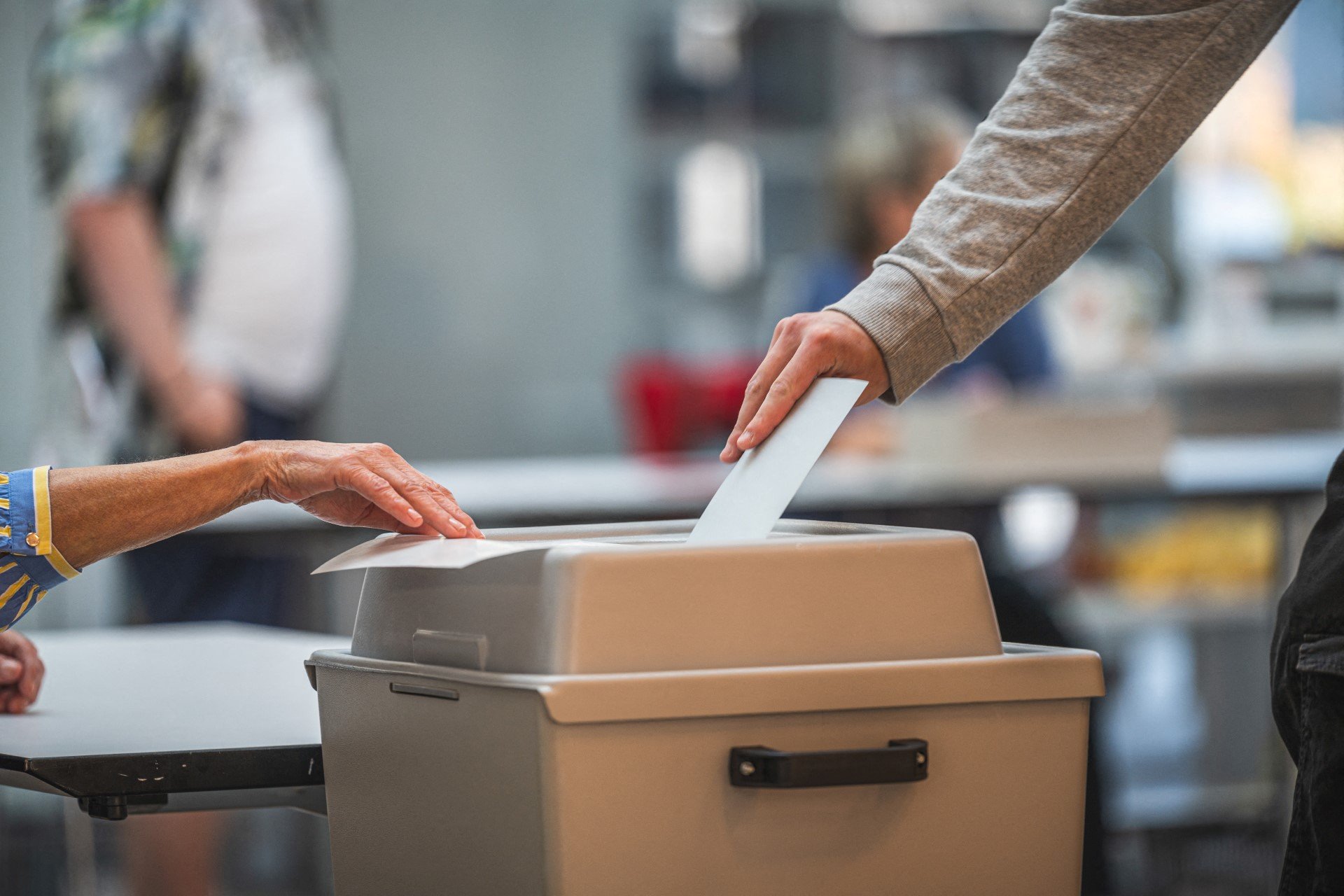
A person’s hand is seen to cast a vote in the ballot box. (Photo by DAVID BREIDERT / Picture5 / AFP)
Özdemir flatly rejected the idea as “nonsense”, refuting that even if the lead was only by one vote, it would be clear which party provides the state premier.
A rift appears to have come between the parties, which were already partners in the previous state coalition.
Özdemir has since said that party members are already discussing the new coalition, whereas the CDU has reportedly denied it.
READ ALSO: The winners and losers of Bavaria’s local elections
Far-right gains ground
The far-right, anti-immigration Alternative for Germany (AfD) achieved its best-ever election result in a western German state, nearly doubling its 2021 result to secure third place with 18.8 percent of the vote.
The party’s success here hints that it’s now become firmly established across the country – even in regions marked by a strong middle class and high employment levels.
However, the AfD missed its own stated goal of achieving 25 percent or more.
Additionally, it is left with no real hope for meaningful participation in the state government here, as the Greens and the CDU maintain a policy of not working with the party.
SPD and other parties excluded
Arguably the biggest defeat in the election belonged to the Social Democratic Party (SPD), which having gotten just 5.5 percent of the vote, only barely managed to keep its place in the state parliament.
Parties must win at least five percent of the vote in German elections to be qualified to hold seats in parliament. Both the liberal Free Democrats (FDP) and the Left party (Die Linke) failed to cross the five percent threshold.
The loss is the latest in a series of significant electoral defeats for the centre-left party, which has been haemorrhaging support since the collapse of the previous federal government that it led along with the Greens and FDP.
OPINION: Merz really needs to talk Germany up or he’ll hand the country to extremists
Disclaimer : This story is auto aggregated by a computer programme and has not been created or edited by DOWNTHENEWS. Publisher: thelocal.de






