
Social interactions in Germany are often defined by a series unwritten codes that can be hard for many foreigners to understand. Here are our top tips for doing as the Germans do – and even for out-doing them if the need arises.
Integrating in a new country is not about flawless imitation. Half the joy lies in bringing your own habits, ideas and traditions with you – gently challenging assumptions and proving, by example, that other ways of doing things are possible.
Yet there are moments when it pays to show that you’ve grasped the local logic. Not by loudly announcing your cultural competence, but by quietly behaving in a way that signals that you get how things work here.
In Germany, where social life is governed by a set of largely unspoken rules, this kind of subtle fluency can go a long way.
Here are a few ways to demonstrate that you’ve understood Germany’s unwritten codes – as well as some pro tips to help you ‘out‑German’ your German friends.
Respect the formality
One of the clearest markers of cultural awareness in Germany is how you address people. The basic rule is to start with Sie, not du, and stick with Herr or Frau plus surname until explicitly told otherwise.
This applies to almost everyone: neighbours, colleagues, tradespeople, doctors, bakers and just about anyone else you haven’t shared a bottle of wine with at 2am.
If you’ve learned your German socially – say, from friends in Kreuzberg – slipping into du by accident is forgivable, and one simple get‑out‑of‑jail card works wonders:
“Ich habe mein Deutsch in Berlin gelernt – sorry, wenn ich Sie versehentlich duze.”
“I learned my German in Berlin – apologies if I address you as ‘du’ by accident.”
READ ALSO: 10 ways you will accidentally annoy your German neighbours
Pro tip: If you really want to show you’ve embraced your inner German, you can always try taking things one step further.
When someone invites you to move from Sie to du – Sollen wir uns duzen? – you are, of course, allowed to accept. But, arguably, declining politely represents peak cultural fluency. It’s respectful, faintly pedantic and quietly impressive.
In this case you could say:
“Wenn es Ihnen recht ist, würde ich gerne bei Sie bleiben”
“If it’s alright with you, I’d rather stick with Sie.”
Arrive on time and say as little as possible
German trains may no longer run on time, but that doesn’t mean punctuality has become any less important in social situations.
If you know you’re going to be late, send a message. To establish that you’ve really adjusted to life in Germany, you can still send a message even if you’re only running two or three minutes behind schedule.
Far from thinking you’ve lost your mind, your German friends are likely to be impressed by your commitment to the highest ideals of good timekeeping.
Pro tip: Once you’ve arrived at your destination, it’s good manners to go round the table and shake hands with everyone present (assuming the group is relatively small). Simply say hello to each person – never “How are you?”
At bigger gatherings, avoid saying hello to particular individuals for fear of showing favour. Simply murmur the words Hallo zusammen (Hello everyone), then loiter on the edges of a conversation until you spot an opportunity to contribute appropriately.
A group of friends eat at an Italien restaurant in Frankfurt am Main. Photo: picture alliance/dpa | Andreas Arnold
Hosting
If you’re the host, try and bear in mind that making an effort to put your guests at ease could rob them of the opportunity to show that they can take care of themselves.
Similarly, offering them something to drink could mean they can’t demonstrate how at ease they feel in your home by asking for one.
While your guests, assuming they haven’t already met, will certainly be curious about each other and about why you’ve chosen to bring them together, you could risk making a faux pas by rushing to satisfy their curiosity too quickly or painlessly.
The move here is to let them enjoy the inevitable silence, then break it gently with an anecdote – or better yet, an observation which everyone is sure to agree with and which demonstrates how completely you’ve adapted to German habits.
READ ALSO: German word of the day – Bekannten
Pro tip: One sure-fire winner is to comment on the madness of couples in other parts of the world who chose to share a double duvet rather than sleep under two separate single duvets.
This will inevitably lead to discussions of efficiency and / or the perils of Luftlöcher (air holes), guaranteed to generate waves of passionate agreement.
Small talk and knowing hen to ask ‘how are you?’
German conversation is governed by a different principle from British small talk, for example. On the whole, the principle goal is not to be funny, but to be interesting. And when nothing interesting presents itself, silence is not only tolerated – it’s respected.
If you want to prove you’ve adapted, don’t rush to fill gaps. The longer you can remain silent without fidgeting, joking or apologising, the more convincingly German you’ll appear.
Pro tip: The one glorious exception to this rule is asking ‘How are you?’ (Wie geht es dir?). While this may be one of the first phrases most newcomers learn, it can also be one of the least frequently used in everyday conversation.
That’s because, when it does appear, it’s not small talk but an invitation to unload – an Einladung zum Auspacken.
READ ALSO: Are Germany’s hygiene obsessions backed by science?
If the silence gets too much, a well-timed “Wie geht es dir?” can unlock a lengthy and surprisingly personal series of revelations.
If someone asks you this question, bear in mind that a breezy “Fine, thanks!” can sound like rejection. Instead, if you want to demonstrate that you’ve really arrived in the country, reply with a genuine update on the state of your life.
In this context, health complaints and problems at work tend to go down particularly well.
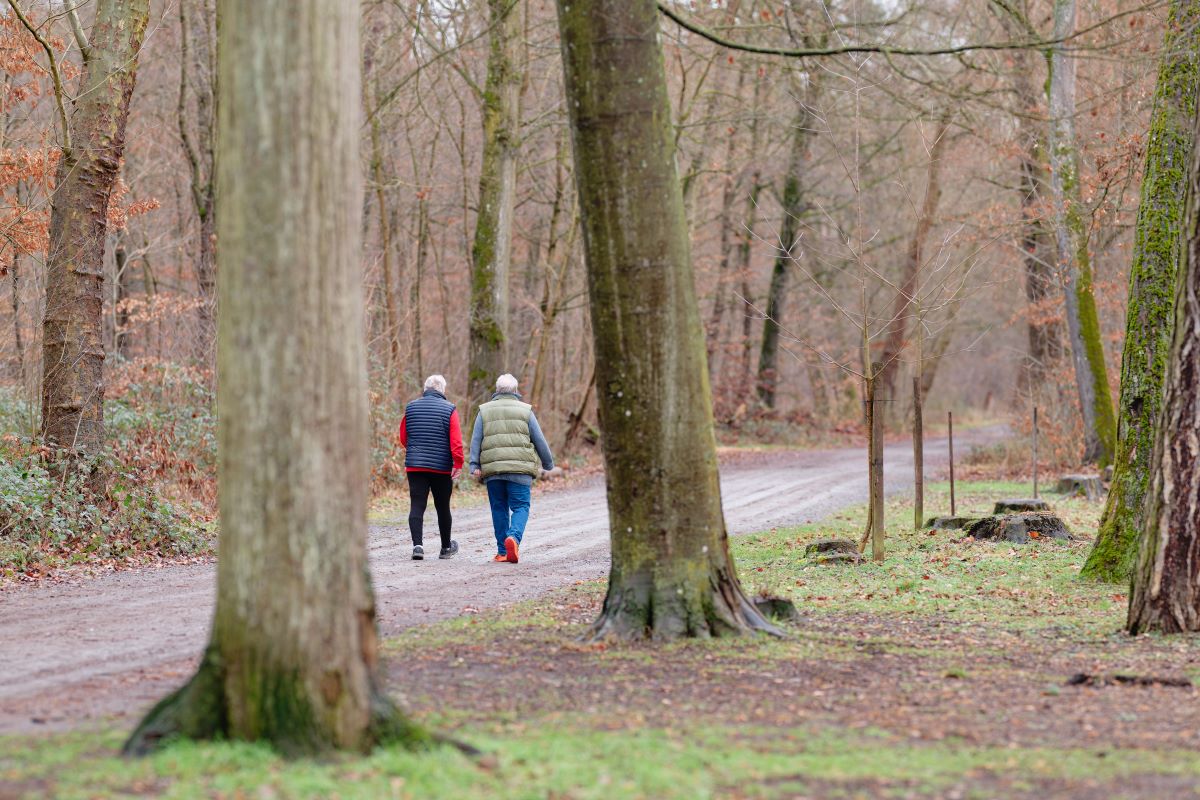
Time spent outdoors is good for the health – and an opportunity to dress appropriately for the conditions. Photo: picture alliance/dpa | Uwe Anspach
Dress for the apocalypse
Famously, people in Germany tend to take life quite seriously. In addition to arriving on time and avoiding small talk, many Germans communicate their seriousness through their clothing.
This applies to formal occasions: a trip to the theatre or a nice restaurant still means smart clothes here.
But the real test is the clothes you wear to face outdoor terrain and weather. Turning up to a five‑mile hike in flip‑flops, or without high performance waterproof gear when there’s a chance of rain, is likely to be regarded a sure sign of irresponsibility.
Broadly speaking, the rule of thumb here is simple: dress for the worst‑case scenario. That means Gore‑Tex, sturdy shoes, spare layers for most outdoor excursions.
Pro tip: If no one says anything about what you’re wearing, give yourself a pat on the back — that’s when you know you’ve probably got things exactly right.
Disclaimer : This story is auto aggregated by a computer programme and has not been created or edited by DOWNTHENEWS. Publisher: thelocal.de