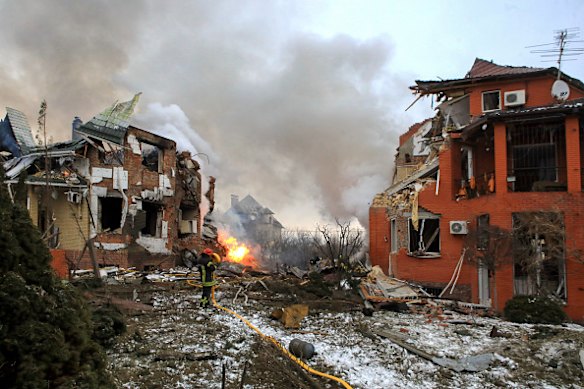
The war of attrition appears almost certain to continue, despite Donald Trump’s pressure on Ukraine to sign away its territory in the hope of a lasting peace.
There is a ruthless objective behind the Russian missile strikes that kill and wound civilians across Ukraine almost every day, and the future of the war is being shaped by whether survivors can defy the pitiless violence.
The killing continues on the fourth anniversary of the full-scale invasion, when Russian President Vladimir Putin sent tanks rolling toward Kyiv in a bid to topple the government, but the attacks have yet to achieve his goal.
“Some of us are living in unbearable conditions,” says Olena Davlikanova, an associate senior fellow at the Sahaidachny Security Centre in Ukraine and a senior fellow at the Centre for European Policy Analysis.
“What does it lead us to? It leads us to more hatred towards Russians. While in Moscow, their calculation is to make us go outside to protest and demand signing up to a peace deal, in reality, people just want more Russians to be killed.”
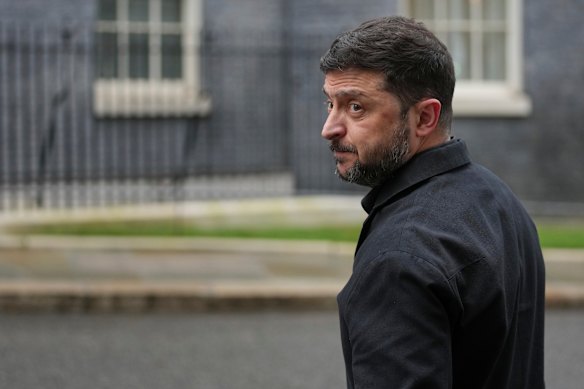
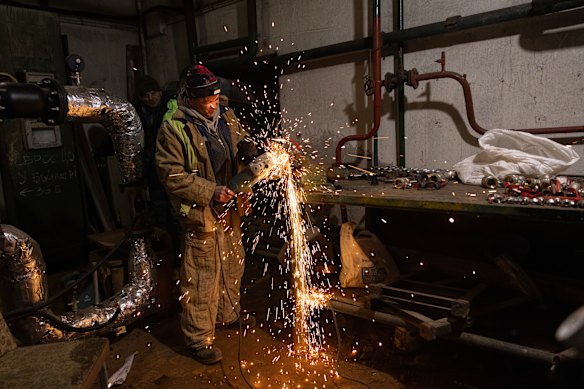
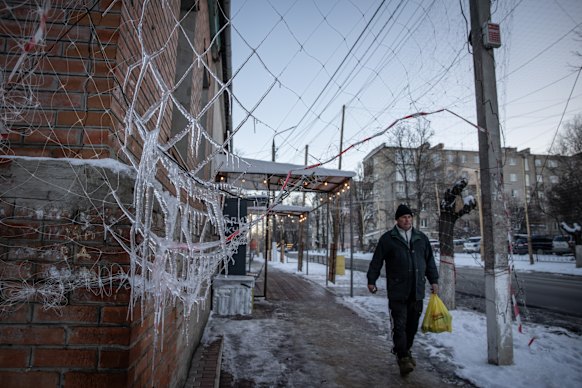
Davlikanova says this from Kyiv, where Russia has targeted energy systems with repeated bombings to shut down heating for millions of residents in the middle of the northern winter. Sometimes there is no electricity for 24 hours at a time. It has been minus 20 degrees outside, she says, and about 5 degrees inside her home.
While leaders talk of peace, progress is slow and a ceasefire seems unlikely despite Donald Trump’s talk of a quick deal when he won his second term as American president. Putin not only wants Ukrainian territory but a settlement with Europe and America that cements Russian power. Ukraine, so far, will not give him this victory.
And the options are not simply a binary choice between war and peace. There are multiple scenarios ahead as Ukrainian President Volodymyr Zelensky and his European supporters, as well as Trump and his envoys, negotiate the terms that might justify ceding ground to Putin.
The options include a capitulation that would agree to Putin’s most aggressive demands, including that Ukraine limit the size of its army and give up fortified positions that prevent Russian forces from gaining full control of the Donbas region in eastern Ukraine. They include holding out for a ceasefire on better terms, hoping that Putin relents. And they include a continued war of attrition – and even a Ukrainian escalation.
“Ukraine is not ready to give up the most fortified positions,” says Davlikanova. “The Russians were unable to take them militarily for more than a decade, and we do not understand why some of our partners push us to do this. This would be a suicidal act.”
This is ultimately about whether Ukraine should trust Putin to respect a new border – either official or de facto – in a peace deal. The answer, so far, is that Ukrainian and European leaders believe Putin would one day launch a further invasion, so they will not accept peace terms that give him a strategic advantage.
Russia holds about 70 per cent of the Donetsk Oblast and demands control of “fortress” cities such as Kramatorsk, but Zelensky shows no sign of giving up positions that have withstood Russian attacks for years.
Trump might ease the Ukrainian fears by offering a security guarantee that delivers US support if Russia ever breaks the terms of a peace deal – akin to a NATO pact that treats a Russian incursion as the trigger for American military help. Trump, however, remains vague about the fine print on any security guarantee. Ukraine simply cannot trust America to come to its defence.
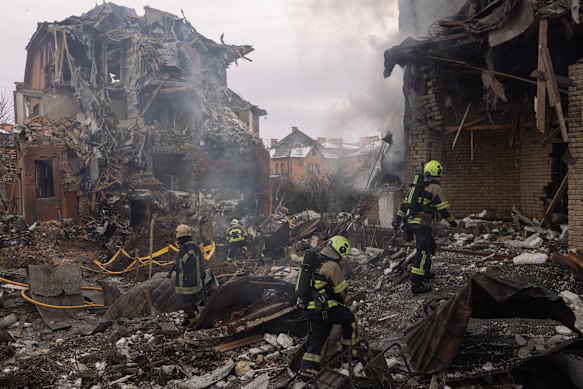
So the cruelty continues. More than 15,000 civilians have been killed and another 41,378 injured since February 2022, according to the United Nations Human Rights Monitoring Mission in Ukraine, or HRMMU. “The situation has demonstrably worsened,” its head, Danielle Bell, said last week. Civilian casualties in 2025 were 31 per cent higher than in 2024 and 70 per cent higher than in 2023.
Russia marked the week before the February 24 anniversary by launching more than 1300 attack drones against Ukraine, as well as 1400 guided aerial bombs and 96 missiles, according to the Ukrainian government. Zelensky blamed Russia for what authorities described as a “terrorist attack” in Lviv, in the far west of Ukraine, that killed a police officer and injured 25 others.
“Moscow continues to invest in strikes more than in diplomacy,” Zelensky said on social media. “That is why we must bolster our air defence.”
Can Ukraine fight Russia to a standstill, if not a victory? It faces the immense challenge of countering a neighbour with a bigger population, industrial base and military.
“In current circumstances, it’s quite difficult to see that Ukraine could hold Russia back and not cede territory,” says Neil Melvin, director of international security at the Royal United Services Institute in London.
“That’s because four years into the war, essentially we have an attritional conflict, and that reflects the asymmetry of resources. Russia has more people, more equipment and more money to bring to the fight. Ukraine is gradually trading territory to grind down the Russians. And the Russians are doing the same. They’re trying to grind down the Ukrainians.”
Melvin says Ukraine has to wage this war with a limited economy and a limited military, troubled by increasing levels of desertion. It has a technical edge against Russia in some areas, such as the use of sea drones to target Russian ships in the Black Sea, but has a disadvantage in others. Russia brings bigger numbers to the arms race: it is capable of sending more missiles and drones than Ukraine can send in response.
Putin also has the capacity to order waves of soldiers against Ukrainian defences at a staggering cost, reflecting his absolute control in the Kremlin after years of eliminating rivals and centralising his power.
Russian forces have suffered nearly 1.2 million casualties over the past four years, according to estimates issued three weeks ago by Seth Jones and Riley McCabe at the Centre for Strategic and International Studies. That is greater than any losses by any major power since World War II.
“After seizing the initiative in 2024, Russian forces have advanced at an average rate of between 15 and 70 metres per day in their most prominent offensives – slower than almost any major offensive campaign in any war in the last century,” they say.
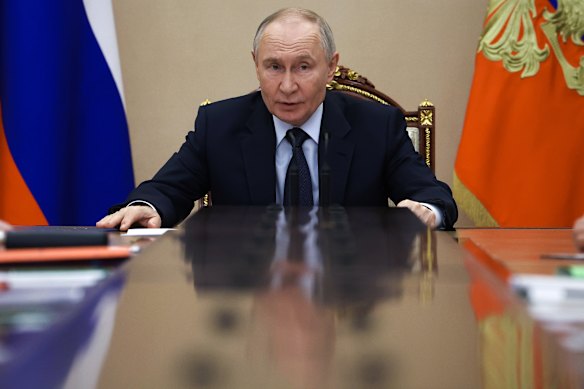
Desperate for more troops, Russia has relied on an estimated 10,000 soldiers from North Korea and is said to have recruited 1000 from Kenya. While the Russian economy is undeniably weak as sanctions take their toll, Putin seems willing to send more fighters to his “meat grinder” in Ukraine despite the losses.
Ukraine is short of the supplies it needs to defend its people on the home front or go on the attack on the battlefield. For air defence, the country relies on the Patriot systems made in the US: Raytheon makes the control systems and radar, while Lockheed Martin makes the interceptor missiles. Europe funds the supply of some of these to Ukraine, but cannot get enough.
“Europe is unable to substitute those systems produced by the US,” says Marianna Fakhurdinova, a fellow at the Centre for European Policy Analysis and also at the Transatlantic Dialogue Centre in the US. But there is another problem, and it goes far beyond defensive systems. Ukraine is hamstrung when it tries to destroy Russian bases that launch attacks on civilians.
“No one should think that air defence is sufficient,” says Kurt Volker, a former US ambassador to NATO (appointed in the Bush administration) and a special representative to Ukraine from 2017 to 2019 (during the first Trump administration). He is also a distinguished fellow at the Centre for European Policy Analysis and spoke alongside Fakhurdinova and others in a media briefing last Friday on the future of Ukraine.
“There is no way Ukraine will ever be able to take down 600 projectiles a night, three to four times a week,” Volker says. “This is simply not doable. That’s why Ukraine needs effective long-range systems in order to take out missile factories, drone factories, fuel facilities, platforms that are delivering drones and missiles.
“This is what needs to happen, and the reluctance of both Europe and the United States to do more on long-range weapons is very frustrating because there is no air defence solution to protecting Ukrainian citizens alone.”
This highlights a scenario that offers an alternative to the status quo or a forced peace. It is about giving Ukraine more resources to go on the attack.
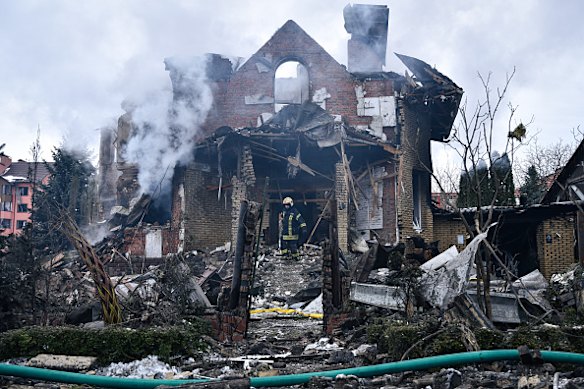
Davlikanova, speaking in Kyiv, says the global response should be to empower Ukraine to stop Russia. First, she says, there should be a far more vigorous program to stop Russian oil exports using the “shadow fleet” of tankers flying flags of convenience from other countries. Second, expanded air defences. Third, greater capacity for Ukraine to go on the offensive.
“We are working on our long-range missiles to convey a message that if we are being targeted, we will have the capacity to retaliate every time,” she says. “This is a priority for Ukraine.”
This means an escalation of the war and an increase in the risk of a broader conflict with a nuclear power, but the Russian bombardment of civilian targets, in a hideous drumbeat over four years, invites a response. If Ukraine does not collapse in submission, it will retaliate in anger.
No matter how much Trump talks about peace talks, European leaders are wary of a deal that rewards Putin and heightens the danger from Russia. They want to inflict more pain on Putin, not ease the pressure at the negotiating table.
“Moscow is not invincible,” the European Union’s foreign affairs high representative, Kaja Kallas, said at a meeting of European Union defence ministers last Friday. “Its army is suffering record casualties, and its economy is under heavy strain. But Putin won’t end this war until the costs are higher than the benefits. And that is the point we must reach.”
Regardless of Trump’s agenda, European leaders are also seeing greater daily threats from Russia, such as drone flights over civilian and military airfields, foreign interference, disinformation campaigns and sabotage of railways and other infrastructure.
European security and defence leaders are increasingly frank about the Kremlin’s use of “hybrid” warfare, and this is a factor in every decision about support for Ukraine.
“We are now operating in a space between peace and war,” the head of British spy agency MI6, Blaise Metreweli, said in a speech last year. “Russia is testing us in the grey zone with tactics that are just below the threshold of war.”
German general Wolf-Jürgen Stahl, the president of the Federal Academy for Security Policy, said last week that his country was under constant attack from Moscow. “We are going to experience things we cannot even imagine right now,” he said in a speech. “When I see how Putin has acted up to now, and the way that he is, in my assessment, on a mission against the West, then there is no question of whether he will use military means. If he gets the opportunity, he will use them.”
This helps explain the frustration in Europe with Trump’s ideas about a peace agreement. Europe, after all, is paying for Ukraine’s defence after Trump chose to stop funding the supply of weapons, so it will not blindly agree to Trump’s decision on the terms of the peace.
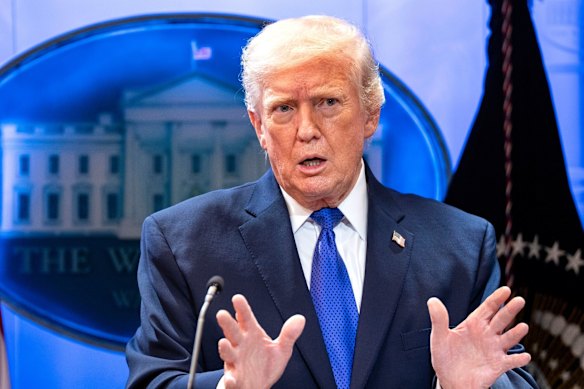
“We are buying American weapons to deliver to Ukraine,” Polish Foreign Minister Radosław Sikorski said last week. “If we are paying, if this is affecting our security, not just Ukraine’s, then we deserve a seat at the table.”
There can be no agreement on the war in Ukraine without considering the broader impact on Europe, for the simple reason that Putin has tried to justify his war by seeking a new security regime across the continent.
“The Russians want a different kind of European security: essentially, the Americans out, the Russians in as a great power in Europe, and a world in which European affairs are decided by the big countries,” says Melvin at the Royal United Services Institute. “In a way, it’s a return to a 19th-century vision of European security, not the modern idea of sovereign equality.
“So we’re entering a confrontation when both sides are rearming. It is a classic security dilemma, in that neither side can feel safe, because they always feel that the other side has more weapons or is building up more weapons.”
Four years after the full-scale invasion, Ukraine is under more pressure than ever. And so is Russia. The war of attrition appears almost certain to continue, despite Trump’s pressure on Ukraine to sign away its territory in the hope of a lasting peace. Ukraine cannot accept a deal that leaves it exposed to a later invasion. Europe will not want a peace that emboldens Putin.
There are myriad variables that could alter these deliberations, given the elections ahead for the United States and Europe, but it is hard to avoid a basic calculation. After four years, it seems the only way to halt a threat will be to defeat it.
Get a note directly from our foreign correspondents on what’s making headlines around the world. Sign up for our weekly What in the World newsletter.
Disclaimer : This story is auto aggregated by a computer programme and has not been created or edited by DOWNTHENEWS. Publisher: www.smh.com.au