

What does leadership and success look like in 2026? These women, chosen as Sunday Life’s Trailblazers for International Women’s Day, all embody traits that make them worthy of celebration.
From global recognition to smashing glass ceilings, and from sporting prowess to social activism, here are 10 women we’d like to celebrate this International Women’s Day.
While our list could easily extend far beyond these 10 names, and we remain mindful of the countless women making a difference behind the scenes, this is an opportunity to spotlight excellence across medicine, sport, culture, business and beyond.
Frances Rings, artistic director
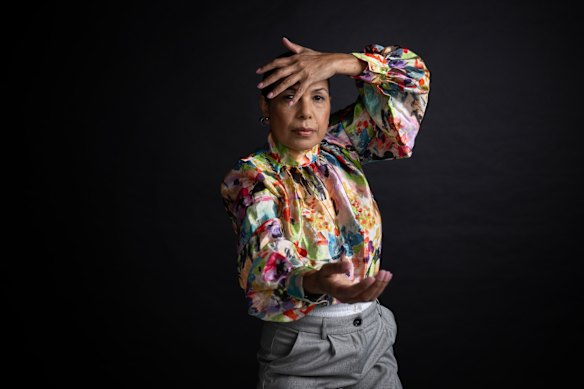
Bangarra Dance Theatre’s Frances Rings was exhausted after a full day’s rehearsal and commute to her home on the NSW Central Coast when she learnt her company had won the dance world’s equivalent of an Oscar.
The choreographer, a Mirning woman from South Australia, expected the late-night call with internationally renowned British choreographer Wayne McGregor would be to tell her that Stephen Page, a Nunukul/Ngugi man who led the company for over 30 years before her, would be knighted.
Instead, she learnt that Australia’s leading Indigenous dance company, which she has led since 2023 as artistic director and co-CEO, had won a prestigious Golden Lion at the Venice Biennale Danza 2026, becoming the first Australians to receive the Lifetime Achievement in Dance award.
“I didn’t get to watch Stephen get a sword on each shoulder and alas I didn’t get the chance to be his Victoria Beckham,” Rings jokes, “but the Golden Lion is the pinnacle in the arts world.
“I was so surprised as we [Bangarra] haven’t been to Europe in a while. We’ve had our footprint firmly planted here in Australia, working on new shows and youth programs so we weren’t expecting this international recognition. It goes to show you people are watching wherever you are in the world.”
Rings joined Bangarra, whose name means “to make fire” in Wiradjuri language, in 1993, and made her choreographic debut in 2002 with the critically acclaimed Rations. She is currently working on Flora, a co-production with the Australian Ballet heavily inspired by her bush childhood. The company will go to Venice in July, where Bangarra will perform Terrain, choreographed by Rings in 2012, which examines the impact of colonisation on the natural environment.
She says the Golden Lion recognises the Bangarra founders and “those who have come before me – Stephen Page, who led Bangarra for 30 years, working alongside his brothers Russell and David Page”.
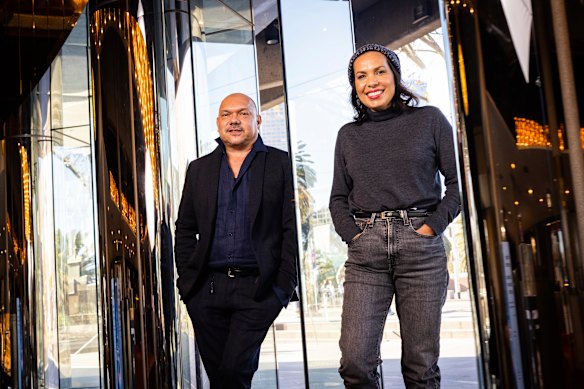
The dance troupe was established in 1989 by the late Gumbaynggirr dancer and Vietnam veteran Rob Bryant, African-American dancer Carole Y Johnson and South African dancer Cheryl Stone. Johnson was also a co-founder of the National Aboriginal and Islander Skills Development Association (NAISDA) dance school, which Rings graduated from in 1992.
Rings moved around a lot as a child, from Port Augusta to Kalgoorlie and then Queensland, for her railway worker father’s job. She escaped into her imagination as a child and remembers a teacher giving her a book, A Necklace of Raindrops by Joan Aiken, which she read over and over again.
“Books often fed my creativity,” she says. “We had no toys so we just made use of what we could in nature playing outside. I feel like all the stories I tell in dance are somehow orbiting around me, and they’re interconnected, and they’re tethered to my identity and to our past. The big thing Bangarra does is amplify our First Nations stories.”
In forging her own leadership path, Rings cites three trailblazing women as an inspiration to her. First up is filmmaker Rachel Perkins, an Arrernte and Kalkadoon woman Rings regards as one of Australia’s most significant storytellers.
“She is incredibly inspiring, especially during the [2023 Voice] referendum in that she chose to become a spokeswoman off her own bat. I love how she shape-shifts from film to television to books and holds her own in each space as she is driven by a cause. I use that as my own modelling.”
The second is June Oscar, a Bunuba woman from Fitzroy Crossing in the Kimberley, former ATSIC Social Justice Commissioner, Indigenous rights activist, community health and welfare worker. “June is as able to move at a high level of government as she is on the ground. She’s meaningful and purposeful in her style and a beacon to us all.”
The third inspiration is her Bangarra co-CEO, Louise Ingram, who she says is “calm and measured” while Rings sees herself as the “passionate serious artist”.
“We are a great balance. Whenever we go through hard times, Louise tells me we have to be like barnacles on a boat – hold strong and weather the storm.”
Rings, who lives with her husband Scott and two adult sons, says she admires female leadership at home as much as in the workplace. “Female leadership is relational – our style is to bring people together. And it’s realistic.
“If I was to tell my younger self something it would be to expect disappointment,” she continues. “Because to be resilient you need to know disappointment. Indigenous people know this and have had to move through Western constructs all the time, so we are constantly learning how to shape-shift.”
Much like the dancers she leads. – HP
Sam Kerr, professional footballer
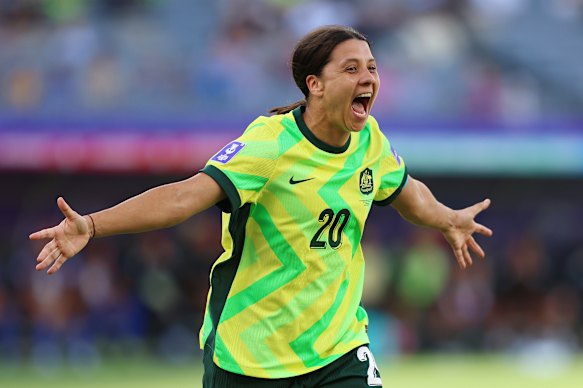
One of Australia’s most recognisable athletes, Sam Kerr is considered among the best soccer strikers in the world and is the all-time leading Australian scorer with 70 goals.
As captain of the Matildas, Kerr and her teammates have helped drive a surge in interest in football – both in fan support and grassroots participation. The 2023 Women’s World Cup, hosted jointly by Australia and New Zealand, was a watershed moment for the sport and this month the team is competing in the Women’s Asian Cup (the team plays South Korea in Sydney tonight).
What some people may not know is that the 32-year-old’s first foray into sport was in AFL. When she was five, Kerr played in an all-boys team until her father and coach pulled her out. “I was getting battered around so much out on the field that it was getting to be a big problem,” she’s said. “Back then, there were no girls’ teams in my area, and to know that I’d never play a sport that I loved so much ever again was devastating.”
From there, she took up soccer, and the rest is history. Playing for both the Matildas and Women’s Super League club Chelsea in the UK, she has also been vocal about gender disparity in women’s sport, saying, “We need funding in our development, we need funding in our grassroots.”
She is also an LGBTQIA+ role model, taking a pivotal role in the Matildas’ partnership with Sydney WorldPride in 2023. Last year, Kerr and American-born footballer Kristie Mewis welcomed their first child before marrying in a lavish ceremony on New Year’s Eve. – AS
Sarah Snook, actor
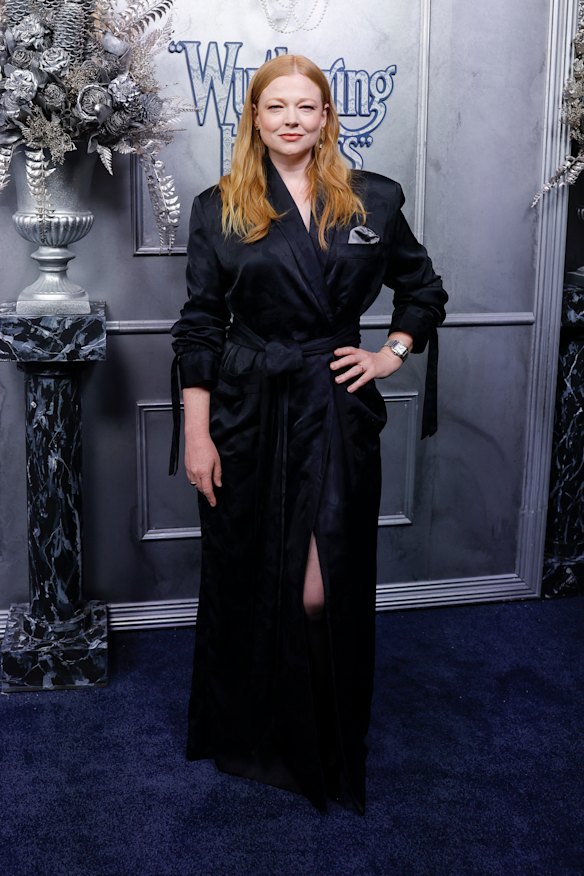
The idea that Sarah Snook is a trailblazer is not a matter of opinion – it is official. Last month, the Australian film and television industry gathered on the Gold Coast to honour her with the 2026 AACTA Trailblazer Award. The award, presented by her father in Succession, Brian Cox, recognised Snook as a visionary who has carved a unique and influential path across the global stage. As Cox put it: “She’s the real deal. She’s extraordinary.”
Her trailblazer status has been hard-won by an incredible run of success on both stage and screen over the last few years. After sweeping the major television awards for her portrayal of Siobhan “Shiv” Roy in Succession, Snook pulled off a theatrical feat in The Picture of Dorian Gray. By playing all 26 characters herself, she not only demonstrated staggering range but also secured a Tony Award and a Laurence Olivier Award, solidifying her reputation as one of the finest actors of her generation.
But when Snook, 38, stood before a theatre full of her acting peers in Queensland last month to receive the Trailblazer Award, the most notable part of her acceptance speech was her deflection from her own achievements and her insistence that her path was paved by those who came before.
She challenged the solitary nature of the “Trailblazer” title by noting she has spent her career benefiting from a long lineage of trailblazing Australians. “Inherent in the word trailblazer is ‘blazing a trail’ – you’re going out there and you’re making your own path,” she said. “But I actually benefit from so many, many Australians who’ve gone and done it before me.”
Snook traced this history from the pioneering spirit of Dame Nellie Melba to the modern-day icons who have opened international doors, including Naomi Watts, Judy Davis, Olivia Newton-John, Cate Blanchett, Nicole Kidman, Toni Collette, Rose Byrne, Margot Robbie, and Isla Fisher.
Looking forward, Snook expressed excitement for the “badass” women currently making their mark – actors like Danielle Macdonald, Yvonne Strahovski, Geraldine Viswanathan, Olivia DeJonge, Angourie Rice, Chloé Hayden, Odessa Young, Katherine Langford, Kartiah Vergara and Andrea Solonge. Of this next generation, Snook said, “I can’t wait to see what they do in the future and I can’t wait to benefit from their activities, their projects and their art.”
Beyond her accolades, Snook has become a champion for the Australian film and television industry, the epitome of a homegrown talent aiming for international success without losing their creative roots. Even at the height of her Hollywood fame, Snook has prioritised returning to Australia to lead local productions such as the acclaimed thriller All Her Fault. By balancing global appeal with a commitment to local storytelling, she has truly blazed a trail that prioritises artistic integrity over celebrity status.
The day after receiving the Trailblazer Award, she sat down for an “In Conversation” appearance with her good friend, actor Shane Jacobson. Jacobson asked if she truly felt the credit belonged to collective effort rather than the individual achievement. Snook’s reply served as a definitive statement on her career philosophy: “Yes, it always is. It’s always a group and team effort, and every individual stands to benefit from the hard work of those around them. That’s just the truth.” – GQ
Sherele Moody, anti-violence campaigner
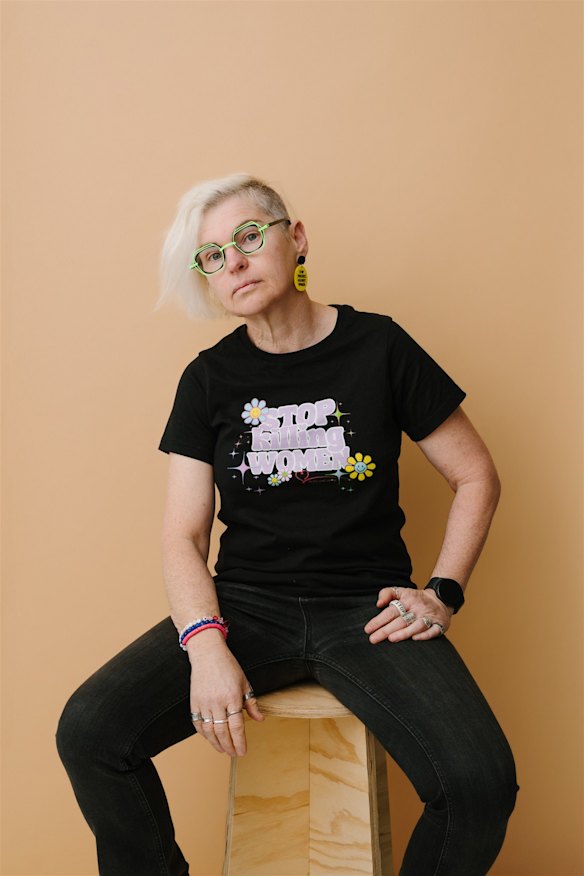
As an award-winning journalist and anti-violence campaigner, Sherele Moody has transformed the way femicide and family violence are documented in Australia. She has dedicated her career to ensuring that women and children lost to violence are remembered as people, not just statistics, by founding several platforms that track and memorialise victims of violence.
One of the most influential is Australian Femicide Watch: a comprehensive database and map that tracks every known Australian woman and child killed by violence, including those killed overseas.
Moody’s work is characterised by a “human-first” approach to data in which she fills in the gaps in official reporting through research and community engagement. As she has said, “It’s about trying to tell their stories and let people know they are not just someone’s wife or mother or someone whose body was found in a bin. It’s that this was a unique person who is not here any more, through no fault of their own. It’s important that we remember and keep the space to tell their stories.”
Through her Red Heart Campaign, Moody has coordinated emotional and legal support for hundreds of survivors and managed projects like “Kids in Crisis”, which provides care packs for children made homeless by domestic violence. She also organises national vigils, provides media training on ethical reporting of gendered violence and established the She Matters mural in Melbourne.
Moody remains a relentless trailblazer, lighting the way for a more compassionate society and ensuring that the silence surrounding family violence is broken for good. – GQ
Aiva Anagnostiadis, racing car driver
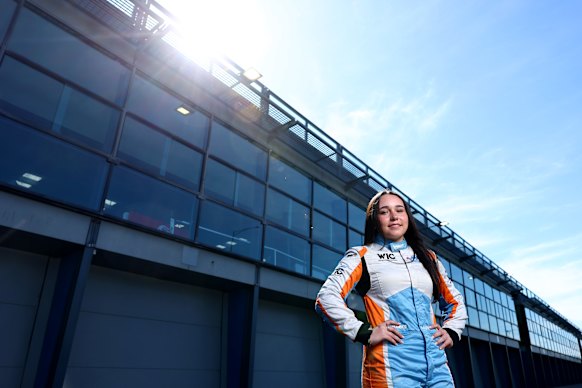
It’s fair to say that Aiva Anagnostiadis was born to be a motor racer. Her mother, Barbara, was a driver and her father a track mechanic, so it follows that the now-18-year-old would enter the “family business”.
Anagnostiadis, who began go-karting at age six and won the Australian Ladies Trophy at the 2021 Australian Kart Championships, has been challenging long-held stereotypes about gender, especially at motor sport’s elite level, Formula 1. In 2025, she was selected for the F1 Academy, where she has raced against some of the best young female drivers in the world.
“If one girl watches a race and thinks, ‘I want to do that,’ then that’s a huge win for me,” she told The Age last year. “I want to help open doors and show that there’s a real pathway to professional racing for women.”
Rachel Butler, co-director of Women in Automotive, says Anagnostiadis has shown the commitment to succeed. “Before turning 18, she’d already relocated to Europe and earned a seat most drivers twice her age would fight for,” says Butler. “But what she represents is bigger than her own ambition.
“Alongside [fellow driver] Joanne Ciconte, she’s one of the first Australian women in F1 Academy. That’s not just a milestone, it’s a doorway, a green light for other girls to see they belong in a sport that hasn’t always made room for them. Aiva’s not waiting for the industry to catch up. She’s forcing it to keep pace, and her influence is already flowing down to young women and girls everywhere.” – MS
Jess Wilson, politician
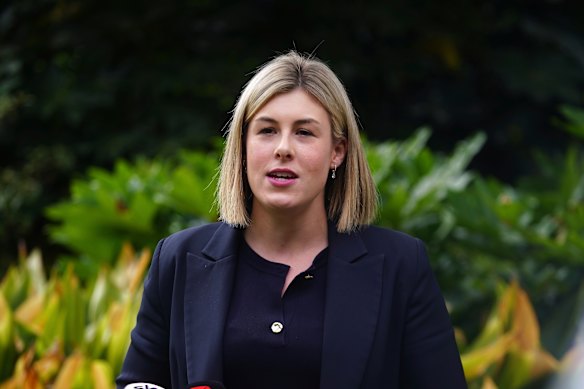
Does any woman in Victoria have a tougher job right now than Jess Wilson, the youngest leader of the state’s Liberal opposition in more than 40 years and the first woman to hold the position?
With a state election looming in November, a mere 12 months since she took office, the 35-year-old mother of one’s mission is clear – to win back as many seats as possible against a rising tide of One Nation and minor party preferences and prevent the Allan government from winning a historic fourth term for Labor.
While the polls and pundits don’t place much hope on Wilson becoming premier, at least not this time around, The Age’s state political editor, Chip Le Grand, says the member for Kew has already met one key milestone.
“Jess Wilson’s first task, which she has already managed to pull off, was to convince people to take another look at the Liberal Party,” he says. “Whether those same voters will be convinced by what they find is another matter.”
If Wilson is to have any chance of an upset victory on November 28, she will need to connect with younger voters who have largely deserted the Liberal brand and her in-car videos, shot on her smartphone, are examples of her attempts to distinguish herself from the more staged style of the sitting premier.
Whatever the outcome, Wilson has shown she’s not afraid to play the part of disruptor, upending her predecessor’s policy priorities on day one by placing cost of living and housing affordability at the top of the list. – MS
Olivia Wirth, Chief executive and executive chair
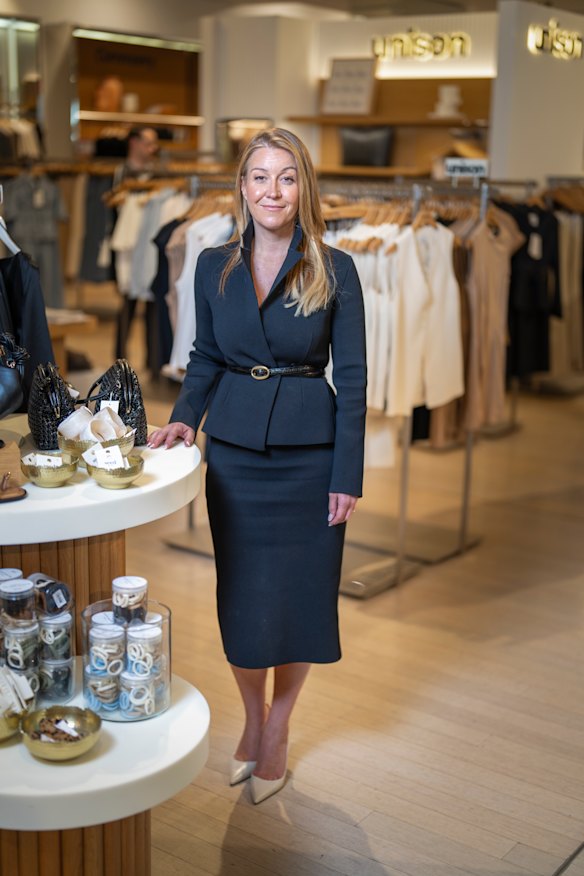
If Olivia Wirth wanted to send a message that department store chain Myer was back in the fashion race, she chose the right forum to do it. Since taking on the top job in 2024, the former Qantas loyalty boss has had her ear to the ground, understanding customers and is now ready to make some noise.
“This is a three- to five-year journey,” Wirth, 50, said last year. “I believe Myer can become the retail powerhouse that is unmatched in Australia. It will take time. It will take energy. It will take the right people.”
At last month’s Melbourne Fashion Festival, Wirth and Myer put their best foot forward by returning to the runway with UK brand Topshop, following decisions to “retire” some of its house brands, including Y2K favourite Sass & Bide.
Still, making unpopular decisions is part of what makes Wirth a formidable leader, says Jessica Yun, retail reporter for The Age and The Sydney Morning Herald. “[Wirth] has all the right ideas and energy to turn Myer around, but it could be interpreted by some as ‘move fast, break things’.
“She’s making all the right noises and talking about retail in the right way,” Yun adds. “Her challenge feels bigger than just Myer. It’s fundamentally about the department-store model and whether you can entice people back. She has the ambition and the will to go as hard as she needs, but whether it pans out – some of that may not be in her control.” – MS
Philippa Watson, chief executive
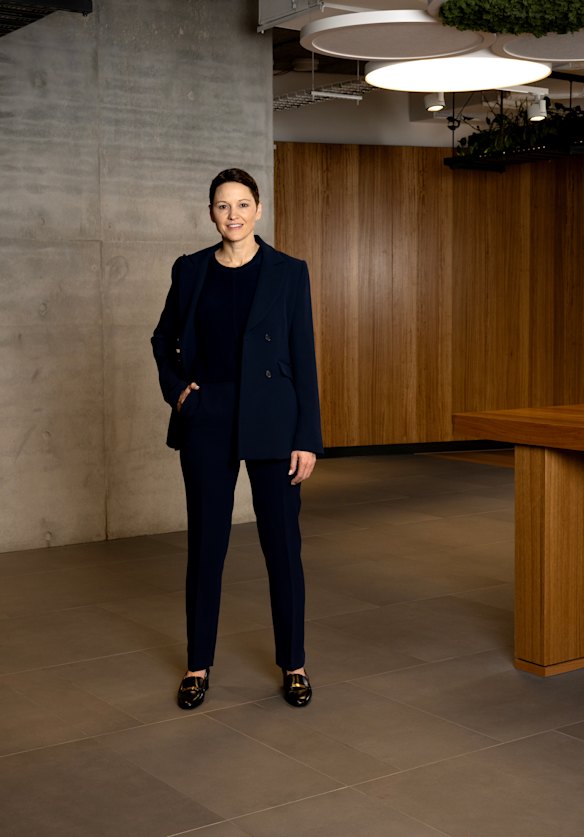
In the male-dominated world of banking, where egos can be as expansive as the boardroom harbour views, Philippa Watson is an anomaly. As chief executive of online bank UBank, Watson championed a low-ego, determined and caring leadership style which made her a prime pick to run Coaxial, the venture capital foundation established by Nicola Forrest after her split from ex-husband Andrew “Twiggy” Forrest.
It was early in her career – first as a lawyer, then in the banking sector – that Watson identified how a different style of leadership to the traditional corporate model could be more effective. “Anyone can manage themselves for a four-week crisis and work 16 hours a day and not get much sleep,” she said in 2025. “But as time goes on, if you continue that, your insight and your judgment and your self-regulation become impaired.
“I saw senior leaders realise that, in a crisis period, the most important thing you can do is self-regulate. It doesn’t do to have the boss fatigued and stressed out of their mind. That helps nobody.”
Celebrated for her willingness to take risks and change course – the very definition of a trailblazer – Watson, 47, topped The Australian Financial Review’s Women in Leadership awards for 2025. Away from banking and finance, she’s also on the board of the crisis support organisation Lifeline. – MS
Jennifer Robinson, international human rights lawyer
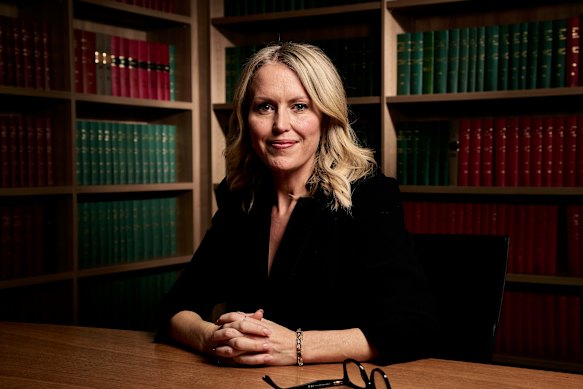
As lawyer to the likes of WikiLeaks founder Julian Assange and actor Amber Heard, Jennifer Robinson has been one of Australia’s foremost and best known legal minds for 20 years. But in the early days of her career, she tackled imposter syndrome, saying, “Imposter syndrome is not just in your head… It’s about gender and class and there are real, structural reasons why people from backgrounds like mine feel out of place.”
Robinson grew up in Berry, in rural NSW, and went on to become a Rhodes Scholar with a master’s in public international law from Oxford University. The 44-year-old is now based in London, working in the chambers of her fellow Australian lawyer, Geoffrey Robertson, KC.
In 2010, the two co-represented Assange when he was accused of sexual assault. At the time, Robinson was asked how she could be a feminist and also defend a client accused of rape. In reply, she famously said: “Everyone deserves a defence.”
Ten years later, Robinson made headlines again when she represented Heard in a defamation case brought by her former husband, actor Johnny Depp, against UK tabloid The Sun (Heard gave evidence for the defence). During the case, which the newspaper won, Robinson and Heard were subjected to what Robinson called “relentless trolling”.
In 2023, Robinson took on another project, writing How Many More Women? with Dr Keina Yoshida about how the law fails women, particularly in cases of gender-based violence. The book has since become a launchpad for a documentary that will premiere at this year’s Sundance Film Festival. Silenced follows Robinson and includes testimony from Amber Heard and also discusses the rape of Australian political staffer Brittany Higgins. – AS
Ariella Heffernan-Marks, chief executive and founder
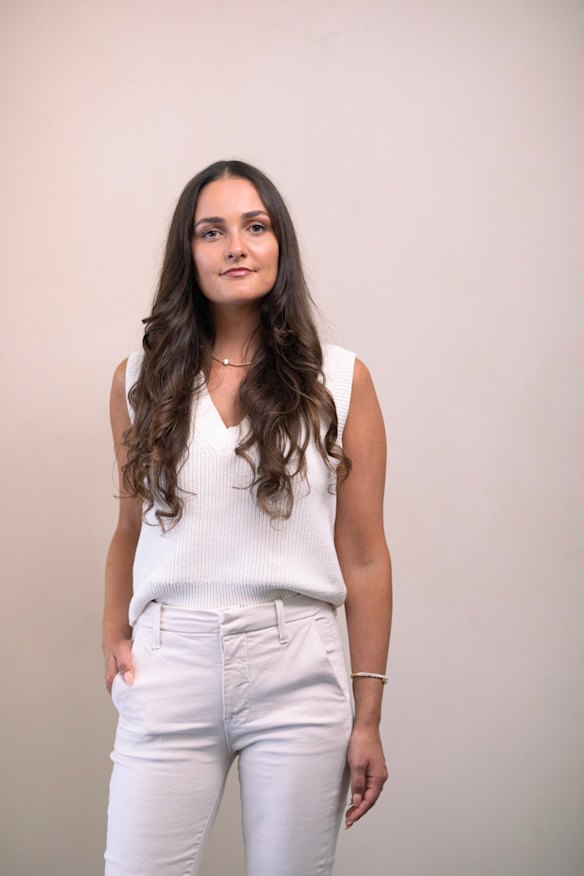
If there is one term that’s dominated women’s health discourse in recent years, it’s “medical misogyny”. For her efforts to stamp it out through her Ovum app, Ariella Heffernan-Marks is deservedly a trailblazer.
The idea was sparked when Heffernan-Marks, now a medical doctor and PhD candidate at The George Institute, was working as an intern. A third-year student, she began to suffer debilitating headaches that one male doctor dismissed as anxiety. “I saw first-hand how fearful women were of the healthcare system,” she said in 2025, adding that many would rather seek medical advice from social media than face gender discrimination.
This spurred Melbourne-based Heffernan-Marks to raise $1.7 million to develop the AI technology, designed not to replace GPs but to work alongside them. She sees Ovum as a way to combat the systemic healthcare issues faced by women in Australia and around the globe.
Endometriosis, for example, affects about one million Australian women. “[In] our current healthcare framework, it can take seven to 12 years to reach a diagnosis,” says Heffernan-Marks. “That’s a decade of pain and frustration caused by our health system, and it’s just one example of a much broader issue.”
While she still has a way to go towards eradicating medical gaslighting, Heffernan-Marks’ achievements have already made her the AI Leader of the
Year at the recent Women in Digital National Awards. – AS
Get the best of Sunday Life magazine delivered to your inbox every Sunday morning. Sign up here for our free newsletter.
Disclaimer : This story is auto aggregated by a computer programme and has not been created or edited by DOWNTHENEWS. Publisher: www.smh.com.au




