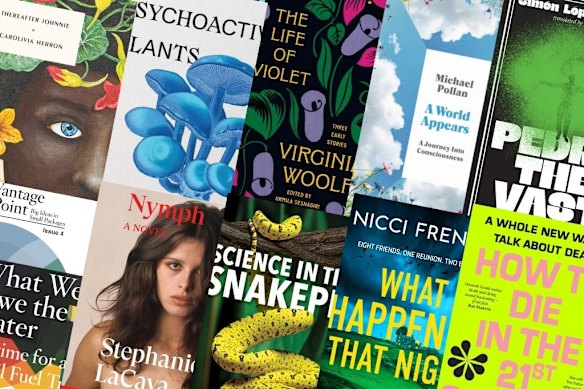
This week’s books cover everything from heteropessimism and eco-horror to a call to arms to fight the lies of the fossil fuel giants and a guide to dying well. No genre left behind!
FICTION PICK OF THE WEEK
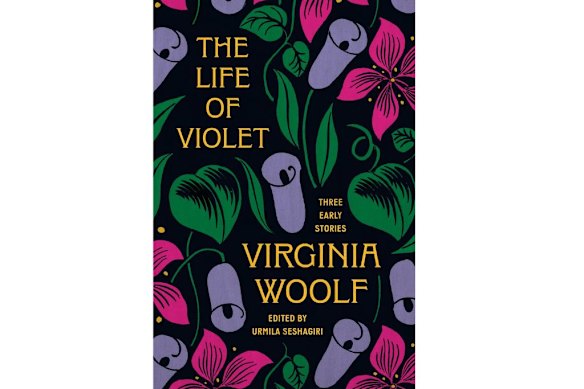
The Life of Violet
Virginia Woolf
Princeton University Press, $32.99
Virginia Woolf herself disapproved of publishing juvenilia: “I don’t want immaturities, things torn out of time, preserved.” Yet this smart hardback edition of three interconnected early short stories, collected and edited as The Life of Violet by scholar Urmila Seshagiri, proves artists can be wrong about their own work. Seshagiri discovered more polished manuscripts than heretofore known of Woolf’s farcical, surreal short works from 1907, before the Bloomsbury phase of the writer’s career. Taken together, they form a mock-biography of Violet Dickinson – an extremely tall, witty and whip-smart friend of hers (so tall and intellectually endowed, in fact, that Woolf’s stories conceive her as a giantess) who went on to become a noted botanist. The tales represent Woolf’s first serious attempt at literary craft. They’re very funny and left field. You can see in The Life of Violet traces of the satirical wit that was to ripen in Flush, another (also funny) mock-biography Woolf later wrote of Elizabeth Barrett Browning’s cocker spaniel. It’s a must for aficionados of modernist literature, and readers afraid of Virginia Woolf will be surprised by how disarming and entertaining she can be.
Nymph
Stephanie La Cava
Verso, $24.99
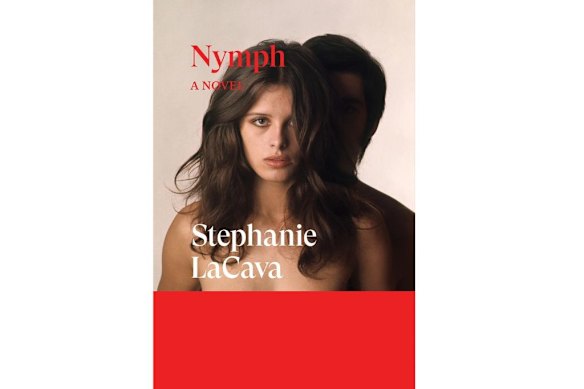
This edgy feminist gothic from Stephanie La Cava subverts violent thrillers and traditional romance. It centres on Bathory (or just Bat), a beautiful young Manhattan student who happens to come from a long line of assassins and isn’t afraid to put her inherited skills to use. Murder is just one of Bat’s talents – she moonlights as a model and sex worker, and she’s also a Latin scholar. Bat has her black heart set on dying young, and her chief ambition in life is (like Sally Bowles from Cabaret) to avoid the entanglements of romantic love. Will she succeed, or will her lethal inheritance become her destiny? La Cava deploys exaggerated tropes – her heroine is a femme fatale par excellence – only to subvert their cultural underpinnings, in a playful critique of gender, gendered violence, class and the commodification of women’s bodies, of human suffering, and even culture itself. Seeded in heteropessimism, this dark flower of novel blossoms from a metamodern reworking of dark romantasy that inverts elements of the genre and welds them to sharp cultural critique.
Thereafter Johnnie
Caroliva Herron
McNally Editions, $32.99
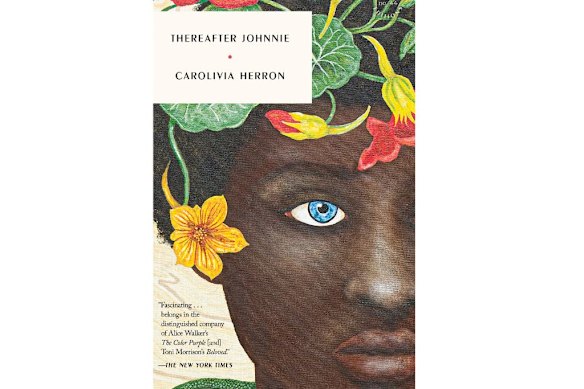
Literary academic Caroliva Herron weaves echoes of ancient epic and myth with the traumatic legacy of American slavery in this ambitious saga. We follow an affluent black family in Washington DC who seem to be outwardly flourishing, though they’ve got serious skeletons in the closet. Paterfamilias John is an eminent heart surgeon; his wife, Camille, loses herself in keeping up appearances at their stately home, and their daughters – Cynthia Jane, Patricia and Eva – receive the best education money can buy. Under the wealth lies dysfunction worthy of ancient Greek tragedy – rape, suicide, madness, religious visions and unyielding grief. For granddaughter Johnnie – a child of incest, mute until adolescence – her mother’s death sparks an odyssey to discover her origins and unearth the curse her family has inherited. Herron’s writing alternates between vauntingly cadenced epic and more naturalistic narration, swelling into a bleak vision of political and social collapse with apocalyptic overtones. It’s a significant literary contribution, stylistically and in terms of the politics of representation.
Pedro the Vast
Simon Lopez Trujillo
Scribe, $27.99
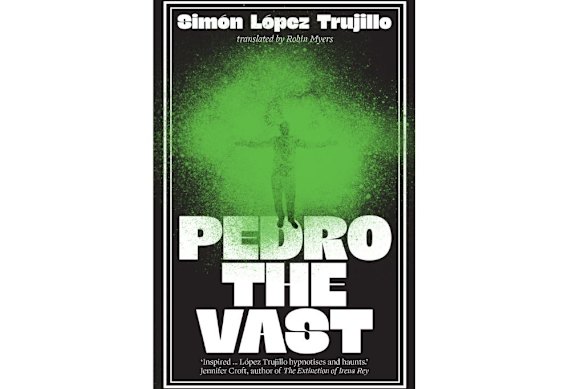
If fungal eco-horror is your jam (and from the global success of The Last of Us, it does seem to have infectious appeal), then Pedro the Vast might be worth picking up. Set on a eucalyptus plantation in Chile, it has an unnerving set-up. One of the workers, single father Pedro, falls into a coma, as the rest of his colleagues succumb to an unknown fungal disease. When Pedro awakens, he begins to utter strange ramblings, and is spirited off by a priest, who intends to present him as a prophet to his cultlike sect. This leaves Pedro’s son Patricio – thrust into a parenting role – and daughter Cata – a girl whose art becomes increasingly sinister and disturbing – to fend for themselves. Spores of spiritual and familial and ecological destruction thrive as the voice of a mycologist intrudes, promising a scientific explanation. The initial scenario of Pedro the Vast draws you in, but postmodern flourishes – with metafictional devices including extensive footnotes – overcomplicate and detract from the storytelling and the horror in such a short novella. Trujillo does have a creepy imagination; it may need a longer, denser form to grow into full toxic bloom.
What Happened That Night
Nicci French
Simon & Schuster, $34.99
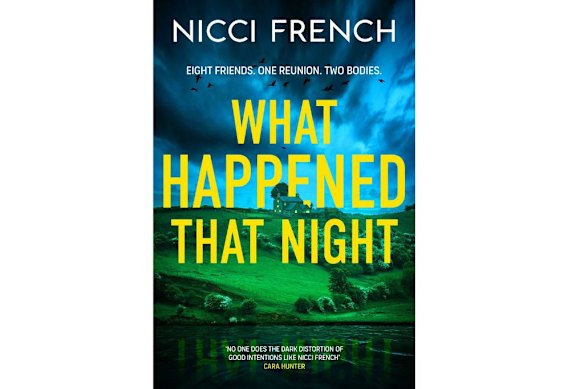
Husband and wife crime-writing duo Nicci Gerrard and Sean French compose popular thrillers under the nom de plume Nicci French. They’re known for the popular series featuring an amnesiac psychotherapist, Frieda Klein. Following a few standalones, they launched a new protagonist, Detective Maud O’Connor. She’s now on her third case in What Happened That Night, although it takes a while before Maud enters the frame. Tyler Green has been released from prison, having served nearly 30 years for the stabbing murder of his friend, Leo Bauer. He insists he didn’t do it and summons the old clique of university mates who were there that night for a reunion to find the real killer. One of those friends winds up dead, with Tyler obviously the prime suspect. Maud has orders to solve the case quickly and without fuss, given that prominent people are implicated, and the previous murder was one of some notoriety. Quickly, she might manage. Without fuss isn’t her style. A whodunit with plenty of plausible suspects and backstory, it’s a reliable, slow burn of a novel.
NON-FICTION PICK OF THE WEEK
A World Appears
Michael Pollan
Allen Lane, $39.99
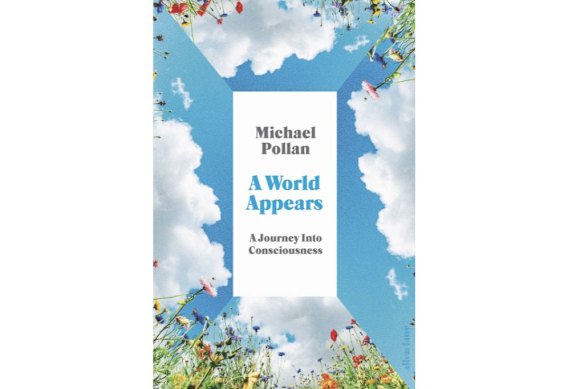
When you can’t put a book down despite the haze of insomnia, you know you’re reading something special. And this is no easy read. It’s a work that makes considerable intellectual demands, delving deep into how neuroscientists and philosophers are grappling with the “hard problem”, as it has become known, of consciousness. How does it arise? Does it emerge from the brain, the body or from outside us? Are even the smallest particles conscious in the most rudimentary way? While researching his previous work How To Change Your Mind on the history and renaissance of psychedelics in the West, Michael Pollan tried a few of these mind-altering substances himself. What happened propelled him into this exploration of what generates our awareness of ourselves and the world. Pollan has a gift for making abstruse theories accessible while being prepared to question the “narrow beam of attention” that can inform them. Ultimately, it’s cartographers of the inner life such as Proust, and Pollan’s own experience, which yield the richest insights.
What We Owe Water
Kumi Naidoo
Australia Institute Press, $19.95
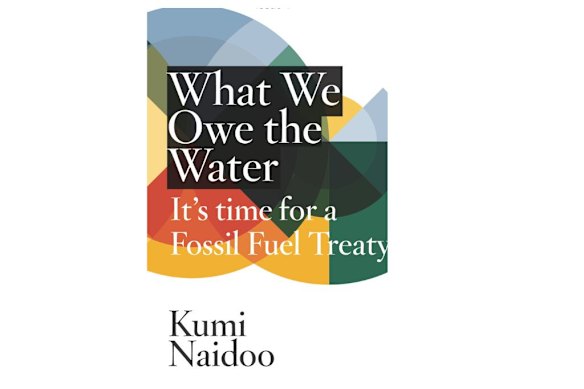
When Kumi Naidoo was growing up under apartheid in South Africa, even the ocean was segregated. The best and safest beaches were reserved for white people. As a person of colour, this struck him as absurd. “How could anyone own the waves?” It was an early lesson in the making of an activist. In Pacific nations threatened by rising oceans, Naidoo finds this injustice in another form. “Water is not the threat. Water is the messenger. It heralds a truth about the fossil fuel age.” This concentrated, seering essay unpacks this truth and urges us to join the call, initiated by the Pacific Nations, for a fossil fuel treaty. How, he asks, can the Australian government claim that it is “standing with the Pacific” while still approving new coal, oil and gas projects? Why did it take 28 years for the UN convention on climate change to incorporate a reference to fossil fuels? Civil society and politicians, he says, must find the moral courage to fight the lies of the fossil fuel giants. ‘The tides are rising,” he writes, “but so are we.’
Psychoactive Plants & Fungi
Liam Engel
Thames & Hudson, $49.99
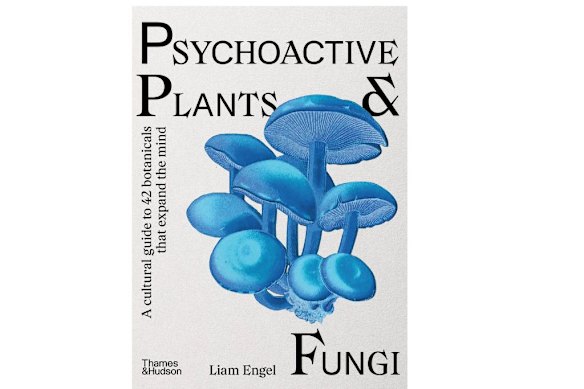
Who would have thought that the flying broomstick motif of folktales might owe its origin to the medieval practice of coating pieces of wood with ointment from the datura leaf which, when applied vaginally, produced a sensation of flight? AKA, a high. This handsomely illustrated and scientifically informed work on psychoactive plants and fungi is a testament to how mainstream interest in these botanicals has become. But the practice goes back millennia. They were often used in religious rituals from the mountains of the Andes to the royal courts of South Asia to heighten spiritual and communal experience. In the Caribbean, yopo seed snuff provided a hotline to the deities. While we are increasingly familiar with the therapeutic and recreational uses of magic mushrooms, peyote cactus and ayahuasca, this book introduces a fascinating selection of the many other psychoactive plants that have played a role in shaping cultures and consciousness around the world.
Science in the Snakepit
Rick Shine
Reed New Holland Publishers, $35
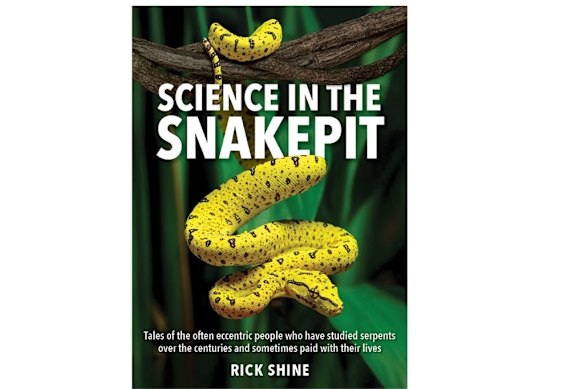
It comes as no surprise to learn that the scientific study of snakes has lagged that of other animals. Humanity’s primal fear of serpents, along with the difficulty of observing these reptiles in the wild, were serious obstacles for herpetologists until the middle of the 20th century, when attitudes and field practice began to change. Reptile ecologist Rick Shine, who has been part of this revolution in understanding, writes with humour and affection about snakes and the singular scientists who have devoted their lives to studying them. There are, as you would expect, many dramatic stories about scientists and snake-handlers being fanged. But more interesting and enlightening are the tales that confound our assumptions about these “deadly” creatures. To thermoregulate, for example, sea kraits “snuggle up to warm-blooded seabirds in their burrows”. Shine’s skill as a yarn-spinner and the striking photographs that accompany his text open our eyes to the allure of these mostly shy, unfairly demonised and often beautiful creatures.
How To Die in the 21st Century
Hannah Gould
Thames & Hudson, $34.99
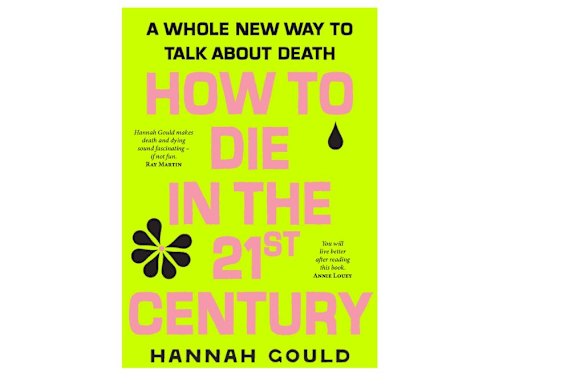
With “peak” death or “Boomergeddon” approaching, it’s a fitting moment to reflect on how we deal (or don’t deal) with death. Hannah Gould, an anthropologist who has her own coffin propped up behind her work desk, believes that our lives and deaths will be better when we make death more a part of our lives. In our medicalised society, the dying are sidelined in aged care facilities, hospitals and hospices – only 15 per cent of Australians die at home. Modern death denialism has real consequences for all of us, says Gould. It can leave us floundering when a loved one dies, ill equipped for mourning, insensitive to the grief of others and terrified of our own mortality. Her very practical, down-to-earth and wry advice aims to help us be prepared for the inevitable. She advises using the “d word” rather than euphemisms, facing up to what happens to the body after death, prior consideration of “disposal” and what makes for a good funeral. “If we can overcome our fears, our potential for better dying is boundless.”
The Booklist is a weekly newsletter for book lovers from Jason Steger. Get it delivered every Friday.
Disclaimer : This story is auto aggregated by a computer programme and has not been created or edited by DOWNTHENEWS. Publisher: www.smh.com.au