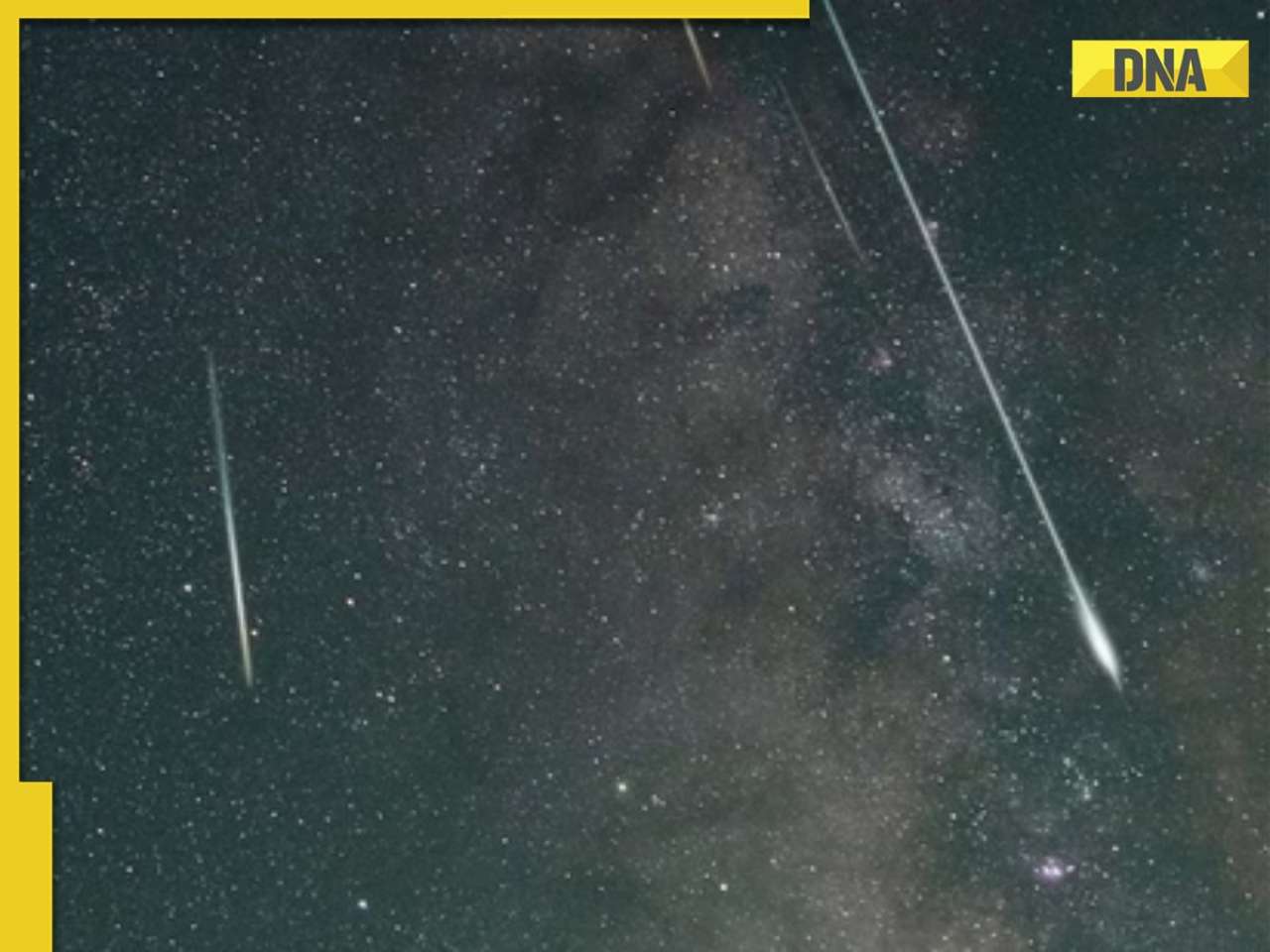
The Geminid meteors appear to radiate from the constellation Gemini, located near the bright star Castor.
The Geminid meteor shower, widely considered one of the most reliable and spectacular astronomical events of the year, will peak in India between the nights of December 13 and 14.
The Geminids are an exceptionally prolific meteor shower whose parent body is 3200 Phaethon, considered an Apollo asteroid with an orbit resembling that of a “rocky comet.”
According to the American Meteor Society (AMS), under ideal viewing conditions, skywatchers can see up to 150 meteors per hour as the Earth passes through the densest part of the debris stream.
Known for producing bright, colourful meteors and occasional dramatic fireballs, the Geminids are considered one of the most powerful annual meteor showers.
They are easily visible to the naked eye, especially from dark, open locations away from city lights.
The Virtual Telescope Project will be live-streaming the Geminid meteor shower from its observatory in Italy.
What is the best time to watch the Geminid meteor shower in India?
According to a report by the Indian Express, the ideal time to watch the meteor shower in India is between 2 AM and 4 AM IST on December 14.
Geminid meteor activity runs from November 19 to December 24, but the number of meteors increases as the night progresses, and is usually highest after midnight and before sunrise.
What causes the shower?
Meteors become visible when small pieces of space debris enter the Earth’s atmosphere and burn up, creating brief streaks of light.
Particles smaller than a grain of sand can produce bright flashes of light, while slightly larger pieces can create intense fireballs that illuminate the sky.
What sets the Geminids meteor shower apart from other meteor showers is its origin. These are not associated with a comet, but rather with an asteroid-like object called 3200 Phaethon, which is often described as a rare “comet-asteroid hybrid.”
When is the peak of the Geminid meteor shower?
The peak of this meteor shower is expected to occur on the night of December 13-14, 2025, with the most intense activity predicted around 3:00 UTC on December 14.
Where are they visible?
The Geminid meteors appear to radiate from the constellation Gemini, located near the bright star Castor.
The constellation Gemini rises in the eastern to northeastern sky after sunset and continues to climb higher throughout the night.
This constellation is located northeast of Orion, between the constellations Taurus and Cancer, and its twin stars, Castor and Pollux, are its defining features. Jupiter, which is the brightest star in the sky from late evening until morning, will also be located near the radiant point of this constellation, making it easier for novice stargazers to find their bearings.
Also read: Shocking! Skydiver’s parachute stuck in plane in middle of stunt, this is how he escaped, WATCH
Disclaimer : This story is auto aggregated by a computer programme and has not been created or edited by DOWNTHENEWS. Publisher: dnaindia.com