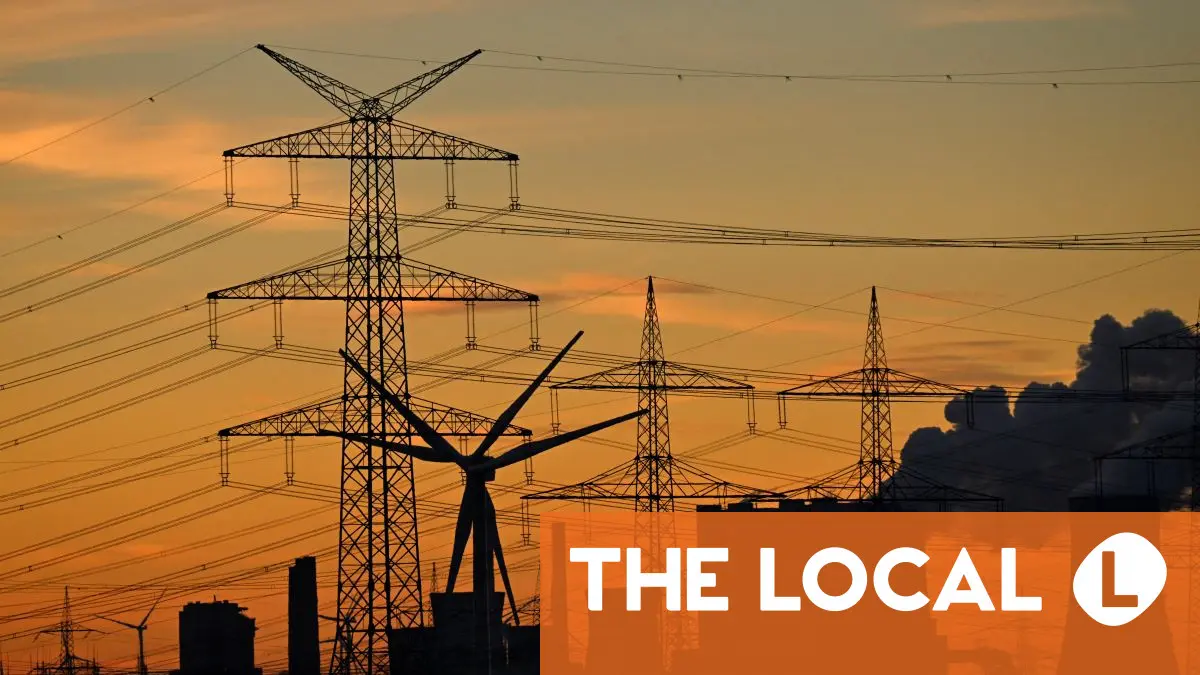
Germany risks missing its climate targets for 2030 and 2045, according to a draft of the government’s climate action plan obtained by AFP on Tuesday.
Chancellor Friedrich Merz’s government faces a March 25th deadline to deliver a policy framework for how the EU’s largest economy will deliver on legally binding climate pledges.
The leaked draft notes that Germany – long a green energy champion – is now projected to fall just short of hitting a 2030 target of reducing greenhouse gas emissions by 65 percent compared to 1990 levels.
Reaching that target remains “fundamentally achievable,” says the draft, but an advisory panel of climate experts cited in the plan was less optimistic, finding that the target is “probably not going to be achieved”.
Environmental groups which have looked at the details agreed, after the plan was also reported on by several German media outlets.
Germany’s climate targets “cannot be achieved with the measures proposed” in the draft plan, the head of the group Environmental Action Germany (DUH), Sascha Mueller-Kraener, told AFP.
The draft plan also says that “the goal of net greenhouse gas neutrality by 2045 remains at risk of not being achieved”.
“With the current climate policy instruments and the assumed framework conditions, it is not foreseeable that the transformation to greenhouse gas neutrality will be successful in all sectors,” it reads.
The draft, prepared by the environment ministry and dated to late January, includes a range of policy proposals to help cut emissions, from subsidies for energy efficient building renovations to more investment in public transport.
But critics quickly noted that the draft does not account for other moves being pushed by Merz’s coalition government, including a loosening of EU-wide car emission rules and an expected rollback of building energy efficiency mandates.
An environment ministry spokesman said details of the action plan are still being negotiated and that “we do not comment on unfinished drafts”.
He added that the government remains committed to achieving Germany’s legally mandated climate targets.
Huge gaps
Even as US President Donald Trump has pulled the world’s largest economy out of the Paris climate treaty, Germany’s government remains under pressure to keep slashing emissions, which is enshrined in law.
READ ALSO: ‘Denial of reality’ – Is Germany’s future government ignoring the threat of climate change?
A top German court ruled in late January that the previous government’s climate action plan – adopted in 2023 – was inadequate and violated the law by failing to do enough to curb emissions.
That decision, which came in a lawsuit brought by DUH, suggests further legal battles may loom.
Merz, a conservative in power since last May, has made jump-starting Germany’s stagnant economy a top priority and has looked to cut energy costs and loosen regulations on heavy industry.
Balancing that agenda with Germany’s longstanding climate commitments poses a tricky challenge.
Lisa Badum, a Greens party MP and climate policy spokeswoman, said the draft plan outlined an “unambitious, piecemeal approach” that “won’t allow us to reach the climate targets”.
Badum said the handful of policy suggestions in the draft would not even offset higher emissions from other policies being pushed by Merz’s government, such as tax breaks on aviation fuel and the changes to EU car emissions rules.
“We’re talking about huge gaps in the targets: the problem sectors of transport and buildings are on track to miss their 2030 targets by almost 280 million tonnes of CO2 – more than the entire country of Spain emits in a year,” Badum said.
READ ALSO: Germany’s energy transition put on the back burner in 2025
A separate draft proposal to overhaul electricity regulations – which was also obtained by AFP – would cut longstanding rules that favour renewable energy projects.
Current rules require electricity grid operators to prioritise connection requests from newly built renewables and also guarantee payments for the power those projects generate.
The leader of the German Renewable Energy Federation warned that the changes “will stifle the expansion of renewables” and would be “poison for urgently needed investments”.
Disclaimer : This story is auto aggregated by a computer programme and has not been created or edited by DOWNTHENEWS. Publisher: thelocal.de