From Parma ham to Champagne, Europe protects authentic food. Here’s how Germany’s own food labels reward soil, climate and craft – and help shoppers spot real quality on supermarket shelves.
Most European countries have a system for identifying and protecting “authentic” foods – products whose quality, flavour and reputation are inseparable from where they come from.
Italians know this instinctively from labels like DOC or DOP; the French swear by AOP. Germany, characteristically precise, does the same thing using initials you’ll see in supermarkets and delis: g.U and g.g.A.
Once you know what they mean, these small round logos can unlock a surprisingly rich world of regional cheeses, breads, meats and sweets – from Allgäuer Emmentaler to Fränkischer Grünkern.
The system is designed to protect consumers from being sold “Schwarzwälder Schinken” made from factory-farmed pork on the other side of the world. Only ham cured and smoked in the Black Forest, using traditional methods, can legally be sold under the name.
But it also helps explain something fundamental about German food culture: a deep respect for origin, process and tradition, even in an age of industrial food.
Here’s your guide to what to look for – and which German products already enjoy protected status.
READ ALSO: Early dinners with Sauerkraut – The German food and drink habits that foreigners are adopting
What to look for in your local supermarket or deli
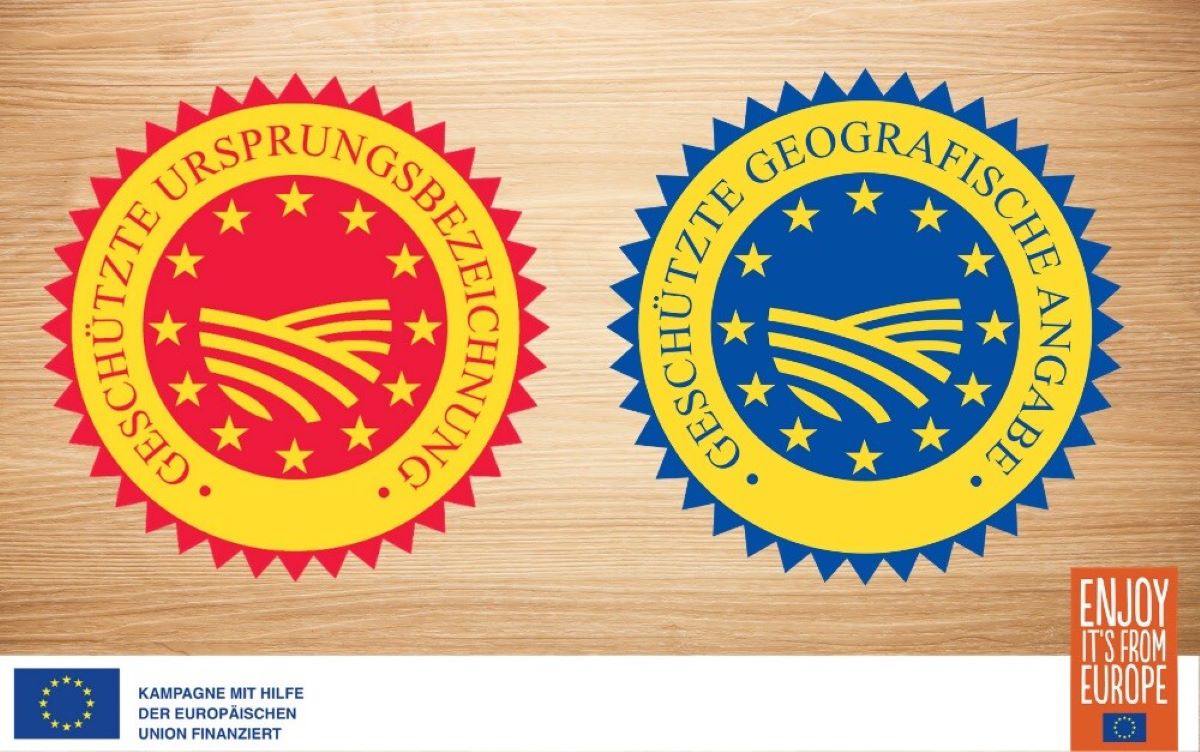
There are two labels which foodies and Feinschmecker should look for in Germany. The first is a round yellow and red EU logo above the letters g.U.
The second is a blue and yellow logo above the letters g.g.A.
g.U. stands for geschützte Ursprungsbezeichnung, which translates as Protected Designation of Origin (PDO).
This is the gold standard. For a product to qualify, every single stage of production – from raw materials to processing to final preparation – must take place in the defined region.
g.g.A. stands for geschützte geografische Angabe or Protected Geographical Indication (PGI).
This is slightly more flexible. At least one key production step must happen in the named region, and the product’s reputation or special qualities must be linked to that place, even if some ingredients come from elsewhere.
Germany has around 30 food and drink products with g.U. status, while a larger number carry the g.g.A. label, covering everything from sausages to bread, beer and baked goods.
These European seals guarantee authentic enjoyment and originality. Photo: picture alliance/dpa/Dutch Dairy Association
READ ALSO: 9 incredible foods you have to try while visiting Frankfurt
Germany’s ‘protected designation of origin’ products
Products with g.U. status are the purists’ choice. They are rooted – quite literally – in their landscape.
Allgäuer Weißlacker: Not for the faint‑hearted, this legendary Bavarian cheese is sometimes affectionately called a “stink cheese” (Stinkekäse).
Cube‑shaped, rindless and matured for up to a year, it delivers a fierce, salty punch and an aroma that announces itself well before it reaches the table.
Made exclusively in defined parts of the Allgäu and Lake Constance region, it’s a triumph of alpine milk, local flora and stubborn tradition.
Fränkischer Grünkern: Harvested while still green and roasted over beechwood fires, this parched spelt is a relic of medieval farming ingenuity.
The result is smoky, nutty and satisfyingly chewy, perfect in soups or as a grain substitute. Every step – from growing the spelt to roasting the kernels – must happen in Franconia, where the distinctive soil and climate give Grünkern its unmistakable character.
READ ALSO: Handmade glass to modern dance – Germany’s world recognised cultural heritage
Stromberger Pflaume: These small blue plums grow on the steep slopes of the Stromberg hills in Westphalia.
Hand‑harvested and intensely aromatic, they’re prized for jams, brandies and preserves. The unique balance of tartness and sweetness is said to come from mineral‑rich soils and a cool microclimate.
Other g.U. products include Odenwald breakfast cheese, Lüneburg Heidschnucke (a kind of sheep) and Spalt Spalter (hops).
Germany’s ‘protected geographical indication’ products
g.g.A. products are more widely known and often eaten far beyond their home regions – but still anchored in local tradition.
Lübecker Marzipan: Silky, almond‑rich and delicately scented with rose water, Lübeck’s marzipan has been famous for centuries. The g.g.A label ensures it’s still made according to strict rules in the Hanseatic city, protecting it from overly sweet, almond‑light imitations.
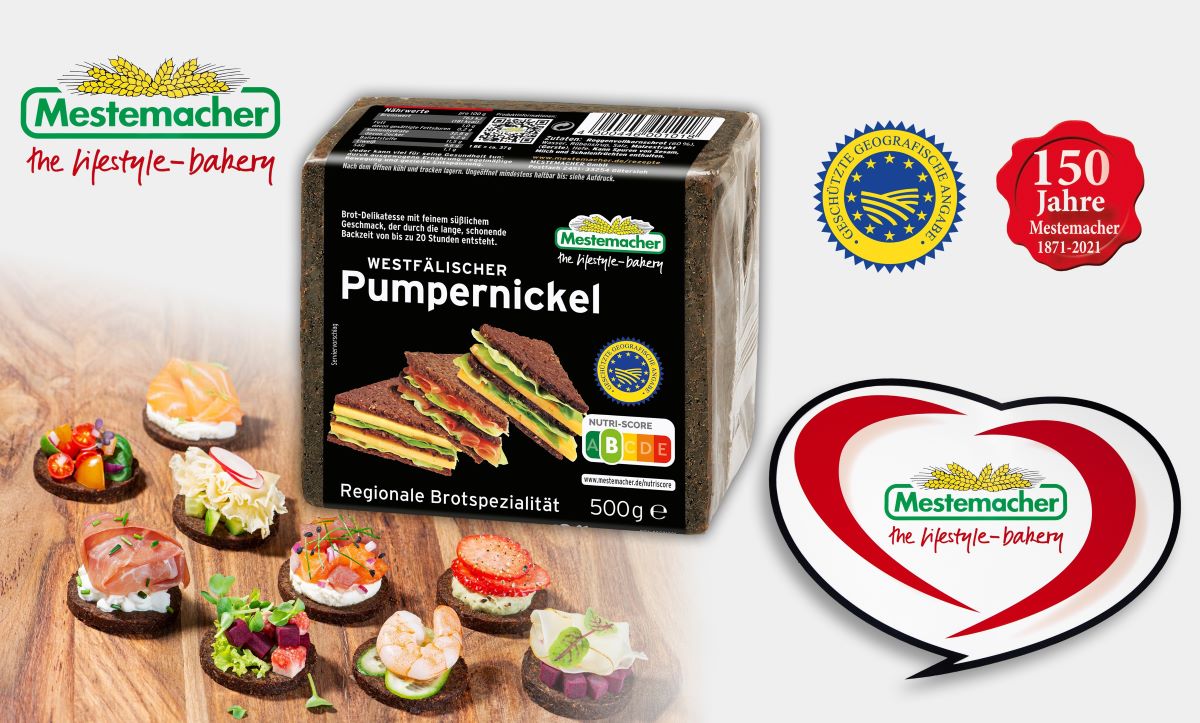
The classic ‘Westfälischer Pumpernickel’ from Mestemacher. Photo: picture alliance/dpa/Mestemacher GmbH | Mestemacher GmbH
Bayerisches Bier: Beer may be brewed worldwide, but Bavarian beer carries centuries of regional identity. Protected since 2001, the label requires brewing to occur entirely within Bavaria’s defined territory, using only water, barley, hops and yeast (or wheat for certain styles).
Nürnberger Lebkuchen: These spiced gingerbread rounds are inseparable from Christmas in Germany. Soft, aromatic and rich with nuts and citrus peel, they must be produced in Nuremberg to carry the name – even if some ingredients travel further.
READ ALSO: German word of the day – Gaumenschmaus
Westfälischer Pumpernickel: A dark bread made from coarse whole rye meal, water and salt (no yeast), which is slowly baked for 16–24 hours at low temperatures in steam-filled ovens to develop its signature sour, malty flavour.
Sliced thin, it’s perfect with butter, cheese or cold meats.
Disclaimer : This story is auto aggregated by a computer programme and has not been created or edited by DOWNTHENEWS. Publisher: thelocal.de