https://golf.com/
Your life, well played.
en-US
hourly
1
https://wordpress.org/?v=6.9
https://golf.com/wp-content/uploads/2020/04/cropped-favicon-512×512-1-32×32.png
https://golf.com/
32
32
https://golf.com/?post_type=article&p=15576662
Thu, 11 Dec 2025 22:09:04 +0000
<![CDATA[
I completed a five-week basic strength routine from top PGA Tour trainer David Sundberg. The results were incredible.
The post I followed a PGA Tour trainer’s strength routine. The results shocked me appeared first on Golf.
]]>
https://golf.com/instruction/fitness/pga-tour-trainer-strength-routine-david-sundberg/
<![CDATA[
I completed a five-week basic strength routine from top PGA Tour trainer David Sundberg. The results were incredible.
The post I followed a PGA Tour trainer’s strength routine. The results shocked me appeared first on Golf.
]]>
<![CDATA[
I completed a five-week basic strength routine from top PGA Tour trainer David Sundberg. The results were incredible.
The post I followed a PGA Tour trainer’s strength routine. The results shocked me appeared first on Golf.
]]>
<![CDATA[
This year, I came to a devastating realization: If I wanted to hit the ball further, I’d have to start working out in the gym.
I know this may seem obvious, but it’s a truth I’d avoided for years. I figured with the proper technique and a little speed training, I could pick up some swing speed. And while that is true, there’s no substitute for getting in the gym.
Mike Carroll, a strength and conditioning coach and founder of Fit for Golf, explained it succinctly when I spoke with him for a story over the summer: “Think of it like upgrading your engine.”
For someone who hadn’t so much as looked at a set of weights in over a decade, this was a tough pill to swallow. Nevertheless, I was desperate for more clubhead speed — so I headed to the gym.
Getting started
For the first four months of so of working out, I didn’t really have a plan. I’d go to the gym and work on legs one day, upper body another. It was certainly helpful for getting my muscles used to working out again, but as far as gains on the course went, the returns were minimal.
That’s when I met David Sundberg. Sundberg is a strength and conditioning coach who works with multiple top-ranked PGA Tour players, including Xander Schauffele and Patrick Cantlay, and he explained that working out is foundational to generating clubhead speed.
“Whether you’re a Tour player or a recreational golfer, the principles are the same,” he said. “Move well, get strong, and the speed will come.”
So, what exactly should I be doing in the gym? Well, Sundberg had a plan for me. He was kind enough to put together a five-week basic strength training plan, which you can see at the bottom of this story. And if I followed it, Sundberg was confident I’d make meaningful swing speed gains.
The program
When I first started the basic strength training program, I didn’t think it would generate many gains. In fact, after the first week of working out, I told my girlfriend it was “easy.”
The exercises might’ve felt easy, but that didn’t diminish their effectiveness. Thanks to Sundberg, I was targeting the correcting muscle groups and building strength in the places I needed to build swing speed.
“Even though our program was only five or six weeks, it still had a planned progression: certain sets, reps and weights,” Sundberg told me during our post-program debrief. “The idea is to start at a level that’s challenging enough to create a new stimulus, let your body recover, then hit the same movement pattern again with slightly more load the next week. That gradual increase forces the body to adapt and get stronger without doing too much.”
Each week, there were small tweaks to the program. Early on, it called for more reps, while later in the program, we added even more weight. I was doing the same set of exercises the whole time, and each week I got a little bit stronger.
Best of all, the program was tailored to building muscles used in the golf swing, giving me functional strength I could actually use on the course.
“In the golf swing, you load into your glutes in the backswing,” Sundberg said. “At impact, you’re pushing through the ground with your lead leg — using the quads — to stand up and transfer force through the body. So those exercises directly support that movement. Same with pushing and pulling [with your arms]. They give you the most return for your time compared to isolated exercises because they target pretty much the entire front and back sides of your upper body. For most golfers, especially those newer to structured strength training, that’s plenty to drive improvement.”
The results
Like I mentioned before, I’ve been doing some gym work and speed training since the summer in hopes of upping my ball speed. But after a few months, I felt like I’d hit a plateau.
When I began training in earnest, I topped out right around 100 mph of swing speed and 150 mph of ball speed. After those few months, I could get up around 102 mph swing speed and 152 mph of ball speed — but that seemed to be my limit.
After a few weeks of Sundberg’s basic strength program, I shattered both records. Over the past month, I’ve seen my max swing speed increase to 105 mph with my max ball speed reaching 154 mph. I know that progress is rarely linear, and those aren’t quite Bryson numbers, but adding that much speed over the course of a month was an exciting development.
What’s next
It’s officially the offseason up here in New York City. Although I’ll make a few trips to warmer climates throughout the winter, there will be no more golf in the Northeast until things thaw out in the spring.
Most people hate the winter for that reason — but I see it as an opportunity. Last offseason, I drilled the fundamentals like my life depended on it, and I came out of the winter much more technically sound. This winter, I plan to go all out getting my body ready for the season ahead.
I’ve already spoken to Sundberg, and he’s creating an offseason plan that I’ll stick to all winter long. If the results are anything like they were after his basic strength program, 2026 should be my best season yet.
If you want to give Sundberg’s basic strength program a try, check it out below.
Basic Strength Routine (3 Days/Week)
Goal: Build foundational strength, control, and stability with moderate loads, unilateral emphasis, and minimal fatigue risk.
Structure:
- Day 1: Lower Body
- Day 2: Upper Body
- Day 3: Full Body
DAY 1 — LOWER BODY SESSION
Approx. 50–60 minutes
1. Warm-Up
After 5–10 minutes of light cardio, perform:
- Half-Kneeling Hip Flexor Stretch w/ Reach — 30s/side
- 90/90 Hip Rotations — 8 reps/side
- Open Book T-Spine Rotation — 6 reps/side
- Glute Bridge w/ Band Abduction — 10–12 reps
- Side Plank — 20–30s/side
- Front Plank — 30s
- Wall Slides — 8–10 reps
Intro Plyos (Level 1) — Rest 60 sec between sets
- Pogo Jumps — 2×10
- Lateral Line Hops — 2×8 each direction
- Squat Jump to Stick (controlled landing) — 2×5
Goal: Prepare tendons, joints, and the neuromuscular system for strength work.
2. Strength Block (Main Work)
Focus: Unilateral control with quad/hamstring balance.
A. Single-Leg Quad Dominant
Rear-Foot Elevated Split Squat (DB or bodyweight)
Rest: 120s between sets
Choose a weight you can perform 12 reps with (good technique).
- Week 1: 3×8
- Week 2: 3×10
- Week 3: 3×12
- Week 4: 3×6, 6, max reps
- Week 5: 2×6 @ 50% weight (deload)
B. Single-Leg Hamstring Dominant
Single-Leg Romanian Deadlift (DB)
Rest: 90s between sets
Choose a weight you can perform 12 reps with.
- Week 1: 3×8
- Week 2: 3×10
- Week 3: 3×12
- Week 4: 3×12–15
- Week 5: 2×6 @ 50% weight (deload)
3. Hip Stability & Core
Perform as a circuit. Minimal rest between exercises; 90s after each round.
- Mini-Band Lateral Walks — 3×10 steps each way
- Half-Kneeling Anti-Rotation Press (Pallof) — 3×10/side
- Dead Bug (slow tempo) — 3×10
- Single-Leg Balance Reach (3D/Y-Balance style) — 3×5/leg
Goal: Reinforce pelvic stability and trunk stiffness during rotation.
DAY 2 — UPPER BODY SESSION
Approx. 45–55 minutes
1. Warm-Up
After 5–10 minutes of light cardio:
- Wall Slides — 10 reps
- Serratus Wall Slides w/ Foam Roller — 10 reps
- Light Band External Rotations — 12 reps
- Cat-Cow to T-Spine Rotation — 6 reps/side
- Band Pull-Aparts — 12 reps
2. Strength Block
A. Push (Horizontal Focus)
Dumbbell Incline Bench Press
Rest: 90s between sets
Use a weight you can perform 12 reps with.
- Week 1: 3×8
- Week 2: 3×10
- Week 3: 3×12
- Week 4: 3×6, 6, max reps
- Week 5: 2×6 @ 50% weight (deload)
B. Pull (Horizontal Focus)
Two-Arm Prone DB Row
Rest: 90s between sets
Use a weight you can perform 12 reps with.
- Week 1: 3×8
- Week 2: 3×10
- Week 3: 3×12
- Week 4: 3×6, 6, max reps
- Week 5: 2×6 @ 50% weight (deload)
Perform A and B back-to-back, then rest 60s. Repeat for total sets.
C. Push/Pull Accessory (Scapular Focus)
- Y’s on Bench — 2×10
- Face Pulls — 2×12
3. Core & Stability
Perform exercises consecutively, then rest 90s. Repeat for total sets.
- Side Plank — 2×20s/side
- Bird Dog — 2×8
- Stability Ball Rollout (knees) or Plank Walkout — 2×10
DAY 3 — FULL BODY SESSION
Approx. 45–55 minutes
1. Warm-Up
After 10 minutes light cardio:
- Wall Slides — 10 reps
- Serratus Wall Slides w/ Foam Roller — 10 reps
- 90/90 Hip Rotations — 8 reps/side
- Cat-Cow to T-Spine Rotation — 6 reps/side
- Half-Kneeling Hip Flexor Stretch w/ Reach — 30s/side
- Glute Bridge w/ Band Abduction — 10–12 reps
- Side Plank — 20–30s/side
- Front Plank — 30s
- Band Pull-Aparts — 8–10 reps
Intro Plyos (Level 1):
- Pogo Jumps — 2×10
- Lateral Line Hops — 2×8 each way
- Squat Jump to Stick — 2×5
2. Strength Block
A. Push (Scapular Focus)
Half-Kneeling Landmine Press
Rest: 90s between sets
- Week 1: Empty bar; 3×8–10
- Weeks 2–4: Add 5–10 lb each week; 3×8–10
If you miss reps, keep the same load next session and aim to beat previous reps. - Week 5: Empty bar; 2×6–8
B. Squat Pattern
Goblet Squat to 18″ Box/Bench
Rest: 90s between sets
Box teaches proper hip sit-back and neutral spine.
Start with a dumbbell ≈30% bodyweight.
- Week 1: 3×8
- Week 2: 3×10
- Week 3: 3×12
- Week 4: Increase to ~40% bodyweight; 3×6–8
- Week 5: 2×10 @ 50% Week-4 weight
C. Horizontal Pull
One-Arm Half-Kneeling Lat Pulldown (High Pulley)
Rest: 90s between sets
- Week 1: Light load; 3×8–10
- Weeks 2–4: Add 5–10 lb weekly; 3×8–10
If reps are short, maintain load next session and beat previous numbers. - Week 5: 2×6–8 @ 50% Week-4 weight
The post I followed a PGA Tour trainer’s strength routine. The results shocked me appeared first on Golf.
]]>
https://golf.com/?post_type=article&p=15576667
Thu, 11 Dec 2025 21:53:35 +0000
<![CDATA[
Unlike many of the finest courses in golf-rich Japan, Kawana is part of a resort and accessible to the public.
The post This cliff-hanging course is long haul for U.S. golfers — but worth the effort appeared first on Golf.
]]>
https://golf.com/travel/kawana-golden-age-charles-alison-japan-golf/
<![CDATA[
Unlike many of the finest courses in golf-rich Japan, Kawana is part of a resort and accessible to the public.
The post This cliff-hanging course is long haul for U.S. golfers — but worth the effort appeared first on Golf.
]]>
<![CDATA[
Unlike many of the finest courses in golf-rich Japan, Kawana is part of a resort and accessible to the public.
The post This cliff-hanging course is long haul for U.S. golfers — but worth the effort appeared first on Golf.
]]>
<![CDATA[
GOLF’s latest ranking of Top 100 Courses in the World features plenty of familiar names, from Augusta National and Pine Valley to Cypress Point and Pebble Beach. But tucked amid those icons are lesser-known layouts with compelling designs and rich histories of their own. In this ongoing series, we’ll introduce you to them.
In 1930, English architect Charles Alison stepped ashore in Tokyo from the steamer Asama Maru for a three-month visit. In that brief time, he ignited Japan’s golfing soul. Alison left his signature on four prominent courses around Tokyo — Tokyo Golf Club, Hirono, Naruo, and Kasumigaseki.
But his true masterpiece unfurls two hours south of the capital: the Fuji Course at Kawana, draped across storm-sculpted cliffs that mirror Big Sur’s savage beauty, with sacred Mount Fuji itself rising above the clouds and visible throughout the course.
Of the many fine holes, two stand out for their mix of natural beauty and strategy.
The 7th, a mere 393-yard par 4, tumbles toward a pulpit green kissed by dappled light reflected off the ocean. From the tee, the hole seduces with the promise of driving the putting surface, yet Alison’s deep bunkers slash the fairway in two, demanding a decision: the generous right side grants a straightforward approach, albeit from a severely sloped lie; the more daring angle up the left rewards with a level lie but a delicate pitch over flashed bunkers.
The 15th, a 480-yard par-5, plunges from a sky-high tee to a fairway that abuts towering bluffs along the Pacific. Wind and slope make eagle a possibility, but bunkers right push play left toward the cliffs. The rippled fairway climbs to a narrow, two-tiered green, where par is a strong score.
Kawana must be played to be fully appreciated. And that’s the thing: anyone can. Unlike most of Japan’s top courses, Kawana is accessible to the public. It’s part of a resort. Its sibling Oshima Course (measuring a modest 5,711 yards) shares similar strategic demands on a smaller scale and serves as an ideal warm-up or twilight companion to the Fuji, making for an all world 36-hole adventure.
Noel Freeman is a course rater for GOLF and Golf.com.
The post This cliff-hanging course is long haul for U.S. golfers — but worth the effort appeared first on Golf.
]]>
https://golf.com/?post_type=article&p=15576660
Thu, 11 Dec 2025 18:15:11 +0000
<![CDATA[
For the first time in years, there will be two Kordas (Jessica and Nelly) teeing it up in a professional golf tournament this week.
The post ‘Major FOMO’: After 2-year absence, Jessica Korda returns to LPGA Tour appeared first on Golf.
]]>
https://golf.com/news/jessica-korda-returns-lpga-tour/
<![CDATA[
For the first time in years, there will be two Kordas (Jessica and Nelly) teeing it up in a professional golf tournament this week.
The post ‘Major FOMO’: After 2-year absence, Jessica Korda returns to LPGA Tour appeared first on Golf.
]]>
<![CDATA[
For the first time in years, there will be two Kordas (Jessica and Nelly) teeing it up in a professional golf tournament this week.
The post ‘Major FOMO’: After 2-year absence, Jessica Korda returns to LPGA Tour appeared first on Golf.
]]>
<
Secret Tour meetings, Tiger’s comeback: 10 lessons from Hero on pro golf’s future
Interestingly, Cauley is also familiar with returning to golf after a long layoff. He was in a serious car accident in 2018, missed several months and faced starts and stops in the years that followed.
“We have spoke about it a little bit, but really the only thing you can do is get out there and get your feet wet again.,” Cauley said. “Obviously I know she’s been putting in a lot of time at home to prepare and get ready. When we have talked about it, I guess I’m not very much help because really there’s no substitute just for coming back out playing, competing and going out there and trying to shoot a score.”
Friday’s format is a scramble, Saturday is alternate shot and Sunday’s final round will be a modified four-ball.
Cauley and Jessica Korda, along with Nelly Korda and her partner Denny McCarthy, played a practice round together on Tuesday.
“[Jessica’s] been out a couple times here and there and throughout the years, but I’m excited for her to tee it up this week and to kind of feel the nerves back,” Nelly Korda said. “It’s going to be a fun week. It’s always so nice to have family around. I hope she just has fun and keeps it kind of light.”
Last year, Jessica Korda had a spot in the booth during the Grant Thornton telecast. That, plus other random broadcasting gigs over the years, made her miss playing even more.
“When we were kind of talking about what I could possibly test my body out in, this was almost a no-brainer,” she said. “So yeah, I love this event. I loved the idea of it when it was first brought to us. And then just being behind the scenes of it and seeing how much fun everybody had, I felt like I had major FOMO, so I needed to play.”
The first round of the Grant Thornton will be broadcast 1-4 p.m. ET on Friday on Golf Channel. Jessica Korda and Cauley are paired with Rose Zhang and Michael Kim and tee off at 9:30 a.m.
The post ‘Major FOMO’: After 2-year absence, Jessica Korda returns to LPGA Tour appeared first on Golf.
]]>
https://golf.com/?post_type=article&p=15576638
Thu, 11 Dec 2025 16:34:25 +0000
<![CDATA[
A new bundle announced by YouTube TV could save golf fans cash on their monthly cable bill. Here’s what you need to know.
The post Golf fans could be about to save big on their cable bill appeared first on Golf.
]]>
https://golf.com/news/golf-fans-save-big-youtube-tv-subscription/
<![CDATA[
A new bundle announced by YouTube TV could save golf fans cash on their monthly cable bill. Here’s what you need to know.
The post Golf fans could be about to save big on their cable bill appeared first on Golf.
]]>
<![CDATA[
A new bundle announced by YouTube TV could save golf fans cash on their monthly cable bill. Here’s what you need to know.
The post Golf fans could be about to save big on their cable bill appeared first on Golf.
]]>
<![CDATA[
How about this for the “Great Rebundling”?
On Wednesday morning, YouTube TV announced that it would introduce a sports-specific cable package, allowing consumers to cut back on cable costs while still receiving the sports programming at the center of those packages.
According to YouTube, the new package will be offered to customers at a cost below the company’s current “base plan” price of $82.99 — though the exact price has not been disclosed. The sports package will be debuted in “early 2026,” and will provide access to broadcast channels (ABC, CBS, Fox and NBC) and cable networks showcasing sports programming (ESPN networks, Fox Sports, NBC Sports Network, and USA Sports/Golf Channel).
The new sports bundle will be part of plans to bring 10 “genre-specific packages” to consumers in the new year. The sports bundle comes after years of crowing from sports fans in support of such an endeavor — and follows years of complaints from consumers who felt they were paying for cable channels they did not consume.
The announcement follows a bruising fall for YouTube TV that saw the cable provider lose a handful of NFL and college football games — and a chunk of its business — to a protracted “carriage fight” with ESPN and Disney. At the conclusion of that battle, YouTube TV vowed to work to win back customer trust, and the genre-specific packages appear to be the first effort to those ends.
The economics of cable TV have long made a sports-specific “bundle” a difficult proposition. Sports networks like ESPN cost a fortune for cable providers like YouTube TV (nearly $10 per month, per customer, according to the most recent estimates) and ESPN’s owners at Disney have been keen to ensure that cable providers include all Disney programming under one package, making it hard for providers to siphon off smaller, genre-specific portions of programming.
In many ways, however, the rigidity of the traditional cable structure contributed to the format’s decline, as larger and larger audiences continued to “cut the cord” in favor of sports-specific, piecemeal solutions that proved cheaper than a traditional cable bill.
For golf fans, the new YouTube TV bundle offers an all-access pass to golf programming, providing coverage of LIV Golf, the PGA Tour, and each of the major championships under agreements with NBC, CBS, ESPN, Golf Channel, USA, and Fox.
For those TV customers who are “single-issue” viewers — in other words, those who watch only sports programming — the news is good: The same TV access will be available in the next few months … and it’ll cost less for you to watch.
The post Golf fans could be about to save big on their cable bill appeared first on Golf.
]]>
https://golf.com/?post_type=article&p=15576651
Thu, 11 Dec 2025 13:32:10 +0000
<![CDATA[
When anonymous reports circulated linking two-time PGA Tour winner Sungjae Im to LIV Golf, Im took to Instagram to settle the matter.
The post PGA Tour winner shuts down LIV rumors with 2 words appeared first on Golf.
]]>
https://golf.com/news/pga-tour-winner-shuts-down-liv-rumors-2-words/
<![CDATA[
When anonymous reports circulated linking two-time PGA Tour winner Sungjae Im to LIV Golf, Im took to Instagram to settle the matter.
The post PGA Tour winner shuts down LIV rumors with 2 words appeared first on Golf.
]]>
<![CDATA[
When anonymous reports circulated linking two-time PGA Tour winner Sungjae Im to LIV Golf, Im took to Instagram to settle the matter.
The post PGA Tour winner shuts down LIV rumors with 2 words appeared first on Golf.
]]>
<
Still only 27 years old, Im made 20 of 28 cuts in the 2025 PGA Tour season, collecting nine top-25 finishes and three top 10s, including a T5 at the 2025 Masters. He finished the season at 27th in the FedEx Cup standings.
In addition to the wins, Im has accumulated 48 top 10s and 22 top 5s in 209 career starts, earning $34,982,404 on the course for his troubles.
And he’s something of a major threat, even if he hasn’t claimed one yet. In six Masters starts, Im has three top-8 finishes, including a T2 in 2020. He added a T7 at the 2024 Open Championship.
With that pedigree, Im would clearly be a big get for LIV Golf and a similarly large loss for the PGA Tour were he to switch tours. With LIV Golf keen on expanding their popularity globally, the fact that Im hails from golf-crazed South Korea only makes him more attractive.
But thanks to Im, we now know he’s not going anywhere.
Sungjae Im brands LIV rumors ‘Fake news’
On Wednesday, reports citing anonymous sources claimed Im was readying to ditch the PGA Tour for LIV Golf, along with another South Korean PGA Tour pro.

‘Looking forward to next year’: PGA Tour star announces big LIV decision
Other journalists, citing their own sources, denied that the reports about Im’s LIV move were true.
That caused Im to take the matter into his own hands.
Later on Wednesday, Im took to his Instagram account and posted a screenshot of the original report. But he added two words and an emoji on top of the screenshot that settled the matter.
“Fake news,” Im wrote, along with a “thumbs down” emoji.
And with those two words, the PGA Tour star confirmed that contrary to reports, he isn’t switching tours and will continue to ply his trade on the PGA Tour.
The incident recalls a similar situation an Australian PGA Tour player found himself in earlier this year.
In November, rumors flew that 27-year-old PGA Tour winner Min Woo Lee was considering a move to LIV Golf.
But in an interview with the Australian Associated Press, Lee ended any speculation by confirming that he was staying on the PGA Tour.
“There’s been a lot of rumors. I’m not going [to LIV Golf] and am just going to play on the PGA Tour,” Lee told the AAP. “So, I’m happy with where I’m at and, yeah, I’m looking forward to next year.”
The post PGA Tour winner shuts down LIV rumors with 2 words appeared first on Golf.
]]>
https://golf.com/?post_type=article&p=15576639
Thu, 11 Dec 2025 12:39:04 +0000
<![CDATA[
I got Bettinardi’s VIP putter fitting experience earlier this year, and now you can win one on Fairway Jockey.
The post I tried this VIP putter fitting experience. Here’s how you can get it for free appeared first on Golf.
]]>
https://golf.com/gear/putters/i-tried-it-bettinardi-putter-fitting/
<![CDATA[
I got Bettinardi’s VIP putter fitting experience earlier this year, and now you can win one on Fairway Jockey.
The post I tried this VIP putter fitting experience. Here’s how you can get it for free appeared first on Golf.
]]>
<![CDATA[
I got Bettinardi’s VIP putter fitting experience earlier this year, and now you can win one on Fairway Jockey.
The post I tried this VIP putter fitting experience. Here’s how you can get it for free appeared first on Golf.
]]>
<
I got fit for a putter at Bettinardi’s Studio B. The result shocked me
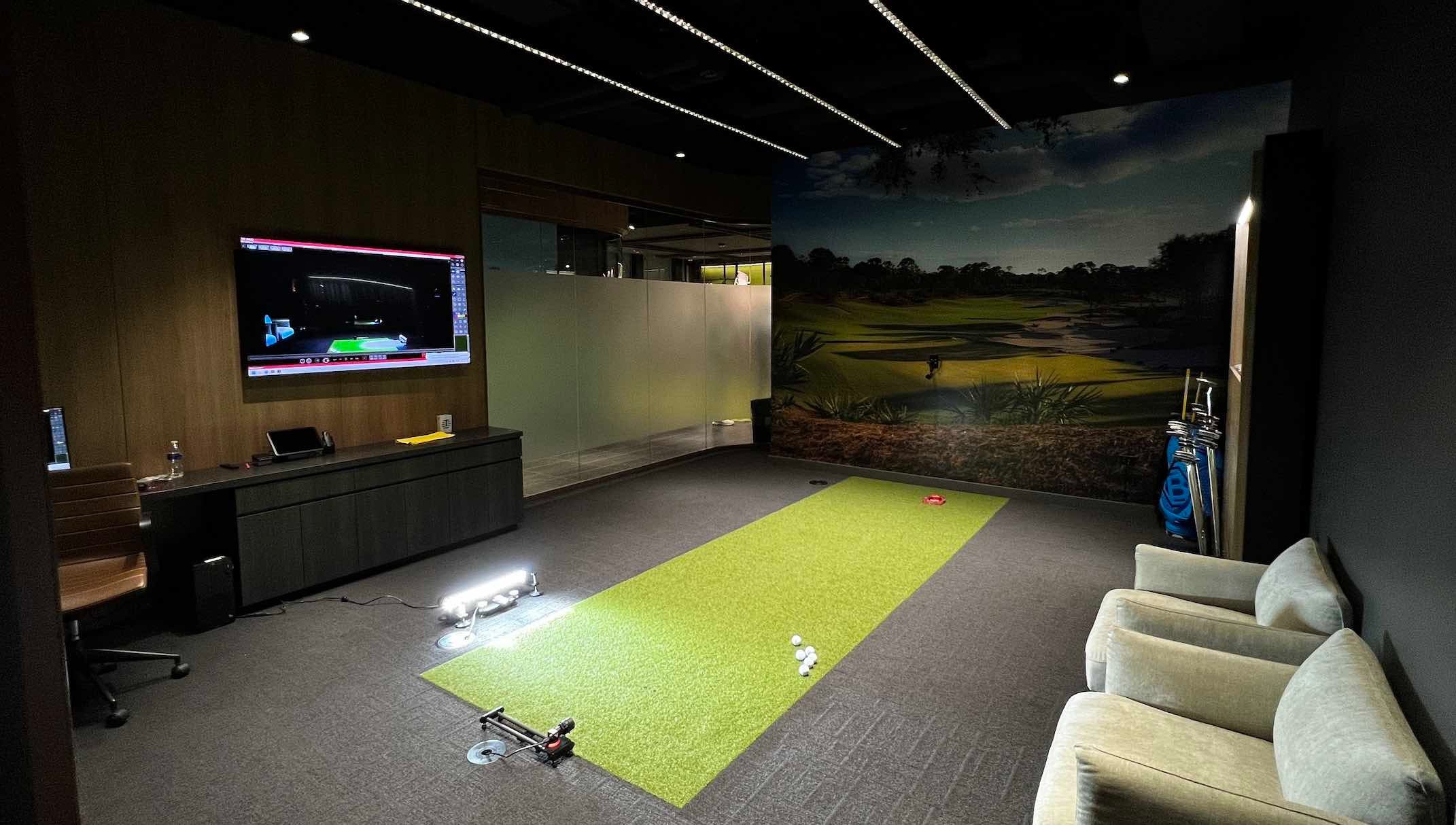
You can read more about my experience below, but I thought this would be a good time to revisit my putter fitting and how it’s helped me.
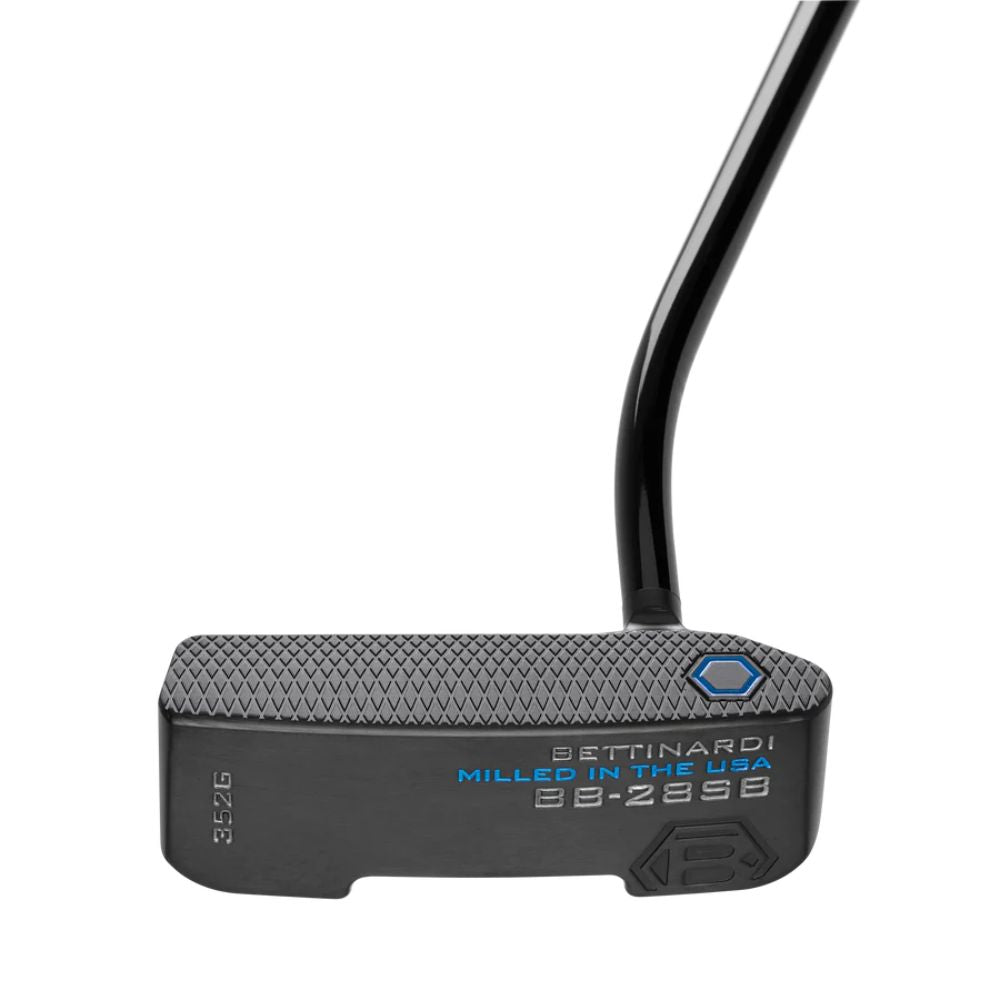
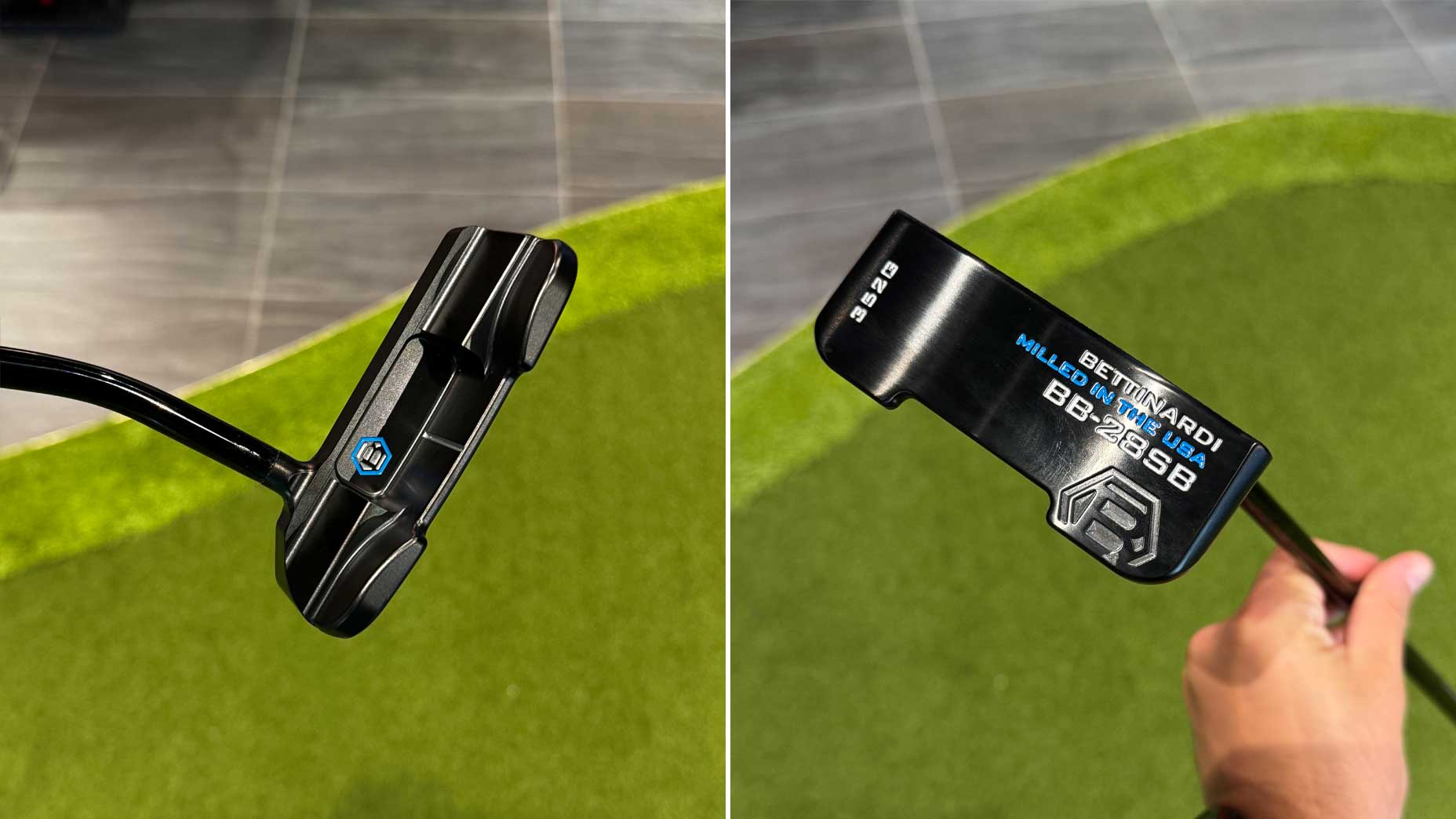
Since that fitting that saw me end up in a Bettinardi BB-28SB, a face-balanced blade putter I thought would never be a good fit, putting has gone from potentially one of the weakest parts of my game to a strength. I feared a left miss and now I can feel like I release the putter head freely and know it will start on my intended line.
As you’ll read below, Tom Sopic, Studio B’s lead hive concierge, put me through my paces hitting putts and found that the high-toe-flow putter I was using was causing me to put more hook spin on the ball than forward roll, which was causing my left miss.
Since then, I’ve felt like I’m making one or two — or more — 10+ putts a round, and I made it to the finals of my club championship. This summer was by far my best on the greens and can only lead to bigger things over the next few years as soon as I get the rest of my game in order.
Keep reading below for my experience, and be sure to enter Fairway Jockey’s Bettinardi VIP Fitting giveaway today!
I got fit for a putter at Bettinardi’s Studio B. The result shocked me
Editor’s note: This story was originally published on June 3.
As I’ve chronicled my own golf journey through gear, I’ve started to realize that I’ve fallen into some of the bad habits that we here at GOLF preach against.
Take my putting.
Not until I was fit for a putter at Bettinardi’s Studio B did I become aware of the putting stroke and putter I should be using.
Today, I’m in a putter type I could never have imagined using, but I felt and saw instant results with how easy it was to get the ball rolling end-over-end on my intended line.
For those who have been hesitant to get fit for a putter, this article is for you.
Some background on my putters
All my life, I have used a Ping Anser-style blade putter, which was the putter type that came in my first U.S. Kids’ Golf set. The first Scotty Cameron my dad cut down for me was a 2005 Studio Style Newport 2.5 with a GSS insert.
That putter has a flow neck and a ton of toe hang, which I always thought matched my stroke because I always thought about the putting stroke as an arc and opening the face going back was the easiest way to return it to square.
In 2010, the first golf club I ever bought myself was a 1999 Scotty Cameron Teryllium II Newport 2 for a $150 on eBay, and I had it refinished. This putter has a plumber’s neck, but I was going for feel and I didn’t know anything about putter fittings at the time.

Want a 1-of-1 putter? Bettinardi will make it — but it will cost you | Fully Equipped
I kept using that putter for 13 years before a newer Teryllium version came out, this time as a wide-body blade and a high-toe flow short slant neck. I still thought my stroke matched best with a lot of toe flow so I bagged one and never thought twice about it.
I did get fit for this putter but after I already had purchased it. I got fit to the putter, rather than finding a putter that was fit for me.
But, as these things tend to go, I was wrong!
My Bettinardi putter fitting
I was excited to go to Bettinardi’s Studio B in Oak Brook, Ill., just outside of Chicago; it would be my first putter fitting at which we’d start from scratch, and I was going in with a completely open mind.
From the moment we started rolling putts, I realized something was about to change.
“Does this green have a bit of a left break?” I asked, innocently, thinking I was hitting good putts.
“It actually has more of a right break, if anything,” said Tom Sopic, Studio B’s lead hive concierge and my fitter for the day.
Using a high-tech camera system in the fitting bay and Quintic putting analysis, Sopic uncovered a huge revelation about my putting stroke.
He didn’t even need to see the video to confirm it.
“Just watching you hit a couple of putts during your warm-up, I could see that it was more of a pendulum-style stroke,” he said. “The easiest way we saw it was that your takeaway when we came to the apex of your stroke, the pocket of your putter was dead straight behind the golf ball.”
On the video screen, Tom showed me that my putter face stays almost square for most of the stroke, as opposed to opening on the way back and closing on the way through as it would for an arc. Because the face naturally wants to close on the way through, it created a hitch in my putting stroke that would mostly cause me to strike the ball on the heel and pull it.
We could also see that my eyes were about 2 to 2.5 golf-ball widths inside the heel of the putter, which was because my putter was long (36″).
“A lot of times when people are fitting into toe hang putters, they recommend your eyes fall inside the heel, which we do as well,” Sopic said. “But that distance away from it, with you being a pendulum-style putter, is going to create a lot of exaggerated arc that isn’t there naturally.”

Bettinardi opens all-new Studio B to enhance customer fitting experience
All of this was causing my golf ball to launch with almost as much side spin as forward roll. The Quintic analysis showed my forward spin at a 51 RPM average and the side spin at 45 RPM. Ideally, Sopic said, you want three times as much forward spin as side spin. It wasn’t consistent, either, because my highest side spin was up to 75 RPM of hook spin!
The result of my putter fitting
We stayed in a blade-style putter because, while I believe a mallet putter is more forgiving, I’ve never found one I like looking at. I’ve gone to wider-blades to give me more forgiveness and that seems to do the trick.
Our winning putter was three degrees flatter (67˚) than my gamer (as the toe of my putter was still coming in high), and a half inch shorter (35.5″), which brought my eyes right over the heel of the putter. To me, it really didn’t feel that much different, which was what Sopic was going for. My spine angle didn’t change when addressing the shorter putter.
Bettinardi BB28 Slotback Putter
View Product
ALSO AVAILABLE: PGA Tour Superstore
The real shock to me was the head and neck, which was a Bettinardi BB-28 Slot Back, a nearly face-balanced putter with a single-bend shaft. I had never used any putter without a hosel before.
Interestingly, the BB-28 has an identical offset (3/4ths of a shaft) to my previous gamer, which, despite the absence of a hosel, looked completely different; however, lining up to a putt felt almost the same. That’s no coincidence, Sopic said, because right-eye dominant players, like myself, who like to use sight lines on the flange to line up their putts, tend to also prefer less offset.
But the results on the Quintic were clear. With six putts, my forward rolls averaged 60 RPMs of forward spin and just 12 RPMs of sidespin, well above the 3-to-1 minimum ratio.
The cool part of the Studio B experience was that a new putter was built to my exact specs right there for me, and I was able to go out and play with it immediately that afternoon.
I won’t lie and say there wasn’t an adjustment period, especially considering I’ve been scared of pulling short putts for the better part of six months now, but by my third round with this putter (and even the back nine that day) it was clear that this putter fit me better than any other I’d had before.
Jack Hirsh/GOLF
What this putter fitting really tells us
We could go on and on about how this has really changed how I think about my putting, or how it’s going to improve my game, but the reality is simple:
You need to be fit for your putter, not to your putter! There’s a difference.
It also comes down to more than just specs. Different putter shapes, faces, necks, etc., all do different things. I could bend and cut my old putter to meet the same specs as this new one, and it still wouldn’t work as well because of the toe flow.
So my suggestion: Go get fit and then buy a putter; your scores will thank you later. It will cost you only about $100 to $150 ($100 at Bettinardi’s Studio B), which really isn’t that much when you’re already spending $400-$500 on a new putter. Think of it as an investment for all the money it will end up winning you on the greens!
A few notes on the giveaway: It is available to U.S. residents only. Ground transportation not included in prize. Spend threshold will be calculated using the subtotal after any discounts have been applied and prior to tax and shipping being applied. Items or orders returned and refunded will not count towards entry. All TaylorMade, Ping, Odyssey and Scotty Cameron products are excluded from the promotion and do not count toward purchase thresholds. However, product add-ons like as shafts, grips, and ferrules will count toward all purchase thresholds.
Ready to start earning some entries? Explore Fairway Jockey’s wide array of gear here — and click here for more information on the Bettinardi giveaway.
Want to find the best putter for your game? Find a club-fitting location near you at True Spec Golf.
<figure class="youtube-facade" data-content="
“>
The post I tried this VIP putter fitting experience. Here’s how you can get it for free appeared first on Golf.
]]>
https://golf.com/?post_type=article&p=15576380
Wed, 10 Dec 2025 22:49:44 +0000
<![CDATA[
Tiger Woods’ reappearance shone a light on what’s good — and weird — with professional golf’s current landscape.
The post Secret Tour meetings, Tiger’s comeback: 10 lessons from Hero on pro golf’s future appeared first on Golf.
]]>
https://golf.com/news/tiger-woods-tournament-pro-golf-future/
<![CDATA[
Tiger Woods’ reappearance shone a light on what’s good — and weird — with professional golf’s current landscape.
The post Secret Tour meetings, Tiger’s comeback: 10 lessons from Hero on pro golf’s future appeared first on Golf.
]]>
<![CDATA[
Tiger Woods’ reappearance shone a light on what’s good — and weird — with professional golf’s current landscape.
The post Secret Tour meetings, Tiger’s comeback: 10 lessons from Hero on pro golf’s future appeared first on Golf.
]]>
<![CDATA[
Something is wrong with professional golf.
I couldn’t shake that feeling as I rode the bumpy Bahamas shuttle from the golf course back to the hotel at the Hero World Challenge late last week. As the bus plunged through another pothole, I considered the fact that, in the same week, squarely in the center of the golf offseason, Scottie Scheffler, Rory McIlroy and Viktor Hovland would headline three distinctly different golf tournaments in three different time zones and three different corners of the world. Scottie Scheffler was at Tiger Woods’ event in the Caribbean, Hovland was at the DP World Tour’s headline event in South Africa, and McIlroy was at the DP World Tour’s headline event in Australia — all while Jon Rahm chased some sort of Krispy Kreme challenge.
To visualize the physical distance between these three superstars was really to face the latest iteration in golf’s most elusive question: Which tournaments actually matter? And it didn’t take much reflection to reach a handful of angsty follow-ups: Surely these tournaments should each get their own shine? Surely this was an inefficient distribution of golf’s top resources? Surely somebody much smarter and much more powerful would figure this out?
These are champagne problems to contemplate from a golf tournament in the Bahamas, so I swallowed my feelings of foreboding as I entered my resort and rode the elevator up a dozen floors. I entered my hotel room and stared over the Atlantic Ocean, watching the lights twinkle in the denim-blue pools of the resort spilling out in the foreground below. Then I flipped on the TV to find something even prettier: Rory McIlroy and Adam Scott hitting high-risk, downwind pitch shots at Royal Melbourne. As I researched margarita options downstairs, I felt my anxiety loosen. For the moment, the world had achieved perfect balance.
But now, a week later, I’ve returned to the real world (42 and drizzle in Seattle, Wash.) and as I debate the new duality facing me — to clean off my shoes or let them dry — I’m also thinking about the duality of professional golf, and how the day-to-day dreaminess hides an ongoing, underlying tension.
That tension was the centerpiece of what I saw, heard and felt at the Hero World Challenge. There’s more happening beneath the surface. In Tiger Woods’ presser. At Tuesday’s secret player meeting. On this continent and multiple others. Here are 10 things that stuck out, specific and general, from a few days at one of pro golf’s offseason outposts.
1. Tiger’s coming back.
I don’t know when or in what capacity. Woods himself insisted he has no idea, either. He’s just been cleared to chip and putt following his latest back procedure, and he did do some chipping and putting at Albany. But it didn’t take a body language expert to see the desire is still there. Although he ruled out a start with his son Charlie at the PNC Championship (“it wouldn’t be fair to my son and it wouldn’t be fair to another team that could play”) and he ruled out early-season TGL starts (“but I will be there at every match Jupiter Links competes in”) he laid a trail of bread crumbs that we could follow to another comeback.
“Hopefully I will be able to maybe play at the end of the season here and there, but I don’t know,” he said.
It’s impressive to pack “hopefully,” “maybe,” “here and there,” and “I don’t know” into a sentence that short, but if you’re a Tiger optimist, you’re used to it. He seemed to suggest he was thinking about a return before the end of the TGL season (mid-late March), which would also interestingly coincide with the Masters (early April).
Still, when Woods was asked specifically about another comeback, he offered this dose of reality:
“Come back — to what point? I’d like to come back to just playing golf again. I haven’t played golf in a long time. It’s been a tough year. I’ve had a lot of things happen on and off the golf course that’s been tough.
“And so my passion to just play, I haven’t done that in a long time. Just play. So I’ve had to sit on the sidelines for a number of months, and most of this year and quite frankly end of last year.”
Woods wants to play golf with his son Charlie. He wants to feel good enough to do so. But I think he wants to play in the Masters, too. That could be nostalgia talking, for me and for him. But any real comeback requires a heavy dose of optimism anyway.
2. Tiger’s quietly guiding golf’s future.
I wrote more about this here, but one thing is increasingly clear about the shape of pro golf’s future: Tiger Woods has the hammer and chisel.
In some ways, it seems counterintuitive. When you think “revolution” and “disruption” and “significant change” in basketball, you don’t exactly picture Michael Jordan on a Zoom call. Is he weighing in on the nuts and bolts of playoff schedules or seeding in the NBA Cup? Hopefully not.
But that’s Woods’ current role as chairman of the Future Competition Committee, which means he now uses words like “stakeholders” with regularity and says things like this:
“This is one of the reasons why we’ve talked to all of our partners, why we talked to all of the CMOs, CEOs, everyone who’s involved in the game to get their opinion on what they would like to see. It’s up to us at the committee level to try and figure that out.”
3. Tiger has his North Star. Everybody else should take note
The rest of professional golf should take note of the answer Woods gave when he was asked why, exactly, he cares about the future of the PGA Tour.
“Well, the PGA Tour gave me an opportunity to chase after a childhood dream,” Woods said. “I got a chance to hit my first ball in my first PGA Tour event when I was 16 years old. I know that’s what, 33 years ago, but I’ve been involved with the PGA Tour ever since then. A little kid from Cypress, California growing up on a par-3 course got a chance to play against the best players in the world and make it to World No. 1. I got a chance to be involved in a lot of different things on our Tour.”
If you’re cynical, maybe you found these words rehearsed or scripted, but sitting in the room with Woods, they felt genuine, especially the throughline: The PGA Tour is the dream. I’m not blind to the realities of the PGA Tour business — and it is big business! — but the Tour should hold itself accountable to a slightly higher standard than cash. It is the pinnacle of the sport, an aspirational, meaningful place to compete, and every one of its tournaments should be conducted accordingly. The more they care, the more we care. Here’s what Woods said motivates him to pay it forward:
“This is a different opportunity to make an impact on the Tour,” He said. “I did it with my golf clubs, I made a few putts here and there. Now I am able to make an impact in a different way for other generations to come. Not just generations that I played against, but for future generations like a 16-year-old looking for a place to play who maybe hopes of playing the PGA Tour.”
4. These guys like Brian Rolapp.
I was not around for the arrival of Jay Monahan as PGA Tour commissioner. I’m not sure what it’s like when other sports leagues adopt new leadership. And there are exceptions to what I’m about to say, particularly in the Tour’s midfield. But I will say, I was shocked by the level of optimism the Tour pros I spoke to expressed about new CEO Brian Rolapp.
I suspect some of that has to do with his NFL pedigree; everybody knows the NFL is king, especially these football-loving Tour pros. But Rolapp also makes a very distinct impression on people. He seems like the kind of guy who gets what he wants, takes everything in stride, and is always in control. Direct and impressive — those are the two words I kept hearing about Rolapp. Things could turn, of course. Don’t they for all commissioners, sooner or later? But so far, so good.
5. The latest “secret player meeting” went well.
Perhaps it should come as no surprise that a Tuesday meeting of top PGA Tour players (plus Tiger and Rolapp) on the future of the PGA Tour went well. (Of course the future is bright for these top-ranked guys! It’d better be!) But I was more impressed by the audience than the substance. There’s something to be said for the fact that every player in this star-studded Hero field attended the meeting.
The PGA Tour has felt reactive over the last few years, but these meetings left me with the feeling that Rolapp and co. are playing offense. The players clearly believe change is coming, and they want to prepare for it before it arrives.
Woods is a good fit as an establishment figure because Rolapp is the opposite. Two more phrases that Rolapp and the people around him enjoy are “blank slate” or “clean sheet.”
6. The new schedule isn’t decided — but we’re getting hints.
A couple weeks ago, Harris English did some out-loud thinking at the microphone at the RSM Classic when he suggested the future PGA Tour could be 20-22 events between the Super Bowl and the end of August. There’s no need to take English’s statements as gospel; he emphasized that his words were merely a personal prediction. But considering the general reaction to English’s comments has been something to the effect of yeah, that could be about right, including from Rolapp, it’s safe to assume he’s onto something.
The specifics may not yet be clear, but the general outline seems to be the following: shorten the PGA Tour season, double down on the remaining tournaments, get some of those tournaments into bigger markets, and deemphasize everything else. So, which tournaments do you dump? Which do you move? How do you tweak the playoffs?
Can you start at the WM Phoenix Open? Can you move California’s marquee events to the summertime? Can you leave Hawaii behind altogether? Can you recategorize the lower-level PGA Tour events in a way that makes sense for both players and viewers? And can you actually give people fewer PGA Tour events and draw more viewers via scarcity?
These are the questions Woods’ “FCC” has been assembled to answer.
7. Still, nobody’s coming to save “pro golf.”
Where does the Australian Open fit into all of this? What does it mean for the DP World Tour, and LIV, and some unified theory of worldwide golf?
On one hand, the theoretical schedule would leave plenty of room for interested players to participate in tournaments during football season. Rory McIlroy has been the poster boy for international barnstorming this fall; he’s been to Ireland, England, India, Dubai and Australia in the three-plus months since the Tour Championship. Perhaps more players would join him, if given full latitude to do so.
McIlroy told Evin Priest that he sees real opportunity in the vision.
“Yeah, I think I understand what they’re [PGA Tour] doing,” McIlroy said. “They’re trying to get their domestic model right before focusing internationally, and they obviously don’t want to go up against football … So if the [PGA] Tour are really thinking about playing from February through to August, that leaves September through to January for here [Australia] and Europe and wherever else in the world to really be the shining light of golf for that five months. So I think people could really get behind that.”
But golf still needs some resolution. At the Hero, I watched the continuation of a new golf tradition: Chatter about which pros might be headed to LIV, as well as speculation on the future of LIV golfers competing on the DP World Tour. Brian Rolapp can do a lot as the CEO of the PGA Tour, but he’s not the CEO of Professional Golf.
8. Keegan Bradley’s in pain.
It’s easy to visit a tournament like the Hero and assume that everybody in the golf world is all good. They’re not. Keegan Bradley is still hurting after the American Ryder Cup loss at Bethpage, and I thought this was an incredibly vulnerable self-assessment from the losing U.S. Ryder Cup captain on his 2025.
“Well, that’s a complicated question because I’m really proud of the way I’ve played. I think in a lot of ways it’s the best year of my career. My rookie year I won twice with a major, so that’s going to be tough to beat. But with everything that was going on, I’m really proud of the way that I played.
“But when you factor in losing the Ryder Cup, I mean, it’s an F. You’ve got to go and win that, and this grade’s different. It’s really tough to grade.
“I was talking to my coach, he said, ‘Remember, you won this year.’ I was like, ‘No, I don’t remember that at all.’”
Bradley described recent weeks as “the darkest time of my life, probably. I mean, I don’t know how else to describe it. Certainly, definitely of my career.” And this part was particularly wrenching:
“I have this, like, gaping hole in my career now that I don’t know that I’ll ever be able to fill. This isn’t something that you lose the Masters, you lose a tournament, I’m going to work extra hard to get back and win.”
One thing’s guaranteed going forward: nobody will be harder on Keegan Bradley than he is on himself.
9. Akshay Bhatia has a fascinating new caddie.
The PGA Tour has big-time existential changes, but Hero week is a reminder that the daily changes of golf are incremental. Like Jordan Spieth working on a new swing feel and testing it out in competition for the first time — or Akshay Bhatia debuting his new caddie, veteran looper Joe Greiner.
Greiner’s appearance on Bhatia’s bag was a fitting way to cap off a wild year on the caddie carousel. He split with longtime boss Max Homa early in the season, then enjoyed a brief stretch as a fill-in for Justin Thomas. After a mid-season stint on Collin Morikawa’s bag, he bounced over to Jake Knapp before ultimately finishing the year with Bhatia. Homa has gone through multiple caddies since then, as has Morikawa. Other longtime partnerships are giving things another shot, like Webb Simpson and Paul Tesori. But Greiner is now on the bag of a rising star — and I found one detail of their partnership particularly interesting: They’re both lefties.
“I think certain golf courses, certain shots, certain cues that we have, he really understands that. And again, I think from the majority of lefties that I’ve met, Phil, Bubba, myself, very creative and I think being lefty has something to do with that, I believe. It’s an exciting thing for me for someone to see a shot the way I do.”
Bhatia said he’d pursued Greiner for a while; they grew up in the same California town and have vibed well thus far. As for Greiner? I’m sure he sees room for improvement after their 14th-place finish in the 20-player field. But I saw his eyes widen when his new boss hit a preposterous flop shot into the 9th green on Friday. The new partnership has no shortage of potential.
10. There is one place trying to make sense of it all.
The week finished with three champions across three golf tournaments in three regions of the world. For two of them — Australian Open champ Rasmus Neergaard-Petersen and Nedbank Golf Challenge winner Kristoffer Reitan — the wins guaranteed entry into the 2026 Masters. (Hero winner Hideki Matsuyama is a past Masters champ and therefore has a standing invitation.) In that ongoing quest to answer golf’s most elusive question — which tournaments matter? — Augusta National has taken a stand. Last summer, the club announced they’d award a spot in the Masters to the Australian Open champ as well as winners from the Scottish Open, Spanish Open, Japan Open, Hong Kong Open, and South African Open.
The R&A stands with Augusta National, providing Open Championship slots for top finishes in its Open Qualifying Series, which consists of 15 tournaments in 13 countries around the world, including the Australian Open, where three players punched their ticket to next year’s tournament.
Lowest score wins. That much remains true.
The rest feels up in the air.
Dylan Dethier welcomes your comments at dylan_dethier@golf.com.
<figure class="youtube-facade" data-content="
“>
The post Secret Tour meetings, Tiger’s comeback: 10 lessons from Hero on pro golf’s future appeared first on Golf.
]]>
https://golf.com/?post_type=article&p=15576618
Wed, 10 Dec 2025 21:42:32 +0000
<![CDATA[
The 2025 Top 100 Teachers Summit is Dec. 15-17 at Cabot Citrus Farms in Florida. Here is the schedule and speaker lineup.
The post 2025 Top 100 Teachers Summit: Schedule and Speaker Lineup appeared first on Golf.
]]>
https://golf.com/instruction/2025-top-100-teachers-summit-schedule/
<![CDATA[
The 2025 Top 100 Teachers Summit is Dec. 15-17 at Cabot Citrus Farms in Florida. Here is the schedule and speaker lineup.
The post 2025 Top 100 Teachers Summit: Schedule and Speaker Lineup appeared first on Golf.
]]>
<![CDATA[
The 2025 Top 100 Teachers Summit is Dec. 15-17 at Cabot Citrus Farms in Florida. Here is the schedule and speaker lineup.
The post 2025 Top 100 Teachers Summit: Schedule and Speaker Lineup appeared first on Golf.
]]>
<
Matt Majka
MONDAY, DEC. 15
ARRIVAL & WELCOME
2 PM: Arrivals
2 PM – 4 PM: Top Teacher Registration (Driving Range) and check-in to Cabot Citrus Farms (for on-site guests)
4 PM: GOLF Top 100 Teachers Opening Remarks (Front Tee Driving Range)
4:30 PM: Mike Adams & Bob Ford (moderated by Eric Johnson): Mentoring and Careers in Golf (Front Tee Driving Range)
5:15 PM: GOLF Top 100 Teachers Welcome Reception (The Porch)
6:30 PM: Close of programming, dinners on your own
TUESDAY, DEC. 16
7 AM: Breakfast (Grange Hall – A la carte or grab and go)
8:30 AM: Morning instructors sessions begin (5th Green & 6th Tee Squeeze)
Joe Plecker: Connecting the Dots in Ground Force Instruction – Lessons, Legends, and Lab Data – A 30-Year Journey
Jason Birnbaum with Jon Tattersall: Junior Golfer To Tour Pro
Kevin Kirk: Developmental Coaching for High Performance Players (18-24 Years of Age)
Rick Murphy: Functional Movement to Functional Golf: Integrating Applied Sciences to Elite Instruction
12:15 PM: Lunch (Grange Hall)
1:30 PM: Mid-Day Speakers (5th Green & 6th Tee Squeeze)
Jason Sutton: Live Lesson: Solving the Puzzle by Reverse Engineering Problems in Putting
John Dunigan and Kevin Sprecher: Motor Learning & Problem SolvingRick Silva: Jacobs 3D Research & Learnings in Lessons
Carol Presinger: The Ups and Downs of Putting
4:30 PM: GOLF Top 100 Teachers Happy Hour & Announcements with David DeNunzio & Joe Plecker (Grange Hall)
6 PM: Close of programming, dinners on your own
WEDNESDAY, DEC. 17
7 AM: Breakfast (Grange Hall – A la carte or grab and go)
8:30 AM: Morning instructors sessions begin (5th Green & 6th Tee Squeeze)
Parker McLachlin: Short Game
Adam Schriber: Golf Fitness
Dr. Jim Suttie: Timing in the Swing
Daniel Gray: Cautiously Training Speed
Mike Malizia: Blending Tech with Human Understanding
1 PM: Lunch (Grange Hall – Grab and go lunch)
2 PM: Close of programming, Departures
For questions, please contact oliver@8amgolf.com.
The post 2025 Top 100 Teachers Summit: Schedule and Speaker Lineup appeared first on Golf.
]]>
https://golf.com/?post_type=article&p=15576640
Wed, 10 Dec 2025 21:36:33 +0000
<![CDATA[
GOLFTEC Director of Teaching Quality Josh Troyer explains that shoulder tilt during the backswing is key for maintaining posture.
The post This key relationship is crucial for maintaining posture during the swing appeared first on Golf.
]]>
https://golf.com/instruction/key-relationship-maintain-posture-golftec/
<![CDATA[
GOLFTEC Director of Teaching Quality Josh Troyer explains that shoulder tilt during the backswing is key for maintaining posture.
The post This key relationship is crucial for maintaining posture during the swing appeared first on Golf.
]]>
<![CDATA[
GOLFTEC Director of Teaching Quality Josh Troyer explains that shoulder tilt during the backswing is key for maintaining posture.
The post This key relationship is crucial for maintaining posture during the swing appeared first on Golf.
]]>
<
GOLFTEC Swing Evaluation
The post This key relationship is crucial for maintaining posture during the swing appeared first on Golf.
]]>
https://golf.com/?post_type=article&p=15576581
Wed, 10 Dec 2025 18:22:52 +0000
<![CDATA[
As data-center development accelerates in the U.S., golf courses in at least a half-dozen states have been identified as potential sites.
The post This muni just sold for nearly $50 million. Here’s why other courses could be next appeared first on Golf.
]]>
https://golf.com/news/data-centers-coming-golf-courses/
<![CDATA[
As data-center development accelerates in the U.S., golf courses in at least a half-dozen states have been identified as potential sites.
The post This muni just sold for nearly $50 million. Here’s why other courses could be next appeared first on Golf.
]]>
<![CDATA[
As data-center development accelerates in the U.S., golf courses in at least a half-dozen states have been identified as potential sites.
The post This muni just sold for nearly $50 million. Here’s why other courses could be next appeared first on Golf.
]]>
<
courtesy rick simonic
***
NO MATTER HOW STRONGLY you feel about the societal benefits of golf courses, you can understand the lure of a nearly $50 million payday — and Dauphin Highlands isn’t an isolated case. As data-center development accelerates — the U.S. now has more than 5,400 of the facilities — golf properties, both operational and defunct, in at least a half-dozen states have been identified as potential sites, making courses increasingly contested frontier between recreation and the digital infrastructure powering modern life.
Pennsylvania in particular has been a hotbed for this kind of activity, driven by the state’s available land, rich natural gas reserves and significant investment in energy production. Just a 30-minute drive south of Dauphin Highlands, Royal Manchester Golf Links, a daily-fee course in Mt. Wolf, was, until October, under consideration for a data center. The proposal drew such fierce opposition from residents that the Board of Supervisors shelved the course as a potential data-center site.
Another 30 minutes southwest, though, the wheels are in motion for data-center construction on the land now occupied by Briarwood Golf Club, a family-owned daily-fee course in York. That development — led by Colorado-based Viridian Partners — took a step forward in October when the West Manchester Township Board of Supervisors approved a zoning ordinance that the project would require. “In an ideal world, I would love for the family to keep that as a golf course,” Steve Harlacher, the board’s chairman, told me. “But we know they don’t want to.”

google earth
And if a sale is inevitable, Harlacher said, maybe a data center is a favorable outcome, at least in terms of minimizing disruption to the township. “Some of the other potential purchasers that have come in there are these large warehouses that would have pretty big impact,” he said. “One of them was a manufacturer that would have 300 tractor trailers a day coming in and out of that facility, not to mention all the employees and things like that.”
Harlacher is not helping to decide Briarwood’s future only through the lens of a bureaucrat — he’s also a lifelong golfer who grew up playing the course. “I have a connection,” he said. As a kid, even before he started playing golf, he and his friends would ride their bikes to Briarwood and scoop balls from a pond; by age 12, he was taking lessons there and soon enough was playing rounds with his grandfather, brother and friends.
The course is in Harlacher’s blood, which, in addition to the joy the property brings many other area golfers, is why he’d like to see at least some of the holes survive. Harlacher said on Viridian’s original pitch for the land, its plans for the data facility occupied only half the plot, so the township has asked the developers about whether preserving nine holes might be feasible. However the deal shakes out, the annual real-estate tax revenue would be a boon for the town — somewhere in the range of $6 million, Harlacher said, with $4.5 million going to the school district.
There are, of course, other considerations to weigh should the data center become a reality, including noise pollution; the loss of green space; the amount of water required for the facility’s cooling system; and potential increases in electricity costs for the town. But as George Margetas, one of the board’s other two supervisors, told me of the offer, “It was one of those situations where it’s tough not to say yes.”

google earth
***
SIMILAR DEBATES ABOUT the potential for converting golf courses into data centers have been unfolding — and, in some cases, raging — in at least five other states: Virginia, Ohio, Indiana, Minnesota and California.
In Hanover County, Virginia, near Richmond, a developer is seeking approval to build a data center on a 400-acre parcel that includes Hunting Hawk Golf Club, a daily-fee course that sits on the banks of the Chickahominy River. That request came in the wake of a Northern Virginia planning commission last year denying a rezoning application that would have allowed the then-owner of the defunct Westpark Golf Club in Leesburg to build a data center on the property.
The same Texas company that is seeking to acquire Dauphin Highlands also made a run at getting approvals to build a $1.3 billion data center in Indiana, on land once occupied by Brassie Golf Club, which shuttered in 2021; residents pushed back and the proposal was withdrawn. About 350 miles east, in Hubbard, Ohio, residents have been voicing their own concerns about a data-center proposal on the site of Deer Creek Golf Club, a daily-fee course where 18-hole rates start at $20. In Farmington, Minn., just south of Minneapolis, the city council late last year approved a developer’s proposal to build up to 12 data centers across 340 acres, including on the site of Fountain Valley Golf Course, which closed in 2022; a group of Farmington residents has sued the city with hopes of halting the development.
Out on the West Coast, the land that houses the defunct Delta View Golf Course in Pittsburg, Calif., north of San Francisco, has been approved for development of a technology park and data center. In 2022, the Pittsburg city council agreed to sell more than half of the municipal course’s footprint to a Delaware developer, meaning Delta View is destined to become the first ex-muni with holes designed by Alister MacKenzie — the Augusta National visionary — to be retrofitted for what Pittsburg’s mayor, Jelani Killings, said last month “will serve as a catalyst for secondary businesses such as technology suppliers, research, development and support industries that will choose to locate nearby this brand-new infrastructure.”

google earth
***
HOW SERIOUS A THREAT the data-fication of golf courses poses to the game is difficult to say. For now, industry leaders are not sounding any alarm bells, but that might just be a matter of awareness.
Neither the National Golf Foundation nor the National Golf Course Owners Association track statistics on such activity, and two data-center experts with whom I spoke said they were unaware of data-center developers taking a particular shine to golf courses. Peter Babigian, a principal at Dallas-based Trinity Consultants, which advises on data-center construction, said golf courses, at least in some regards, actually sound like unsuitable places upon which to build the facilities.
“Most of the data-center projects we get involved in are in areas with large tracts of open land,” Babigian said. “A golf course could also be a big tract of open land, but the first thing that comes to mind for me is grade. Most of the golf courses I’ve seen have a good amount of grade change in terms of hills and rises and ups and downs. So, if I can get X number of acres of open land and just do mass grading, why would I try to deal with repurposing a golf course that might have water and hazards and drainage and elevation change?”
Babigian suspected the answer to that question might lie in some courses’ proximity to energy sources. According to a 2024 report by the Brookings Institute, data centers consumed 4.4 percent of the electricity generated in the U.S., and Goldman Sachs recently reported that global power demand from data centers will increase 50 percent by 2027 and by as much as 165 percent by 2030.

getty images
“Availability of power is critical,” Babigian said. “I don’t know what the proximity from golf courses to utilities typically is, but it’s certainly an issue where data centers need a tremendous amount of power and they need a lot of water. Many of the projects we’ve been involved in are building their own substations, they’re building gas-fired utility plants, there’s a push toward nuclear sometime in the future.”
Another expert — Pat Lynch, executive managing director, global head, at CBRE Data Center Solutions, which also is based in Dallas — agreed that the “common denominator” among many data-center projects is the need for “large capacities” of power. “If you peel back the onion on these [golf course sites],” Lynch said, “my suspicion is there’s some power story that is around and very close to the golf course.”
In the case of the Pennsylvania courses, you don’t need to look far to find that story. In July, President Trump and Sen. Dave McCormick, R-Pa., used the occasion of the inaugural Energy and Innovation Summit in Pittsburgh to announce a $90 billion-plus investment in energy and AI in Pennsylvania, an initiative that will, in part, supply energy to data centers and enhance the power grid. The Trump administration also loaned Constellation Energy Corp $1 billion to restart its nuclear reactor, on behalf of Microsoft, at the plant formerly known as Three Mile Island, which has been closed since 2019. Three Mile Island sits on the Susquehanna River, about a 30-minute drive south of Dauphin Highlands and 45 minutes north of Briarwood.
When I asked Jay Karen, who is CEO of the National Golf Course Owners Association, about data centers creeping in on golf courses, he said he was not familiar with the specifics of any such deals but that “it’s a phenomenon that is not surprising. These land-use cases in golf get very controversial because it’s always a ‘not in my backyard’ kind of thing that the local residents hate to see the green space go away. But in the end, these are small businesses that have the ability to exercise an exit strategy.
“These golf courses might only be worth three or four or five million dollars as golf courses, but when someone’s dangling a $20 million or $40 million check, it’s economics at work, right?”
Karen sees a downside to this niche of capitalism, too, namely when low-fee courses like Dauphin Highlands go away. He said he has “deep concern” about the supply line of affordable daily-fee golf in the U.S., because many developers have deserted that model for high-end courses that are out of reach for much of the population; meanwhile, other developers are seeking to repurpose financially challenged courses for housing developments, industrial complexes and, yes, more recently, data centers.
“It’s sad for golf,” Karen said of course sales and closures. “Like, golf looks at this and sees a course close and there’s sadness around it, which is a very valid feeling, because there’s something about our game people want to keep golf courses around. They want their friends and family and other people to experience it. When a golf course closes, that’s one less chance for people to play golf. The golfers get it.”
When someone’s dangling a $20 million or $40 million check, it’s economics at work, right?
***
WAYNE FLEMING ISN’T an avid golfer, but he lives in a neighborhood across the street from Dauphin Highlands, occasionally plays the course and has a deep appreciation for the green space that it provides.
When asked about the benefit of living near the course, Fleming, who is 63 and a public health employee, told me, “It’s not a park but it’s the next best thing.” Dauphin Highlands also has sentimental value to Fleming. Before the property became a golf course, it was a corporate retreat for Bethlehem Steel and a popular spot for wedding receptions; Fleming celebrated his nuptials there in 1987.
Fleming contends that a shuttered steel mill around the corner from the course would be a more logical data-center site, but he’s not holding out hope, calling the repurposing of Dauphin Highlands a “fait accompli.” Should the data center become a reality, Fleming worries about the resulting noise pollution as well as losing some of the leafy views he enjoys when he pulls out of his development. He’s also convinced that the facility would not occupy the entire footprint of the course, which could, he speculated, entice the new owners to build more than just a data center on the land.
“Once they own that piece of property, it’s going to be whatever they want that they can push through,” he said. “What happens when they say we want to put a trucking outfit there or we want to put some office buildings in? That is what I’m most concerned about.” (Those questions are best suited for the board members of the Dauphin County General Authority, all of whom declined to be interviewed for this story.)
When Fleming posited that the land the developers would require to build a data center would be far less than the acreage of the golf course, I told him about the potential sale of Briarwood Golf Club and the idea the town’s Board of Supervisors’ chairman had about finding a happy medium of building a data center while also preserving nine holes.
Fleming said he had never considered that option for Dauphin Highlands but that trying to hold on to some of the course is “a great idea.”
Rick Simonic, though, says Dauphin’s regulars aren’t especially optimistic about the course’s prospects for survival and have already been discussing where to take their weekly league matches.
“You can’t fight city hall is kind of how our guys look at it,” Simonic said. “There are other courses in the area; it’s just we’ll lose one of the better ones. We’re kind of resigned to our fate.”
The author welcomes your comments at alan.bastable@golf.com.
The post This muni just sold for nearly $50 million. Here’s why other courses could be next appeared first on Golf.
]]>
Disclaimer : This story is auto aggregated by a computer programme and has not been created or edited by DOWNTHENEWS. Publisher: golf.com