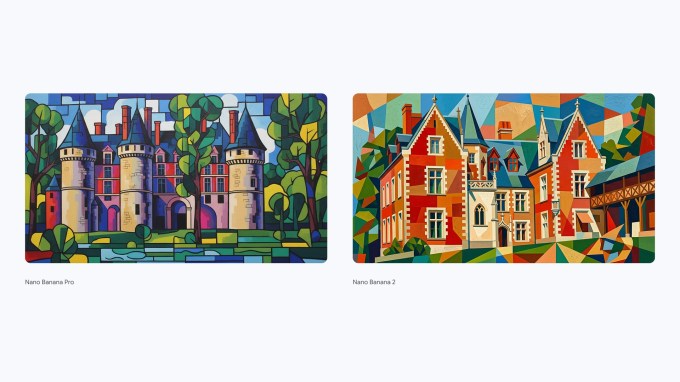
Google today announced the latest version of its popular image generation model, Nano Banana 2. The new model, which is technically Gemini 3.1 Flash Image, can create more realistic images than its predecessor. The model will also now become the default in the Gemini app for its Fast, Thinking, and Pro modes.
The company first released Nano Banana in August 2025, prompting people to generate millions of images in the Gemini app, especially in countries like India. In November, the company released Nano Banana Pro, which allows users to create more detailed and high-quality images.
The new Nano Banana 2 retains some of the high-fidelity characteristics of the Pro model but produces images faster. The company says you can create images with a resolution ranging from 512px to 4K, in different aspect ratios.
Nano Banana 2 can maintain character consistency for up to five characters and fidelity of up to 14 objects in one workflow for better storytelling. Users can also issue complex requests with detailed nuances for image generation, Google says. In addition, users can create media with more vibrant lighting, richer textures, and sharper detail.

With the launch, Nano Banana 2 will become the default model for image generation across all apps in the Gemini app. The company is also making it the default model for image generation in its video editing tool, Flow.
In Search, Nano Banana 2 will become the default for Google Search results via Google Lens and in AI Mode across 141 countries on the Google app and on the web across desktop and mobile.
On Google’s higher-end plans, Google AI Pro and Ultra, subscribers can continue use Nano Banana Pro for specialized tasks by regenerating images via the three-dot menu.
Techcrunch event
Boston, MA
|
June 9, 2026

For developers, Nano Banana 2 will be available in preview through the Gemini API, Gemini CLI, and the Vertex API. It will also be available through AI Studio and the company’s development tool Antigravity, which was released last November.
The company said that all images created through the new model will have a SynthID watermark, which is Google’s mark to denote AI-generated images. The images are also interoperable with C2PA Content Credentials, created by an industry body consisting of companies like Adobe, Microsoft, Google, OpenAI, and Meta. Google said that since launching the synthID verification in the Gemini app in November, people have used it over 20 million times.
Disclaimer : This story is auto aggregated by a computer programme and has not been created or edited by DOWNTHENEWS. Publisher: techcrunch.com