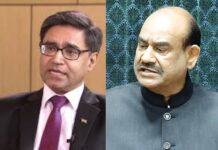
Donald Trump’s administration keeps claiming India pledged to stop buying Russian oil in exchange for tariff cuts and a trade deal, with US Secretary of State Marco Rubio repeating this at the Munich Security Conference in Germany on Saturday.
On the same stage at the Munich Security Conference, EAM S Jaishankar reaffirmed India’s commitment to strategic autonomy, even as the Congress-led Opposition accuses Narendra Modi’s government of buckling under pressure, amid US claims on Russian oil cuts.
India and the US are finalising details of a trade deal after President Trump announced a framework on February 2, confirmed by Prime Minister Narendra Modi.
The Trump administration has lifted the 25% tariff imposed as a penalty for India’s Russian oil purchases amid the Ukraine war, and his Executive Order explicitly states Delhi agreed to stop buying it. India has neither confirmed nor denied this claim so far.
The trade deal framework states that the remaining 25% reciprocal tariff will drop to 18% once a formal Bilateral Trade Agreement (BTA) is finalised.
The US Secretary of State Marco Rubio repeated the claim about Russia at Munich on February 14, but used the word “additional” as a possible caveat for now; he was discussing US sanctions amid European pressure to end the Ukraine war.
“In our talks with India, we got their commitment to stop buying additional Russian oil,” Rubio stated at the Munich Security Conference.
The word “additional” in Rubio’s statement could theoretically mean current Russian oil orders already in process remain unaffected, though no final clarification exists yet. Reuters and other reports indicate Indian firms, including state-owned ones, are already avoiding Russian oil purchases set for April delivery.
Indian External Affairs Minister S Jaishankar, during his session with German minister Johann Wadephul, did not confirm US Secretary Marco Rubio’s claim. Instead, he stressed that India’s energy policy follows market forces, a position consistently held by his ministry and the government. “Where energy issues are concerned, this is today a complex market. Oil companies in India, as in Europe and elsewhere, look at availability, cost, and risks, and take decisions that serve their best interests,” Jaishankar said.
Disclaimer : This story is auto aggregated by a computer programme and has not been created or edited by DOWNTHENEWS. Publisher: ZEE News